Review: Sandstorm

Sandstorm

sandstormcover

James Rollins’ Sigma Force series begins with Sandstorm.

I might have a little bit of “hype backlash” because of the way this series has been praised so much. I might also be used to ridiculous thrillers because of the way I’ve actively sought them out, so what seems utterly crazy to a less prolific reader might not be that way to me.

That being said, this was a very good, very out-there cheap thriller. I’d describe it as a more tacticool version of Clive Cussler. The ridiculous technobabble and ancient puzzle-solving is there, but the action (which is both incredibly frequent and often janky) is more conventional and, for lack of a better word, “tactical”, save for an amazing scene where someone dual-wields pistols on horseback. While I like it, it’s not the best ever in my eyes.


Review: Opening Moves

Opening Moves

At the start of this blog, I thought that William Stroock’s World War 1990 was the worst World War III work of fiction I’d read. That is no longer the case. Colin Gee’s The Red Gambit: Opening Moves now holds, as of this post, that dubious “honor”.

Why have I made such a bold claim?

First, the prose is very poor and the book incredibly long and clunky. (And it’s just the beginning of a series!). This alone would have been enough for me to not recommend it. However, there’s more. Like Dragon’s Fury, it manages to stumble into seemingly all of the worst parts of the “big war thriller” (overdescription, characters that are too flat and too many at the same time, etc…) all at once. I mean, it has two conference room scenes in a row just at the beginning.

It also has the issue of being very close to World War II. This is one of the trickiest time periods to write a World War III in (for reasons of both military logic and storytelling) and it’s safe to say, especially given just how early Stalin attacks in-universe and how Japan allies with the Soviets (!), that Gee doesn’t do it right.

Although the biggest problem is how horrendously stereotyped everyone is. After reviewing Gee’s Atlantisch Crusaders, I kind of expected this, but that doesn’t make it any better. While terrible stereotypes don’t break a cheap thriller by themselves (if they did I’d have never read a single Casca book), this doesn’t present itself as a cheap thriller.

It presents itself as both a “crunchy” tale of military detail and as a sweeping war epic. For the former, the stereotypes, contrivances, and extreme premise counter whatever technically accurate rivet-counting details appeared. For the latter, the storytelling is just far too clunky for it to work.

Thus the stage is set for a truly gigantic mess. There’s stereotypical pulp, there’s overly rote “lines on a map” fiction, there are overlong big-picture doorstoopers, and then there’s this, which somehow manages to be all of the above.


Review: The Nash Criterion

The Nash Criterion

After three stumbles, Erec Stebbins suddenly struck the right note with The Nash Criterion.

After one bad and two middling thrillers, Stebbins suddenly turns into Jon Land-if not Hideo Kojima- with this ridiculously overstuffed tale of a second American Civil War and ancient world-controlling super conspiracies. This book just was so over-the-top that I grinned at every single later page.

A lot of times it’s hard to review additional books in a series. This is not one of them, as it offers a distinct change. Many more times, if there’s a distinct change worth pointing out, it’s a negative one as the series drops in quality. Here, the opposite is thankfully true. The INTEL 1 series has gained in quality with this book, and I was very glad to see it.

Review: Ward

Ward

The sequel to Spacebattles darling Worm, Ward arrived to much fanfare, to the point where the end of its author’s last web serial was overshadowed by antsy fans waiting for it to start. Now Ward itself has just finished.

When I started reading it, I saw that Wildbow’s literary issues didn’t change. The prose was too flat. The action likewise was too flat. The pacing had only two speeds: “Way too fast” and “Way too slow”. The descriptions are either overdetailed or underdetailed. I’d tried to follow all of his serials after Worm itself when they were written, and ended up just abandoning them.

Reading more of Ward, it has Worm’s problems, if not more. The structural issues mentioned above. The tendency to write into a corner and then ESCALATE out of it. The way the cosmology becomes ridiculous (you don’t include precognition as a power without good reason, much less two super-precogs, and that’s just one problem).

But really, Ward is a tragedy. I don’t mean inside the story itself, although it has plenty of dark moments. I mean that it’s dragged down by two big factors. The first is the legend of Worm bringing up unrealistic expectations (something Wildbow himself mentioned in his retrospective). The second is that its predecessor had just the right amount of factors to make it popular. Lightning was never going to strike twice.

One strange effect was that an improvement in the characterization actually doomed the serial. Worm’s fandom success hinged on Taylor, its protagonist, and her lack of what would normally be considered substance. Someone who was about 30% power fantasy of fighting back against the people who were just UNFAIR TO HER and 70% blank slate camera RPG protagonist created some strange incentives.

If you saw Worm as something that was more of a superhero RPG let’s play than anything else (which it comes across as), then the fanfiction boom made sense. Taylor’s bug power was just one “build” among others, and if the sole part of her character that filtered down was that wish fulfillment, then it’s easy to see why (combined with bandwagon inertia) why it got all the fanfiction it did on one small part of the internet.

So Victoria Dallon may have been an improved character, but the mystique was lost. Ward ended up as feeling to me like the kind of webfiction that, if you’re into it from the start (I wasn’t) you’d follow until it finished and then leave it behind.


Review: Life Without Giamotti

Life Without Giamotti

Sean Munger’s surreal Life Without Giamotti may be one of the most influential books I’ve read, with its surrealism influencing so much of my thinking with regards to fiction that I’ve sometimes had to step back and look to see if the tracks are there. For instance, my story thought of the pilot who finds his wingman is just a shell is, upon even a brief inspection, very much inspired by it. Possibly too much so. Oh well.

The narrative is a strange and unconventional one about an author and his character who has gained sapience. Perhaps fitting, it’s very hard to review. How can one score a book like this? It’s a strange book. Either you’ll think it’s a thought-provoking psychological story, pretentious emptiness, or a sum of parts that doesn’t quite add up to a whole. At times I’ve felt each of those opinions about this book.

Yet it’s well-written technically and its prose is sound. I can’t help but recommend it, to see if another reader will find it appealing.

Box Press released

Box Press, my second Smithtown Unit ebook, has been released by Sea Lion Press. While the first installment  aimed to pay homage to the “men’s adventure” genre in all its forms, this one has a narrower and more obscure foundation. That would be the weirder books in the 1970s that tried to move beyond just shooting mobsters and brought in stranger antagonists as a result.

Enjoy the next adventure of Bill Morgan.

Review: Manuscript For Murder

Manuscript For Murder

Jon Land took over writing the Murder She Wrote books, and Manuscript For Murder is the result. Inside a very thin shell of a cozy mystery, Land releases one of his thrillers, complete with the super-conspiracy of the week.

Jessica Fletcher starts by investigating murders (how shocking) and ends up following a enigmatic political thriller manuscript that turns into a murder-soaked conspiracy reaching to the highest levels of power. In other words, it’s par for the course for his books.

One strange factor is the context vs. the actual details. The former would make it weirder-after all, this is supposed to be a cozy mystery, yet it involves multiple gunfights and deathtraps. This is an older woman author, not Blaine McCracken. The latter, in comparison to Land’s other books, seems less weird, since this is still Jon Land we’re talking about.

That being said, the nameplate ultimately doesn’t matter much. This is a weird, bizarre quirky, and quick Jon Land book. I can understand why actual cozy mystery fans would be disappointed, but come on, this is the guy who had monster truck chases in his “proper” books. I can also understand why this is tamer than his “normal” books. Still, normally a book like this would sink into the mix. Shifting genres gives it a chance to stand out.


Review: Operation Sea Lion

Operation Sea Lion

The most infamous invasion that never was, Operation Sea Lion holds a special place in the annals of alternate history. Richard Cox’s book takes a 1974 wargame of it at Sandhurst and turns it into a Hackett-esque big picture tale. This can be described as a World War II version of The War That Never Was, taking simple wargame results and giving them a tiny fig leaf of “plot” via various vignettes.

Not surprisingly to anyone knowledgeable about alternate history, the wargame, despite deliberately going easy on the first wave (to have a substantive ground element at all) ends with the Royal Navy cutting the lines and the Germans defeated. It’s not Cox’s fault, but something with the outcome never in doubt is hard to make exciting for someone who knows the context.

That being said, this remains an amusing little historical alternate history footnote. It’s aimed at a popular audience who wouldn’t necessarily know the context, and is at least more literary than a rote after action report of the wargame itself would have been.


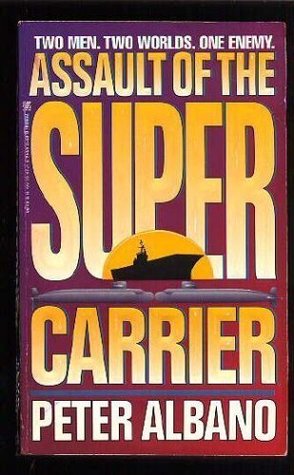
Review: Assault of the Super Carrier

Assault of the Super Carrier

supercarrierfinale

Peter Albano’s Seventh Carrier series comes to an ignominious end in Assault of the Super Carrier. The action has gotten incredibly repetitive, the worldbuilding feels like even more of a toy box, the novelty has worn off for a long time, the characters are horrifically stereotypical, and the base writing just isn’t good enough for eleven books.

There’s two things that make this last entry especially disappointing. The first is the “girl of the book” subplot becoming its sleaziest, most useless, and most distracting yet. The second is that there really isn’t an ending. There’s a battle that feels like every other battle in the series, a victory that should have been an arc-level one at best, and then the novel-and the whole series- just ends quickly.

What I’ve found after searching out books with novel setups is that they alone can’t carry a series. And this is the best example. Take away the goofy “carrier thaws out, jet/rocket engines get insta-zapped” setup, and all you’d have is something like Ian Slater, only with (even?) worse writing and a fixation on World War II military equipment. And like Slater, that’s not enough to sustain a huge amount of books by itself. Maybe the Seventh Carrier saga could have worked with three books. It couldn’t with this many.

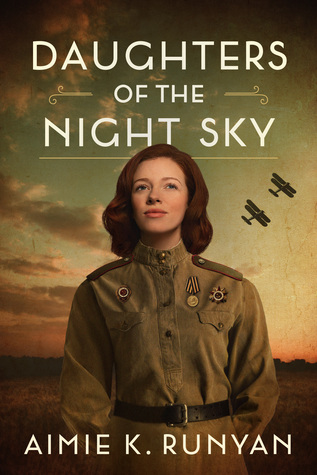
Review: Daughters of the Night Sky

Daughters of the Night Sky

nightskycover

With Aimie Runyan’s Daughters of the Night Sky, Fuldapocalypse moves into yet another new genre-the Romance Centered Around Night Witches. It’s a little tricky to review, but I’ll try. The first “issue” is that this is obviously chick-lit, which is not something normally associated with the Eastern Front, for good reason. That the heroine falls in love with an artist is kind of the icing on the cake.

The second issue is that it feels like chick-lit and not like characters who are actually in the middle of a horrendous world war. What this came across as was “romance characters, plus add a few obligatory flying scenes and the occasional stereotype like a reference to blocking detachments.” While the author admits she wasn’t that knowledgeable about Russia or military aviation, it just feels too generic.

And that brings me to the third issue, which is that the actual flying isn’t very good. While I wasn’t expecting Dale Brown and while it’s actually admirable to not try and dwell on something you admit you don’t have much knowledge of, this still falls short. The problem is there’s too much of it and not enough research.

It would be like if a writer was making a story about American football (hey, I’m posting this review on NFL Draft day) and only knew the basic positions, such as quarterback and receiver. This would be obvious to those who read it and knew even a bit about the subject matter, but the writer still insisted on showing several games. This is like that, only with Polikarpovs instead.

As a whole, this is just a fluffy romance novel with World War II flying scenes and the characters having Russian names.