Autoloaders in Soviet tanks

Why did the Soviets so eagerly adopt autoloaders for their tanks? I don’t have any direct primary sources supporting it, but I have some hunches.

  1. Size. Soviet/Russian tanks have always had substantial size/weight limitations for transporting them along the entire length of the rather large country. This explains a lot, including why there was less (which is not the same as no) focus on tanks fighting other tanks, as opposed to using artillery and ATGMs. If the autoloader can make the tank smaller by removing one of the crew, it helps a lot.
  2. Making crew training less relevant. If you have a gigantic force of in-and-out conscripts, you don’t want to rely on something that relies a lot on individual skill.
  3. The third, which I saw in an intelligence piece on the Soviet tank company, stated “in understrength units there may be no loader in tanks other than those of the company and platoon commanders.” I’d really like to see more evidence for this, although it does say understrength.

There’s probably more like how it makes using bigger guns easier, but those are the biggest three that come to my mind. I also like to think of how the inevitable national bias would change if it was, for whatever reason, the opposite. Instead of tales of arm-wrecking autoloaders, there’d be sniggering of “we have high-tech auto-loaders, and the Soviets are still having people stuff the tank with shells-look at how they’d get tired.”
Review: The Gambit

The Gambit

Take a stilted first novel, add a difficult genre, and you have Brad Carlson’s The Gambit. This tale of Iranian plots and the Americans out to stop them reminds me of, if anything else, an even rougher version of Gavin Parmar’s Unseen Warriors. The problem is that technothrillers are harder to do right than small unit thrillers. I don’t want to be hard on the author. This is a first novel, I know firsthand how much effort writing any kind of long fiction is, and everyone has to start somewhere. But I have to be hard on the book.

There’s the clumsy prose, but there’s also the awkward pacing. There’s the action that falls well below even the standards of Marine Force One, but there’s also a ton of conference rooms and really rote instances of military equipment doing its thing (I hesistate to use the term “action” for the scenes describing it). There isn’t even an out-there premise. It’s just “shoot the terrorist” and stopping the most basic and mundane plots, all the while moving through something horrendously unpolished.

There are good independent first novels. This is not one of them.

Review: Black April

Black April

George Veith’s Black April is an excellent chronicle of the final fall of South Vietnam. Taking as many sources as he could, Veith paints the picture of an understudied and underappreciated campaign.

The interior workings of the North Vietnamese are very fascinating and, in my opinion, the best part of the book. This is because the campaign was the biggest example of a Soviet-style army defeating a western-style one decisively. While all the planning texts and documents can show a strict operational plan where everyone adheres to their role, in any reality, friction and human conflict is always there, and this shows an example of it in practice.

Veith is on less firm footing with the southerners. While his goal to emphasize the damage of the aid cutoff and give the southerners a fair emphasis compared to their scapegoating as inept bumblers from start to finish is admirable, his opinions about the primacy of the aid cutoff don’t always match with the examples he shows. This isn’t to say that it wasn’t an incredibly important factor, but the frequent examples are of southern units getting chopped up by better-handled northern ones, not attritional slugfests that only ended when they ran low.

Still, this book is an excellent historical reference.

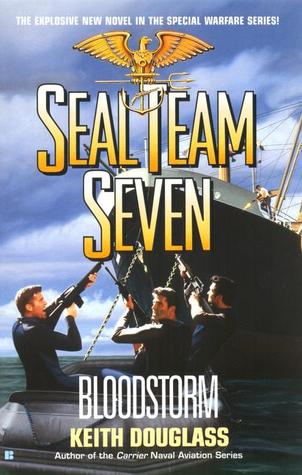
Review: Bloodstorm

SEAL Team Seven: Bloodstorm

st71 cover

A Chet Cunningham SEAL Team Seven novel, Bloodstorm is a strange book. It features a globetrotting chase to hunt down loose ex-Soviet nukes, going everywhere from Libya using them in a Dale Brown-ist fashion to Afghanistan (in a pre-9/11 book) to Syria.

There’s the usual tons of weapon descriptions, including a “Bull Pup” (two words) that matches the ill-fated OICW in terms of what it does. Like Frontal Assault, this is a hyperactive thriller that zips around the world over the span of a comparably short book-and yet it still feels overly padded. Cunningham was no stranger to writing out large quantities of books very fast, and this feels like one of them, with a huge amount of  sloppiness. While a cheap thriller is better off moving too quickly than moving too slowly, there are better books of this type out there.

Personal Notes

So, in light of the coronavirus, especially since my father already has a lung condition that makes matters extra-risky, I’ve been preemptively holing up since starting to feel icky. What confuses matters is that I have pretty bad seasonal allergies anyway, and while I don’t feel the exact symptoms (as of now for instance I haven’t really been coughing), it’s better to be safe.

-What does this mean for Fuldapocalypse, barring some terrible development with me? Either this blog will be a lot less busy (if there’s other stuff I need to attend or am just too sleepy to do much) or a lot more (if I have nothing else to do except read hordes of cheap thrillers and have the motivation to review them).

Review: The Ragnarok Conspiracy

The Ragnarok Conspiracy

Erec Stebbins’ debut in the INTEL 1 series is The Ragnarok Conspiracy. If you can accept A: Politics that are flipped 180 degrees from the stereotypical “shoot the terrorist” thriller (without spoiling much, it involves western antagonists destroying Muslim holy sites from the get-go), and B: Said politics being too-frequently pushed with all the subtlety of an after-school special, it’s not a bad thriller.

The political preachiness is a knock against it, but it’s not nearly bad enough to get in the way of a thriller with good fundamentals. Yes, it’s a rote thriller. Yes, its message doesn’t exactly go well with a main villain who’s the kind of person Blaine McCracken deals with on a daily basis. But I’ve definitely read worse.


Review: The Suns of Scorpio

The Suns Of Scorpio

sunsofscorpiocover

A while ago on Fuldapocalypse, I reviewed the first of Kenneth Bulmer’s Dray Prescot “sword and planet” novels, Transit to Scorpio. That was at least somewhat fun. The second novel, The Suns of Scorpio, is less fun and more pretentious. And after only one book, the novelty of the setting has definitely worn off.

The setting is about a continent wide and a millimeter deep. This wouldn’t be such a problem if it was supposed to be mundane (ie, a world with a convenient near-endless supply of mobsters for Mack Bolan to kill) but it’s intended to be “exotic” and “awe-inspiring”. What it comes across as is nothing more than a literary version of the kind of trashy sword and sandal movie you’d see on Mystery Science Theater. By trying to be more than it is, the setting turns into less than it is.

Of course, the setting and concept are all secondary to the execution in this kind of work. And here it fails even more crucially. Bulmer’s prose is ridiculous without being ridiculously fun. To call it purple would be an incredibly horrific understatement. Yet it really isn’t that exciting. It should be, but it isn’t, since Bulmer just overdoes everything. Especially the descriptions.

To top it off, The Suns of Scorpio ends on a cliffhanger that brings the artificiality of the setting to full force. I’ll just say that after reading this, I knew why the sword and planet genre declined so much in popularity.

(As an aside, with 52 entries completed before Bulmer’s death, Dray Prescot is one of those individual series that far outstrips the entire “conventional WWIII” niche in terms of quantity).

The Motorcycle Regiment

The motorcycle regiment was one of those obscure units in military history. At least according to one Soviet World War II organization, it was essentially a reinforced motorcycle-heavy battalion with motorized artillery and, at least on paper, a tank company, that could act as a forward detachment or be broken up into recon patrols without issue. Some descriptions have them being multi-battalion formations.

A postwar set of field regulations on regimental operations describes it as follows.

A motorcycle regiment (battalion) is a tactical unit (small unit). It is made up of battalions (companies) and other small units. The regiment (battalion) is intended for conducting reconnaissance of the enemy. In addition, it has the capacity to:.
— pursue the retreating enemy, destroy headquarters and signal centers, and disrupt the work of the enemy rear;
— destroy enemy airborne landings;
— seize crossings, important lines,, and objectives, and hold them until the arrival of friendly troops;
— protect the exposed flanks of friendly troops.
The motorcycle regiment and battalion can carry out reconnaissance missions operating as an entity or as small units which are designated as reconnaissance detachments and separate reconnaissance patrols.
Independent of the character of the combat mission to be carried out, the motorcycle regiment and battalion may be reinforced with artillery, tanks, self propelled artillery, small units of special troops, and air support.

The motorcycle regiment was made obsolete by increased mechanization (the recon battalion in later large units fills more or less the same role), but it’s one of those unconventional formations I have a strange interest in.

A Thousand Words: xXx: State Of The Union

xXx: State Of The Union

One of the few comparative advantages that books have over visual media in the spectacle department is that huge feats can be added with no extra cost. The time and money spent on an author writing something is, for most intents and purposes, the same whether the author is writing a nonviolent office romance or a baseball third baseman fighting evil Georgists on the moon.

The flip side is that this makes most thrillers hard to actually adapt. Only the most successful can get movie/TV adaptations, and those have a bunch of risks. Smoothed out, they have many changes. Enter xXx: State Of The Union, the movie that most accurately shows the spirit of the most ridiculous “airport thrillers.”

The original xXx, starring Vin Diesel, was considerably worse. That was a period piece dated immediately in the “90s X-Treme” area (despite being released in 2002). This sequel, starring Ice Cube, manages to transcend all of that. You have stormtroopers in futuristic masks participating in an American coup attempt. You have a tank battle on board an aircraft carrier. You have a finale where a car’s tires are deliberately ripped so it can go on train tracks (where of course it fits perfectly).

Somehow it all added up so that this one and only representation of the craziest cheap thrillers ended up getting on the screen with a budget that did it justice. Something with this exact blend of “amazingly stupid” and “stupidly amazing” very rarely comes around. And that it is why, in spite of all its many, many faults, I just love this movie.

Adding A Tank Manufacturer

So this thought came to me from a throwaway line in Sidney Sheldon’s Master Of The Game about how the main character’s conglomerate started manufacturing tanks in World War I (along with other war material). How hard is it to slip a tank company into an alternate history?

There’s two boring solutions. One is that it’s easy if the story calls for it, with a focus on armored vehicle economics not usually being beneficial to a book (especially a Sidney Sheldon one). Another is that they can, especially during the World Wars, be just a contractor that built tanks designed by someone else (see a lot of railroad locomotive plants in World War II). A third is that they end up as the main winner for a gigantic wartime or Cold War contract and just become what General Dynamics Land Systems (to give one example) is in real life. A fourth is if severe politics (read-no reliable import partners) are involved.

But privately designed tanks for private sales? That’s tricky. There’s really only a few windows, the interwar and middle Cold War periods. Otherwise, you just have a glut of WWII surplus/early Cold War military aid or an equally huge one of advanced technology/later Cold War surplus.

And even then, for every success like the Vickers MBT, you have failures like the AMX-40 and Osorio, to say nothing of one-customer wonders like the Stingray. Both political power and economies of scale are tough to overcome. Yet there’s always the chance of getting an export order and then having the exported tanks do well enough to trigger more interested customers. It still isn’t going to come close to the T-55 or Patton, but it can work.