Review: Russian Air Power

Russian Air Power

The 2002 book Russian Air Power, by Gordon and Dawes, is something I was eager to get for the sake of seeing a past snapshot. I was not disappointed. Sure it’s dated (including a laughably inaccurate prediction that by 2010 the Russian Air Force would have streamlined down to three platforms, including the PAK-FA), but I expected it to be dated. A slightly worse criticism is how the doctrinal specifics of a high-intensity “air operation” are left a little vague for my liking.

But I have the Heavy OPFOR stuff for that, and the rest of the book is good. That I already knew much of it was no knock against it. And the part about the air force’s role in the Chechen Wars is excellent (and further reinforces my belief that, despite huge investment in the twenty years since, it may have actually regresssed from that in terms of overall capability in the early part of the Ukraine War.)

If you can get this book, do so. It’s a good historical reference, and Dawes keeps a lot of Gordon’s issues in check.

Review: The Churchill Memorandum

The Churchill Memorandum

Sean Gabb’s The Churchill Memorandum is an alternate history spy thriller taking place in a world where World War II was averted due to Hitler’s death in 1939, the libertarian British Empire rules strong-and the US has devolved into a dictatorship complete with a “Republican Guard”. It’s one of the hardest books to review.

See, this may be the most extreme example of “alternate history as a setting” I’ve seen. By itself, the book is nothing but a 51% installment in a genre that, while not disliked, isn’t my first choice. But the setting, oh boy. The setting combines a big dose of L. Neil Smith-style libertarian utopianism with a British version of “libertarian” nostalgia for something you’d think wouldn’t be appropriate. In this case, it’s THE EMPIRE. You can be forgiven for wondering “isn’t an empire using the power of the state to a great degree to suppress others”.

Anyway, the setting goes farther than that. Historical British politician Michael Foot is portrayed as a supervillain who dissolves his victims in pits full of acid. His associate in the League of Evil is Harold Macmillan.

This book is kind of like a 1980s hair band that dresses extravagantly but plays the most mundane pop. The surface is crazy, but what’s behind it isn’t really. Ok, except for Michael Foot’s Evil Tub of Acid. That has to count for something, right?

Weird Wargaming: The Jeep Compass Army

Using variants of civilian vehicles from Model Ts and Rolls Royces in World War I to the omnipresent Land Cruisers and Hiluxes of today is nothing new. But I saw a proposal from an Indian armoring firm (which also advertised the boxiest armored vehicles ever) for uparmored Jeep Compasses, and my brain sparked. After all, compact crossovers like it are so common now, so why not send them to war? This isn’t like the classic jeep, even in its latest form.

Well, there’s obvious reasons against it. It can barely fit five normal-sized people without wargear. Five big soldier men with all their equipment would probably be a nonstarter. You could use it as a pure weapons carrier-but the disadvantages of that would be obvious as well. There are plenty of off the shelf SUVs far more suitable… but I don’t care.

The Compasses would be used by recon/raiding teams, being too small (regardless of how many people you can stuff inside) to be a line carrier. The least bad option, of gun vehicles, involves a crew of three with extra munitions in the (gulp) trunk/back. Even then, the Compass has a max payload of only around 1,100 pounds/500 kilograms. Which would probably have been eaten up by the armoring, but I’ll let it slide for now.

So, here it goes:

  • Command vehicle: Unit commander, driver, comms equipment, aide, maybe lighter machine gun RWS.
  • Personnel Carrier: Driver, 2-4 additional troops, lighter machine gun RWS.
  • Weapons Carrier: Driver, Gunner, Commander, either light missile or heavy machine gun.

The number of vehicles of each type depends on the exact mission. And the Jeep Compass could be replaced by any light SUV. And I do not recommend actually trying these small light SUVs unless you have no other choice.

Review: American Secret Projects: Airlifters

American Secret Projects: Airlifters

Craig Kaston and George Cox’s two volume series on American airlifters is one of the main reasons for the recent fascination I’ve had with these cargo-bearing beasts. Like a lot of books in the series, both are excellent. However, one of the volumes outshines the other, though through no fault of the authors.

The first volume is well-written and illustrated, but it describes a time period where, for the most part, it’s just variations on big-bellied freighter aircraft. The second volume has a lot of those too, but also has weird shapes, VTOLS, napkin company projects that make Mukhamedov and Stavatti look like Boeing and Airbus, and so much more.

If you have to get one book, get the post-1961 volume. But both are well worthy of any aviation history enthusiast’s bookshelf. Fair warning-you may twist your brain into a pretzel trying to estimate just what some of these oddballs can and can’t transport. It’s what I’ve been doing a lot, and I have no regrets.

Soviet-Romanian War: The Chronology

I finally have a set chronology for the course of the Soviet/Romanian alternate history war I keep posting about. And yes, I’m now running three WIP books simultaneously.

Using the classical best-case 60km a day (on average) rate of advance, the Soviets would cross Romania in a little more than a week. Under their 70-100km guidelines for weaker opponents (which it’d definitely qualify as), it would fall in 5 days (too optimistic)[1] However, the same sources drop their rate to 30 km in mountainous terrain, found in central Romania.

The Bulgarians take an outsize share of the casualties. In part, this is because of the difference in both skill and equipment (in 1989, the Bulgarians historically still had T-34s equipping their reserve formations!). It’s also because of them having to cross the Danube opposed, never an easy task.

Bucharest, with its population of 2 million people, is not initially stormed in full. Instead it’s surrounded, left for the Bulgarians to keep encircled, and squeezed while the rest of the country is overrun. In around two weeks at absolute most, it is.

In a nod to the Gulf War, BARCAPS are placed to keep the doomed RoAF from escaping to Yugoslavia…. but the majority of planes that make it across due so to Hungary, the longtime rival, instead.

The stumbling block I had because of how much it depends on the story is what would happen to Ceausescu. Whether he successfully escapes, tries and fails to escape, gets couped, or killed/captured by the Soviets (keeping in mind he’d be very old and was in terrible health already in 1989). Of course, now I’ve found a solution that I can work into the plot…

Regardless, it ends in considerably less time than the current Russo-Ukrainian War has already been going on for (which is why I feel comfortable posting this now.) Using MCOAT with variables and unit sizes that I feel are close enough, casualties amount to:

  • Union of Soviet Sovereign Republics: Circa 3,500 killed, 14,000 wounded to varying degrees.
  • Bulgaria: Circa 6,500 killed, 26,000 wounded
  • Afghanistan: Circa 640 killed, 2,900 wounded
  • Romania: Circa 47,000 killed, 131,000 wounded [around a quarter of forces deployed at least hurt!]

These calculations assume nine days of high-intensity combat. Bulgarians and the Basic Forces divisions would take a large share compared to Mobile Corps with better armor, equipment, and medicine.

The result is a regime installed made up of local collaborators and those with some ties to Romania. Occupation duty is largely left to the Bulgarians and Afghans. Although prewar Romanian doctrine called for guerilla fighting, there isn’t terribly much stomach for it from the apathetic, shell-shocked population. Much of Romania’s population flees during and after the war, primarily to Hungary and beyond.

And out of it emerges, among other things… a mystery. Or several mysteries….

[1]The coalition managed a rough 45 km a day in the Gulf War, against a weak opponent in open terrain, and 30 km in the conventional phase of the Iraq War, with a pause and while facing the rougher areas of Iraq itself.

Review: The Iraqi Army

The Iraqi Army: Organization and Tactics

The NTC special text dubbed “The Iraqi Army: Organization and Tactics” is a valiant attempt at quickly trying to adapt to a different enemy. While the Iraqis used lots of Soviet equipment, their actual doctrine was more British-based on paper and often varied from both (usually for the worse). Just all on its own, it’s a fairly conventional and standard OPFOR document. But I find the context incredibly fascinating.

Like in Lester Grau’s much later The Russian Way of War, a tightrope had to be walked between the observed performance and the theoretical doctrine. Given the latter country’s vast paper trail and its known obsession with quantifying everything, separating the two was/is an easy task. As is/was noticing when theory inevitably diverged from practice, from Grozny to Hostomel.

Here, not so much. The Iraqi Army was notoriously slapdash, so the challenge was even greater. One example I like is that an Iraq War wargame supplement even told the player not to try and use any kind of standardized formation for them at all (!). On the more important doctrine, it acknowledges the flaws shown in the war with Iran, but cautiously and wisely goes with what can be paraphrased as “This may have been an aberration, treat them as a mechanized force worthy of their equipment”. That in many cases they turned out not to be showed the importance of assuming strength rather than weakness.

As a primary source, this is a very interesting snapshot. Plus it’s in the public domain and available readily now.

Even Cheapies Are Expensive

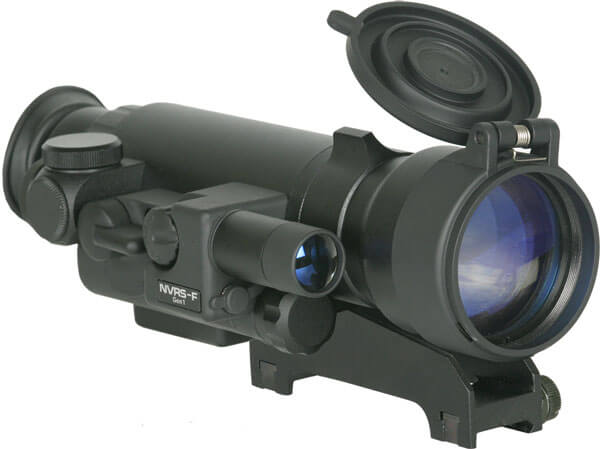
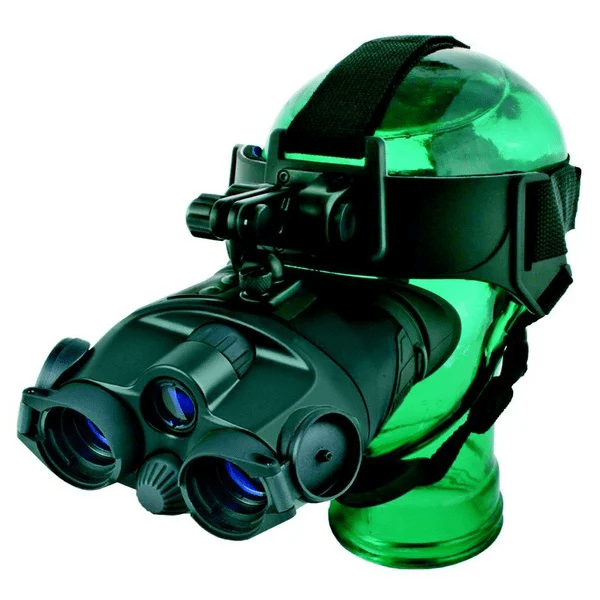
So take these cheapie eastern night vision division devices: Good for a range of 150-200 meters depending on context, around $700 a pop. Both goggles/binoculars and rifle scopes for different contexts.

Yukon Tracker
Yukon NVRS Scope

To equip the line personnel (defined here as those in the actual fighting regiments/brigades) of one small division in the absolute most oversimplified fashion would be around $7-10 million, depending on the exact size. Getting around 5,000 sets, but then there comes the hard part: Maintaining 5,000 sets, keeping track of 5,000 sets, making sure that those 5,000 sets aren’t lost (via honest or dishonest means…), and so on.

Now apply this to almost any even slightly expensive piece of military equipment and you can see why, for instance, Egypt still issues its draftees equipment left over from the Yom Kippur War. That’s an extreme example, but you can see how even the individually “cheap” stuff can be expensive, particularly for less funded armies. And you can see both the political and military advantage of reserving such a thing for “elite” units if one has no choice but to only acquire a limited number of said items.

And you need a lot of stuff, to the point where it’s almost an “I, Pencil” situation. Boots, uniforms, load bearing equipment, helmets, packs, shelters, it all adds up. The bottlenecks can appear where you wouldn’t think they would. For instance, many people know of WWII Germany’s fuel shortages, and historians know of their special alloy shortages, but what a lot of either don’t know is of their cotton shortage resulting in less effective leather load bearing equipment.

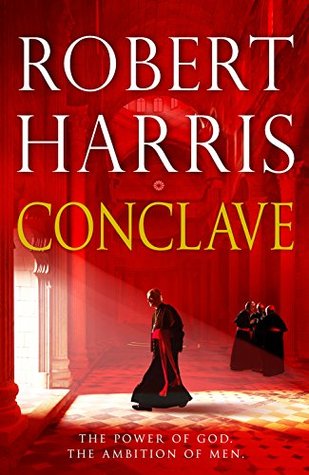
Review: Conclave

Conclave

There’s this only half-joking thought I’ve often stated in regards to book writing that, if you’re stuck, just write the characters fighting a bunch of crazy bikers. This is a lesson I learned from The Survivalist. And I saw something like that in a place I didn’t expect.

Robert Harris’ Conclave is the tale of a papal succession by a well-known author who’s written the alternate history classic Fatherland. He does not have the cardinals face off against crazy bikers. But he does have them encounter what seems like everything else. The writing itself is often good, and certainly Harris’ skill is on display. The setup of the book is excellent, save for a contrivance where a secret cardinal manages to slip into the conclave in spite of historical precedent.

…And then the plot goes off the rails into more and more melodrama. One of the papabili is felled by baby mama drama. Then another, who steered the baby mama into the Vatican to crush his rival, has his machinations uncovered and his candidacy sputters. Then the main character finds the papal equivalent of Regina George’s Burn Book and metaphorical chaos happens. Then there’s a terror attack outside the chapel (really) and literal chaos happens.

With all of the rivals having shot themselves in the foot (and the book has gotten to the point where a papabili cardinal pulling a Plaxico Burress wouldn’t be surprising), Mr. Sneaky Cardinal then becomes pope. Then in the final twist, it turns out that the new pope was born a girl , mixing the Pope Joan legend with the likes of such highbrow epics as Fate Stay/Night and Sleepaway Camp. The book ends with Pope Joan Angela Saber I Innocent XIV taking the throne.

I mean no transphobia, and think that you could make a perfectly tasteful, good, and profound novel with that (and its discovery) as the premise. But as the biggest swerve in a book full of them, it still comes across as bizarre and tacky. Even if the concept is quite doable, the execution here falls flat.

In fact, as another review in the conservative Catholic World Report has noted, Harris’ sources in the acknowledgements are a little questionable. Imagine a military novel where the sources are well-intentioned and good-hearted but obviously slanted antiwar activists and axe-grinding Pentagon Reformers, and you can get an idea for how skewed this is (even if I agree with a lot of it on the merits as a nonreligious descendant of Lutherans).

This isn’t the equivalent of one of the worst popes ever. But it isn’t one of the best either.