A Thousand Words: Sonic Adventure

Sonic Adventure

I was a child when Sonic Adventure first came out on the Dreamcast. I was also one of the rare few who got to see it new and firsthand. At the time it looked impressive. Now with hindsight, it’s basically the Yak-38 of video games.

The Forger was basically a tech demo of a V/STOL fighter that got shoehorned into being an operational aircraft out of desperation. It was horrendously underpowered and unsafe. Likewise, this is a massively erratic way to show off all the things the Dreamcast could do more than an actual game. Sonic himself is a barely controllable pinball. Everyone else is there to represent something “new” and “amazing”. Tails can fly. Knuckles is there to have the same kind of collectathon gameplay pioneered in Mario 64. Amy-uh, does, basic puzzle stealth? Gamma the robot does third-person shooting by way of locking on, and Big the Cat infamously has that classic element of a speed game: Fishing. Slow paced fishing at that.

The cinematography in the cutscenes is utterly horrendous with the slightest point of comparison to anything else. And this introduced the storyline elements that would explode to horrendous proportions in Shadow and 06 and remain with the series even to this day. Which is to say, a combination of mystical mumbo-jumbo, Dr. Robotnik/Eggman messing with something he shouldn’t, and tons of new characters with each installment.

What I consider interesting is that Super Mario 64, made by Nintendo from a position of strength, did not do anything like this. It kept the same basic excuse plot as the past installments, and didn’t feel like it had to push anyone new very hard. Sonic Adventure, made by Sega from a position of weakness, had to stretch, and it failed in that regard.

The tragedy of this for the series was that instead of trying to improve the fundamental controls, Sonic Team focused on one gimmick after another. Mechs, teams, guns, telekinesis, anything but razor-sharp platforming. Adventure didn’t cause the famous 3D pit all by itself, but it started the process of digging.
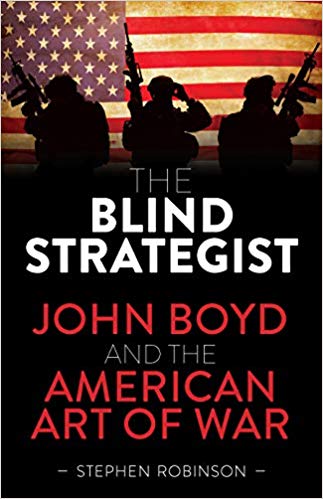
Review: Blind Strategist

Blind Strategist

I’ve wanted a book that dove deep into the excesses of supporters of so-called “maneuver warfare”. In Stephen Robinson’s Blind Strategist, I finally have it. How is it? Mixed. Thankfully, it’s the kind of mixed that makes for a good review.

The book is nominally aimed at John “OODA Loop” Boyd. However Boyd, due to his aversion to writing anything down, his own constantly shifting imagination, and his uh, “difficult personality”, is hard to pin anything on. I do not think it’s a coincidence that Boyd’s teachings are excellent in general terms but almost never work for anything specific.

Blind Strategist spends most of its pages slamming Basil Liddell-Hart and William Lind, who did not have an aversion to writing anything down. It also talks of the Wehrmacht Legend that drove maneuver warfare activism, and defends the oft-criticized William DePuy and his “Active Defense”. (I agree with almost all of the substantial criticisms of Active Defense, but think that in the mid-1970s, the post-Vietnam US Army needed to walk before it could run). Finally, it tries to hold maneuver warfare responsible for the Iraq War’s struggles. Even I think this is going too far, and it doesn’t exactly sound convincing.

Even in its main thesis, this comes across as being overly nitpicky and a little straw-mannish. I do not believe that even almost all of the most devoted maneuver practitioners would deny that there comes a point where you have to close and destroy. Note that I said “almost all”…

…Because Lind is one of those obsessives. And here, weirdly, Robinson arguably doesn’t go far enough. Blind Strategist neglects Victoria, a fantasy where indeed, just doing the right principles and following the right footwork causes the Mary Sue’s enemy to collapse totally without the need for a slugfest. It rightly talks about him trying to shove “third-gen” maneuver war into “fourth-gen” unconventional war, but doesn’t elaborate (and should) on just how he jumps right back to his third-gen map exercises at the slightest opportunity.

I feared this book would go a little too far in the opposite direction, and it does. But I can understand, given the maneuverist min-maxing, why it would do so. I don’t blame Robinson, and if there is room for extreme pro-“maneuver” arguments, there’s also room for extreme reactions.

A Thousand Words: WMMA5

WMMA5

Grey Dog Software’s World of Mixed Martial Arts 5 is an excellent mixed martial arts simulator/tycoon game. It’s best to keep your game worlds small as loading times are still an issue, but that’s the only (small) sour note in a very sweet game. As a tycoon, you can participate in building your own MMA empire, and learn the hard way that trying to do right by either your fighters or your fans has financial consequences.

Or you can just smash the figures together in the game’s Quick Fight mode, which is where I spend most of my time with it. The character editor means you can create anything from all-rounders to monomanical specialists who can’t strike or can’t grapple (or both!) As MMA has even more “moving parts” than boxing, making a proper sim is tough. Thankfully, this delivers.

Review: Invasion Downfall

Invasion: Downfall

DC Alden’s Invasion series is infamous. After reading Downfall, the first installment in the series, I soon found that this infamy is completely deserved. First, the obvious part: This is a book about an Islamic superstate invading the UK. And it has the politics you’d expect from such an invasion novel. Yes, there’s a lot objectionable about it, including the “traitorous fifth column in waiting” trope taken to extremes even by the standards of the genre.

Of course, I found something else objectionable, which is that it started off in a conference room. And we see a lot of those, and not in a well-handled way. At least the “setup phase” isn’t too long, even if what’s going to happen is completely obvious.

When push finally comes to shove, the military action is not exactly a rival to Larry Bond. The enemy uses a surprisingly bland array of mostly western equipment (not helped by later editions trying to make it “contemporary” by erratically changing names), and there are iffy set pieces like an E-3 letting itself get in range of a short-range missile. The infamous “strong but weak” trend that I was already on thin ice about picks up. “The horrible hordes can easily overrun England-but they can lose multiple strategic aircraft in one battle with named characters.” Like a slightly less intense version of Joly’s Silent Night, nearly all of the British military is incapacitated by irregulars before the conventional forces land.

Just a little bit more research and/or imagination would have made the battles a lot better. As would having the opponents actually earn their victory in Operation أسد البحر. The actual book is a “get the conference rooms right, but not the battles” mediocrity.

Review: The Soviet/Russian Aircraft Carriers

The Soviet/Russian Aircraft Carriers

It’s time to ring in the new year with…. another history book. This one is Simon Beerbaum’s book on Soviet and Russian aircraft carriers. It’s not just about the Kiev and Kuznetsov classes, which I feared it might have been. On the contrary, it has everything from pre-WWI czarist proposals to post-revolution plans for converting surplus ships (with limited technology/resources, it would have been easier to finish a large warship as a carrier rather than an armored, big-gun battleship) to never-weres like the Ulyanovsk and Project 11780 Kherson “Ivan Tarava” helicopter amphib based on the Kiev.

This is an amateur enthusiast project, so it has issues with formatting and inconsistent quality in the line drawings. Those are small issues, and if I had a bigger gripe, it’d be that far too little attention is given to the actual air wings of those carriers-the entire reason they’re built. It’s vague, especially when there’s no shortage of equally fascinating never-were carrier planes as well (from the Yak-141 to navalized MiG-23s to other exotics).

Still, this book does what it sets out to do. For a country whose carriers have arguably all been prestige peacocks, a lot of designs were made. If you want an intro to these flattops, you could do a lot worse than this book.

Fuldapocalypse Year In Review

While 2020 was a bad year for everyone, my 2021 was excellent. I made and released my first full-length novel, The Sure Bet King. It was the most fun I’ve had writing a book-ever. Really, it was a great experience. I got to write in a genre I knew nothing about when I started the blog, and know I could do a 100,000 word book.

Writing it was so smooth and fun that I actually thought I could just go right in to making the next book, which didn’t quite click (yet). But one full-length novel is better than none, and that it was a “pop epic” inspired by the likes of Sidney Sheldon (an author I didn’t know about when I started the blog) and about sports betting (A topic I didn’t know nearly as much about when I started the blog) made it all the sweeter. It really showed how the blog’s diversification paid off.

I actually found that in many ways, writing a big-scale book that took place over a long period of time was actually easier than a shorter, narrower-scope one. I could add varied scenes without having them feel like just padding. Of course, now I have the desire to make a more conventional action thriller…

Review: Small Unit Tactics

Small Unit Tactics

Because of a desire to write action scenes that are at least slightly more maybe, kinda-a-little more realistic than “hand cannons and elbow drops”, and because I’m a sucker for instruction books, I’ve been dipping into visual tactical guides. These are the kind of things the infamous Paladin Press would publish, and aim to translate from field-manualese to English (a more charitable interpretation is that they’re aimed at genuine military personnel and try to make legitimately important stuff clearer). One of them is Matthew Luke’s Small Unit Tactics. How is it?

This book focuses almost entirely on the ambush. Because I actually enjoy reading field manuals for fun, there wasn’t a lot I didn’t already know. But this is a clear example, and it talked about ambushes in a way different from how I’d previously read about them. Maybe because I had read so much about irregular forces, the type most firmly in my mind was “fire, do as much damage as you can, and then immediately try to escape”. The book talks about a further close assault, and labels that kind a mere “harassing ambush”, used mainly for deterring patrols/reaction forces.

This is a good resource for fiction writers and/or armchair generals. The pictures and photos (mostly of military exercises practicing the type of actions written in the book) are well-done, the text is well done, and it can be applied to almost any type of formation. Yes, the classic OPFOR has the simplest foot infantry tactics (unitary squads deploying in lines), but those unitary squads are still capable of launching an ambush. It’s not the be-all-end-all of research, but it’s still a very good component.

Review: Once an Eagle

Once an Eagle

A fairly long time ago, I received Anton Myrer’s Once an Eagle as a gift, because I liked books on military fiction. This book is a classic of its genre and is very highly spoken of. The only issue is, well, I didn’t like it very much. Granted, my first impression of it was clouded simply by a mismatch of tastes. To me (esp. at the time), “military fiction” meant Dale Brown-style thrillers. This book is a sweeping pop epic that just happens to have the American military as its setting, the way my own The Sure Bet King has the underground sports betting industry or Susan Howatch’s Sins of the Fathers has the New York banking industry.

However, even accepting that it’s an orange rather than an apple, I still don’t think it’s a very good orange. Main character Sam Damon is an obvious and massive Mary Sue, and the Manichean nature of the book doesn’t really suit a horrifically complex subject. Maybe if Myrer’s writing fundamentals were really good, they could have saved the book. They aren’t.

You could definitely do (and people undoubtedly have done) a gigantic, excellent pop epic on a long military career. But this is not it.