The 57th Kirov book, The Mission is a delightful change of pace. For a start, the absolute basics are changed. It’s less of a long, big, every-tank-and-every-missile wargame lets play like the past two seasons. This alone makes it preferable to the formula that was wearing out its welcome after sixteen previous installments.
The setting is also different. And by different, I mean “a lot more awesome”. There’s not only a change of scenery back to the Russian Civil War and airship fights, but the ridiculous goofy time manipulation and mystical elements come back with a vengeance. It reminds me of the later Payday 2 metaplot, and I say this as a total compliment.
This book was a lot of fun, the most I’ve had with Kirov in a while.
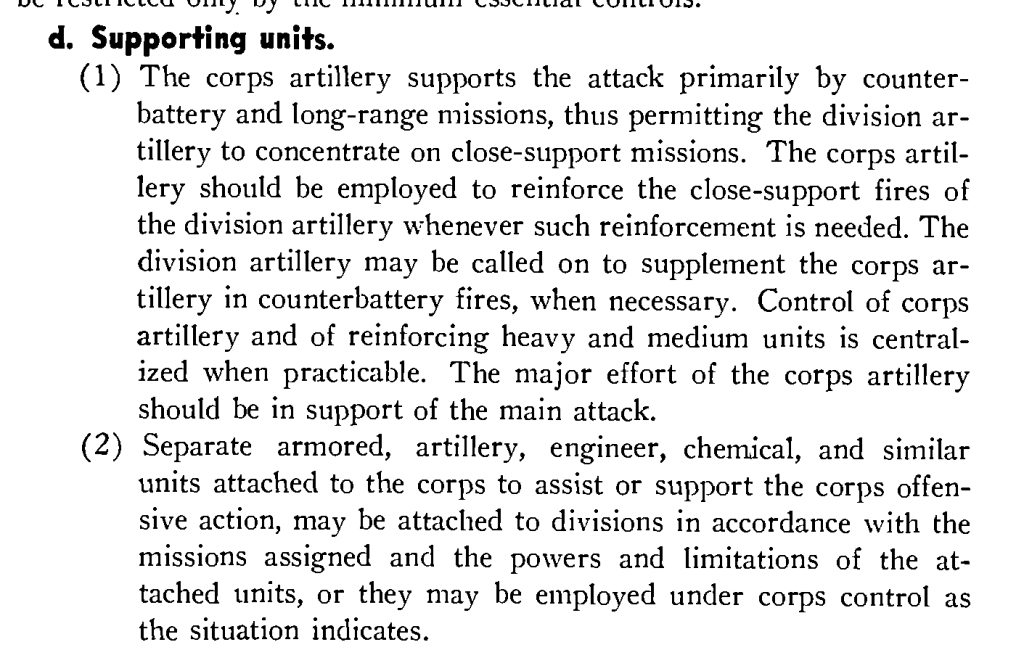
The American FM 100-15, from a similar time, had a similar statement.
As far back as 1923, the regulations explicitly state:
“The primary mission of corps artillery is the destruction or neutralization of hostile batteries, the destruction of hostile defenses, and long-range interdiction fire.”
As technology has consistently improved, command has “flattened”, and the understanding of its role has become more obviously apparent, more recent documents don’t spell it out so exactly. But the general concept is still there and present.
Mark Ciccone’s Dixie Curtain is an alternate history thriller set in a Confederate victory North-South Cold War.
The first important thing to note is that the worldbuilding is very much in the vein of “soft” alternate history, with a lot of obvious parallels and historical figures still in the same places and times well after the point of divergence. This is not a bad thing-mostly. At times it gets a little too much in terms of parallel historical figures used, but for the most part it works with the style it’s going for.
As for the actual book, it’s a a solid cloak and dagger thriller beyond its setting. The genre isn’t my favorite type of cheap thriller, but I still liked it. I recommend this to people who like spy dramas and/or alternate history.
So bizarre crossover fanfics are nothing new. Yet this ultra-bizarre crossover fanfic idea/fusion has just leapt into my mind after seeing a few strange similarities and having my eyes light up. It’s My Next Life As A Villainess/Hamefura and-the “Ryanverse”, specifically (gulp) The Sum of All Fears. Granted, part of the appeal is just the strangeness.
The first spark is the reincarnation of “Monkey Girl” (her pre-reincarnation proper name is never given but that nickname is) being weirdly crossover-friendly. It’s impressive that it’s character-focused. Take a good-natured and sometimes right-twice-a-day (her obsession with farming, thinking she would have to fend for herself, was actually sound) but clueless about human relationships person who thinks the world runs on video game logic, and there’s a surprisingly high number of things you can do with it.
The second was how the original pre-reincarnation Katarina was a vindictive, hate-sink villainess. Who else fit that bill? Elizabeth Elliot, whose novelty made her one of my favorite technothriller antagonists. So there was a bizarre mutual overlap already. But my brain didn’t stop there. Oh no, because of the thought of bringing otome game logic to one of the most male genres in existence just felt amazing. So The Sum of All Hearts would star analyst Cathy Ryan. She’d have a man named Jack as one of several love interests, having to pursue one of them while at the same time trying to stop a nuclear war. It would be something.
Granted, the specifics would probably wreck it, but why worry about such things as “details” and “plausibility” when you have such a delightfully mushed-up concept? And hey, it’s not really any farther from Clancy’s original tone than some of the other “Tom Clancy’s” label franchises are.
(Come to think of it, “Rainbow Six” [with that number of love interests] could be the title of a romantic game…)
Sidney Sheldon’s Morning, Noon, and Night is one of his later books, beginning with a ruthless billionaire falling into the sea off of his yacht and dealing with the subsequent power struggle. It is also one of his worst. How so? First, the obvious needs to be stated. Like every single other one of Sheldon’s books, it’s “gilded sleaze” with simple, easy prose. However, this takes things in different directions. And they’re not good directions.
The prose seemed even more bare-bones than the norm for the author, going from a strength to a weakness. More importantly, the book tried to be an outright thriller at times instead of a “pop epic” chronicling a tawdry saga of wealth and romance. Sheldon’s writing style just isn’t suited for pure thrillers, and this exaggerated version of it was even worse.
Also, the stakes seemed petty (with the wealth of its centerpiece character told more by telling than showing), and the plot was confused with a lot of loose threads and super-quick wrap ups. Sheldon has written a lot better, so I don’t recommend this book.
It’s time to review another light novel with an overlong title, this one being Kanata Satsuki’s I Refuse To Be Your Enemy! Now, a bit of explanation is in order. Much as how Mack Bolan spawned a glut of mobster-slaying vigilantes, thus the success of Hamefura led to a ton of “reincarnated as a previously doomed video game character” tales that continue to this day. And this is no exception, with game villainess Kiara Credias realizing her predicament and trying to change things.
The problem with this compared to My Next Life As A Villainess is that the latter didn’t go the easy route of just munchkining through with foreknowledge. Instead, Katarina tried to munchkin her way through with foreknowledge and it didn’t work (except it did in that she survived happily). In this case, the “win through foreknowledge” is played much straighter. This is both less amusing in its own right and clashes with the still-present goofy antics.
While this isn’t technically bad , it’s still little more than a 51% book.
Soviet Military Operational Art: In Pursuit of Deep Battle
David Glantz is one of the most famous and prolific western Sovietologists. In his 1991 Soviet Military Operational Art, he took a big yet close look at their conduct of campaigns, from theory to practice, from the revolution to the then-present. As with everything he’s written, it’s dry history. But it’s excellent for what it is.
Special focus needs to be given to his looking at the more obscure and lesser-known periods of Soviet military history, such as the revolution and Russian Civil War itself, the interwar period, and the immediate post-WW2 one. These tend not to get as much attention as WWII itself and the 1980s hypothetical WW3s, but are just important historically and frequently very different tactically. Looking at the layout of a Russian Civil War division, so different from the formations I knew, I thought “this was like when baseball pitchers threw underhand”.
The book is still a little dated in some areas, and has a few issues. I think the most glaring one is Glantz overstating the effect of the Stalin purges. While they didn’t help the Red Army, looking at later Russian sources gives me the impression that its biggest problem was expanding too much too quickly and that the purges were just the icing on the cake. Khrushchev-era politics would give an obvious incentive to blame Stalin directly for as much as possible.
But this is a small issue and the book itself is still excellent.
It’s the 25th anniversary of Pokemon, the series of my childhood. And one generation stands out in particular for me-Generation II, more specifically the Silver Version. However, I also feel like this particular generation happened at exactly the right time, when I was young enough to be in total awe but old enough to appreciate it.
I’d say Gen II felt alive in ways that neither Gen I or III did. There’s a clock, and visible day-night progression. Certain events only happen on certain days of the week. There are two regions, both of which look and sound distinct. It feels impressive.
Of course, two regions also lead to something I did notice even at the time-its horrible difficulty progression. Most of the early game is an absolute cakewalk, to the point where I think Whitney’s infamous Miltank gets its memetic status purely because it’s the only even slight challenge in an otherwise effortless journey. Then the difficulty jumps big and stays there.
If I was to replay Gen II now, I’d say it almost certainly wouldn’t impress me nearly as much. But it will always have a place in my heart that none of the other (worthy and enjoyable) games did.
Yes, I know this title sounds like a contradiction. Yet the irregular opponent operates in tiers.
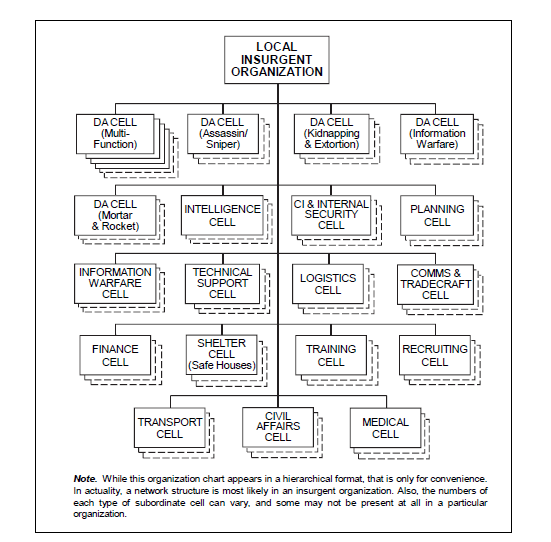
At the “bottom” tier of organization, as per Training Circular 7-100.3, Irregular Opposing Forces (source of diagram), there is what that document calls “insurgents”, ones devoted purely to doing damage.
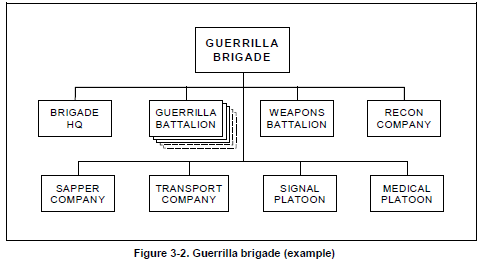
Next are what it calls “Guerillas”. The definition is “
“A guerrilla force is a group of irregular, predominantly indigenous personnel organized along military lines to conduct military and paramilitary operations in enemy-held, hostile, or denied territory (JP 3-05). Thus, guerrilla units are an irregular force, but structured similar to regular military forces. They resemble military forces in their command and control (C2) and can use military-like tactics and techniques.”
(Bolding added by me)
The document holds “guerillas” to be more organized and more capable of conventional-ish action than “insurgents.” It lists (obviously rough) organizations up to brigade size.
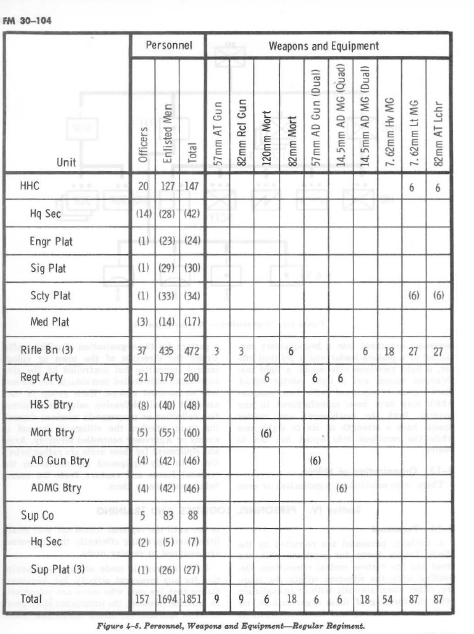
Then it gets trickier. Then there emerges “regular forces” that are intended to fight and hold ground conventionally. The Vietnam-era “Handbook on Aggressor Insurgent War” (FM 30-104, 1967) has a sample regiment of these regular forces organized as follows.
FM 30-104 rightly notes that these are organized similar to conventional Aggressor rifle regiments, only with lighter equipment. This flows right into the highest tier, consisting of…
Forces trained and equipped similarly to their external patrons (since very few unconventional forces can grow this powerful without outside backing). These are less interesting from an organizational standpoint, as the only things really distinguishing them are the origins of their forces and sometimes skill.
Irregular forces that have the size and equipment to succeed at conventional operations. These will have de facto infantry, motor vehicles (the infamous “technicals” ) and a smattering of supplied/captured AFVs, operable in what would be considered “detachments” in more structured armies in terms of their size and (lack of) organization.
The third volume of My Next Life As A Villainess takes place after the original planned ending of the story. In-universe, it takes place after Katarina has “beaten the game”. There’s two reasons why this declines in quality. The first is that the second volume was such a good stopping point that it feels a little wrong (even if understandable) to go past it. The second is that the setup just really isn’t that deep, so it’s especially vulnerable to getting worse as it gets bigger.
The structural fundamentals present in the past two books are still there, for better and worse. But it’s definitely lost something. Going from “someone tries to munchkin a setting through foreknowledge and successfully ‘fails’ because she thinks it’s still railroaded when it’s not” to just “light fantasy antics” is a big step down. There’s a reason why, despite enjoying the first two installments, the third is the last I’ve read, with little motivation to keep going further.



 Fuldapocalypse Fiction