
See, Buckshot Roulette is one of the most crossover-friendly setttings imaginable. All you need to do is put the crossover character into the game. Since it’s implied to be some kind of supernatural dream anyway (at least in one mode, it’s a long story), you can go into their psychology as they face off against a floating head and heads and repeatedly shoot themselves in the head for a mid-six figure paycheck.
Author: coilerxii
Review: Flight of the Intruder
Flight of the Intruder
Well, I finally did it and read a classic Vietnam War aviation novel, Stephen Coonts’ Flight of the Intruder. The joke before its infamous film adaptation was released was “Fighter pilots make movies, bomber pilots make history.” Afterwards, it was “Fighter pilots make movies, bomber pilots make bad movies.” Having not seen the film yet (and not likely to sneer, as I enjoyed Iron Eagle of all things), do they make bad books?
The answer in my opinion is kind of but not really but also kinda? Coont’s first novel, this is basically Herman Melville but with A-6s. Read the long, long sequences of a plane doing plane things. The sequences of an attack run. The sequences of a carrier landing. The sequences of doing naughty things in the Philippines. You get the idea. Thing is, even though I didn’t really care for these, I could see the appeal, especially to a non-expert reader back in the past.
So this is another one of those “have I been skewed against this?” books. And there could be worse.
Review: The Machiavelli Covenant
The Machiavelli Covenant
Allan Folsom’s The Machiavelli Covenant is the story of people walking around Europe in search of a nebulous conspiracy. Kind of like his first novel, The Day After Tomorrow, where people walked around Europe in search of a nebulous conspiracy that involved Adolf Hitler’s preserved head. Here it involves the kind of thing that Jon Land would make and make amazing through ridiculous set pieces. Except here, there aren’t any and the whole thing has a poker face that would have given it millions of earnings in the WSOP.
Well, the set pieces technically are ridiculous, but not in a “wow a monster truck chase” kind of way. More like “ok, it’s the twentieth chapter of people getting in and out of cars.” It’s ridiculous in a not-so-fun way, not a fun way.
I truly believe this book could be a quarter of the length it actually was and still work. I hope it was due to some length obligation by the publisher, but given Folsom’s other work, I really doubt it.
A Thousand Words: Buckshot Roulette
Buckshot Roulette
A minimalist and creepy horror/puzzle/party (seriously) game, Buckshot Roulette is “what if instead of a revolver, you used a randomly loaded pump-action shotgun in a game of wits with a creepy big-teethed guy?”
While it might sound like a trolling anti-game, it actually works as a combination of luck and skill. Power ups can see which shell is chambered, can eject a shell, and so on. Whoever can get lucky the most wins. While this isn’t the deepest game, it works for what it is.
Casino Complex

Created using Stable Diffusion and manual outlining, an under construction casino complex.
Review: Jaws
Jaws
Behind every good 1970s movie is a bad 1970s book. Perhaps the ur-example of this saying of mine comes in Peter Benchley’s Jaws. I had heard very little good about the novel but decided I had to see for myself. Well, the shark bit.
I recognized the prose style immediately. And by immediately I mean “A few paragraphs and I recognized the wannabe 1970s pop epic style right away”. Much of the book really feels like someone who wanted to write “‘Arthur Hailey’s’ Tourist Town “, with huge long descriptions of how Long Island resort Amity works, runs, or doesn’t. These are interspersed with long, almost Proust-esque descriptions of things that straddle the line between padding and pretentiousness.
Oh yeah, there’s a shark. Spoiler alert. However, there’s surprisingly little shark. There is a lot of romantic drama and legal drama that Spielberg rightfully threw into the chum bucket. Which is what renders the book nothing but a curiosity. The movie superannuated it. Completely.
Eurasia ERT
Now Eurasia Aviation is my home for never-were planes to be built. Behold its magnum opus, the ERT.
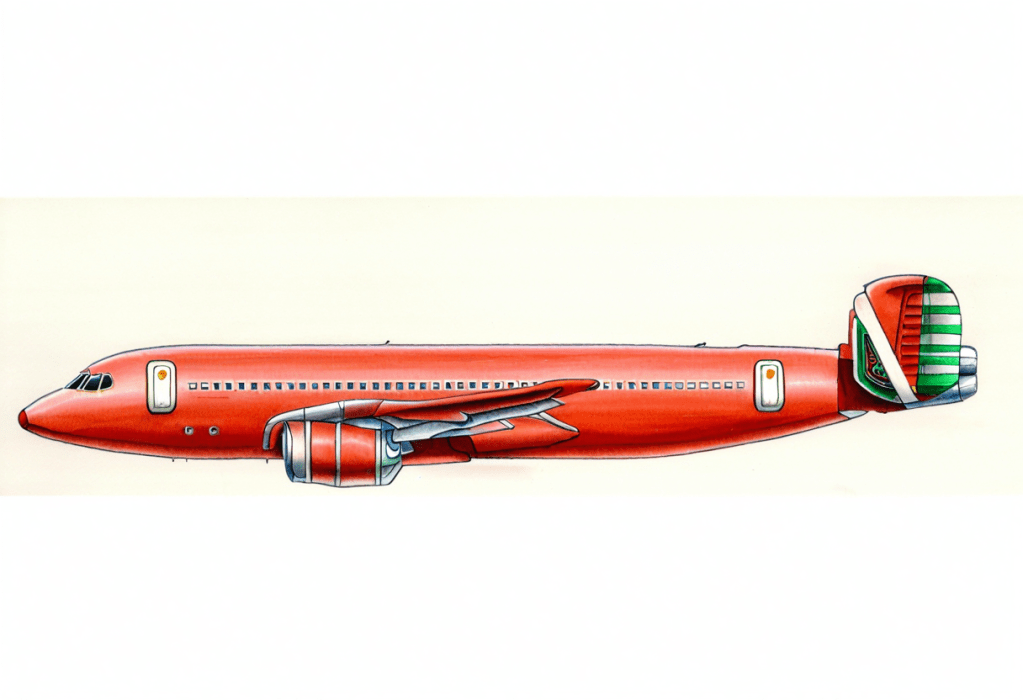
The ERT was their breakout hit, a 21st century airliner with one aisle and, most distinctively, B-24 style twin tails.
Review: Knockdown
Knockdown
Dick Francis’ Knockdown is a horse racing mystery. I feel like I would have liked it a lot more if I was into horse racing. It’s a little hard to review because the basics are very good. I can see what it’s trying to do. It’s just there isn’t really a connection with me.
I guess it’d be like if I was a horse racing enthusiast and I was reading a mystery novel set in a conventional World War III. The basics are mostly good, but there just isn’t anything to grab. Which is a shame. Or maybe I just jumped into the deep end of the series too quickly. Which is still a shame.
Review: America’s Favorite Son
GG Allin: America’s Favorite Son
The semi-autobiography (it’s a long story) of infamous “punk rocker” GG Allin , America’s Favorite Son is a look into the life and mind of someone who was legitimately not well. Going up to the “Ann Arbor Incident” which resulted in his longest of many prison sentences, the book is honestly disturbing. It does show Allin’s appeal, which was in the same category as the intentional train crashes that Scott Joplin immortalized.
Allin started off as someone who made simple, vulgar punk rock before shedding what talent he had and turning into an outright freak long before his overdose. This book does not paint a good picture of his mental state, and it’s supposed to be sympathetic. But reading it is an experience. Just like watching one of Allin’s “”””concerts””””.
The Stingley and the SA-2
Time to look at one of my favorite examples of “Statistics don’t tell the whole story.”
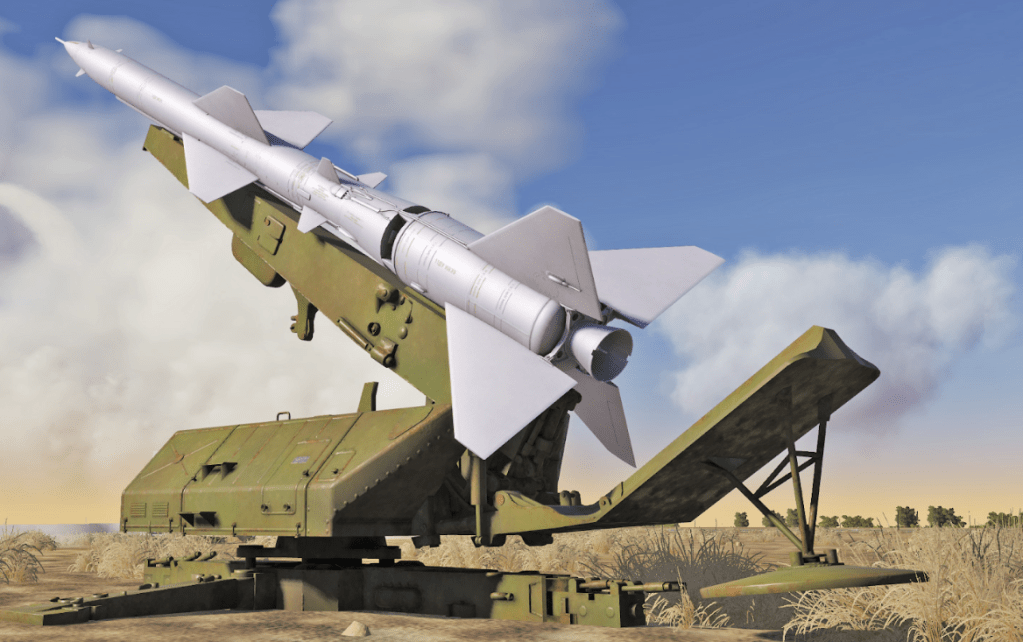
This is the SA-2/S-75 SAM. In Vietnam it accounted for only a single digit percentage of American losses. So it must be ineffective-right?

This is Texans cornerback Derek Stingley Jr who just got a monster contract. But he’s never had more than five interceptions in a season, good but not even close to league leading… Overpaid, or?
Or maybe SA-2s forced planes down low into the teeth of AAA and maybe the best corners succeeded because opposing QBs are deterred from throwing in their direction to start with.
 Fuldapocalypse Fiction