Having A Pile of Unread Books

I’ve come around to actually liking having piles of unread books (and yes, for me that means both metaphorical and literal piles of them.) There have been times when I’ve actually “succeeded” in reading through all the books I’ve wanted to. And it’s a weirdly unsatisfying feeling.

Whereas having a variety of books in various degrees of “Ok, maybe sometime I’ll start them” means that when I do have the time and desire to read one, I can just grab one that’s ready to go. And that’s a weirdly satisfying feeling.

Review: Olympus Rises

Olympus Rises

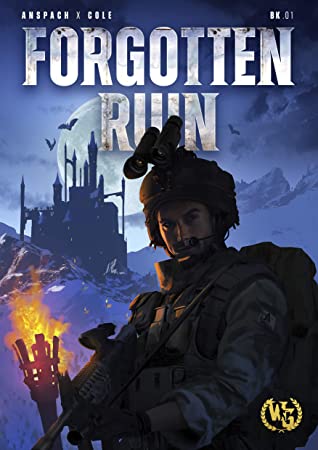
After reading a novel dragged down by trivialities like “technical realism”, it was an amazing experience reading one that threw all that aside in favor of crazy action. The first entry in the Code of War Series, Jim Roberts’ Olympus Rises is such a story, dealing with a supervillain sci-fi mercenary army and the modern soldiers who end up fighting it. Like the Black Eagle Force series before it, this is not the most fundamentally sound book. And while this goes without saying, anyone bothered by a lack of plausibility probably won’t like this.

However, that doesn’t matter. This is a very, very fun book and I had a great time reading it. Sometimes you just need jetpacks and mecha-ninjas. The many cliches and references I saw actually enhanced the experience in my views. It’s that kind of book, and that’s the kind I frequently take to reading.

The Breach

One of the most difficult military operations (although to be fair, none could be considered truly “easy”), and one I’ve recently been looking at in my armchair studies, is the breaching operation. Requiring firepower and engineering in massive and coordinated amounts, its challenge is emphasized in everything that talks about it. Yet what’s equally interesting is that defending against such an attack requires just as much in the way of perfectly synced combined arms as launching it.

It’s a counterintuitive paradox that fortifications (the official term for preparing them called “survivability” ) are important to manuever war and mobile counterattacks are equally important to positional warfare. For the former, I’ll just say that artillery hasn’t exactly gotten less effective since World War I. For the latter, any position can be eventually reduced and overwhelmed with firepower if the opponent is given the chance.

Review: Vortex (Larry Bond)

Vortex (Larry Bond)

Larry Bond’s Vortex is a tale of war in southern Africa, as a revanchanist South Africa seeks to retake Namibia, with the opposition of Cuba and the Americans drawn into it. My first proper Larry Bond novel in some time, I wanted to see how this, his last pre-Soviet collapse novel went. And the answer, sadly, is “not too well”.

I knew his style, and, starting this blog, thought it was a lot more common than it actually was. I knew it’d have a lot of conference room scenes. I knew it would have a very long opening act to set up the war everyone knows is going to happen. I knew it would hop around viewpoint characters a lot and focus on each and every part of the war. Yet I wasn’t prepared for how excessive all of it would be. This is the longest, clunkiest, and, I hate to say it, worst Larry Bond I’ve read.

It takes over a hundred pages just to get to the conference rooms. The book has this weird “too hot and too cold” feeling where it stays for a while on a low-rate cloak and dagger plot in the first half and then explodes into too many tangled threads in the second. Naturally, all of this makes the ending too contrived and neat.

This is a shame because the premise-expanding on a real conflict with truly interesting participants and tactics in a theater of war genuinely unfamiliar to many Americans-is a very good one. Which makes it being squandered in this huge mess all the worse. Bond has written much better than this, and his other works have similar-level battle scenes without the structural failings here.

Review: The Hamfist Trilogy

The Hamfist Trilogy

George Nolly’s Hamfist Trilogy consists of a compilation of novels set in the Vietnam air war, as written by a veteran of the Vietnam air war. The books are weirdly breezy and good-natured for war novels, which sets them apart. Especially since it also tries to be generally realistic-Mack Maloney this is not. This is a passion project, for better and worse.

Thus it sometimes feels sloppy. The tone can sometimes come across as overly rambling and not the most suited for the story Nolly is trying to tell, with the first person perspective not always helping. But it gets enough of the basics and little details right that I enjoyed reading it. And I say this as someone who often doesn’t go for straight historical fiction.

Review: Whirlwind

Whirlwind

The 56th book in the Kirov series and the conclusion of its third World War III arc is Whirlwind. By this point, the same issues present in any other installment are there. The prose is what it is, and the “time travel soap opera mixed with wargame AARs” is familiar as well. A large chunk of this book doesn’t even pretend to be a conventional narrative and just recaps the war in detail.

While this (supposedly) second-to-last arc in the series doesn’t just nuke everything and overwrite the timeline like its predecessor, it leaves an uncomfortable feeling. The talk about how weapons and doctrine in-universe evolved gave me the impression that Schettler would pull the football yet again and have yet another four-books-too-long wargame sim. Especially because the main ship plot does have a lot of genuine promise.

The concept of the titular ship’s crew going back in time to stop delightful supervillain Ivan Volkov from destroying the timeline is a great one, and I know very well that you could merge such a plot with wargame scenarios. But even my patience is wearing down with the formula. The circle could be squared if the ship and its crew got a good final conclusion while allowing the toy box lets plays to continue, but I’m not really confident in that happening.

Review: The Rules of The Game

The Rules of The Game: Jutland And British Naval Command

In the seventh game of the 2001 World Series, Mariano Rivera faced Tony Womack, giving up a game-tying hit and setting the stage for Luis Gonzalez to win the series for the Diamondbacks. In that plate appearance, Womack triumphed. In the rest of their careers, it was quite potentially the greatest relief pitcher ever (Rivera) against a poor hitter whose sole virtue was speed in baserunning (Womack). A sample size of one doesn’t lead to good results.

Unfortunately, this is what Andrew Gordon tries to do in The Rules Of The Game: Jutland and British Naval Command, a history epic that is equal parts awe-inspiring and frustrating. When younger, I hung on this book’s every word. Now, it comes across highly erratic. See, the writing quality is still amazing. The research and attention to detail is excellent as well. In terms of historiography, Gordon stands out.

It’s just a shame that in terms of slant, he stands out as well.

Gordon is one of the few historians who stands with David Beatty over John Jellicoe, and his defense is weird. In the actual book, Gordon points out Beatty’s flaws -he put the slower but most-armored Queen Elizabeth battleships in the back of his formation, he didn’t coordinate more, he was a ‘difficult’, arrogant person that nobody liked, and so on. And yet he still supports the BCF commander on “his heart was in the right place” grounds. You know, he was scrappy, and he had that clutch spirit.

With a bias towards a decisive victory that never truly needed to happen, the book comes across as not what it could have been. Gordon takes that sample size of one (hey, remember the time a relief pitcher with only two career plate appearances managed a double off of Randy Johnson? The time Muggsy Bogues blocked a shot from Patrick Ewing?) and seems to just miss the forest for the trees-or if he doesn’t, he barely dwells on it.

This book is still a huge accomplishment and one very much worth reading. It just needs to be understood that it’s not exactly the most neutral in tone.

The Earliest BTRs

I remember reading through a coffee table book on armored vehicles when I was very young and being strangely intrigued by the BTR-40 and BTR-152 APCs. Yes, they were just armored trucks, but armored trucks still looked so much different and weird than the later purpose-built APCs on both sides of the inter-German border. The contrast between the advanced IFVs I’ve taken to amalgamating as “BMPradleys” couldn’t be any more different.

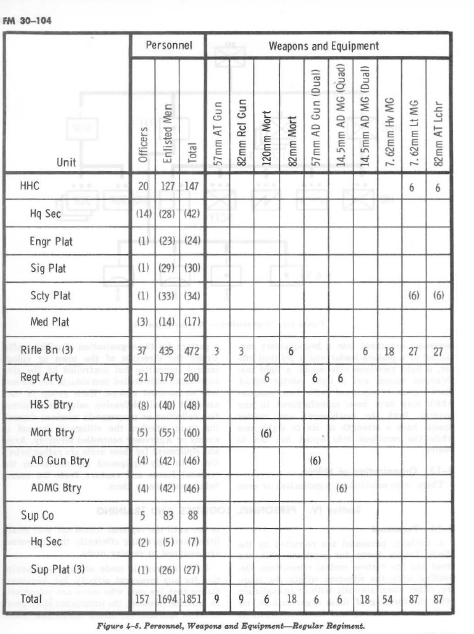
Perhaps because of their relative lack of capability, at least one field regulation document lists APCs and ordinary motor vehicles interchangeably. And that’s understandable, there’s only so much you can write about an armored truck with a machine gun on top. Yet compared to nothing, an armored truck with a machine gun on top is quite the advance.

Since then, there’s been no shortage of truck-chassis APCs from manufacturers around the world. I guess it’s the next step up from the basic technical/jeep.

Review: Tier One

Tier One

Brian Andrews and Jeffrey Wilson’s Tier One is the first installment in a series that, like a surprisingly high number of Fuldapocalypse review entries, I learned about via negative comments. I’ve been pleasantly surprised by such books before, so I decided to give this tale of a SEAL turned super secret super commando a try. Of course, I’ve also often found them to be just as bad as they said.

This is not a good book, but it was a strangely enjoyable one. The action was passable but not the best. The main character comes across as a ‘difficult’, unlikable person. And the plot-well, the plot seemed like it was trying to check each and every box of what a stereotypical modern thriller would contain. This was enough to make it swing all the way around from “cliche and bland” to “weirdly interesting”. Thus Tier One is the kind of work I cannot recommend but did not mind reading.

Review: Persuader

Persuader

Lee Child’s Persuader was the first Jack Reacher novel I read. It was also one of the first real “action novels” that I read. This wasn’t an adventure novel, or a science fiction novel. No, this was contemporary red blooded action! Because of this, the book has a special place in my heart.

The actual book is still kind of “51%” in the full context-it doesn’t really stand out with hindsight after reading countless other books (including those following a similar formula). But I still think the success of it and the whole series is deserved. It promises action, and it delivers. Who knows how many people got into cheap thrillers after reading a Jack Reacher?