So I’m going to try NaNoWriMo this year. I have an outline, and it’s a plot I’ve long since wanted to write. Even if I don’t meet the 50,000 word goal, it’ll at least help me get a big chunk of my next draft out.
I’m very excited to take part in it.

So I’m going to try NaNoWriMo this year. I have an outline, and it’s a plot I’ve long since wanted to write. Even if I don’t meet the 50,000 word goal, it’ll at least help me get a big chunk of my next draft out.
I’m very excited to take part in it.
Operation Causeway was a proposed plan by the US military in World War II to land on Taiwan. It would have been a massive high risk, high cost, and high reward operation. In actual history, Causeway was shelved in favor of landing in Luzon.
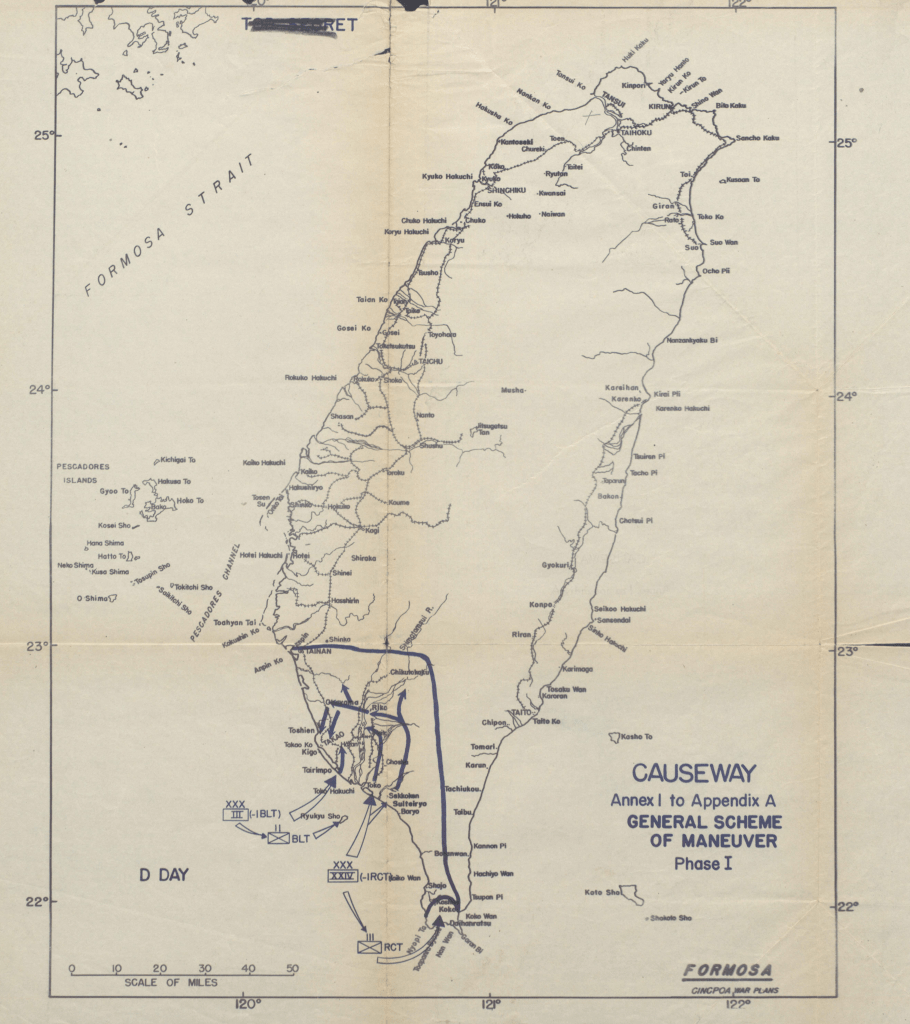
The Causeway documents are useful not just as an alternate historical reference, but also as a general guide to what a large amphibious invasion of Taiwan would entail (something that, for some mysterious reason, has remained relevant postwar).
First, a description of what a “bullpup” rifle is: The firing chamber/action/magazine is located behind the trigger instead of in front of it. There have been numerous bullpup designs, and they came into a fad in the 1980s. Of course, this brought up the biggest issue with them.
Basically, it’s easy to make a bullpup simply by flipping around a conventional rifle. However, that doesn’t make for a good bullpup the way a ground-up design does. However again, rifles are such a small part of (especially high-intensity) war that the decision to make a big investment in them is not made lightly. However however again, the impetus for bullpups was basically “they need to be short so they can fit in vehicles more easily”, with performance being less of a concern.
Of course, shorter-barreled conventional rifles took most of the wind out of the bullpup’s sails. But they continue to be used. They just haven’t dominated.
There’s an internet meme I think is surprisingly profound. This is the “Boss Baby” meme:

I’ve seen the “Boss Baby Vibes” effect in many an insular fandom. It seemed annoying, until I realized that I had fallen for it too with my initial reviews of Fuldapocalyptic fiction. Reading Red Storm Rising and third-tier knockoffs of that first had massively skewed my perception of that subgenre in particular and cheap thrillers in general.
So now I can sympathize with people who are just comparing what they see to what they know.
Finally got the chance to hear about the peculiarities of Asian sportsbooks in an old podcast by betting hand Matthew Trenhaile. Of course it comes a year after I wrote an Asian megabook as if it was a western-facing post-up (you deposit money in the book instead of operating on credit) one in The Sure Bet King. Anyway, the entire segment is great and I recommend you listen to it.
Asian sportsbooks have had (note the past tense) a reputation for being “sharp”, ie taking bets unquestioned with huge limits. But as the podcast notes, it’s wrong to compare them to the western-facing “sharp books” (Circa Sports / Pinnacle /BetCRIS). The short version for their “balancing act” is simple:
The podcast, recorded in 2018, mentioned this system declining already. Limits were being noticeably reduced, especially for lower-tier leagues. The wider adoption of the internet makes the tangled agent pyramid less and less necessary. Since then, everything I’ve seen has indicated this trend becoming more pronounced.
It’s a fascinating look at an extremely important but murky even by sports betting standards component.
The GENFORCE concept featured an eastern OPFOR divided into legacy “Basic” and more advanced, mixed, “Mobile” forces. Yet how many formations of the latter would plausibly exist in a nation the size of the USSR?
I found a possible answer in a 1985 CIA analysis called “Trends And Developments in Warsaw Pact Theater Forces, 1985-2000” (a great source for a continued Cold War in its own right). The mobile combined arms corps, effectively a big division, is mentioned.
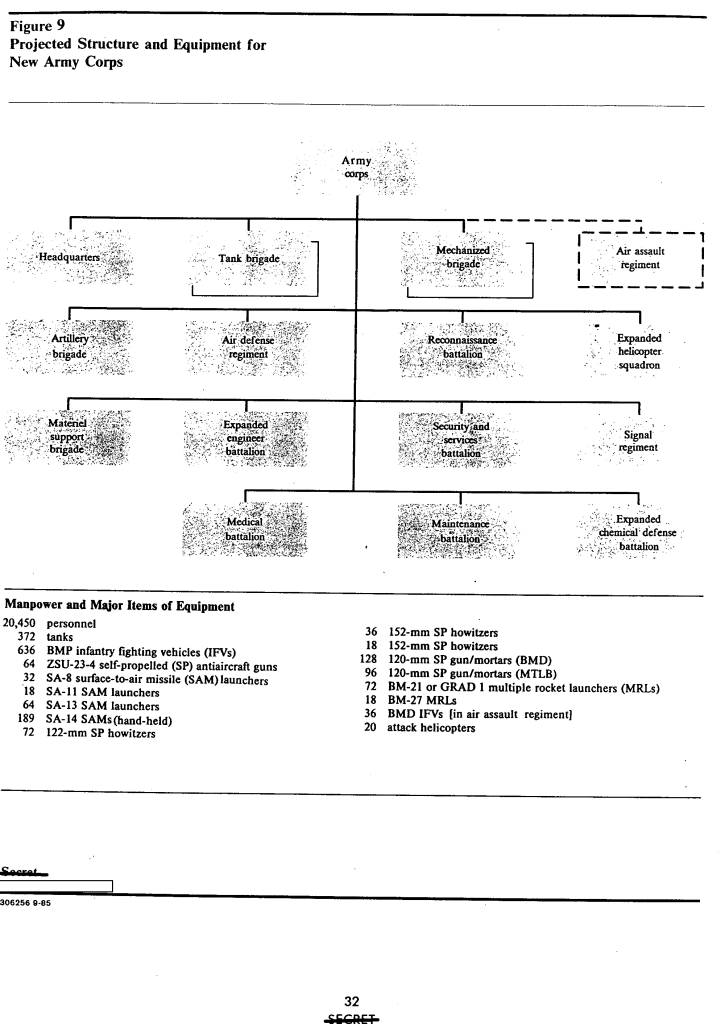
Obviously assuming a surviving USSR and Warsaw Pact, the document estimated that nine such corps would be ready by 2000. Three of these would be in the western theater, two in the southwestern, and one on in the northwest. Two would be in the Far East and one in the south/middle east.
180,000 personnel would be needed from a napkin calc of corps numbers x paper strength of each corps. It’s actually closer to the actual number than most because existing tail assets could be used to support them. However, there will be undoubtedly more people than that necessary, especially to have them achieve their full potential.
The problem isn’t getting that many soldiers. It’s getting that many good soldiers, especially because these mobile corps are specifically designed to be better and more complex tactically than previous line formations. And because they have to compete with the airborne and naval infantry for the best inductees.
Interestingly, the document itself also mentions the possibility of the tank divergences continuing, with the basic forces (word choice deliberate) getting a less exotic model and the mobile corps getting a more out-there one. This would also coincidentally make two bureaus/plants very happy instead of one, so I can see it happening.
It’s an interesting document in any case.
My current People Playground mod-enabled obsession is the “Facility Escape”. The background for this RP is simple: A character from another setting is trapped in the mysterious mad science super-facility and has to try and escape, fighting their way past an army of workers, security contractors, androids, and who knows what else.
Characters from settings as distinct as Undertale and Hotline Miami have been placed in the playground. The (intentional) clumsiness of the human figures just, if anything adds to the fun. There’s nothing like jury-rigging an “epic” sword vs. chainsaw battle.
Characters who have “earned the privilege” of escaping have the final exit simulated by a black hole being created with them sucked in. This symbolizes a portal to their home setting (or somewhere else?) being activated.
Doing a rare commentary on a contemporary military situation, since it happens to overlap with what I’ve read about. Fair warning-I’m not an expert, I’m a civilian enthusiast who has read too much and seen too many order of battle charts. Take this what you will.
So, moving with the speed and grace of the Austin Powers steamroller victim, Russia has finally declared a “partial” mobilization after seven months of brutal attrition, including training units. At first limited to reservists and people with military experience in out of the way provinces (let’s be realistic), it’s nonetheless very broad. The initial goal is 300,000 troops, which sounds like a lot and is still politically dicey. Why they did this is obvious-the Ukrainian counteroffensives and the failure of their improvised semi-mobilization left them with little choice.
People have talked ad nausem about the equally obvious issues with training and equipping that many (or more) troops, as well as morale. So I’ll mention two topics. The first is what they can legitimately accomplish. This is to serve as a stationary dug-in meatshield as the first line of defense. Every army needs an infantry meatshield from somewhere. In the early summer Ukraine was doing this, desperately throwing poorly equipped and trained militia to the east. Of course, you can have that or you can have the 1991 Iraqi infantry formations, but there is a legitimate use for low-quality troops, at least on paper.
What they cannot do effectively is launch offensives. You can probably understand why this is a big deal. And that’s especially if they have worse and their opponents better equipment.
Now for the rivet-counting nerd part and what you need to equip 300,000 people (this is NOT saying the real ones would be equipped or organized this way, just showing how demanding it is equipment-wise). Using a mostly foot OPFOR infantry division as the baseline (ie, largely only suitable for defensive operations), and assuming a handwaved 20,000 strong divisional slice of support troops beyond the 10,000 strong division itself, you get get 15 division-equivalents, which is…
Even in Russia this does not grow on trees, especially after the stockpile has already been plundered massively.
Screenwriter Stephen E. de Souza has a catch-all Latin American country called “Val Verde” he uses whenever a politically neutral country in that part of the world is required for one of his movies. (In Arnold’s Commando, John Matrix wiped out the entire military of Val Verde by himself.) I have made several Val Verdes in my brain that I’m in the process of putting down in writing, and which may become more than just an order of battle chart.
They are:
Cardona is the conventionally weakest OPFOR country and the closest to de Souza’s Val Verde in terms of theme. It draws from both South American and Southeast Asian influences (if I wanted to be really shameless, I could have it have large conveniently Spanish-speaking regions and equally large parts with native Asian languages.)
Cardona’s military is large in numerical terms but lightly equipped and is focused on internal control rather than external invasion. It also has no shortage of irregular groups of all shapes and sizes.
Named for the Seleucid Empire, Seleucia is a catch-all Middle Eastern OPFOR country. Like its namesake, it features terrain from the Mediterranean to the Altais. A diverse and fractious nation, it is at times (ie, when the scenario calls for it) a strong state and at times a weak one. But even at its conventionally weakest, it’s still more powerful in material terms than Cardona is.
Seleucia can be the opponent in everything from irregular warfare to Gulf War level major battles. It also can have nuclear weapons in some cases.
Named after a form of Germany, Teutonia is the developed western European country. The most technologically advanced of these states for the time period, it was once a world power and remains a continental one.
In addition, Teutonian exports are found all over the world, including in the other two mentioned countries. Teutonia is a nuclear power if the tech level of the scenario allows it.
All three will be elaborated on, possibly in prose form… (winks)
The Rhodesian Bush War passed without a decisive 1975-style conventional campaign. Of the two main guerilla organizations, it was the Ndebele, Soviet-favored ZIPRA that placed more of an emphasis on conventional operations, compared to the majority Shona, China-favored ZANLA’s “people’s war”. A combination of largely successful preemptive strikes by the Rhodesian military and a (smart) focus on inherent strengths than weaknesses by the opposition meant that the large battle never came.
The common wisdom about such an operation “Zero Hour” (as one code name for it was) is that it would be stopped with ease (although it does not help that most surviving prominent sources are either from the ZANLA-veteran regime or former Rhodesians, neither of which has an incentive to talk up their opponent). But even if the first such offensive was stopped with ease, the rebels definitely had the people and enough hand-me-down aid to try multiple times.
Such an offensive would feature the fairly light Rhodesian military against an opposition that would have at least T-34/85s, BTR-152s, appropriate artillery, and even rumors of fighter aircraft. (If said fighter aircraft could disrupt the deployment of the infamous Fire Forces, it would not be good for the Rhodesians). It can obviously be played with any kind of wargaming ruleset that can handle early/mid Cold War equipment and formations.
 Fuldapocalypse Fiction