Weird Wargaming: The All Union US Military Part 2: Air Force(s)

Part two of this alternate history series.

Background/USAF

Until September 9, 1998, the US Air Force and Navy was mostly in a holding pattern. About the only large procurement decision was going ahead with the A-6F and F-14E Super Tomcat programs due to the continued USSR, leaving the Super Hornet as a paper plane in this timeline.

Then the Sovereign Union destroyed 80% of Romania’s air force on the ground in minutes, and panic set in. V/STOL research and dispersed operations immediately began taking the highest priority, and as an interim measure, the first major foreign-built fighter in American service since the AV-8A was made in the form of the F-21 Griffin, aka the Gripen. A huge fight ensued over whether to phase out the F-16 or keep it. The results were mixed.

US Naval Aviation

The US Navy and Marine Corps have a mixture of Super Tomcats, F/A-18A-Cs, Sea Gripens, F-24 NATFs, and A-6Fs in a support role. The Intruders and Hornets are being phased out. No, this is not just an excuse to run scenarios in CMO.

5th Gen/Updates

A lot of helicopters, high-performance VTOLs, and the F-24 being “Phantomed” into the Air Force as well. The equivalent of the F-35 is just the F-35 B/C equivalent, since a pathological fear of normal air bases exists. (Ironically the Sovereign Union does NOT have quite a fear despite knowing what it can dish out, but that’s another story).

The Megaliners

I mentioned a long time ago how I had a fascination for “megaliners”, “superjumbos”, or aircraft designed to hold more passengers than a 747. Leaving aside the impracticality of them, most were/are pretty conventional. They just took an existing jumbo and either added or stretched the upper deck.

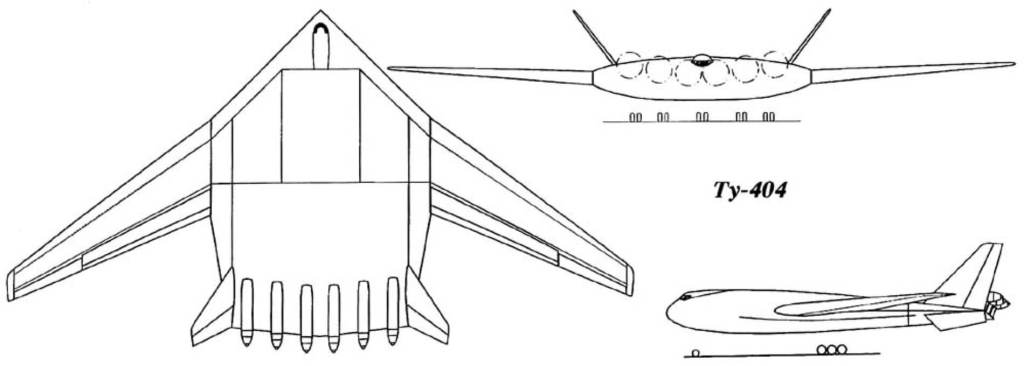
But not the Tu-404. This not-found Tupolev design was a flying wing for maximum passenger space.

Some variants stretched capacity into the four digits, and it would have been driven by six propfans.

The Draft Bust That Changed History

It’s almost Super Bowl time, and it’s Black History Month. So I figure I’d post this tiny bit of gridiron history I was checking out. So if you were to list pioneering black quarterbacks overcoming the past stereotypes of the position to thrive in pro football, maybe you’d pick the first starter in the modern era, Marlin Briscoe. Or maybe Doug Williams, the first to win a Super Bowl. Or Warren Moon, the first superstar.

How about seemingly forgettable draft bust Andre Ware? Picked out of Houston college by the Detroit Lions no. 7 overall in 1990, he sputtered out in the pros. Now the “how” isn’t really the point of this article. From what I’ve read, it was a college scheme that didn’t really translate well to the pros, especially at the time. That white quarterback David Klinger followed a similar “went to Houston, was drafted high, and was a pro bust” seems to support that. But again, that’s not really the point.

The point is that Ware set a precedent for drafting black quarterbacks very high that has never stopped. Looking at later drafts:

  • 1995: Steve McNair: 5th overall
  • 1996: Tony Banks: 42nd overall, second round, however was first quarterback picked
  • 1999: Donovan McNabb (2nd), Akili Smith (3rd), Daunte Culpepper (11th), this was the final nail in the coffin

Now obviously high draft picks are not total evidence of prejudice being eliminated. But it is interesting to note see the exact moment when, in practical terms, the tide turned.

Nuclear Weapons Studies

I have an idea for teaching a class that would combine traditional history with red-teaming. This is of course just a fantasy, but this is a fantasy blog. The course would be called “Nuclear Weapons Studies”. It starts off with history and physics even I can understand. Then comes The Assignment.

Students are given a fictional country with a set government, GDP, and domestic industry. They have to present the story of that country’s nuclear weapons program and will be judged not just according to traditional metrics but also according to how ‘plausible’ it seems to me. And the program doesn’t have to be a successful one, just seriously attempted.

The Offshore Coach Scam

So I saw a tweet by an offshore sportsbook, in about the 302,122,877th time they’ve done something like this. It declared that Deion Sanders was the favorite to be the next head coach of the Dallas Cowboys and listed odds. Now I was skeptical to put it mildly. As for the actual next one, well, that could be overtaken by events and who knows, maybe it will be Mr. Primetime.

But the point is that sports journalists for the 302,122,877th time took up on these odds and repeated them. Now there’s nothing wrong with repeating genuine futures odds. Just because a chance of something is slim doesn’t mean it won’t happen, and it gives an idea what oddsmakers (including at sharp books) and the market think is the best situation. However…

…This is not the case. The numbers here are basically pulled at random, and instead of letting sharps bet in, they’re from a ‘soft book’ with very low limits. It’s a publicity stunt, and sportswriters ALWAYS fall for it by repeating these things.

Soviet Romanian War At Sea

Naval forces in All Union’s Soviet Romanian War were bound to play a peripheral role. Romania had a small and weak navy, a relatively short coastline, and massive conventional amphibious landings were geographically dubious and militarily even more so. Constanta was overrun and surrendered almost immediately after the war began. Even Soviet historiography talks very little about what they and the Bulgarians did at sea, mostly just mentioning bombardment, surveillance, transport, and other routine supporting tasks. Most naval infantry units fought on land.

Yet it would be a mistake to assume that the navies did nothing or that there was no drama. Although overshadowed by the crossing of the Danube and the massive deep airborne operations, one of the largest postwar aerial/amphibious landings was conducted in Tulcea County.

  • Units near Bolhrad would cross/lift/fly over or infiltrate via smaller boat.
  • Heliborne units from the Black Sea would stage and make large landings in the depths. Black Sea Fleet aircraft and ships would naturally support them.
  • The Tulcea operation was considered lower priority and was assigned fewer resources and, uncharacteristically, had its commanders given instructions to not try and force it if the initial advance stalled. (In contrast, the Danube Front units tasked with taking the Constana area were told to rightfully treat it as a high-priority one).

Notable events:

  • September 8-9: Landings. Many inoperable Romanian ships destroyed in port.
  • September 8: Romanian corvette M290 sunk by SS-N-14 missile. Romanian submarine SC-02 sunk.
  • September 9: Sole successful Romanian air attack against Soviet Warships. Missile craft Kittivyek sunk by Romanian MiG-21s. Two other unsuccessful attacks. Five aircraft and four ASMs shot down.
  • September 10: Gunboat PSKR-710 destroyed by mine. Four Romanian craft sunk. Romanian submarines Pastrav, SC-01 sunk.
  • September 11: Final attempted Romanian air/missile attack on naval targets. Completely unsuccessful. Romanian submarine SC-05 sunk by Soviet submarine S-39 in the first post-WW2 mutually submerged sinking. Soviet landing ship SDK-303 sunk by mine.
  • September 13: Tulcea operation completed with mutual link-up.
  • September 14: Final surface engagements of the war, a duel between small boats in the north and Bulgarian ships sinking an attempt to flee southeast into the open ocean, presumably to Turkey.
  • September 16: Final naval engagement. Romanian submarine Ton sunk.

The main takeaway was that ASW was successful (no Soviet ships lost, no disruption) but it was under ideal circumstances (being able to just smother a small area).

Rates of Advance in (Fictional) Practice

So a while ago I did the obsessively number-crazed Soviets studies on their planned rates of advance. Looking at my descriptions and map games writing in All Union, I’ve thought “hmmm, how could this go in practice? Or at least fictional speculative practice?”

The Theory

Against NATO, 40-60 km a day on average was the goal. Against a weaker opponent (like one based on the Chinese conventional forces at the time), it was even more, around 70-100. By the 1990s GENFORCE (what I patterned the mobile corps off of), it was down to ideally 30-40, albeit against a stronger opponent.

Romania in Practice

As it stands, I focused mainly on the 17th Mobile Corps, and had a (fairly) detailed route after much Google Mapping. It left a line of departure from near Chernivtsi on September 8, 1998, and came to a final stop around Sibiu on the 16th-17th. On the way it cleared out the important crossroad town of Toplita, crossed the Carpathian mountain roads, and fended off an attack on its bridgehead near Dulcea.

Map is a vague generality. Different subunits progressed around different mountain roads and frontages. Length is hard enough, don’t ask me to do width.. :p

Using a pure napkin calc, this comes to 285 kilometers from the Chernivtsi border region to Sibiu, which leads to 8-9 days of high-intensity fighting, which means a very rough 30-35 kilometers a day. So not bad by GENFORCE standards, especially with a rough terrain making up for a weaker on paper opponent and with the counterattack at Dulcea costing it an entire day.

So not too bad….

The Problem

Of course the definition of “rate of advance” is incredibly arbitrary (does it mean anything in that unit, so can we count a patrol of BRDMs moving far ahead and encountering no resistance before circling and stopping, then the main force reaching that spot without issue later?) and depends a lot, as anyone would admit, on circumstances.

In the same war, many Danube Front formations barely made it past the river, and some that did moved at the equivalent of a brisk walk. But clearly a unit of press-ganged Bulgarians with 1940s equipment having to do an opposed crossing of a very long river and then facing coherent defenders with many fortifications is not the same as a high-tech, high priority force smashing across the plains against a broken foe.

The Writing Lull

One of my least favorite parts of creative work is the writing lull after something gets finished. And now with The Fuldapocalypse World War III book out, I’m feeling it again. Oh, work on the next All Union. No, work on that other project you wanted. No, work on…

I’ve learned after years of creative writing that it’s very hard to force creativity. I just have to wait and see what inspiration comes to me next. Hopefully it’ll be good and workable.