Review: C3

C3: Nuclear Command, Control, Cooperation

Written by former Strategic Rocket Forces officer Valery Yarynich, 2003’s C3 is an in-depth look at Cold War (and beyond) nuclear war command systems and their hazards. Although having access to then-secret info in Soviet times, Yarynich was no Viktor Suvorov and did not sensationalize (in fact, he provided one of the first detailed and level-headed descriptions of the infamous Perimetr/Dead Hand system). The result is one of the best nonfiction books on nuclear war that I’ve read.

As it is written by a former Soviet officer, you do get waves and waves of charts and equations that attempt to quantify something relating to military technology. But you also get lots of clear, simple explanations that make a layperson able to understand this well. In terms of everything from organizational charts to what the “nuclear briefcase” even is to why scissors were found to be a weak link in the command chain (seriously), it’s incredibly illuminating.

If you have any interest in nuclear war or command systems whatsoever, I highly recommend this book. I’ll also just say that it’s an excellent research resource…

Review: The Han Solo Adventures

The Han Solo Adventures

Originally published in three installments from 1979 to 1980, the Han Solo Adventures by Brian Daley were the first books in what would become the Star Wars expanded universe. Star Wars fans tend to love them, and I’m one of them. Without restrictions or a desire to one-up the movies (I’m looking at you, Kevin J. Anderson), the books are a fresh fun romp through the Corporate Sector.

Daley can write everything from prison breaks to starfighter bouts to duelists well, and he does in these books. Every Star Wars fan, science fiction fan, or just fiction fan should read these.

A Thousand Words: Captain Commando

Captain Commando

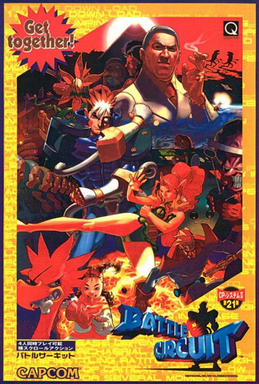
Capcom, fresh off the success of Final Fight, made another arcade brawler called Captain Commando in 1991. I’m sure the title was just a coincidence. You can control the titular vanilla superhero, a ninja, an alien mummy named “Mack The Knife”, and, most bizarrely, a baby prodigy that controls a mech-that can ride other mechs. It’s like the walking robot version of a nesting doll.

Anyway, to call it a superhero version of Final Fight would be unfair. It’s more like a souped up superhero Final Fight. For instance, the second boss of Captain Commando is almost exactly like the final boss in that game (someone who jumps around with a crossbow). Only he’s much faster. As for the real final boss, it’s one of the cheapest in all arcade brawlers, and exists primarily to devour quarters.

For all this enhanced goofiness, it doesn’t seem as graceful or punchy as Final Fight was. The new move additions consist of the previously mentioned mechs (which are few and far between, and clunky enough to generally be more trouble than they’re worth) and dash moves that are both hard to do and rarely of that much use.

It gets the basics right, but if you have to choose, I’d say either Final Fight itself or one of the better successors. This is not one of the better successors.

Review: The Death of Russia

The Death of Russia

It’s uncommon but not unheard of for a book to have its premise done better by something else in more or less every single way possible. So is the case with The Death of Russia, an alternate history story told through exposition and snippets about Yeltsin dying in the early 1990s and the world sinking into chaos. AH enthusiasts will also know that Zhirinovsky’s Russian Empire was another alternate history story told through exposition and snippets about Yeltsin dying in the early 1990s and the world sinking into chaos. Both started off as forum timelines and then were commercialized.

The first issue one notices is the writing style. Namely, giant breathless blocks of text. The timeline tries to do the “snippets from in-universe books and the like”, but this falls flat because all the “sources” read exactly the same. The second issue is the relentless grimdarkness. While based on stuff that sadly did happen, this just feels gratuitous. There being no real characters or anything but pure exposition makes both problems all the worse.

Eventually things spiral into a nuclear World War III. However, it’s worth noting that a fake interview with Evangelion’s producer starts off the chapter in question. Since pop culture is an obsession of the online AH fandom, this is not exactly a good start. The strike itself is no Arc Light or Red Hammer 1994. I actually fell annoyed at how a (mostly) survivable nuclear war, a topic that fascinates me, was handled so badly. It’s handled with all the grace of a minor league sportsball game report. Namely, a minor league game report written by an basic computer program that saw the box score.

In fact, what’s honestly interesting about the final nuclear exchange, besides the teeth-gritting “it doesn’t work like that” inaccuracies, is how it demonstrates a critique I’ve had for a while now. In the footnotes, the author doesn’t cite those two novels, or any real study on a limited/counterforce-heavy big nuclear strike that would leave society survivable. No, it’s another timeline, an earlier one called Able Archer 83.

But for any normal reading, I’d just say “read Zhirinovsky’s Russian Empire instead”.

Review: Carrying the Fire

Carrying The Fire: An Astronaut’s Journeys

Long considered one of the two best astronaut memoirs (the other being Mike Mullane’s Riding Rockets), Carrying the Fire is the autobiography of Apollo 1 command module pilot Michael Collins. He got to go to the moon but not walk on it. Collins insisted on writing the book all by himself without assistance, and it paid off. Not only was he a capable pilot and astronaut, but he turned out to be an excellent author as well.

With both humor and majesty, Collins tells the story of flight and the moon program. Anyone interested in outer space should get this. It’s an excellent book and even greater autobiography. While it’s not nearly as fresh as it was in 1974, that’s a small and inevitable “problem” to have. This is a great book.

A Thousand Words: M. D. Geist

M. D. Geist

One of the most infamous animes of the 1980s, M. D. Geist was a crudely made original video animation that sank into obscurity. Or it would have if the head of western distributor Central Park Media hadn’t taken a liking to it and pushed it forward. Because of this, there’s been a backlash against the excuse-plot gorefest of a power-armored monster fighting through a sci-fi apocalypse that is M. D. [Most Dangerous] Geist.

That said, it doesn’t deserve to be listed as one of the worst of all time, as it too often is. Like fellow mid-1980s pop culture phenomenon We Built This City by Jefferson Starship, though lacking, there’s a lot worse out there. As cheesy fun it “works”. And that’s often what you need.

Review: Cadia Stands

Cadia Stands

Of all the Warhammer 40K factions, my absolute favorite by absolute far is the Imperial Guard (or as they’re supposedly called now, the Astra Militarum). So I had to read Cadia Stands, about the 13th Black Crusade (definitely) and one guardswoman’s struggle to survive and escape-supposedly. I mean, the saying correctly went “Cadia Broke Before The Guard Did”, meaning that the forces of Chaos had to literally destroy the world to win.

The book is kind of disjointed. There’s a lot of battle vignettes. Minka Lesk, the young guardswoman in question, is supposedly the main low-level character. But she’s mostly just basically there and little different from all the other Imperial viewpoint figures. So, did I not like it?

NO! HERESY! There’s little wrong with a bunch of battle vignettes, and this is the kind of subgenre that’s incredibly hard to get exactly right. So while it’s not the best, this is a perfectly serviceable action novel.

Review: The Cold Hand of Death

The Cold Hand of Death

Brent Towns’ latest Team Reaper thriller as of this post is The Cold Hand of Death. It can basically be described as the technothriller equivalent of gulping down an energy drink in a distorted physics chamber where time moves faster. It’s like the book never goes more than two pages without a shot being fired or something blowing up. There’s the usual world-in-crisis technothriller plot, but even this is warped up to ludicrous speed.

I’ve mentioned the previous installments as being fast-paced, but this takes them to a totally different level. It’s like comparing a fast propeller plane to an SR-71.

It just feels excessive. The writing is not bad. It aces the action scenes, and that’s what a thriller needs to get right. But the best action writers of all time would struggle to keep any book interesting if it had as many battles as this one. This is like a deep fried gummy candy. It’s not inedible, but it’s just not the sort of thing you’d want to eat/read lots of.

Review: The Reckoning

The Reckoning

David Halberstam was one of the most legendary historical writers. In The Reckoning, written at the height of the 1980s auto crunch, he turned his eyes on Ford and Nissan, trying to find what made carmakers on both sides of the Pacific go. Halberstam has a talent for writing. Unfortunately, that very skill makes it uneven.

It does a good job describing formative events like Henry Ford’s family drama and the 1953 labor dispute at Nissan that shaped not only it but the entire Japanese auto industry. It also does well when looking at individual workers caught up in the mess. Although I have to say that it’s very hard to write about the auto industry and not make it interesting. The field is just so inherently complex and full of colorful stories.

So what are the problems? Well, it’s dated for one. This isn’t as bad as it could have been. Yes, it’s a more than a little “JAPAN GOOD”, but certainly not to the excess of some other bubble era publications. After all, this shows the Japanese industry warts and all. It also aptly points out in its study of the South Koreans how the rest of Asia was cracking its knuckles and preparing to charge-which came to pass.

No, the biggest obvious problem is that it’s too “Bruce Springsteen”. Which is to say it has the tone of a wealthy suburbanite who idealizes the blue collar worker’s struggle too much. Its slobberingly positive portrayal of UAW head Walter Reuther is the most obvious part of it, with even sympathetic history works on that man being far more critical and full than Halberstam’s hagiography. This also leads Halberstam to idolize the “Manufacturing Men” over the supposed “bean counters” who nickel and dimed every car to pieces. (Not surprisingly, Robert McNamara in his pre SecDef days is there and scorned).

This leads to the next problem that someone with any kind of interest in the auto industry can see: It’s too centered around the capital-N Narrative of the Good Manufacturing Man being brought down by the Evil White Collar Consultant. The “Manufacturing Men” in both continents could get away with running hog wild simply because their industry was in a boom. Once it busted, they simply had to start penny pinching. After all, the first Japanese car company to close a plant and downsize was… Nissan. All this is combined with something that, for all his research, Halberstam didn’t actually have much familiarity with, and it showed. It’s also catnip for the mostly well-off target audience of the book.

Still, for all its problems this is something I’d definitely recommend.

Review: Knee Deep In The Dead

Doom: Knee Deep In The Dead

You might think that a classic video game with a plot of “run around, shoot monsters” would be hard to novelize. Yet a writer by the name of Dafydd ab Hugh (which is the most Welsh name ever) gave it a try in Knee Deep in the Dead. This could have very easily been a low-effort potboiler. The author would just type out the blandest adherence to the and some filler, submit it, collect the money, and never look back. This has happened with many other visual media adaptations.

But not here.

Knee Deep In The Dead has a lot of running around and shooting monsters. But it also has this very bizarre style (that grew even more bizarre in its sequels, from what I’ve heard) that is nothing short of endearing. It’s one of those books that kind of has to be read to be believed.

Is it “good”? Not really. Is it readable? Yes. Is it fun? Oh yeah. Should you check it out? In my eyes, you betcha.