Review: Wings Over The Hindu Kush

Wings Over The Hindu Kush

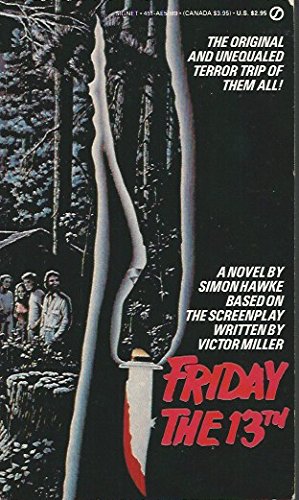
Lukas Muller’s Wings Over The Hindu Kush shines a light on an obscure footnote in aviation history: The Afghan air forces (yes, plural) between the Soviet withdraw and Enduring Freedom. Leaving behind a large quantity of helicopters and aircraft, there were enough parts and willing pilots for the Taliban and its rivals to create air forces up until 2001. As someone aware of their existence and interested in how functional air units could be maintained from such “scraps”, this book was an easy purchase.

In a complex, fluid situation without the best documentation, getting the detail that Muller did was no small feat. The book isn’t the biggest or most absolutely detailed, but it does tell the story of these helicopters, Fitters, and Fishbeds. And it’s a very interesting story.

The strike aircraft were far from the most capable or effective (the transports in a place with poor infrastructure were far more vital), but their mere presence in such conditions was surprising. And this book clears up the surprise in a great way.

Review: By Order of the President

By Order Of The President

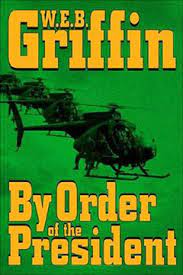
Despite being one of the most prolific and successful military fiction writers, it’s taken me a very long time to read W. E. B. Griffin. I started with By Order of the President. And well, I sure hope the rest of his books aren’t like it. The story of the search for a stolen Boeing 727 and the sinister plot behind it, it doesn’t exactly fly through the skies gracefully.

Although to be fair it does seem like the wrong genre for its author’s writing style. Viewed one way, it’s just a stylistic misfit. All the detail, the flashbacks to the past, and the grounded way of writing all feel much more fit for historical fiction (which most of Griffin’s famous work is) than a contemporary thriller (which this is). As for the parade of meetings and travel that makes up nearly all of the book, it arguably fits into the “too realistic for its own good” category. At the very least, it’s an orange read by someone who prefers apples. But I could all this the benefit of the doubt…

…If the main character was someone other than a half rich German, half rich Texan (Griffin famously said outright that “rich people are more interesting than poor people”) super-agent who hit my suspension of disbelief hard. Or if the story, regardless of realism or style, was better paced. As it stands, it just clunks along and then rushes when it’s near its conclusion.

Finally, I got the impression that this was aimed for the people for whom reading about something is interesting in and of itself. The technical descriptions and organizational procedures made it seem that way. It’s either a flaw or another orange compared to my favored apples.

I can still see Griffin’s appeal, and he was successful and famous for a reason. This isn’t something inexplicably popular and published like William W. Johnstone. But I still see him striking out at the first at-bat I noticed.

Review: Soviet Era Airliners

Soviet-Era Airliners: The Final Three Decades

In many ways, Aeroflot mirrored the USSR itself. Its breakup in 1991 scattered the massive airline’s assets across all the independent republics. Christopher Buckley’s Soviet-Era Airliners: The Final Three Decades tells the story of what happened to all the “Classics”, “Crusties”, “Carelesses”, “Clobbers”, and more. While the collapse of the USSR and the failure of its aviation industry to make a competitive product caused its new-build civil aircraft industry to fall apart instantly, there were lots of surplus planes around.

This book does a great job showing most of their fates. There’s lots of details and even more excellent photographs. If you like civil aviation at all, this is a great book. I was curious to see what happened to these flying trilobites, and now I know.

Review: Crimson Star

Crimson Star

The third Maelstrom Rising book, Peter Nealen’s Crimson Star takes the action to the American west. With the collapse into anarchy and invasion underway, the Triarii have their hands full. Having read this, I feel like it is both a lot better and a lot worse than the first two books.

First, the good. It’s written in third person, which is so much more suitable for a work of this nature. So much. Granted, the viewpoints are a little too restricted (try telling pre-Fuldapocalypse me that I’d think that), but it’s still a huge step that makes it so much better to read. And of course the action takes advantage of the larger scope, with lots of vehicle units and large forces. It is as good as anything else Nealen has done.

Now, the bad. The annoying slobbering over the Mary Sue protagonists reaches new heights. Any alternative to them is viewed as a completely incompetent obstacle. The narration does everything but say that their training was a combination of “SEAL, Ranger, Special Forces, and gutter fighting.” It got irritating, and it would be even more so if I hadn’t adjusted my expectations. After all, it sold itself as Larry Bond. By now, it’s actually Jerry Ahern’s The Defender updated to the present with more realistic battle scenes.

Do they balance each other out? My answer is: I still want to read the next book in the series. Make of that what you will.

A Thousand Words: Airport

Airport: The Movie

I was not exactly the fondest of the original novel Airport. So what did I think about the Burt Lancaster movie, which basically created the disaster genre? It was mixed, but I’m willing to give it a break based on its limitations. Having read the book first was not the best way to appreciate the movie, especially as it tracks the plot well. Too well.

First off, the cinematography is dated and clunky. This isn’t the movie’s fault, but it was one of the last “old fluffy Hollywood” movies, and it was made just before movies got more dynamic and more of an edge (the low body count in this compared to later disaster films is something.) But that’s not really its fault.

What I do think is its fault is trying to cram too many subplots from the book into an inherently shorter movie. A looser adaptation would have been preferable, especially because the book is not very movie friendly. It has too much overhang of “look inside an airport” and less focus on the main “a plane is in danger” plot.

Thankfully, the cast and crew are undeniably talented, and they do the best within these limitations. It’s easy to see why it made so many imitators, and at the time, it would have been seen rightfully as a giant spectacle.

Review: The Rich and the Righteous

The Rich and the Righteous

I’d already known why Sidney Sheldon had the appeal that he did. One of his strengths that appealed to a lot of readers (including me), was a very simple, easy, and smooth-flowing writing style. The virtues of this writing become far more apparent when you read another “pop epic” that doesn’t have that advantage. Helen Van Slyke’s The Rich and the Righteous is one such book.

The story of a struggle for corporate control, this is like a specific type of airplane. It has an excellent shape regarding aerodynamics. It has excellent sensors and a cockpit layout. There’s just one small problem: Its engine can’t get it off the ground. Likewise, Van Slyke is one of the blockiest, clunkiest authors I’ve read, and thus what should be interesting just sort of taxis down the runway and then falls into a ditch. Ouch.

Which is a shame. But oh well.

Review: Holding Action

Holding Action

Peter Nealen’s second installment in the Maelstorm Rising series, Holding Action is an attempt at a bigger-scope war than the small-unit ones that make up a lot of his other books. Here it’s a clash in Poland in a campaign very clearly inspired by Larry Bond’s Cauldron (which was reviewed by the author and read for inspiration). And I’m sad to say I found it somewhat lacking.

The first and biggest problem is that the book is both written in first person perspective and clearly wants to be a big-scope tale. This square peg and round hole do not exactly align properly. And it’s not like the reader gets an excellent character study from it: The biggest trait I remembered in the main character was him being Catholic.

The second is that the Triarii, the “military NGO” that the protagonists serve in, feel like Mary Sues in ways that Brannigan’s Blackhearts never did. The Blackhearts are a bunch of expendable, disposable people doing underground dirty work. These are propped up as the centerpiece of fighting, more so than the bumbling regular American army. And listening to the narrator extol their awesomeness and the regular army’s weakness doesn’t exactly help matters either. The third and least important is that the setting tries to walk a tightrope between “plausible” and “distinct” and doesn’t really stay balanced.

That being said, the actual nuts and bolts action is as good as always, and I don’t fault Nealen at all for trying something very ambitious. It’s just that when you aim high, there’s a greater risk of falling short. This is a definite “uneven 51%” book. And there are worse things I could have called it. Besides, it’s fun to review an actual conventional World War III novel and go back to the blog’s roots.

Review: The Machine That Changed The World

The Machine That Changed The World

The product of a large MIT study of the auto industry, The Machine That Changed The World attempts to tell the story of “lean production”. The two other production types of motor vehicles mentioned in the book are obvious: Handmade/custom “craft production”, only used for a handful of low-unit firms, and classic assembly line “mass production”. But what is “lean production”? This was and still is a hard question to answer. But in its attempt, the book is an excellent study of the car industry.

One hand, this is a masterpiece in many ways. It’s a very technical but also very accessible study. It shows the difference between the older and newer ways of auto production very clearly. And its anecdotes are good in and of themselves.

But it also has some pretty serious flaws. This book is not only dated, but also was released at the absolute peak of the Japanese market bubble. So its veneration of Japanese production when the industry had a huge tailwind and was yet to experience a massive stress test needs to be taken with a large quantity of salt.

That being said, while not the most definitive book on auto production, it’s still a great historical resource.

Review: Where The Crawdads Sing

Where The Crawdads Sing

One of the least Fuldapocalyptic and most mainstream novels I’ve recently reviewed, Delia Owens’ Where The Crawdads Sing is a historical novel in the marsh of North Carolina. It follows the life of Catherine “Kya” Clark as she grows up in a shack, falls in love, gets smarter, gets successful, and gets accused of murder.

The prose is beautifully written and deserves all its accolades. The ping-ponging of scenes from the time of the murder to the time of Kya’s youth that eventually get closer and closer starts off somewhat awkwardly, but smooths itself out by the end. The plot works fine for moving the story along.

The biggest problem I had was Kya’s development as a character. Her transformation from illiterate bumpkin to intelligent scientist/philosopher felt too fast and not credible enough for me. But that’s not enough to break the book. This is a bestseller that deserves to be a bestseller.

Review: Wheels

Wheels

Arthur Hailey’s Wheels, published three years after Airport, turned its attention to the auto industry. While I’ve been a fairly new study to the aircraft industry, I’ve been interested in cars for much, much longer. So I knew I had to at least try this book. Especially because there are bizarrely few novels about the auto industry’s shenanigans. The biggest names are just this and The Betsy, which barely counts as a coherent book.

This is only somewhat more focused than Robbins’ scattershot, crazed novel. And it’s less focused than Airport. While that had a big broad soap opera and industry exposition that concluded with a rushed thriller plot, this is nothing but a Detroit drama. Or to be more specific, a series of Detroit dramas that range from car design to the struggles of a poor assembly line worker to the not-exactly-scintillating subject of middle class adultery.

I can respect this book for what it is-a lot of the research holds up, even if Hailey once again fell for futurist wonders being just around the corner (room-temperature superconductors in this case). It does work as a snapshot of an utterly rotten industry that was practically begging for the imports to come and whip it into shape (Published in 1971, the only reference to Japanese cars is a Subaru 360-esque “four wheeled motorcycle” that no one likes). But it doesn’t really work as a practical narrative.