Review: Brink of War

Brink of War

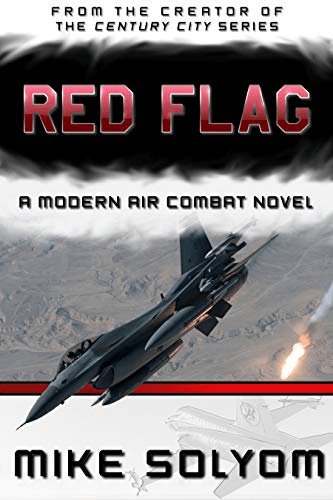
Logan Ryles’ Brink of War is a rather strange action thriller. It’s equal parts 51% action thriller that plods along just fast enough and just well enough to be sufficient (when it’s focused on that), tepid attempt at a technothriller that falls short because of how little research is done on the various pieces of military equipment mentioned (at times it comes close to Ian Slater levels of inaccuracy) and justification sequences. Yes, justification sequences.

See, the premise of the book is that action hero Reed Montgomery (again with the action hero names) is sent to investigate the mysterious downing of this plane called, uh, Air Force One in eastern Turkey. And despite being in one of the most militarized regions of the world, the Americans need an action hero who’s in Latin America at the start of the book. I don’t mind contrivances, but this spends way too much time dwelling on its justification for having an action hero.

So a third of the book is a “decent enough” action hero novel. But two thirds of it are not. I guess that makes it uh, a 16.83% book? Whatever it is, there’s sadly much better cheap thrillers out there.

A Thousand Words: The Assassination of Trotsky

The Assassination of Trotsky

Directed by Joseph Losey and starring Richard Burton as the title character, The Assassination of Trotsky is often placed on many “worst movies ever” lists. It is a well deserved placement. For this is a terrible, terrible movie. And it’s deliberately terrible-it’s not due to circumstances, but due to creative choices.

First off is Richard Burton’s performance. His Trotsky looks like a cheap Colonel Sanders mascot and acts like that aging beatnik professor you had in college and loathed. You will learn absolutely nothing about the historical context from this film. In fact, the only way to make sense of the incoherent plotting is to assume that Losey thought the audience would already know everything historically relevant.

Second is the massive, massive padding. Since it doesn’t take ninety minutes to have an ax hitting someone in the head (SPOILER ALERT!), Losey fills the movie with filler. This includes a scene involving rabbits being raised, a long gondola ride where Stalin’s image appears in the water, and, worst of all, a long and gruesome bullfight scene. The only attempts at suspense involve dragging every scene out and playing minimalist music. This gets old after about, oh, two such scenes.

About the only sympathetic character is Romy Schneider’s “Gita”, who is as confused with the situation and disgusted with the bullfight as the audience is. Sadly, she cannot carry on her own, and is the subject of a padding scene as well.

This is a terrible, terrible mess that’s almost so bad it’s good. Almost.

Review: US Narratives of Nuclear Terrorism

US Narratives of Nuclear Terrorism Since 9/11

Because of my current “itch” for material involving nuclear weapons, I knew I had to read Liverpool University professor David Seed’s US Narratives of Nuclear Terrorism Since 9/11. In spite of its title, this covers material written long before 2001. As I love highbrow analyses of lowbrow fiction, I dug deep into this book.

Doing more than just digging into stuff like The Sum of All Fears, Seed in fact wades through the Augean Stables of fiction that makes up what I’ve dubbed the “shoot the terrorist” subgenre. To have read so many books of that nature seems astounding even to me, who loves cheap thrillers. Some are books that I’ve read from big names like Tom Clancy and Mario Puzo (Fears and The Fourth K). Some are from series that I’ve heard of (like SEAL Team Seven). Others are extremely obscure and unknown to me prior to seeing Seed’s compilation.

This isn’t perfect. At times the book gets a little too stereotypically “academicese” in it writing, and there are the occasional typos here and there. And while it sounds like a clickbait video, I’d have loved to see someone with more technical knowledge critique the plausibility of many of these scenarios. Seed tries and often does a good job, but an actual nuclear expert could probably do better.

But it’s something very near and dear to my heart, and as a review of thriller fiction, I remain in awe of this smooth narrative. Where else could I hear of books like Thomas Fillinger’s Chameleon’s Shadow, where Seed mentions the following plot point in a deadpan fashion:

“Detroit is destroyed when a nuclear bomb detonates by accident, but this proves to be a sideshow from the main search for the leader of the conspirators, who are all depicted as stereotyped fanatics.

It’s plots like that that make me love my reviews. And this brave struggle of a book has warmed my heart. I mean, even I probably couldn’t make it through that many “shoot the terrorist” novels without gaining an insatiable urge to lick the Chernobyl Elephant’s Foot. It’s not Seed’s fault, but so many plot elements repeat throughout his summaries: Warheads stolen by/sold to the antagonists and the dreaded “suitcase nukes” are two of the most common. Granted, this comes with the cheap thriller territory, and these kind of books succeed or fail more on execution than concept, but still.

There are definitely a lot more terrorist nuke books than conventional WW3 books, and this does a great job covering them and (however accidentally) showing the different subgenres of thrillers.

A Thousand Words: Camera Obscura

Camera Obscura

One of many indie platformers, Camera Obscura is the story of a photographer-woman trying to climb to the top of an ancient clockwork tower. The big gameplay gimmick is that you can take photos, and the “afterimages” will move for a bit before freezing. This creates temporary platforms.

A (mostly) slow-paced puzzle game, this is not an easy finish. The excellent (I’d recommend the game for the soundtrack alone) original music kind of fits with each area. The story, which is a combination of exposition about the tower builders and a really pretentious, almost stereotypical love story plot involving the photographer, doesn’t really do so. But it’s a small part.

As far as indie games go, you could do a lot worse. Did I mention the music is amazing?

Review: Act of Justice

Act of Justice

Former SEAL Dick Couch’s Act of Justice is a thriller with one of the most distinct premises I’ve read. If it can even be called a thriller, for most of the book amounts to one strange plotline. When I saw the tagline of “alternate history”, I was intrigued. Though this book really tiptoes on the line between alternate and “secret history”, where there are divergences that didn’t change the results of history as we know it. Taking place in the War on Terror, this book offers an alternate/secret story for how the government managed to find Osama bin Laden. It starts with a Herman Melville-level description of the Abbotabad raid, and then goes… places.

First, Couch uses this as an opportunity to plug his previous books, taking the super secret special hired “Intervention Force” and making them central. While I haven’t read any of them, their inclusion and the references were still kind of glaring and gave the impression of “look at my Mary Sues”. Second, the bulk of the book is, well… it could be called “They Saved bin Laden’s Kidneys” for accuracy. The plan involves using superscience listening devices implanted in a set of fresh kidneys, making bin Laden more useful alive than dead. Most of the effort is devoted to the ways the operation is set up and finally conducted.

It’s fanciful, especially because all the parts of the plan fall into their lap. Thus while different, that’s really all that it is. But it still has the qualities of a 51% book, and I’ll gladly take a Dark Rose-style 51% book with a weird premise over a 51% book without one.

Review: On Nuclear Terrorism

On Nuclear Terrorism

Michael Levi’s On Nuclear Terrorism has been the best book I’ve read in some time. In fact, of all the books and papers I’ve read on this topic, it’s arguably the greatest. Levi takes a holistic approach, using the analogy of a sports team where trying to judge each component in isolation falls short. Although he uses baseball when football is a much better analogy. Oh well.

The decision to look at the big picture as well as noting the issues that alarmist worst-case analysis brings are relevant to much more than countering nuclear terrorism. He also turns “the terrorists only have to succeed once” statement on its head by pointing out that while true, it can also be said that “they have to succeed every step of the way, while their opponents only have to succeed at one”. This sort of reasoning is welcome whatever the subject.

Not that this is a brief overview-it goes into a lot of detail on things like the uses and limitations of scanning detectors and does a lot of detail on gun-type weapons (implosion ones get less effort, because given the issues states have had, non-state actors going for them is arguably pushing it). And he even goes into psychology as well, which is important for the goals of irregular groups.

The impression I’ve gotten from this and other sources is that nuclear terrorism can be compared to Y2K. Y2K was mistakenly perceived as an overblown panic when in reality it was a legitimate issue largely solved by a massive effort when the new millennium rolled around. Similarly, while the threat of even a radioactive Beirut/Tianjin/Port Chicago-level blast (to say nothing of even a Little Boy-level bomb) is a legitimately frightening one, the similarly massive efforts to work against it have (to date of course) deterred even attempted nuclear terror attacks. The Aum Shinrinkyo cult marked the only known attempt at a substantive irregular nuclear program, and it failed despite numerous factors in its favor (lots of money, able to operate openly pre-chemical attacks, and access to Russia at the depths of its 1990s desperation).

Bad sports analogies and occasional clunkiness aside, this is an excellent book.

Review: Tarnsman of Gor

Tarnsman of Gor

The Gor series is perhaps the most infamous science fiction one ever. Yet you’d never know it from the beginning entry, Tarnsman of Gor. What that is is a somewhat sleazier and really, really blatant John Carter of Mars knockoff. As transported Earthman Tarl Cabot goes to a world of barbarians, slavery, and giant birds (the titular “tarns”), a clunky narrative ensues.

The series devolved fairly quickly into what is best known as slave sleaze, where it becomes filled with blocky rants about how men holding women as slaves is the best, most natural form of society, and how many Earthwomen suddenly find themselves loving being slaves. This isn’t as present in the first installment, but Cabot is still not exactly the most ideal protagonist.

More interesting than the blocky prose is how the series got its reputation: I mean, there’s certainly no shortage of outright and far more explicit sleaze fiction, whether in the 1960s-70s or today. So why do sci-fi/fantasy fans turn their anger more on Gor and not those? I’d argue that it’s because it makes the fig leaf of “sword and planet adventure” too blatant, putting it in a different standard. Even Dray Prescot got into mocking Gor, naming a barbaric continent of slavers “Gah”.

But yeah, even in the early, less problematic books, I can unhesitatingly say: Skip Gor. Author John Norman rivals William W. Johnstone for “worst mainstream published author”, and that is no small feat.

Review: Zhirinovsky’s Russian Empire

Zhirinovsky’s Russian Empire

Infamous nationalist politician Vladimir Zhirinovsky recently passed away. Fans of online alternate history know him as the main character of a timeline-turned-ebook called Zhirinovsky’s Russian Empire. In it, Yeltsin is killed during the August Coup and Zhirinovsky ends up in control of the USSR-turned-“Union of Independent States”, with the 1990s going from mostly peaceful to mostly not peaceful.

What this does right is actually using the “snippets of fake newspapers” formats very well. There are elements of drama that are well done, and the whole thing seems like a way to tell a story rather than a way to avoid writing a narrative. However, the biggest issue is the tone, which can go from too serious to too goofy and back at the drop of a hat.

Furthermore, while it’s not intended to be the most “plausible” alternate history, there were more than a few times when my suspension of disbelief didn’t hold up. Zhirinovsky is portrayed as a wild man who barely wins even with dirty tricks, yet he somehow has the political pull to wrestle something as powerful as the Russian arms industry into a 180 degree shift in policy (a so-called “billion Kalashnikovs and one nuke approach). And of course, him getting to power is ultra-contrived to begin with.

But by the standards of online alternate history, this is a good story. It has a proper beginning and end, and is better paced.

Review: Revisiting South Africa’s Nuclear Program

Revisiting South Africa’s Nuclear Program

Apartheid South Africa built a handful of nuclear bombs before the ANC government dismantled them. As a result of that revelation and transparency, it provided an interesting look into a a field that is understandably quite opaque otherwise. David Albright and Andrea Stricker’s Revisiting South Africa’s Nuclear Program show it in depth.

Altough this is a technical nonfiction book, Albright and Stricker nonetheless write well, and it’s quite accessible to non-nuclear physicists. The creation, developmental struggles, warhead production, and removal of South Africa’s nuclear weapons is all covered, and there are several interestingly unique factors about it that the book provides.

The first is a technical tidbit. South Africa went with a conceptually simpler gun-type device in the style of Little Boy. However, their device was small enough to fit on a Raptor glide bomb carried by a Blackburn Buccaneer, and there were (preliminary) plans to boost it to around a hundred kilotons using a special pellet. As most powers have used implosion devices, South Africa’s experience shows how far the basic gun-type can be pushed.

The second is that, unlike other nuclear programs, South Africa’s was comparably well run and efficient. The pragmatic choice of a gun-type was one of the good decisions that it made. And it still took several years in peacetime while running into bottlenecks-most notably the enriching of uranium.

For those interested in the relevant subjects, this book is thus a good read.

A Thousand Words: Mighty No. 9

Mighty No. 9

Judged on its own without any other context, Mighty No. 9 would resemble a mediocre Mega Man-style game. There have been dozens of those, including more than a few in the official series itself. To study it there would not be the most interesting. About the only things I can say for the game itself are that it copied the cheapest difficulty elements (why?) and in everything from plot to aesthetics simply tried to be “as close to classic Mega Man as possible without lawsuits”.

But what is interesting is the ridiculous amount of hype that came around its crowdfunding. Occuring in the “irrational exuberance” phase of Kickstarter and spearheaded by ex-Mega Man head Keiji Inafune, this was one of those “the gaming king came down to make a dream” experiences. This prompted emotion that successful MM-esques like Azure Striker Gunvolt (made conventionally by a firm that had experience on the official games) and 20XX (crowdfunded yet made by an unknown) couldn’t bring.

The result was a ton of stretch goals “met”, feature creep, the project getting out of hand, the mood turning from hopeful to laughable, and then the game itself sinking like a stone when it was finally released. Whether it could have been better or if the expectations were just too great is an open question. What is not is that this was one of the biggest crowdfunding embarrassments.