Review: The Iraqi Army

The Iraqi Army: Organization and Tactics

The NTC special text dubbed “The Iraqi Army: Organization and Tactics” is a valiant attempt at quickly trying to adapt to a different enemy. While the Iraqis used lots of Soviet equipment, their actual doctrine was more British-based on paper and often varied from both (usually for the worse). Just all on its own, it’s a fairly conventional and standard OPFOR document. But I find the context incredibly fascinating.

Like in Lester Grau’s much later The Russian Way of War, a tightrope had to be walked between the observed performance and the theoretical doctrine. Given the latter country’s vast paper trail and its known obsession with quantifying everything, separating the two was/is an easy task. As is/was noticing when theory inevitably diverged from practice, from Grozny to Hostomel.

Here, not so much. The Iraqi Army was notoriously slapdash, so the challenge was even greater. One example I like is that an Iraq War wargame supplement even told the player not to try and use any kind of standardized formation for them at all (!). On the more important doctrine, it acknowledges the flaws shown in the war with Iran, but cautiously and wisely goes with what can be paraphrased as “This may have been an aberration, treat them as a mechanized force worthy of their equipment”. That in many cases they turned out not to be showed the importance of assuming strength rather than weakness.

As a primary source, this is a very interesting snapshot. Plus it’s in the public domain and available readily now.

Review: Conclave

Conclave

There’s this only half-joking thought I’ve often stated in regards to book writing that, if you’re stuck, just write the characters fighting a bunch of crazy bikers. This is a lesson I learned from The Survivalist. And I saw something like that in a place I didn’t expect.

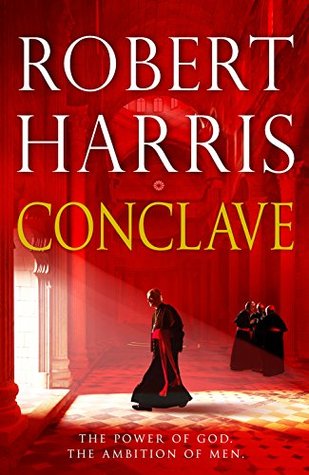
Robert Harris’ Conclave is the tale of a papal succession by a well-known author who’s written the alternate history classic Fatherland. He does not have the cardinals face off against crazy bikers. But he does have them encounter what seems like everything else. The writing itself is often good, and certainly Harris’ skill is on display. The setup of the book is excellent, save for a contrivance where a secret cardinal manages to slip into the conclave in spite of historical precedent.

…And then the plot goes off the rails into more and more melodrama. One of the papabili is felled by baby mama drama. Then another, who steered the baby mama into the Vatican to crush his rival, has his machinations uncovered and his candidacy sputters. Then the main character finds the papal equivalent of Regina George’s Burn Book and metaphorical chaos happens. Then there’s a terror attack outside the chapel (really) and literal chaos happens.

With all of the rivals having shot themselves in the foot (and the book has gotten to the point where a papabili cardinal pulling a Plaxico Burress wouldn’t be surprising), Mr. Sneaky Cardinal then becomes pope. Then in the final twist, it turns out that the new pope was born a girl , mixing the Pope Joan legend with the likes of such highbrow epics as Fate Stay/Night and Sleepaway Camp. The book ends with Pope Joan Angela Saber I Innocent XIV taking the throne.

I mean no transphobia, and think that you could make a perfectly tasteful, good, and profound novel with that (and its discovery) as the premise. But as the biggest swerve in a book full of them, it still comes across as bizarre and tacky. Even if the concept is quite doable, the execution here falls flat.

In fact, as another review in the conservative Catholic World Report has noted, Harris’ sources in the acknowledgements are a little questionable. Imagine a military novel where the sources are well-intentioned and good-hearted but obviously slanted antiwar activists and axe-grinding Pentagon Reformers, and you can get an idea for how skewed this is (even if I agree with a lot of it on the merits as a nonreligious descendant of Lutherans).

This isn’t the equivalent of one of the worst popes ever. But it isn’t one of the best either.

Review: Final Target

Final Target

John Gilstrap’s Final Target is a Jonathan Grave retread. “Grave gets in a tussle down south of the Rio Grande” is basically the plot of the book. Which he’s done before. Oh, and he helps rescue a group of kids/teenagers as well. Look, cheap thrillers don’t exactly have the most intricate plots.

Being a retread, this is a 51% book. There’s little in it that hasn’t already been done in previous Grave novels. But this is a 51% book in the best possible way. It’s comfortingly familiar, and all the fundamentals are sound. The writing is good and so is the action. There are worse things to read than a book in a series you like that demonstrates all the qualities that made you enjoy the series in the first place.

Review: Journey’s End

Journey’s End

Amazingly, surprisingly, the Kirov series has gotten a formal conclusion with Journey’s End. I’d predicted that there was no way for the series to end gracefully after 64 clunky volumes. And my prediction turned out to be accurate. A lot of this is de facto flashbacks to each ill-developed member of the crew. The final battle is just a wargamed clash like the hundreds before it. The hanging threats of Volkov and the aliens are dealt with hurriedly and contrivedly.

The conclusion is “a generally happy ending is stuffed in at the last second due to yet more time travel technobabble.” Schettler was clearly desperate to finish Kirov so he could write a fantasy novel series (which are no stranger to giant, bloated, sagas), and it shows. Still, that a 64 book epic with millions of words was completed at all is no small accomplishment.

A Thousand Words: Alien3 The Gun

Alien3: The Gun

Based off the ugly duckling of the Alien franchise (infamous for killing off the beloved non-Ripley cast of Aliens, for starters), Sega’s Alien3: The Gun was an arcade lightgun shooter a la Revolution X. Unlike that “how do you do fellow kids” game, this actually manages to be atmospheric. The visuals match the movie’s themes well, and the music is excellent.

In fact, this is the rare game that manages to have its cake and eat it too. Alien properties, following in the wake of the second movie, have this tendency to turn xenomorphs into uglier Koopa Troopas, being generic expendable enemies. (The game Alien: Isolation was a deliberate reaction to this trope). Naturally, a light gun arcade game can only do that… but it still manages to be chilling and foreboding too.

Then there’s how the action is jury-rigged into the movie plot. The player controls an anonymous marine who somehow ended up on the doomed Sulaco and goes through all the parts of the actual movie. There are robots, including a giant tank. Despite there being hordes of xenomorphs, the real one from the actual movie is inexplicably more durable as a boss. And finally, the last boss, in a game full of hideous monsters is….. a human with a flamethrower. It would be annoying in other contexts, but here it’s endearing.

This is the rare quarter-muncher with class and poise, and a pleasant surprise from a genre with low expectations.

Review: Siege

Siege

Edwin Corley’s Siege is a 1968 thriller with a bizarre premise. In many ways it’s like the ahead-of-its-time version of Mike Lunnon-Wood’s Dark Rose. Except everything the much later Dark Rose does right, this does wrong.

The premise here is that Black Power militants are holding Manhattan hostage so that the American government will give them New Jersey as a new homeland for African Americans. As a New Yorker, I am obligated to bash Jersey, but I will suppresses the urges here. This makes it seem like the book would be wacky. But it’s actually not. It’s very dreary and sometimes even ugly.

First, the obvious issue. You might think a cheap thriller from 1968 would not be the most progressive or racially sensitive novel. And you would be right. But even by those low standards, the racial content becomes outright uncomfortable too many times here. Second, even leaving that aside, the book is terribly paced. Like Richard Rohmer, it’s just mostly meetings and plans, and the competence of the characters changes on a dime. Skip this book. It’s not worth it.

Review: American Secret Projects: Bombers

American Secret Projects: Bombers, Attack, and Anti-Submarine Aircraft

One of the American Secret Projects series, this book looks at air-to-surface planes from the end of World War II to Vietnam. Covering everything from mammoth strategic bombers to light propeller planes, it’s an ideal aviation niche history book. With lots of illustrations, the obscure become visible.

With this book you can see all the bizarre and erratic 1950s designs. You can see how the AX project that became the A-10 started off as just a rich man’s Skyraider. This is an excellent book for any aviation enthusiast.

A Thousand Words: Streets of SimCity

Streets of SimCity

When I was young, one of my favorite games to play was Streets of SimCity, a car action game that could take place in actual SimCity 2000 maps. Unfortunately, my frustrations with it were there even then. And now? Looking back without rose-tinted glasses, I can say: It sucks.

Here’s the first thing that illustrates why it sucks: You have no turrets and have to turn your entire car to aim like it’s some kind of wheeled StuG. Second thing. You can’t run anyone over. Because Maxis didn’t want to be too violent, Sims are just these weird bald sprites that you can’t really interact with (a contrast to SimCopter, where you can land on or push people out of your helicopter). Even the story hedges, with you being a stunt driver and all the action taking place in-universe on shows-within-a-game.

That it’s a blatant ripoff of the far better Interstate 76 is another blow against it. Combine this with terrible performance and worse physics, and you get a spinoff that spins off the road.

Review: Blood Brothers (Dallas Barnes)

Blood Brothers (Dallas Barnes)

Not to be confused with the Black Eagle Force book of the same name I reviewed previously, Dallas Barnes’ Blood Brothers is the tale of Native Americans, casinos, and underworld intrigue. It’s also the book that, because of its subject matter, has highlighted the inherent differences between me as a writer and me as a critic.

Now the book itself is a 51% potboiler in a genre I’m not the most interested in. Yes, it’s full of cliches and doesn’t make the best use of them, but it’s also competently written. That’s what a 51% book is, basically. What separates it is the element that makes up the bulk of the plot, beyond the opening “publicity stunt gone wrong” incident that drives it.

See, it’s about the struggle to build a casino. Now the reader in me was thinking “is this really the best plot for a thriller? Something as low-stakes [no pun intended] and not really that economically beneficial as a casino?” But the writer in me went “Well, uh, you made an entire book where one of the main plots was about the establishment of an online casino. Clearly you thought it would be a a suitable plot point.”

I’ve said before that I don’t think being a critic has made me a better writer, but do think that being a writer has made me a better critic. This book is an interesting specific example of that. The critic part of me doesn’t think that highly, while the writer part of me can understand.

Review: Parting Shot

Parting Shot

Written by nuclear expert James Kunetka, Parting Shot promised a more grounded, realistic look at the infamous “The Germans have a nuclear bomb” World War II alternate history. When I saw the Sea Lion Press review, I knew I had to get it. So I did.

It’s indeed the most plausible “WWII German nukes” AH out there. In fact, it’s arguably too much so. This is a rare example of the kind of book that’s possibly too realistic for its own good. The Germans go with a gun-type device, because that’s the easiest to build. Although that arguably just shifts the bottleneck from the physics package itself to uranium enrichment-it’s why I’m certain that’s the reason the Iraqis went with a more complex but less U235-hungry implosion design. But then again, having a cheap thriller drag you into plausibility arguments isn’t the best itself.

And make no mistake-the final fight leaves no doubt that this is intended as a thriller. Only the contrivances of that (and other scenes) mixed with the intent to be more realistic leads to an awkward stumble. The very nature of a program that wasn’t even close becoming unrealistically successful is jarring in and of itself. And even the bomb proper didn’t really work for me, being a cheap thriller cliche just short of “HITLER LIVED!”

Finally, the structure of the book works against it being a good thriller. Having stuff told in the past tense and jumping between past and (then) present takes away a lot of the drama. This is still an ambitious book, but it kind of falls apart from that very quality. If it’s too realistic for its own good, it’s also too scattered.