Snippet Reviews: June 2019

So this “snippets” feature is here so I can share books I recently read, but which I would struggle to write in a longer review. So here it goes.

Third Law: Let It Burn

Third Law: Let It Burn is the sort of throwaway cheap thriller it’s hard to write about. It’s at the prose level of a lower-grade self-published book and with a lot of really blocky paragraphs. But at the same time it’s not totally bad, and it worked for a day’s read. The only thing really interesting is that it’s one of the first books I’ve read since Ian Slater to have a domestic militia as the antagonist.

Sweetwater Gunslinger 201

William LaBarge’s Sweetwater Gunslinger 201 is basically “Herman Melville, but with aircraft carriers”. This is not an insult. It’s the story of fighter pilots on an aircraft carrier, not facing any technothriller-level threat (but indeed facing the Libyan Air Force over the Gulf of Sidra-it had to have some action). Good for what it is.

Texas Lockdown

Robert Boren’s Texas Lockdown is the first book out of thirteen in the Bug Out: Texas series, which is itself a spinoff of the Bug Out series (13 books) and Bug Out California (15 books). It’s a combination invasion novel, survival novel, and (unsubtle) political novel. It’s adequate, if cliche, and its focus on the characters makes it better than some. But I’m skeptical as to it being a good starter for a series that long.

The Military Techno-Thriller: A History

The Military Techno-Thriller: A History

I absolutely loved Nader Elhefnawy’s “The Rise And Fall Of The Military Techno-Thriller.” So when I found that he’d written a recent big-picture overview of the genre , I was delighted and eagerly snapped it up. Rather than starting with the classic ‘invasion novels’ of the late 1800s, Elhefnaway moved even further, beginning in the 1600s.

Thus begins a multi-century tour de force, deftly pointing out not only the books themselves but also the cultural context behind them. This book is both long enough to be comprehensive (mostly) and short enough to be easily readable, making it the best of both worlds.

The picture it paints of the “techno-thriller” per se is of a genre that could only really thrive at one very specific sort of time. It has to exist in a period of heightened military tension that can’t spill over into any sort of massive backlash and a period of novel technology at the same. Such a period existed around the turn of the 20th Century and in the 1980s. At least in the latter case, it was not sustainable even without “events”, and with the “events” (ironically consisting of a war in the first period and a peace in the second), both were doomed.

There are a lot of fascinating insights that made me go “a-ha”, for lack of a better term. Elhefnawy’s statement that “Full-scale great power war scenarios like Clancy’s Red Storm Rising, Coyle’s Team Yankee or Ralph Peters’ Red Army (1989) were in the minority” matches what I found after starting this blog-my “blind man touching the elephant” background in wargaming and alternate speculation made me think the ‘big-war’ subgenre of that sort was considerably larger than it actually was. Another insight I found intriguing was the notion that Red Army was as successful as it was because it was novel in large part compared to other Fuldapocalyptic tales. And the tone of the writing, being frequently critical but never sneeringly dismissive, works very well too.

I think my biggest substantive disagreement with Elhefnawy’s conclusions is his depiction of the technothriller now. He mentions the “rise-of-China/return-of-Russia” change in geopolitics, but argues that “Nonetheless, the cultural trends evident in the 1990s proved quite robust”. I think that shift gave the the technothriller a bigger bump in popularity than he gives it credit for, especially given the headwinds it’s had to work against (the fragmentation of publishing and pop culture).

And while I don’t want to nitpick the omission of certain areas in something that’s meant to be a general overview, there’s a few I where thought more detail could have been warranted. In particular are what he calls the “vigilante novels” (ie, Mack Bolan). These are interesting in that they provide a parallel track of pop culture that both stood apart from and moved closer to the technothriller across the length of time. That phenomenon gets a segment but deserved more. There’s also the long-term “squeezing” of the mainstream publishing industry, and a deeper look at how that and the push for big, higher-margin books both helped and hurt the technothriller would have been nice. (It’s mentioned several times, but never in too much depth).

Still, these are just very small critiques for an excellent book that examines an overlooked genre through a variety of interesting perspectives in a highly readable way. I cannot recommend The Military Techno-Thriller: A History enough for fans of the genre.

Review: Atlantisch Crusaders

Atlantisch Crusaders

Collin Gee’s Atlantisch Crusaders tells an alternate history tale of World War II. Namely, it tells the story of an armistice in the west that leads to the formation of an Anglo-American volunteer unit in the Waffen-SS that joins Barbarossa. Now the reputation of World War II fiction, especially concerning those two letters, had me on very, very high alert. I was not going to give it any slack.

In literary terms, it was neither as bad or good as I feared. Historical war fiction isn’t really my cup of tea (I read this primarily because of the alternate history aspect and likely wouldn’t have if it had been a straight historical war novel with volunteers from another country), so I’m not the best judge. It’s not as bad as it could have been (the writing isn’t too bad) but it’s not also not as good as it could have been (the writing is dry and a little AAR-y). So if this was the story of a totally fictional war between Teutonia and Krasnovia without any other context or baggage, I’d have dismissed it as a “49 to 51%” book and left it at that.

But it isn’t. And alarm bell after alarm bell roared in my mind as I read this book. There’s a mention of the “unique comradeship that set the Waffen-SS apart from other forces” early on. Then they cross the border, and the words “hordes” and “human waves” are used to describe the Soviet counterattacks. To be slightly fair, the book does take place in 1941, when the skill gap between the two armies was at its height-but remember, no slack.

But then there’s the whitewashing. One of the first things the legion sees as it enters the USSR is the aftermath of a massacre-committed by Stalin’s security forces. Then there’s tale after tale of captured members of the Atlantisch Legion and their brutal, cruel fate at the hands of the Soviets. It’s not ahistorical, but the one-sidedness combined with the overall tone of the book made me uneasy, to say the least.

In contrast, it takes about 2/3s the length of the book before some of the SS volunteers finally commit an atrocity-and it’s one they’re quickly punished for, and one which many feel “uneasy” about. There’s the handwringing of “oh no, these war crimes are happening”, with the whole “Look, we’re the good noble warrior Waffen-SS, we’re not the murdering Totenkopfverbande-SS” dodge.

Even the nature of the battles the legion fights, with many spectacular affairs against Red Army regulars and their huge arrays of tanks and artillery, is both suspicious (being rear area security is more likely) and contributing to the “wehrabooism” of it all. It read like a western Cold War depiction of the Eastern Front-but it was written very recently. And the rest of the book is not good enough-not nearly good enough- to make up for the moral queasiness I felt with this.

Review: The Omega Command

The Omega Command

blainemccrackencover

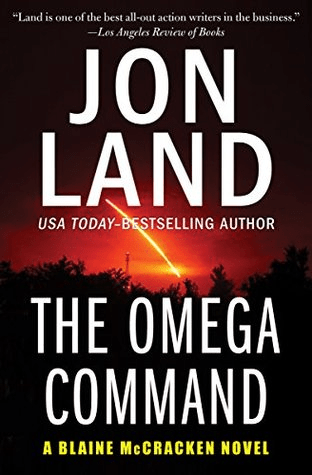
Jon Land’s The Omega Command is the first entry in a series of thrillers starring someone with arguably the best thriller protagonist name ever: Blaine McCracken. It starts with a typical cheap thriller plot involving a space shuttle getting blown up, and then goes on a one-way trip to Crazyville, going from New England to Atlanta to secret mercenary islands to supervillain lairs to outer space.

Blaine McCracken is a “Rogue Agent Who Doesn’t Play By The Rules” cliche. The supporting characters are equal mixes of cliches and stereotypes. The plot can basically be described as this conspiracy theory pileup of escalations, swerves, and “twists” without foreshadowing. 80s Computer Technology is involved, and I would feel comfortable in saying that this is a technothriller. However, it is an off-the-wall bonkers goofy ridiculous monster of a technothriller, and I loved it all the more for it.

This was amazing to read. Simply amazing. Not really a “good” book in the true sense of the term, although the action and pacing essential to every cheap thriller were by no means bad. It was a spectacle, and an ridiculous, stupid, bizarre, and somehow totally satisfying spectacle at that.


Review: Israel’s Next War

Israel’s Next War

Martin Archer’s Israel’s Next War was… strange. I’ve read my share of “boom boom goes the tank” war “thrillers” where there are what feels like five million characters (very few of whom are interesting) and five billion weapon descriptions (very few of which are relevant). Thus I was bracing for the book to be like that, and I was not wrong. But it goes a lot deeper than those surface issues.

First, there’s the action itself between Israel and an alliance of its traditional enemies, where I went “No. No. This isn’t how it would go” on many occasions. I guess I just can’t help myself, being the avid wargamer and historian that I’ve been. Something unrealistic, flawed, or not the most well researched isn’t a deal-breaker (far from it). But given the quality of the rest of the book, it went from eyebrow-raising to  head-shaking. Some of it is good, if a little rote. But more of it isn’t, and it all feels like Archer’s sources were:

  • A half-remembered History Channel piece on the Yom Kippur War.
  • Various “Modern Military Equipment” coffee table books.
  • Command And Conquer Generals.

The technology is all over the place, and the equipment is neither consistent nor particularly accurate. Combined with a dull non-war plot, this would feel like a ramshackle technothriller, if not for the final icing on the cake. That would be the writing style.

Archer writes the book in first person, constantly shuffling back and forth between first-person viewpoints with a label preceding their section. The nadir of this is a character named only “The Iraqi Lieutenant Colonel”, but the others aren’t much better. The prose alternates between the “BBGTT” classic of “Infodumps-R-Us” and something that’s surprisingly (and jarringly) “bouncy”, for lack of a better word. It clashes, to put it mildly.

For all those flaws, it’s not the absolute worst, either in plausibility or or in drama. But the “quirks” noted above push Israel’s Next War from being potentially bad and dull to bad and slightly weird. At least I had fun making this review.

Review: PRIMAL Origin

PRIMAL Origin

Jack Silkstone’s PRIMAL series kicks off with a bang in PRIMAL Origin. This tale of supermercs features solid action, humor that makes the characters more than just the automatons found in the worst action books, and, most importantly, a car chase in a Toyota Prius (it’s a bit of a long story).

This is the kind of book that’s tough to review, not because it’s bad, but because I find it a lot easier to explain how I didn’t like something than how I did. Well, I liked this book. I liked it a lot. As a cheap thriller, it’s excellent and hit all the right notes.

Review: Starship Troopers

Starship Troopers

sstcover

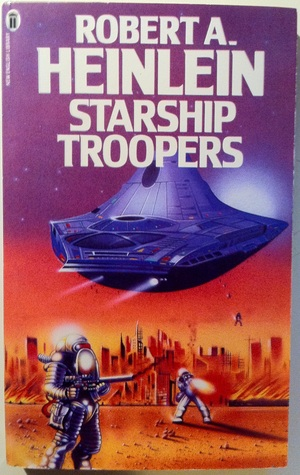
Ah, this book. Starship Troopers is a misunderstood classic. It’s also something where the influence is worse-considerably worse- than the content of the book itself. Heinlein’s famous tale of the Mobile Infantry deserves a lot of scrutiny, and it’s very, very hard to give a “conventional” score.

For the book itself, if the average military sci-fi cheap thriller is an apple, this is definitely an orange. Viewed as a coming of age story, a training story with realistic drudgery, and (however worthy or unworthy the politics) a political piece, Rico’s story is better than it would seem from the perspective of “how many explosions are there?”. If I had to give a critique of the orange that’s independent of that, I’d say the writing tone is a major problem.

The book is written in a sort of, for lack of a better word, “Gee-whiz” style that I recognized from another Heinlein book of the time I read, Tunnel in the Sky. This style happens to not go well with any of the elements. Not the “Space Herman Melville”, not the politics, and not what action there is.

If it was just an orange,  I’d feel better about it. It’d just be a type of orange that I could personally dislike to a degree, but still understand why others would like the taste. However, it’s an orange that influenced a whole lot of apple farmers.


When reading military sci-fi and then reading what I call “contemporary action”, there are differences that drag the former down. Perhaps the most obvious, and the most obviously taken from Starship Troopers, is filling every first part of the first installment with training. Contemporary action heroes, in contrast, tend to just stride in wholly trained. There are exceptions, but those are the trends I’ve seen.

Imagine if, somehow, the romantic-ish Vigdis subplot of Red Storm Rising made the book popular to readers of romance fiction (let’s just assume the zombie sorceress mind control was particularly effective that day). Now imagine that what sometimes feels like every fluffy romance novel you read adopts the structure of a technothriller, with a lot of viewpoint characters, a lot of sitting in conference rooms giving details of little particular relevance to the (crowded out) main characters, and a general “big-picture” scope that doesn’t seem to fit the small, intimate story you’d expect from a romance. And you just stand there going “no, no, Red Storm Rising wasn’t a romance, it was the story of a third world war! It didn’t really fit but people are copying it anyway!”

That’s what Starship Troopers has done to military science fiction. I don’t want to put too much blame on it or any one book, but it’s a definite influence in that negative direction, and, apple or orange, I don’t see the original as being good enough to make up for the way it pushed its genre down the road of the (pun very much intended) “spacesuit commando.”

Review: The Fourth Reich

The Fourth Reich

bef4cover

After the cataclysmic misfire of Blood Ivory, the Black Eagle Force series returns to its greatest form in The Fourth Reich.

Following in the wake of such great literary works as the Bionic Commando video game and that deep, haunting movie, They Saved Hitler’s Brain, the book pits the BEF against the high-tech Reich from its base in South America. Any book that has Hitler reawaken in a clone body and immediately demand to know where his mustache is can’t be truly bad.

And the BEF is never more in its element then when it’s dogfighting against Horten flying wings. This is the kind of enemy they were made to face. Thus this book, for all its slight clunkiness, remains as big a joy as Eye Of The Storm and Sacred Mountain were.

Review: Blood Ivory

Blood Ivory

befbloodivory

Blood Ivory is the fourth entry in the Black Eagle Force series, detailing the super-team in their super-VTOL aircraft as they face terrorist poachers and cruise ship hijackers.

It’s also where the series simply collapses like the Hornets did in one infamous 2009 playoff game. Almost everything good and distinctive about it isn’t there, and everything that’s bad and derivative about it is. The names get even worse, and the politics (particularly at the “climax”) go from “stupid, wish-fulfilling, and strangely charming” to “stupid, wish-fulfilling, and creepy”.

But those are the least of its problems. There are two bigger ones.

  • The fundamental flaws with the rest of the series are there, and made even worse by a descent into jumping technothriller plots.
  • Substantially worse, the central “more Mack Maloney than Mack Maloney” gimmick is tossed aside almost completely. Past BEF books, particularly the first two, had opponents suitable for the super-VTOLs. This one just doesn’t.

What’s left is what amounts to two intertwined fourth-rate “small unit thrillers” that have, you guessed it, most of the weaknesses and few of the strengths of that subgenre. They’re too silly to be good “serious” thrillers by far, and they’re too mundane to be good “goofy” thrillers.

It’s uncommon to have a book series misfire so dramatically in one entry, especially one without excuses like editorial pressure (this series is self-published) or changes of writers (not evident here). But this book misfires indeed. It’s like the time Captain Beefheart tried recording “normal” music, taking something where the eccentricity was the biggest draw and leaving only mush.

Writing And Blogging

Over at my other blog, I have a piece explaining it in more detail, but I’ll say it here as well. I’m slowing down Fuldapocalypse and putting it on semi-hiatus, not total by any means, but not at the pace I have now.

  • I’m concentrating on long-form writing, and want to slow down my blogging, as I want to get into the habit of long-form “marathons”, not short “sprinter” posts. Especially as my Fuldapocalypse posts have been getting shorter.
  • I’ve been sinking into a weird habit where I’ll pass over later installments in series where I loved the first book, but grab, read, and even review the same installments in ones where I thought the first one was merely decent at best.

That being said, I have no regrets about doing what I’ve been doing at Fuldapocalypse. It’s given me a lot of enjoyable books to read and share, and I’ve had a lot of fun making the reviews.

I have a few mostly finished reviews I can post to help it along a little longer, but just thought I’d give the heads-up.