
I heard a complaint in a review that character names were just like real ones only changed slightly. However, I disagree. Slight changes from real historical names are actually realistic. Look at all the variants of John, Juan, Jan, Jean, Johann, etc…, which goes back to the Hebrew/Greek Biblical roots of it. So far from being bad, I think it’s a good way to make the characters distinct and at the same time relatable/understandable.
Wither GTA?
With the official trailer for the next Duke Nukem Forever Grand Theft Auto 6 finally being out and the game having a vague ‘sometime next year’ release date as of this post, I’m reflecting on how uh, “meh” a lot of people are about it. Since it’s been over a literal decade since the release of the previous installment, which is about as much time between GTA III and V. Back in the day, when we had to walk uphill both ways, for people’s consensus to be “ok, something to look out for” at best and dread at worst would be as unthinkable as the Cubs winning the World Series. But here we are.
So what happened?
- Diminishing returns in graphics making it harder to razzle-dazzle people with its visual brilliance.
- A decade of both seeing the issues in the series and seeing more open world games to the point where it’s arguably played out.
- GTA Online, a monkeys paw that brought Rockstar piles of money at the expense of reputation. GTA V was able to continue getting griefers and Xbox Live Kids to buy shinier and shinier gimzos with real money, at the same time making it a joke to everyone else. And not the good kind.
- The issue of what tone to adopt, where a mixture of blended ChatGPT-made (ok, I might be a little hard on the AI) scrambled crime drama mixed with juvenile ‘shocking’ Bart Simpson meets Dennis Rodman antics that were a little edgy in 2001 that the series previous had has aged horribly…. but with reasonable confidence that what’s left of Rockstar might not be able to do something differently better.
I still think it’ll be playable, make a gargantuan amount of money, and look good. But the old-time hype is just gone.
Review: Unclear Physics
Unclear Physics: Why Iraq and Libya Failed to Build Nuclear Weapons
In Unclear Physics, Malfrid Braut-Hegghammer takes a look at the ultimately unsuccessful nuclear weapons programs of Saddam’s Iraq and Libya. Instead of a technical perspective, she looks at them from a political/organizational one, showing how poor state structures (in the case of Iraq) and nonexistent ones (in the case of Libya) hampered them. From the outside, there aren’t any shocking revelations: Iraq could have had a bomb by the mid-late 1990s without the Gulf War or a similar catastrophe, while Libya’s was going nowhere by 2003.
But from the inside, it’s a detailed look at human failure,in terms of dealing with low technology, dictator paranoia, dictators not understanding, and disorganized factionalism. Some of it comes across as legitimately fun to read.
Unclear Physics has two big apparent weaknesses. The first is its academese tone. The second and worse one along the similar nature is that she writes in a kind of inside baseball tone as if this an argument among nonproliferation academics, saying “the conventional wisdom says ______” when she means the previous conventional wisdom among people in that very small niche. It’s arguments that I’ve never even heard, for better or worse, as someone who’s for an amateur read up a lot about nuclear proliferation.
But this is still a great book at showing the soft human side of an otherwise hard technical issue.
Review: Icebreaker
Icebreaker
Perhaps Viktor Suvorov’s most infamous work is Icebreaker, a revisionist historical book that claims that Stalin was juuuuuust about to invade the rest of Europe from the east when the Germans launched a preemptive attack in 1941. What makes this not just wrong in the sense that his book on the hyper-Spetsnaz was inaccurate but outright disturbing is that someone else publicly stated such a claim repeatedly. Said someone else was famously portrayed in a movie by Bruno Ganz.
Thankfully, the book itself does not make the best case for this incredible claim. It’s not just that with hindsight and primary sources (that Suvorov inaccurately claimed were destroyed to cover them up) the image of the shambling wreck in peacetime formations that was the 1941 Red Army facing off against the bunched-up offensive force of the 1941 Wehrmacht. (Fun fact BTW: The Germans actually had a 3-2 numerical advantage in the early part of Barbarossa, and even more in practice if you account for the terrible logistics of the Soviets then).
The only evidence besides ‘trust me bro’ that Suvorov puts forward is basically “The Soviets had lots of ____ [such as fast tanks and/or paratroopers] that clearly meant they were meant for an offensive into western Europe.” It couldn’t just be that their doctrine was on mobile warfare and that they tried and failed to implement it defensively.
I knew about how bad its premise was, but I wasn’t expecting so weak an argument. Which is probably a good thing. Unlike this book.
Hunter
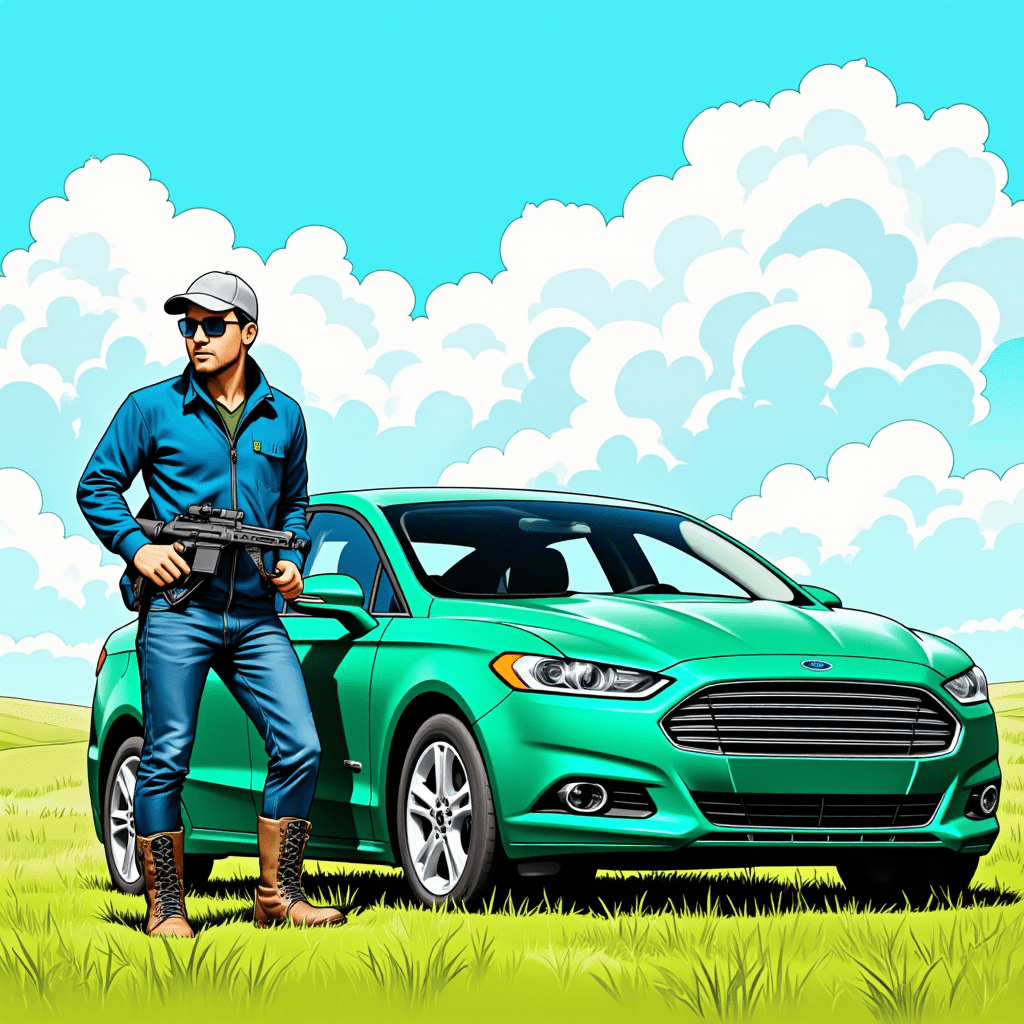
AI Art, generated in Flux. Hunter. Of what is up to your imagination.
A Thousand Words: BeamNG Drive
BeamNG Drive
One reason why Fuldapocalypse hasn’t been updating much is BeamNG Drive. It is an automobile sandbox with realistic physics that allows someone to do so much. Now on its own the game does not look like much. You can drive around maps that range from tiny to several virtual square kilometers, do some challenges like races or time trials or seeing how far you can get on an almost empty fuel tank, etc…
But that is like saying like sports is just throwing/kicking a ball around. With just the stock game (and the mods for this are numerous and excellent), you can control everything from big truck fronts to tiny old cars. The seemingly mundane can turn into fun, like towing a trailer with cargo many times the weight of the car pulling it, and doing so on a dirt mountain road without mishaps (easier said than done).
You have to make your own fun in BeamNG, but there’s a lot of it.
Classic Cars Were Terrible
So yeah, time to bust the legend of super-classic cars. In short. They sucked.
This video shows the biggest reason I dislike “classics”. They were/are horrifically, monstrously, massively unsafe. Bad seatbelts even assuming people wore them (they didn’t), cars that were basically metal sculptures designed with no concern for the people inside in mind, and yeah.
Ah, but what about the handling? Good question. Your car engine was either so underpowered that a modern econobox can match it or it was a gargantuan rocket inside a frame that could barely contain it, which doesn’t exactly help with safety. And said engines burned through gas so massively that the supposed halcyon days of cheap gas (even beyond inflation) often actually weren’t. Oh yeah, and they were tremendously space-inefficient.
But they built them to last unlike todays evil capitalist planned obsolesence machines, uh…? Well, I’ll just point out that an odometer on an old car being a full order of magnitude (10 times/1 digit) lower in max numbers speaks for itself. But even if it didn’t, you remembered the survivors who stuck around, the lovingly maintained Cadillacs and not the five millionth Chevy Nova that instantly broke down.

So yes, in everything except raw performance (and sometimes not even then), this rightfully regarded bottom-feeder 2017 Mitsubishi Mirage is vastly superior to the fin-boats of old.
Review: Hooves, Tracks, and Sabers
Hooves, Tracks, and Sabers
Raconteur Press’s Hooves, Tracks, and Sabers is an anthology of alternate history cavalry stories. You get helicopters in Southeast Asia (but not the way you might think), airships (of course) in the American Civil War, and plenty of good old horsies. While none of the stories are bad, a lot just feel like historical fiction with different names, which is a problem a lot of alternate history unavoidably has (I think that World War IIIs actually avoid this by being something so completely different from say, the Vietnam War, but that’s another story).
Thankfully, there are ones that go above and beyond that. My favorite is a World War I divergence where the Tsar Tank actually works. How can you not love a giant armored tricycle? Anyway, while the execution may not be the best in every case, the concept is so great that I still recommend this collection (and lament that I couldn’t write a story about armored recon units in the Soviet-Romanian War for it).
Review: The Athlete
The Athlete
With football/handegg season now upon us, I figure a sports book is in order. As good as any other is Jon Finkel’s The Athlete, a biography of Charlie Ward, a quarterback who won the Heisman Trophy and then went on to a long and successful pro career…. as a basketball player. Especially since, by basketball standards anyway, Ward wasn’t even very tall.
To get the negative out of the way, this is a rose-tinted view of him that excuses one of his most infamous incidents (which thankfully just amounted to him saying something dumb and not doing anything). It also praises him as if he was Jim Thorpe or Bo Jackson, which is just a little too much in my eyes. But it’s still an interesting look at a man who succeeded in two places where almost everyone can’t succeed in one.
A final interesting piece is that Finkel doesn’t really try to answer the counterfactual everyone is going to ask: Could Ward have been a viable NFL quarterback? Could have been Russell Wilson two decades earlier, or an undersized runt who’d get crushed by pro defenders? The correct answer is “We don’t know”, but it’s a little disappointing to not even consider it.
While not the best book, this is a good look at someone I knew growing up from his time on the Knicks.
The Worst Pilot Ever
On May 22, 2020, Pakistan International Airlines Flight 8303 crashed in Karachi, killing 98 people. Its pilot, Sajjad Gul, may have exhibited the worst judgement and skill of any pilot involved in an air disaster ever, and he and almost a hundred other people paid the price.
In written and video form, it’s horrifying to behold. There was good weather, a familiar and established plane, no mechanical issues, no foul play, and nothing save for someone who went in on a crash course, had countless opportunities to step back from the brink, and did not.
Absent pilots who crashed on purpose or otherwise did things like make bets that they could land blindfolded (they couldn’t) or reenact the flight of Icarus, this is the least competent aircrew I’ve seen. By the final too-late moments, Gul and copilot Usman Azam were apparently trying to do two contradictory things (which gives you a sign of how bad the crew resource management was).
 Fuldapocalypse Fiction