So in Action PC Football, I decided to simulate one of the classic Madden moments. Up by multiple touchdowns with one second left in the game and somehow almost in their own end-zone, the Packers naturally try a pass play with the quarterback in the shotgun formation (standing some distance behind the center when he snaps the ball).
Rodgers throws the ball to wide receiver Greg Jennings, who catches it and runs. With a broken leg. He makes it across the field to score and avoids Darren Sharper, one of the most hardest hitting safeties in the league.
So under a far more grounded simulation, I used the play analysis tool, running 10,000 repeats of the epic play.
It was a traditional pro set of 2 running backs, a tight end, and two wide receivers, including Jennings.
The pass was a medium fly route. “QB Must Pass” was set on, because otherwise the ball would often get thrown to someone else and that wouldn’t be Jennings putting the team on his back now, would it?
Wide Receiver and Running Back wear and tear was set to the highest level to simulate the effect on Jennings’ leg.
Otherwise no special plans were done.
Jennings reached the end zone and scored 21 times out of the 10,000 plays.
51.7% of the passes were complete. The average distance Jennings made it after catching the ball was 10.3 yards.
7.4% of the passes were intercepted by the Saints.
Today is Veterans Day, or Armistice Day at the end of World War I. Now I’ve said many times-I’m a soft sheltered civilian who could do absolutely nothing in a real fight except get killed. I also have no immediate family who have served in the military. That being said, even though all my knowledge comes from secondary sources, I feel pretty confident in saying one thing, which I think today is as good a time as any to say it.
Veterans simply cannot be lumped into any one category.
And I’m not even talking about different countries, different wars, different branches, different specific units (of course an administrator in the back who faced only the occasional rocket, be it a V-2 or Type 63, is going to have quite a different experience from the tip of the spear). Seriously, the accounts from people in very similar places and roles at the same time can be totally different, as do their beliefs on everything from politics to military doctrine.
Granted, I think part of the problem is pop culture having a tendency to treat the military with the two extremes of either “John Wayne” or “Oliver Stone”. Which is at least understandable, I mean I can give a lot of it the benefit of the doubt. It’s just that “Yeah this isn’t like Hollywood” just makes me go “uh, and? Yes? Fish live underwater? The New York Knicks are not a good basketball team?”
Bringing this to my own writing, there’s not much precedent for how to describe the experiences of a female forward nurse from Kyrgyzstan fighting in the most intense nine days of battle since 1973. So with regards to All Union’s Cholpon, I guess I have to hope I did my best.
And yes I know a lot of you hate it when we say that but to all veterans who served honorably, thank you today.
Now that the focus has changed (a little), I figured I’d do an infodump of something in my mind that I probably wouldn’t get to and honestly shouldn’t elaborate on in the next All Union installment. Enjoy.
In All Union’s timeline, Poland has the world’s fifth or fourth-largest nuclear arsenal.
Plutonium Production Reactor: 2x H-250 (PL) reactors: Nowe-Vistula
On May 20, 1992, Poland detonated a 1.1 kiloton plutonium “physics package” at the Opole Test Site. This was a rushed, improvised device of essentially no practical usability. The bomb was cobbled-together from reactor-grade plutonium taken from the Ignalina power plant in nearby, friendly Lithuania. It was intentionally fizzled to prevent the explosion from being too big, and was controversially detonated above ground to ensure the world knew. But a frenzied construction of nuclear arms and infrastructure began.
The fuel cycle starts at the processing plants. The main and largest by far is the redox chemical plant by Gdansk. The process there is inherently proliferation-resistant due to the fact that it takes a long time to make LEU, and an impossibly-long time to make weapons-level material (as in, over a decade). Low enriched uranium is taken from Gdansk and assembled into fuel rods for reactors home and abroad.
Poland in-universe has seven civilian reactors in two plants. One has three units of 300mw reactors and is located about 30 kilometers northeast of Bydgoszcz. The other has four 600mw reactors and is located near the German border slightly south of Szczecin. All are pressurized water reactors, although the Szczecin plant is of a substantially more advanced design.
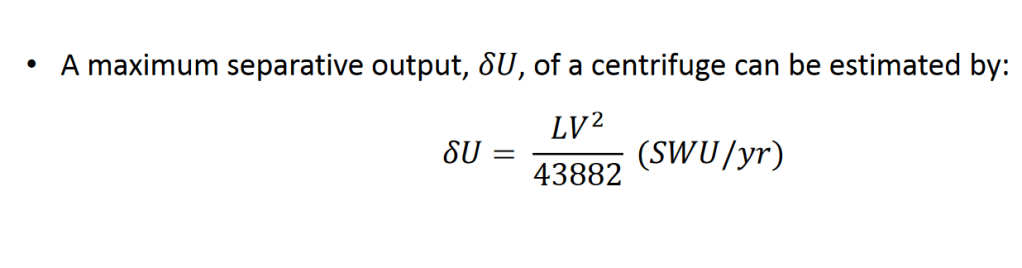
However the uranium can also go into the three centrifuge collections, where it is enriched to weapons-grade levels. This makes up one half of their nuclear weapon path. Using LEU enables them to work more effectively than they could with raw uranium.
While the first proper plutonium bombs were made from “goosing” the Ignalina reactor, it was not a sustainable long-term solution. The Poles responded by building two Hanford-style graphite-pile production reactors near Nowe.
HEU and weapons-grade plutonium is taken to the highly classified Powidz assembly facilities (home to a historical/real air base) where the actual warheads are made. Every remnant is taken to the gigantic reprocessing/separation center at Ostroda, known as Nowa Energia (New Energy). There everything from MOX fuel systems for export to depleted uranium bullets are made (the Polish nuclear program makes a lot of DU, so they incorporate it into their arms industry).
For the finished products, Poland is believed to possess around two hundred warheads. It uses a dyad of aircraft/air-launched missiles and ground-based TELs. Naval deployment has been considered but is not believed to be practical as of the setting present.
Sea Lion Press published an anthology featuring alternate World War Is called N’Oubilons Jamais. Full of short stories, there is one that makes the anthology worth it all by itself. That is “The Modern Knight” by Jeff Provine, and it is amazing. The divergence is that instead of tanks, they go for people in Ned Kelly style body armor. The result is something that looks like a World War I version of GTA V’s “The Paleto Score”
Anyway, the rest of the anthology doesn’t quite come up to that masterpiece, but it’s still well worth your while.
With the B-1(A) cancelled, Rockwell took a look at a variety of bombers that ranged from “deliberately low technology for the sake of development time and risk” to “LASER GUNS” (seriously). The bomber needed to have a payload of 50,000 pounds, mostly in the form of sixteen nuclear-capable cruise missiles. It needed a strategic mission range of about 5,200 nautical miles with said payload.
The five main examples were:
Subsonic, low technology/cost
Subsonic, lowest weight
Supersonic
Stealth
LASER GUN
The resulting report makes for very interesting reading. One of the more interesting proposals that’s mentioned but not elaborated on there is the modular plane that could be a bomber, an AWACS, a transport, and more.
What implied stats emerge (I’m not an aviation engineer) show the cargo version of the bomber as having neither the raw payload capacity of a heavy airlifter (the payload charts only went up to about 40 tons/80,000 pounds) nor the ruggedness of a light one (the takeoff distance, though impressive for a heavy bomber, is less than a dedicated airlifter). And that’s even before considering the issues with a modular pod (there’s a reason why very few transporters like it have been built). Still fun to think about.
Have you ever wished that you could just throw two armies against each other? Have your playthroughs of Command: Modern Operations or other wargames largely just consisted of setting up artificial jousts in the level editor? Don’t want any of that pesky “tactics” or “detail”? Then Ultimate Epic Battle Simulator 2 is the game for you!
There’s a campaign mode and the ability to play it as a makeshift real-time-strategy game, but the true meat of UEBS is to just line up a pair of armies on a map, like a literal million ancient soldiers against an artillery brigade with a contemporary infantry company screen, and watch as they charge at it. It’s not exactly deep but it is very fun.
In fact, it’s weirdly informative about actual battlefield dynamics, because taking away any kind of tactical management means you can see the other factors at play. I was pleasantly surprised to see a small number of melee units I put in making an outsize difference as they fixed the opposition and let the ranged units fire on them more freely. You can see terrain effects as your giant hordes struggle to make it through bottlenecks.
So there are a lot worse things to get than UEBS2, especially since mods mean you make even more fantastical clashes.
E.R. Johnson’s American Military Helicopters is one of those giant encyclopedias of aircraft that appeal only really to a certain group of people, but which appeals a LOT to said group. This is a huge catalog of everything that has either had a rotary wing or a vertical takeoff feature that either entered or was considered for American military service.
So you get stuff like the UH-1 and F-35B. But you also get obscure projects from the 1950s and 60s that ranged from gargantuan lifters that challenged the Soviet monsters in size to literal flying jeeps. The history nerd in me complains that it didn’t go as far into the VTOL weeds as it could have, but as an expanded “coffee table book”, it’s excellent for what it is.
I talked about my fictional 7th Marine Division before. Now I have a more detailed personal organization (though still undoubtedly rough and with inaccuracies). Here it goes. ORBAT chart courtesy of the Spatial Illusion Unit Symbol Generator.
Paramarine Regiment
The Paramarine Regiment is like many other light airborne units, with the exception that it has four battalions instead of the usual three and its artillery battalion has thus been increased to four cannon batteries likewise, along with the other regimental support units similarly beefed up. This is to allow each battalion to serve as an independent combined arms unit to hold ground if necessary (ie around a battery in a fire support base with a battalion of infantry and an LRP platoon and light AFV platoon).
The actual battalions are largely standard triangular airborne infantry battalions.
Raider Regiment
A lighter force with less organic capability, the raider regiment is simple, with three battalions, each of three raider companies and a heavy weapons company. A regimental intelligence battalion is included because of the importance of intelligence and planning to their missions. It’s meant as a direct action-slanted commando force ie the classic Rangers.
SOF Regiment
The SOF regiment has three SOF battalions, below which any formal organization would be varied and inexact by nature (each has a number of teams, varied as you’d think, but around 10-15 each). Its communications/intelligence battalion is there similar to the ranger regiment.
Divisional Assets
Divisional assets are just more support and administrative elements, there because the 7th is not intended to be a “field” organization.
Logos
Some Stable Diffusion concepts for the logo of either the division itself or one of its subunits. You’ll notice a theme of black birds. Yes, I know crows are already the mascot animal for electronic warfare units, but oh well.
Usage
It goes without saying that in All Union, the 7th Marine Division was formed and saw action, including the 2002-2009 conflict in Western Sahara that marked the largest and bloodiest war the US military fought in that TL. If I ever need a fictional American commando force in my writing, I can always use it.
TJ Newman’s Falling is a thriller about an airliner pilot faced with an ultimatum on a previously routine flight: Crash on purpose or your family gets killed. Reading it gave me a weird feeling. Not a bad feeling, but a weird one.
I’ve seen reviews that have said “this book was clearly trying to be a movie”. And this is a very, very blatant example of this. It’s not a bad example, and neither is it a bad book. I was reminded a lot of the movie Speed, which is not exactly a horrible thing for a thriller to remind you of. But at the same time, people remember Speed a lot more than they remember the novelization of Speed, because it’s the kind of thing that’s far better told in visual format.
Not surprisingly, this book is being made into a movie. I’ll have to see how that turns out, but I’ll just say that if being too much like an action movie is the worst thing in a thriller, it’s a good thriller. Especially if it’s written by a veteran flight attendant who thus knows a thing or two about airplanes.