Eric Meyer is one of those authors who just writes a ton and ton of ultra-cheap thrillers. I’ll even admit that I had to check to see if he was a real person and not just an obvious pen name shared by multiple actual writers (the answer is “yes, he is a real person as far as I can tell”, by the way). This is the kind of book I’m dealing with when I read Grant’s War.
The premise is simple. It’s a war novel where protagonist Jack Grant, after being (mostly) falsely convicted, faces the stereotypical “army or jail” choice. He chooses the army just in time for 9/11 and the war in Afghanistan. And he gets there just in time for a scene where he grabs a red-hot AK by the barrel and throws it aside before dispatching its wielder in a fistfight. So, in other words a lot more Jon Land than Jon Le Carre.
While this book is not exactly one that contains deep characterization or excellent literary fundamentals, it’s nonetheless good by the standards of the assembly-line slop that makes up its genre. And that alone is enough for me to recommend it.
Command Modern Operations has finally been officially updated to run as a 64 bit program instead of the 32 bit one it was previously. The list of changes and additions in this mega-update can be seen here. It’s quite the big leap!
In the late 1940s, Hungary, fresh off Soviet conquest and the statistical worst hyperinflation ever recorded, was rebuilding its military. Not surprisingly, the plans reportedly called for a force structured along Soviet lines and doctrine. But surprisingly, the centerpiece was on ridiculously large infantry divisions. How large? Paper strength of at least 25,000 people, but that doesn’t describe all of it.
No, comparing the number of infantry battalions ultimately under divisional control draws this insanity into better perspective. The archetypical triangular infantry division has nine (three in each of three regiments/brigades). The square division largely rejected as too big and clunky had twelve (three in each of four regiments). This had sixteen. Four regiments of four battalions each.
There’s a reason why these actually weren’t made and why, even beyond the impact of the 1956 rebellion and short leash, Hungary’s army in actuality remained conventionally Soviet-styled for the rest of the Cold War.
There are several things that are all true about the Robert Redford movie The Natural, the baseball story that “adapts” Bernard Malamud’s novel of the same name to the screen.
It is a shallow and sugary but well-shot and well-made movie.
It is about as faithful to the original novel as a Minnesota politician is to her husband.
It’s perhaps the most prominent sports alternate history ever made.
The first part needs the least explanation, except to highlight how amazing Randy Newman’s score is. The second part is the more interesting to explain. See, the novel is in many ways just as shallow as the movie, while being far more mean spirited and, frankly, dull. One great inherent part about filmmaking is that via the trick of “the ball hits something which goes boom”, you can see what awesome thing Roy Hobbs did instead of just having someone say “he lead the league in homers and triples and hit lots of home runs until his character brought him down.”
The final point needs some attention. See, Roy Hobbs and the New York Knights obviously did not actually exist, much less win the 1939 National League pennant. But a more important thing is that instead of taking place in a vague “sometime in the past” the way the book did, this has a specific date (1939), and said date is several decades before the filming and release of the movie. If that’s not alternate history, than what is?
Ok, “How many shells were fired in the opening megabarrage of a multi-front offensive operation, such as a Fuldapocalypse or All Union’s invasion of Romania?”
Going with the latter because it’s my book, I finally have an answer that’s easier than a vague “Over a million.” Going with “Sustainability of the Soviet Army In Battle” and “Front Operations 1977” as main sources.
A unit of fire for each artillery piece translates to about 80 for 120-122mm, 60 for 152mm, 160 for BM-21s, and 120 for smaller mortars (sust., pg 68). GENFORCE Mobile has similar numbers but adds 40 for big 203+mm pieces. I’ll just split the difference and say 70.
“Thus, for instance, in armies operating on the axis of the main attack, the expenditure of artillery and mortar ammunition in the first day of combat actions without the use of nuclear weapons may be 2.0 to 2.5 units of fire” (front. pg 309)
A front is described in the same document as having 3,400 to 4,200 artillery pieces (front pg. 12), so a very basic napkin calc for two fronts gives 1,176,000 shells. That’s about 25,000 tons even if you assume “only” the weight of a D-30 round for each shell.
So yeah, 100-150 x the number of total artillery pieces for an extremely basic ballpark figure.
A while ago I did a post on the various Sovereign Union Mobile Corps in All Union, which included their “mascot” animals that appeared on each emblem. Now that Stable Diffusion XL has been released, I’m delighted to say that their logos became a reality. (Note: Some are rougher than others. Goal was general idea)
17th Corps
Starting things off is the 17th Corps that heroine Cholpon Murad-Kyzy served in during the Soviet Romanian War. Its mascot is the Huma Bird, and I chose the output/prompt that didn’t look so much like an eagle. Located in Central Asia, it serves as the de facto strategic reserve corps, being ready to go east, west, or south in equal measure.
5th Corps
The Belarusian 5th Corps is a bison. Historically, it was the only such corps actually made (and not have a bison as its symbol.)
7th Corps
The 7th Corps is an elk. Not much else to say about it.
26th Corps
The Northwestern TVD’s 26th Corps has the Karelian Bear Dog as its mascot animal. It did not participate in the Soviet-Romanian War, but in the event that the All Union and Northern Fury timelines were fused into one combined World War III, it would be the central Soviet force in Norway.
28th Corps
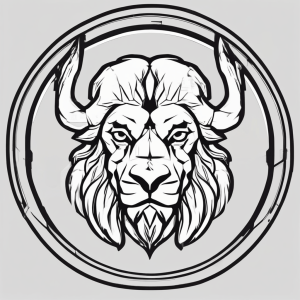
The Lviv-centered 28th Corps is one of the main units opposite new archrival Poland. Its symbol is a fairly plain lion.
64th Corps
The Donbass-garrisoned 64th Corps was in many ways the “pet” unit of legendary reformist president Anton Yatchenko, who happened to come from that area. Its symbol is a nightingale, and it was one of the key units in the Romanian War.
32nd Corps
The Crimea-based 32nd Corps was the only such one to serve in the southern Danube Front, and it only entered the battlefield after the initial Soviet-Bulgarian force had established firm bridgeheads on the northern side of the river. It’s the corps with the most focus on amphibious, airborne, and light infantry operations. Rumor has it that part of it is earmarked for a separate attack on Iceland. Its mascot is a hippocampus, a mythical literal sea horse.
43rd Corps
With its cartoon mosquito being the most whimsical logo of the entire army, the 43rd Corps is the primary mobile corps opposite the old and rising enemy: China. Because of this, it was never even considered being sent west to Romania in 1998.
57th Corps
The leaping lynx that is the 57th is the other Far Eastern mobile corps. Like its “brother” the 43rd, it did not fight in the Romanian War. However, it was on standby along with the 26th in case a second mobilization and major operation needed to be launched (it didn’t).
Sidney Sheldon’s The Other Side of Midnight was his breakout mega-successful novel. It is also by far the worst he’s written in hindsight. So you can guess why I was less than enthusiastic about reading its sequel, Memories of Midnight. The least interesting book and setting getting an expansion?
Thankfully, I could see from the first few dozen pages that this was better. The Sidney Sheldon formula he developed after Midnight was obvious, and that’s not a bad thing. Young Constanin Demiris is more interesting as he heads to Saudi Arabia, and Sheldon’s research into both the mechanics of oil drills and the “desert queen” phenomenon where scarce western women become fifty times more attractive in such an environment is a lot better than “here’s Aristotle Onassis”.
Sadly, we had to return to Catherine The Dull, the “heroine” of the last book before she got amnesia (long story). Which leads to a pattern in this book: When it goes back to its wretched predecessor, it doesn’t often work (although shipping tycoon Demiris is far better an antagonist than the two in Midnight, or even the past version of himself). When it stretches its legs into the world of the pop epic Sheldon excelled at so much, it works. There’s even an eerily prophetic courtroom scene where a super-defense lawyer in a high profile case uses a physical prop (I won’t spoil it) in a way that reminded me of the later OJ Simpson trial to get his client acquitted.
This weird trend makes it below average by Sheldon’s standards. But below average is still better than “bottom of the barrel”. It’s far better than its direct predecessor and in isolation is perfectly readable, but I still wouldn’t recommend it as anyone’s first Sidney Sheldon book. Even an excellent conclusion that involves a million double crosses and Chekov’s Heating Boiler (seriously, it was foreshadowed in a way that made me smile) can’t totally redeem it. But it can make for a massive improvement….
How much nuke-metal can you get out of Reactor X? As it turned out, nuclear proliferation scholar David Albright came up with an oversimplified rough formula, which he wrote in a briefing.
You need:
The thermal energy created by the reactor. Note that thermal megawatts are different and greater than electrical megawatts.
The capacity factor. As I’m not any kind of scientist, I would say just go with Albright’s recommendations or make it even lower than 0.5 if you’re using a press-ganged power reactor to simulate the extra work needed.
The conversion factor. This is obvious in the slide for purpose-built production reactors, but for adapted ones, you need to look a little deeper. Fortunately, the same presentation has a comparative slide.
(Again, do not quote me on this. The very presentation says “this is for production not adapted reactors”, but oh well.)
So:
200mw production reactor: 200×0.6x365x.85=37kg of weapons grade plutonium in a year.
Adapted LWR power reactor: 1,400 mwth, wastage: 1400×0.35x365x.51= 91.2 kg of weapons grade plutonium in a year.
A Fat Man-level warhead is estimated to need anything from 6.5 kg (very low technology, used in said bomb itself) to 3kg. See here and here.
Hell To Pay: Operation Downfall and the Invasion of Japan
With the atomic bombing in the news thanks to the Oppenheimer movie, I figured I’d had to take a look at D.M. Giangreco’s Hell to Pay, an analysis of what would likely happen if the dreaded invasion of Japan was likely launched. Spoiler alert: Hundreds of thousands of Americans and over ten million Japanese would have almost certainly been killed.
With clear and concise arguments that cite primary sources from both sides, Giangreco makes the case very convincingly. With their backs to the wall and years of experience and preparation, the Japanese would face a strung-out American fleet. This book certainly gives credibility to the statement that the atomic bomb was actually the most humane choice.
Those interested in WWII or alternate history should definitely read this book.
Anyone who’s seen my retweets knows how much I like tacticute. And Stable Diffusion gives me the chance to make tacticute in a variety of styles, clothes, and poses. The styles of these military women trend away from the fluffy model and more towards the semi-practical. I tend to give them shorter hair, and in the more photorealistic models, a rougher, harsh edge to their appearance. They may be tigresses worn down by the horrors of what they serve in, but they still have a kitten on the inside. But I digress..
Anyway, for the sake of fiction (obviously real life policy is complex and depends on so many factors), I must admit towards having my military females tending to be something other than armored infantry grunts. (All Union’s Cholpon is a medic, something women have done in battlefield support for thousands of years). Besides that, there’s vehicle crews, agents, even things like the descendants of the WWII Soviet scout-snipers. It’s not keeping them in the back and it’s definitely still putting them in harms way.
Even if there’s a mitigating factor in-setting (ie power armor,magic,even just the tone of things), I still have this bias. And I don’t mind if it’s done right, nor do I think it’s impossible to do right. I guess it’s just a partially subconcious reaction to the trend of “strong female girlboss who’s 5 foot 2 and scrawny and can do the most stereotypically masculine things better than the men can”.












 Fuldapocalypse Fiction