Weird Wargaming: The 185mm artillery

Using a ballistics calculator, I came up with a 185mm artillery piece with the following performance. Why that? Because few/no real guns have the caliber, and I wanted something between 152/155mm and 203mm. When not obtained via the calculator, results are extrapolated from the S-23, the closest real life equivalent, with some enhancements like faster loading and lighter weight to simulate better technology:

185mm Artillery:

Maximum range: 27-41 km, depending on ammunition.

Rate of fire: 2 rounds/minute

Average shell weight: 70-75 kilograms

Approximate Mass: 13,700 kg

The artillery piece is usually self-propelled on a tracked mount, but towed variants do exist. It tends to serve as a corps/army level weapon whose primary goal (and largest shell portion) is counter-battery and other missions where range is more important than size, although it can do anything a big gun can. Advanced users have developed nuclear shells for it, and the usual conventional ammunition types (regular HE, cluster, etc…) have been made.

AI Undertale Portraits

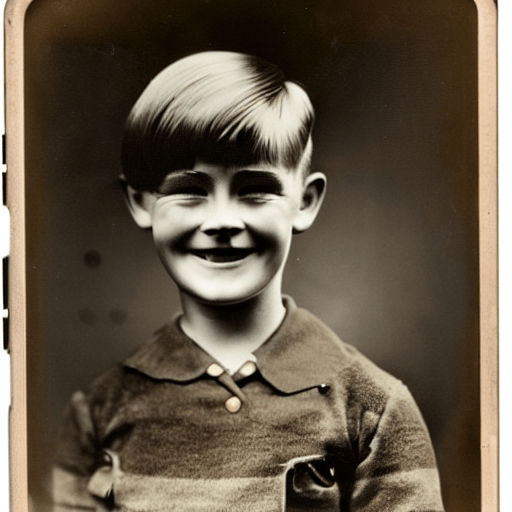
Some Stable Diffusion pseudo-photographs of the Undertale main humans. Chara is the black and white one with the single stripe, Frisk the color one with the two stripes. (The black and white one is partially because I made it in inspiration from a fanfic where Chara fell in 1926, so I chose one that fit the time period.)

Review: The Han Solo Adventures

The Han Solo Adventures

Originally published in three installments from 1979 to 1980, the Han Solo Adventures by Brian Daley were the first books in what would become the Star Wars expanded universe. Star Wars fans tend to love them, and I’m one of them. Without restrictions or a desire to one-up the movies (I’m looking at you, Kevin J. Anderson), the books are a fresh fun romp through the Corporate Sector.

Daley can write everything from prison breaks to starfighter bouts to duelists well, and he does in these books. Every Star Wars fan, science fiction fan, or just fiction fan should read these.

Amin Hayatov Official Portrait

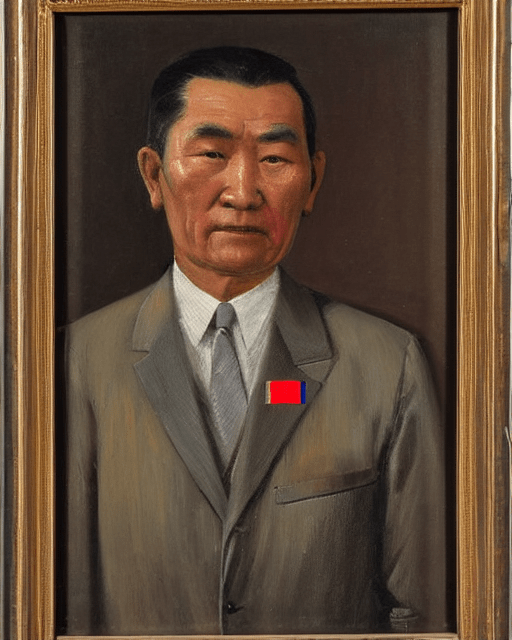
One of the things I like about AI art is the ability to translate my words and mental images into pictures. This is a recent Stable Diffusion “portrait” of Amin Hayatov, president of the Union of Soviet Sovereign Republics in All Union’s present. The original picture had facial hair and something in his pocket that was inpainted out, and the Sovereign Union flag lapel pin was added in externally and then smoothed out through mild AI runs.

Sovereign Union flag for comparison

A Thousand Words: Captain Commando

Captain Commando

Capcom, fresh off the success of Final Fight, made another arcade brawler called Captain Commando in 1991. I’m sure the title was just a coincidence. You can control the titular vanilla superhero, a ninja, an alien mummy named “Mack The Knife”, and, most bizarrely, a baby prodigy that controls a mech-that can ride other mechs. It’s like the walking robot version of a nesting doll.

Anyway, to call it a superhero version of Final Fight would be unfair. It’s more like a souped up superhero Final Fight. For instance, the second boss of Captain Commando is almost exactly like the final boss in that game (someone who jumps around with a crossbow). Only he’s much faster. As for the real final boss, it’s one of the cheapest in all arcade brawlers, and exists primarily to devour quarters.

For all this enhanced goofiness, it doesn’t seem as graceful or punchy as Final Fight was. The new move additions consist of the previously mentioned mechs (which are few and far between, and clunky enough to generally be more trouble than they’re worth) and dash moves that are both hard to do and rarely of that much use.

It gets the basics right, but if you have to choose, I’d say either Final Fight itself or one of the better successors. This is not one of the better successors.

A bizarre archetype

I’ve been playing a lot of beat ’em up video games (ie Final Fight), and I’ve noticed (and have not been the only one who’s noticed) a recurring enemy theme. Yes, you get the normal goons, the musclemen, the femme fatales, and the final boss who has the only ranged weapon in the entire game. And the people with very few hit points who run in, attack once, and leave. And big fat enemies.

But among the last, there’s one strange consistent theme. These portly foes breathe fire. Ok. I don’t know why, but somehow game designers thought “All right, let’s keep doing this.”

Review: The Death of Russia

The Death of Russia

It’s uncommon but not unheard of for a book to have its premise done better by something else in more or less every single way possible. So is the case with The Death of Russia, an alternate history story told through exposition and snippets about Yeltsin dying in the early 1990s and the world sinking into chaos. AH enthusiasts will also know that Zhirinovsky’s Russian Empire was another alternate history story told through exposition and snippets about Yeltsin dying in the early 1990s and the world sinking into chaos. Both started off as forum timelines and then were commercialized.

The first issue one notices is the writing style. Namely, giant breathless blocks of text. The timeline tries to do the “snippets from in-universe books and the like”, but this falls flat because all the “sources” read exactly the same. The second issue is the relentless grimdarkness. While based on stuff that sadly did happen, this just feels gratuitous. There being no real characters or anything but pure exposition makes both problems all the worse.

Eventually things spiral into a nuclear World War III. However, it’s worth noting that a fake interview with Evangelion’s producer starts off the chapter in question. Since pop culture is an obsession of the online AH fandom, this is not exactly a good start. The strike itself is no Arc Light or Red Hammer 1994. I actually fell annoyed at how a (mostly) survivable nuclear war, a topic that fascinates me, was handled so badly. It’s handled with all the grace of a minor league sportsball game report. Namely, a minor league game report written by an basic computer program that saw the box score.

In fact, what’s honestly interesting about the final nuclear exchange, besides the teeth-gritting “it doesn’t work like that” inaccuracies, is how it demonstrates a critique I’ve had for a while now. In the footnotes, the author doesn’t cite those two novels, or any real study on a limited/counterforce-heavy big nuclear strike that would leave society survivable. No, it’s another timeline, an earlier one called Able Archer 83.

But for any normal reading, I’d just say “read Zhirinovsky’s Russian Empire instead”.

A Soviet Romanian War Photo

Had too much fun making this “recon aircraft photo” of wrecked armored vehicles in a field in Stable Diffusion. I actually found it was easier to just make the field and then inpaint in the wrecks. And if it’s a high altitude, somewhat blurry photo, that makes the imprecision regarding tanks and the like less important.

A common sight in September 1998 and after. Soviet air supremacy led to fields full of destroyed and abandoned Romanian vehicles throughout the country.

Review: Carrying the Fire

Carrying The Fire: An Astronaut’s Journeys

Long considered one of the two best astronaut memoirs (the other being Mike Mullane’s Riding Rockets), Carrying the Fire is the autobiography of Apollo 1 command module pilot Michael Collins. He got to go to the moon but not walk on it. Collins insisted on writing the book all by himself without assistance, and it paid off. Not only was he a capable pilot and astronaut, but he turned out to be an excellent author as well.

With both humor and majesty, Collins tells the story of flight and the moon program. Anyone interested in outer space should get this. It’s an excellent book and even greater autobiography. While it’s not nearly as fresh as it was in 1974, that’s a small and inevitable “problem” to have. This is a great book.

How Computers Destroyed (And Could Save) Cover Art

I just found this great article called “When Movie Artwork Was Great.” Long story short, the cover was an important part of advertising, and thus was worth the expense even for otherwise low-budget productions. A combination of computer tools making it easy to do a basic cover (Ie, it’s not like “you have to hand-draw it anyway…), and lower production values as the industry got squeezed meant that generic photoshopped mush took over.

It felt very familiar to me because the exact same thing happened concerning book covers for exactly the same reasons. Weirdly enough, otherwise high-profile books tended to have minimalist covers from the get-go. But trashy pulps that couldn’t even keep the main character’s name consistent (I’m not joking) would have spectacular covers from the likes of Gil Cohen and Ken Barr.

Now it’s just-look at the book section of a grocery store and you’ll know.

I mentioned the ability to improve book covers at very little cost as one of the upsides of AI art. Now that I’ve gotten more into it, I can say even more comfortably that something quickly makeable with the least controversial models (closed source, public domain only, etc…) and only small amounts of manual tweaking could leave most contemporary covers in its dust.

So yeah, shed a tear for the running silhouettes and clunkily shopped-in muscle men. I know we’ll all miss them so much.