Review: Cleo McDougal Regrets Nothing

Cleo McDougal Regrets Nothing

It started with an unfitting title. Cleo McDougal Regrets Nothing by Allison Winn Scotch is the worst book I’ve read so far this year. I regret reading this book. A lot. Granted, I’m not the target audience and got it under the misunderstanding that this would be a political thriller instead of… what it is.

What it is is a terrible whiny melodrama starting with a gossipy, social dagger of an open letter. It might have made sense and been salvageable if the title character was a councilwoman in some small/medium town preparing to run for mayor instead of a US Senator in NEW YORK preparing to run for president. I know the New York media and…. yeah. Trust me. It’s about as accurate as an Ian Slater novel is about modern warfare.

And none of the characters are likeable. So because of that, I have to label it “worst book of the first three months of 2022 reviewed on this blog.” I mean, would you not think highly of a book that’s basically just a self-absorbed character navel-gazing?

VTOLs and Airships

Technically speaking, lighter-than-air airships that have the ability to rise vertically just by dropping ballast are VTOLs. But a lot has struck me about how these heavier-than-air contraptions should be, but mostly aren’t, a staple of alternate history the way airships are. Oh, in science fiction they appear in force (see the Orcas from Command and Conquer and Vertibirds from Fallout), but in regular AH, not so much.

VTOL craft run a gamut from simple (conventional helicopters) to ultra-complex. After normal rotorcraft you have so-called “compound helicopters” like the cancelled Cheyenne that have additional horizontal engines to make them go faster. Then you have tilt-rotors/wings like the V-22. After those there are airplanes with dedicated lift engines. Then you have Harrier-style thrust vectored craft. Perhaps the most complex proposal was a giant Beriev seaplane with literally dozens of lift engines.

VTOLs have been technically possible as long as aircraft themselves, but they’ve run into issues. Trading complexity and the problems that come with it, as well as other performance issues, for small advantages (mostly speed for helicopters and takeoff distance) is one problem. Another is stability, with computerized controls being almost necessary. Of course, another design with tradeoffs that has been underused despite being technically possible is…. lighter-than-air airships!

Yet while the presence of airships has become a cliche in alternate history circles, VTOLs have not been. Alternate history is full of Victorian zeppelins, not Vietnamese tilt-wings and jet-copters. If I had to give one reason why, I’d say it’s because of brand appearances. Zeppelins look like something from the past, therefore it’ll be “historic but with zeppelins”, aka alternate history, while VTOLs look futuristic, and therefore writers are more likely to just make a story with them pure science fiction (or sold as such).

Or it could just be genre inertia. But it’s a fascinating subject about fascinating vehicles all the same.

Review: A Pius Stand

A Pius Stand

The concluding volume of Declan Finn’s Pius Trilogy, A Pius Stand gets still weirder yet. A giant invasion force in the thousands is organized by the International Community League of Evil. It attempts to storm the Vatican, but its soldiers do so in a type of vehicle that sets the tone for the book as a whole. Instead of lavishly described tanks, the League of Evil rides in…..


these

Don’t believe me:

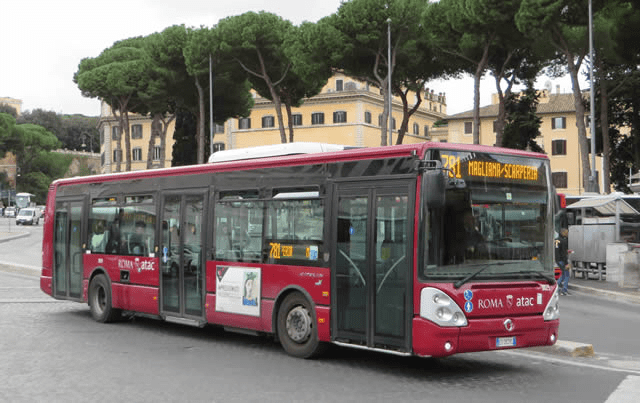
Instead of walking up the middle of the Via della Conciliazione, they drove up the streets on either side—the Via dei Corridori, and Via Borgo Santo Spirito. And, since bringing in armored personnel carriers was too expensive, it was just cheaper to bring their soldiers to St. Peter’s Square with local buses. With each bus driving down the street side-by-side, this amounted to 140 buses shipping in seven thousand soldiers between both streets.

Once the battle actually starts, it’s a goofy spectacle that’s far more Home Alone than Zulu. This is due to the desire of the main characters to keep it as nonlethal as possible. There are Hollywood booby traps, stun beams, and, most ridiculously, cavalry charges with ex-stuntmen. Meanwhile, a League of Good consisting of everyone from NYPD officers to Israeli commandos to the IRA to mobsters (!) fights back and helps defeat the League of Evil.

Like I’ve said about the first two (comparably) tamer installments, this is not exactly anyone’s idea of a good book. But I’d take something weird like this over a thousand shoot-the-terrorist novels any day.

Life Imitates Art

The Kirov novel Eagle Rising, previously reviewed on Fuldapocalypse, has a wargamed out (mostly via the excellent The Operational Art of War) Russian all-out invasion of Ukraine in 2021 with largely realistic OOBs-that ends after a few weeks with the Russians grabbing a chunk of the country but falling short of their objectives and descending into a grinding stalemate. There are of course differences, often erring on the side of spectacle like a brigade-sized air assault into Dnipro at the beginning and, most bizarrely, a counteroffensive crossing the border to hit Belgorod.

It’s described in the book itself after the initial big battles as “All Tyrenkov [the time-traveling Russian leader] has done is buy himself a long war there, and for a lot of blood and steel.”

Like Hector Bywater’s The Great Pacific War, this was strangely prescient in many ways. Even in small details like Ukrainian light infantry succeeding with hit and run strikes. Of course, the background is vastly different, involving a time traveler from the past (Tyrenkov) going forward , seizing control of contemporary Russia, and mistaking a potential future victory for a certain one. But the nuts and bolts are a tribute to both the TOAW simulation and the power of well-designed wargames in general.

Review: Mikoyan MiG-23

Famous Russian Aircraft: Mikoyan MiG-23 and MiG-27

Another Gordon/Komissarov book specializing in the study of just one platform, I knew I had to get the volume on one of my favorite ugly ducklings: the MiG-23. The Flogger did not enjoy a charmed life. With hindsight, it occupied an uncomfortable niche between the cheap MiG-21 and advanced later fighters. Its swing-wing design was a long-term limiter. The MiG-23MS export version, with no long-range missile ability, was the equivalent of using a Manning brother as a running quarterback.

This is a little better laid out than the MiG-29 book, but it still has iffy formatting and a tendency to shift into colloquialisms like lots of exclamation points! That being said, it delivers a lot of technical-and operational-info. It has the strike and fighter variants all covered, as well as exotic proposals like the IFR-capable carrier versions and my most beloved unsuccessful attempt to put new wine in old wineskins: The MiG-23-98 series.

It’s definitely written by and for aviation enthusiasts, but I had fun with this book. It’s a worthy tribute to an often (and not unreasonably) savaged aircraft.

Review: All Lines Black

All Lines Black

The internet novella has grown on me as a way to “sample” an author’s work before I “chow down”. So it was with great interest that I picked up Dalton Fury’s All Lines Black. This short tale of operator Kolt Raynor (again with the cheap thriller names!) in the middle east isn’t going to set any records for originality or serve as anything but a writing sample.

However, the writing is excellent. The action fundamentals are done right, and that’s what matters in a genre like this. Given Fury’s (it’s a pen name, obviously) legit experience, it works fine, even if it understandably gets a little too Herman Melville in places. If you want fun, I recommend this.

Review: Russian Air Power

Russian Air Power

The 2002 book Russian Air Power, by Gordon and Dawes, is something I was eager to get for the sake of seeing a past snapshot. I was not disappointed. Sure it’s dated (including a laughably inaccurate prediction that by 2010 the Russian Air Force would have streamlined down to three platforms, including the PAK-FA), but I expected it to be dated. A slightly worse criticism is how the doctrinal specifics of a high-intensity “air operation” are left a little vague for my liking.

But I have the Heavy OPFOR stuff for that, and the rest of the book is good. That I already knew much of it was no knock against it. And the part about the air force’s role in the Chechen Wars is excellent (and further reinforces my belief that, despite huge investment in the twenty years since, it may have actually regresssed from that in terms of overall capability in the early part of the Ukraine War.)

If you can get this book, do so. It’s a good historical reference, and Dawes keeps a lot of Gordon’s issues in check.

Review: The Churchill Memorandum

The Churchill Memorandum

Sean Gabb’s The Churchill Memorandum is an alternate history spy thriller taking place in a world where World War II was averted due to Hitler’s death in 1939, the libertarian British Empire rules strong-and the US has devolved into a dictatorship complete with a “Republican Guard”. It’s one of the hardest books to review.

See, this may be the most extreme example of “alternate history as a setting” I’ve seen. By itself, the book is nothing but a 51% installment in a genre that, while not disliked, isn’t my first choice. But the setting, oh boy. The setting combines a big dose of L. Neil Smith-style libertarian utopianism with a British version of “libertarian” nostalgia for something you’d think wouldn’t be appropriate. In this case, it’s THE EMPIRE. You can be forgiven for wondering “isn’t an empire using the power of the state to a great degree to suppress others”.

Anyway, the setting goes farther than that. Historical British politician Michael Foot is portrayed as a supervillain who dissolves his victims in pits full of acid. His associate in the League of Evil is Harold Macmillan.

This book is kind of like a 1980s hair band that dresses extravagantly but plays the most mundane pop. The surface is crazy, but what’s behind it isn’t really. Ok, except for Michael Foot’s Evil Tub of Acid. That has to count for something, right?

Weird Wargaming: The Jeep Compass Army

Using variants of civilian vehicles from Model Ts and Rolls Royces in World War I to the omnipresent Land Cruisers and Hiluxes of today is nothing new. But I saw a proposal from an Indian armoring firm (which also advertised the boxiest armored vehicles ever) for uparmored Jeep Compasses, and my brain sparked. After all, compact crossovers like it are so common now, so why not send them to war? This isn’t like the classic jeep, even in its latest form.

Well, there’s obvious reasons against it. It can barely fit five normal-sized people without wargear. Five big soldier men with all their equipment would probably be a nonstarter. You could use it as a pure weapons carrier-but the disadvantages of that would be obvious as well. There are plenty of off the shelf SUVs far more suitable… but I don’t care.

The Compasses would be used by recon/raiding teams, being too small (regardless of how many people you can stuff inside) to be a line carrier. The least bad option, of gun vehicles, involves a crew of three with extra munitions in the (gulp) trunk/back. Even then, the Compass has a max payload of only around 1,100 pounds/500 kilograms. Which would probably have been eaten up by the armoring, but I’ll let it slide for now.

So, here it goes:

  • Command vehicle: Unit commander, driver, comms equipment, aide, maybe lighter machine gun RWS.
  • Personnel Carrier: Driver, 2-4 additional troops, lighter machine gun RWS.
  • Weapons Carrier: Driver, Gunner, Commander, either light missile or heavy machine gun.

The number of vehicles of each type depends on the exact mission. And the Jeep Compass could be replaced by any light SUV. And I do not recommend actually trying these small light SUVs unless you have no other choice.

Review: American Secret Projects: Airlifters

American Secret Projects: Airlifters

Craig Kaston and George Cox’s two volume series on American airlifters is one of the main reasons for the recent fascination I’ve had with these cargo-bearing beasts. Like a lot of books in the series, both are excellent. However, one of the volumes outshines the other, though through no fault of the authors.

The first volume is well-written and illustrated, but it describes a time period where, for the most part, it’s just variations on big-bellied freighter aircraft. The second volume has a lot of those too, but also has weird shapes, VTOLS, napkin company projects that make Mukhamedov and Stavatti look like Boeing and Airbus, and so much more.

If you have to get one book, get the post-1961 volume. But both are well worthy of any aviation history enthusiast’s bookshelf. Fair warning-you may twist your brain into a pretzel trying to estimate just what some of these oddballs can and can’t transport. It’s what I’ve been doing a lot, and I have no regrets.