Today is the anniversary of the most famous World War II campaign by the Western Allies, the amphibious landing at Normandy.
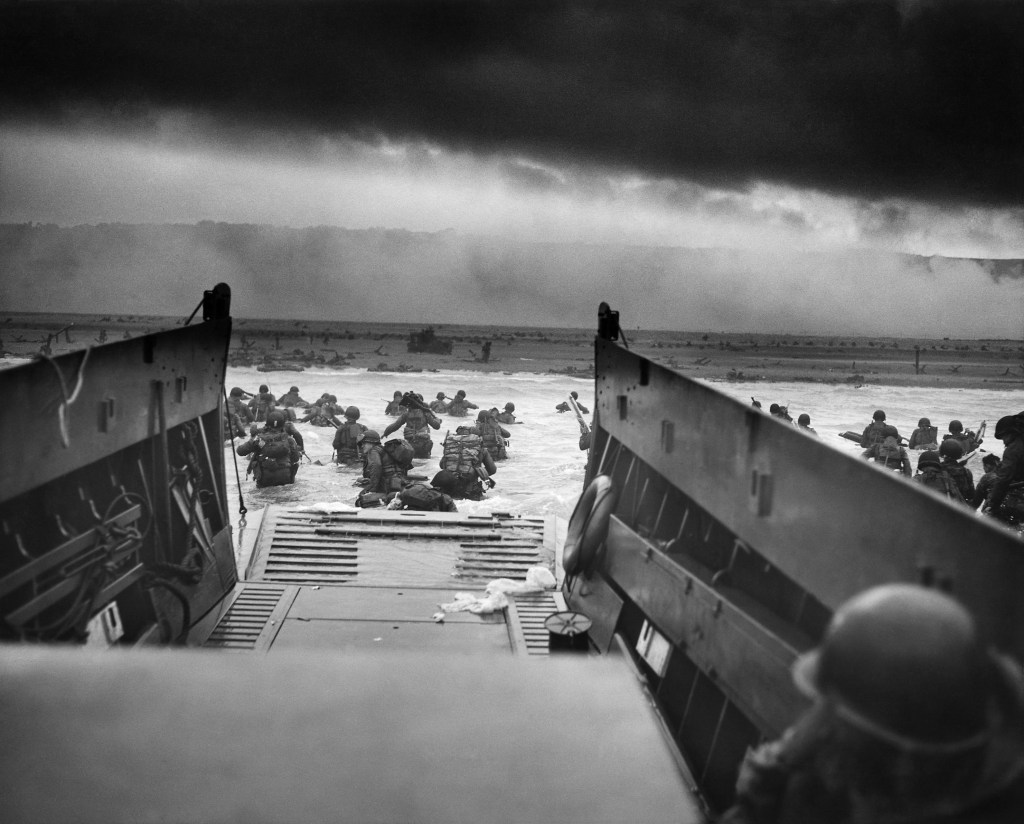
One of the most intricate-and successful- operations in history.

Today is the anniversary of the most famous World War II campaign by the Western Allies, the amphibious landing at Normandy.
One of the most intricate-and successful- operations in history.
Stephen Biddle’s Nonstate Warfare aims to debunk the myths around warfare featuring nonstate actors and point out that there really isn’t as clear a line as thought between “conventional” and “unconventional” warfare. As I’ve been annoyed by the use of the terms “Hybrid War” and especially “4th Generation War”, I was eagerly awaiting this book. However, I found the execution significantly flawed.
Now, the premise is sound and well supported, which makes the flaws in outcome all the more severe. Basically, even the most mass-mobilized total wars with the clearest defined front lines have an irregular and/or deep element (he uses the excellent example of partisans on the Eastern Front in World War II). Likewise, even non-state elements can and have fought battles with large forces, heavy weapons, and the aim to hold territory. Very few people would dispute this. Biddle also points out that the progress of industrial-age technology means that ill-equipped irregulars can have weapons that the most advanced world powers didn’t have a few decades prior.
None of this is really controversial, and simply stating that would make for a very short book. What would be useful would an example of middle-level armies that don’t fit categories very well. Biddle does do this, with his descriptions of the Sadrist militias in the Iraq War and Adid’s forces in Somalia fitting well. He also has an interesting analogy with a spectrum from “Fabian” operations (a reference to the Roman strategy of avoiding defeat) to “Napoleonic” ones (a reference to seeking decisive battlefield victory). To be snarky, Fabian operations to excess are Kalib Starnes spending the entire MMA fight running away from Nate Quarry, while Napoleonic ones are the bandit in a Bethesda game charging the player in super-armor.
Unfortunately, this is written in clunky academese. Biddle uses a rigid scale to rank various forces from “Fabian” to “Napoleonic”, one that I found to be too rigid for an inherently arbitrary judgement. His writing is full of hair-splitting and nitpicking of what honestly feels like a strawman that everything is either phalanxes on a field or nothing but backstabbing. There’s weird hangups like a fixation on force density for its own sake, obsession on individual technical examples (so Adid had TOWs? So what? Even in 1993 it wasn’t like they were stealth fighters), and not enough focus on non-state forces supplied by state ones.
I wanted to like this book. And I don’t disagree with the overall point. But it could have been made just so much better. This feels like an academic squabble in academic language, when a plain-text history of case studies with “conventional irregular armies” would have been far more suitable in promoting the argument.
The second book in the Forgotten Ruin series, Hit And Fade features the timeshifted Rangers going against something close to the original Fuldapocalypse “mascot”. Not a zombie sorceress, but a lich, a zombie sorcerer. I guess his sister was off provoking a Third World War and disabling the nuclear warheads.
The book is very similar to its predecessor in terms of quality, which makes it a little hard to review (in contrast to the original). All of what I’ve said about the good and bad parts has been stated already, and it doesn’t feel that different. If I had to say something, I’d say that the contrivances in worldbuilding add up when repeated, and that there aren’t enough new good qualities to make up for that.
Still, this is not a bad book. Its flaws are not insurmountable, and if this was the first in the series that I’d read, I’d probably feel differently. If you want to see Rangers fighting a skeleton mage, you’re in the right place.
So there were a few World War III timelines on alternatehistory.com , with my first one being Lions Will Fight Bears. Now, my story about them has already been told-at the time I hated them, now I think they’re uninteresting. As for their actual quality, well. They’re better than the likes of Stroock and Dragon’s Fury, and more nominally accurate than soft-WW3s like Ian Slater.
Trying to review them, as opposed to their triple-copycat New Deal Coalition Retained, proved to be tricky. I think it’s because, well, I’ll put it this way. Seeing something adopted into a totally different paradigm than its normal setting is inherently interesting. Just seeing double-xeroxed knockoffs of Hackett/Bond is not.
What I think I can say about them is this. First, they were written in a pseudo-textbook style that exacerbated any technical flaws and wasn’t really that interesting otherwise. This is an issue with almost all internet AH, and it’s what I’ve compared to a race car. If you’re going to have a kitbashed spaceframe chassis, a single cramped seat and no amenities, it’d better be fast. But regardless of its speed, that type of car is just easier to build.
The second part is that they were written in what was, with hindsight, an awkward transitional period between the “eagle” and “sparrow” styles. This I think led to the worst of both. You had authors with comparably little direct knowledge making slip-ups iffily. For instance, one contemporary Iran war TL had the IRIAF putting up a much bigger fight and being much more capable than it likely would have been but didn’t have forcing Hormuz as that big a deal-the opposite of the general consensus.
[Aside: Proper wargaming is great for avoiding these. I’m actually a little iffy mentioning Command because I’ve worked on it, but it’s worked. You can see how tough it is to push through a strait full of mines and smartly used anti-shipping defenses, and you can also see the Phantoms falling en masse while only getting the occasional lucky win. In my opinion, one of the best uses for wargaming/simulation is getting the general feel of the conflict, and avoiding stuff like that]
However, you also had these less knowledgeable authors being often co-opted by those who were more knowledgeable but also more biased (not just nationalist bias but stuff like HEAT Age veterans treating RPGs as superweapons in ways that more recent veterans have never done so) The result frequently felt awkward. Leaving aside any personal bias on my part and just looking at the works in their own terms still feels awkward.
The third was that well, the TLs constantly seemed like they were to maintain the formula, never really trying to step outside the lines. This is what inspired the Iceland Scale, and one can understand why reading the same thing with only minor technical tweaks and contrivances could make one frustrated. One example I can give is a Gorbachev heel turn, which to me felt “coming up with reasons for the Soviets to start the war instead of actually branching out and having NATO start it”. Or piling into Red Dawn knockoffs and treating them in an inappropriate rivet-counting way without seeing the literary issues this causes.
Still, they just feel, for lack of a better word, small. Small, and, in the words of the great Alexander Wallace, “sterile”. Thankfully, most of the works reviewed on Fuldapocalypse after its scope widening are not. It does feel a little disappointing to have something to influential be so middling and hard to review in hindsight, but that’s just the way it is. Not the best, not the worst, and not the most representative, but among the first I read.
So I’m happy to say that my Weird Wargaming post on a semi-serious look at the army of a “victorious” Third Reich is now posted on SLP in my first direct crossover between the two sites. (My review of The Man with the Iron Heart was originally posted on here and Never Was).
Ledru Baker’s Brute Madness is the kind of book I haven’t read in a while. The kind of novel that’s both ridiculously stupid and ridiculously, stupidly fun. A hardboiled Cold War spy thriller about a nuclear scientist and a woman, this book has action, adventure, and… well, what made me see the book in the first place.
That “distinction”, and one that made me go “I have to see this” when I heard it was the claim that the book had some of the worst sex scenes ever written. I was not “disappointed”. In fact, the book has the audacity to make such a scene its very first paragraph. Wow. Adding to the uh, experience is Baker’s constant repetition of the word “erect” to refer to things like someone standing up, something with obvious Freudian connotations.
The book overall is an ultra-trashy cheap thriller. But it’s a fun ultra-trashy cheap thriller. There’s definitely a place out there for horribly so-bad-its-good books like this.

One of the most bizarre footnotes in military history is the tale of Leonid Kurchevsky, an interwar Soviet weapons developer. Kurchevsky’s gimmick was recoilless guns. Everything from small antiarmor weapons to giant battleship-sized naval guns was made recoilless by him. He wanted the entire Red Army artillery park (and aircraft, and naval) to be recoilless, and managed to impress the legendary Marshall Tukhachevsky into going along with his scheme.
Of course, like Tukhachevsky, Mr. Recoilless ended up as a victim of the Great Purge. However, after all of my research I’ve found it very, very hard to feel sorry for him. First, because he’d tried to use Stalinism itself to get the factories to build his contraptions (what goes around comes around, something many Soviet industrialists learned the hard way int their “gang wars”). And there was the problem of the weapons themselves just not being very good. They tended to explode, they were overcomplicated, and they didn’t perform any better than conventional weapons of similar caliber (for instance, Kurchevksy’s Rube Goldberg anti-tank launcher didn’t really do any better than the classic PTRD anti-tank rifle).
All Kurchevksy’s recoilless mania did was delay the development of more effective weapons of that nature. While the postwar Soviet recoilless weapons were/are excellent, they had to go through World War II without an effective projector. While Kurchevsky was not the only reason (difficulty in making shaped charges and such weapons not being that much better than hand charges in the grand scheme of things, hence not the most worth it to put in the effort for a gigantic army and limited resources played a big role too), he didn’t help. Muddling the historical record is the Khrushchev-era anti-Stalinism, where Kurchevsky was portrayed understandably but falsely as an innocent victim and a genius who was halted by Stalin’s paranoia and tyranny. In fact, few were more detrimental to the cause of recoilless guns than he was.
I think a Death Of Stalin-style satirical, only somewhat exaggerated movie about Kurchevsky’s life and times, if done right, would be amazing to watch.
One of the most interesting gaps in alternate history fiction is the seeming lack of a Larry Bond-style serious look at a conflict involving a victorious Nazi Germany. Now, nearly all of this is because most scenarios involving it are “soft” AH made by and for people with less knowledge or concern about rivet-counting plausibility. This isn’t a critique of their quality, it’s just pointing out what’s involved. A semi-hard look at what this would entail can be interesting, and I have some thoughts.
First, the formations are almost certainly going to be outgrowths of early-war organizations. It’s basically impossible for the Germans to win with too late a point of divergence, and there’ll be the “why fix what isn’t broken” mindset. This means things like no gimmick units like the Volksgrenadiers, and large divisions with lots of equipment at full paper strength. It does mean a weird parallel with historical postwar divisions, but then again-that’s how it goes.
Second, it will be dominated by the Wehrmacht. Historically, the SS gained comparative prominence because of the Wehrmacht/Heer supposedly being to blame for losing the war and the plots (ie July 20) that originated within the regular army. This would not be the case here. The most likely fate for the SS is to get purged in Long Knives Part 2 and possibly get supplanted by yet another edgelord alphabet soup organization.
But for the sake of weird wargaming, I’ve warmed to the idea of them using captured/foreign designs and factories to equip their army, potentially rearming them with German calibers-or not. This happened in Marching Through Georgia of all books, with clunkily upgunned KV tanks. While there it was to provide a punching bag for the Mary Sues, it’s still an interesting possibility. And it fits with the theme. Historically, the reason for all the infamous “Foreign Legions” was to get access to a manpower source the main army couldn’t touch, and ramshackle improvisations are closer to what the bulk of the SS truly was than the stereotype of hundreds of shiny cat-tanks. (This stereotype is reinforced by the fact that the western allies largely fought only the legitimately capable and well-equipped SS units, not the Dirlewanger-style garbage ones better at massacres than fighting opponents who shot back)
Third, factionalism was built into the system. The Heer, the SS, the Luftwaffe paratrooper and “field divisions”, the Volkssturm being in large part Martin Bormann’s attempt to get an “army” for himself, and no doubt more examples all speaks to this. One effect of this will be a lot of duplicative units, as everyone wants their share of the pie.
Another is that a nation with all the factionalism but without the existential threat might very well see its qualitative edge wane dramatically. It could be reminiscent of the South Vietnamese military. A politically charged, scheming, cutthroat army whose units are wildly, willdy uneven, ranging from ultra-competent to utterly ineffectual. Everything from case studies of such armies to anecdotal evidence from both Vietnam and contemporary Afghanistan points to this being the defining feature of over-politicized armies more than complete ineptitude, along with a good or bad high-level commander having more of an effect on low-level performance than they likely would in a less politicized one.
The result would be something distinct from both real postwar and real wartime armies. Its opponents would range from the Western Allies shielded by water, the remnants of the USSR shielded by the Urals, the occupants of territory it’d further expand into-or Japan after a likely falling out and power struggle over spheres of influence.
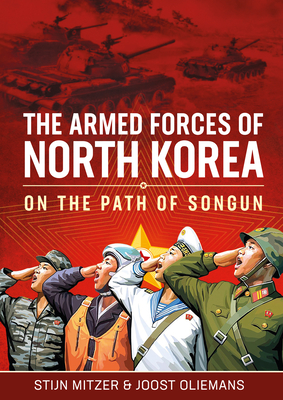
It’s been a while since I read a really, really good military nonfiction reference. Thankfully, Stijn Mitzer and Joost Olieman’s The Armed Forces Of North Korea: On The Path Of Songun takes the cake. The product of the same people behind the legendary Oryx Blog of military intelligence, this took a while to finally get going. Thankfully, it’s well, well, well worth the effort.
So why is it so good? Well, for a start, it’s incredibly well researched, written, and photographed. It’s not an OPFOR manual or a ridiculously broad order of battle chart. What it does do is go into legitimate detail and depth about the KPA and its rise, fall, and rise. What made me absolutely fall in love with this was how this is the rare military book that doesn’t fall into either extreme of “unstoppable or helpless”. When I saw the self-proclaimed intent to the debunk the notion that the KPA wasn’t/isn’t a threat, I feared it would go too far in the opposite direction.
That was not the case. I was treated to a very evenhanded look that amounts to “Yes, there’s modernization, yes there’s legitimately advanced indigenous developments, but as of now it’s limited and foreign support is undoubtedly there” and doesn’t hesitate to point out their shortcomings and material issues. The authors are even good at pointing out what they can verify and what they can’t, a must for dealing with a country as secretive as North Korea.
For enthusiasts, general audiences, wargamers, and anyone, really, this is a great book that I highly recommend.
Occasionally, I dip into what I’ve called “Normandy Syndrome”, which goes something like this. Because the Normandy Campaign may be the single most studied and written about engagement in western history (with the possible exception of Gettysburg), I tend to look at other, different, more novel conflicts. However, this means that because I haven’t looked at them in some time, the big name campaigns become understudied to me in their own right, meaning that then I do take a look at them…
Generally though, I go back once I’ve had my fill. This time is partially an exception, as I’m looking at (gulp) Axis military formations. Don’t worry, this isn’t me becoming the kind of person who can memorize the name of every single Tiger II platoon commander. In fact, what interests me the most is the bad, hodgepodge, underresourced formations.
One area where Normandy Syndrome in general holds up is in force structure. It’s very easy to find and understand Soviet/American organizations as applied postwar. So thus seeing how different ones looked is distinctive to me, and I’m a sucker for OOB charts. But seeing unit TO&Es derived from limited resources, as opposed to Cold War excess, is also a good worldbuilding exercise for postwar formations under similar constraints.
First up are the Italians. Divisions with two three-battalion regiments, often “reinforced” by a Blackshirt battalion or [small] regiment, were the order of the day. I’ll get back to this formation later.
A 1943 assessment of Italian artillery (pg. 79) said it was a hodgepodge, middling force. A postwar assessment of Italian artillery (pg. 25) said-it was a hodgepodge, middling force. Contrary to the stereotype, both sources praise the crews, but note they were underequipped and unsurprisingly deployed forward more often than the Western Allied norm. Which makes sense given transportation issues and the comparative lack of direct fire support.
Then there’s ZE GERMANS. Not the wunderwaffe Germans, but the tattered, late-war, desperate Germans. For all the “lol-Italians” snickering, it’s worth noting that the Germans themselves had six battalion divisions later in the war, both of a downscaled classic type of two three-battalion regiments and a “Volksgrenadier” type of three two-battalion ones that was (on paper) equipped with more automatic weapons to make up for it.
Volksgrenadiers and Volkssturm are often confused. The former was meant to be more capable than other similar-sized formations due to a mass of automatic rifles and machine guns and even in practice was no worse than any other later-war formation, while the latter was the last-ditch pathetic old men with panzerfausts and ancient rifles militia that people know.
Then there’s my favorite, the later-war armored formations. By 1945, a “Panzer” division had only one battalion of actual tanks and one of APCs even at full strength. In fact, it reminds me more than anything of a postwar light OPFOR formation. One battalion of tanks, a few miscellaneous AFVs and vehicles (ie, for the WW2 formations, it was gun tank destroyers, for postwar ones, they’d be likely replaced by ATGM carriers), and some infantry in softskin trucks, equivalent either to a small division or just a brigade, depending on the type. In practice, well, I’ve heard multiple sources say, and I believe them, that the 1945 Germans were comparable qualitatively to the 1941 Soviets.
Because having too few resources is far more common than having too many (and this is before attrition!) I feel looking at the Axis minors and late-war Germans is a good exercise if developing fictional formations. It’s also a very refreshing and important contrast from the usual myth of waves of Tigers.
 Fuldapocalypse Fiction