A Thousand Words: Two For The Money

Two For The Money

2005’s Two For The Money stars Al Pacino and Matthew McConaughey. It is one of the few movies about sports betting, and perhaps the only movie in recent history about sports betting “handicappers” who sell pick advice, or, as they’re known more derogatorily, “touts”. As someone writing my own fiction about touts, I knew I had to watch this film. What did I think about it?

First the plot. McConaughey is an injured college quarterback who goes from playing football games to predicting them. Pacino is a super-tout who values in his skill. The movie chronicles their rise and fall. It’s a classic, predictable narrative. Al Pacino does the stereotypical “Al Pacino Hamfisted Role”, but he does it well. His co-star is more erratic, and not in a good way.

Beyond that, the biggest issue I had was how it misrepresented touts. Now, I was fully expecting and prepared for sports-movie exaggeration (for instance, the way the main character’s picks zoom from great to poor so quickly and consistently). But this goes beyond that, treating the handicappers as sincerely trying to get the right pick and sincerely caring about the outcomes of the games. In reality, nearly all touts don’t.

They make referral deals with sportsbooks, meaning they have a vested interest in their customers losing. They will either cherry-pick or outright lie about their records to make them seem more impressive. And, most notably, they will pull the infamous “give half the callers one team and half the other” trick so that 50% will be ‘winners’. You get the idea. Honestly admitting to the inevitable losing periods doesn’t attract business. Neither does advertising the highest realistic win rate, which less knowledgeable people (ie, the people who’d fall for touts at all) would not consider impressive compared with “79% WIN RATE IN THIS CFB SEASON!”

The thing is, this movie could be equally dramatic, equally exaggerated, and equally able to pull off the “man’s descent into sleaze” plot if it treated its “handicapping” service in this way. There are a few times when it does get the image right, like its spot-on reenactment of over the top sports betting shows/infomercials. But far more often, Two For The Money misses when it didn’t have to. Which is a shame.

Review: Third World War: The Untold Story

Third World War: The Untold Story

It’s very hard for lightning to strike twice. And in Third World War: The Untold Story, John Hackett tried. He did not really succeed. The problem was that much of the appeal of the original came from being the first out of the gate, whereas by 1982 the zeitgeist had clearly shifted. (An obscure and amusing example comes from the line “World War III is drawing near” in the XTC song Generals and Majors, released in 1980).

While possibly unfair to list the earliest instance of a genre as not having held up well over time, I do believe that Hackett’s work has aged the worst of all the few “big-name” conventional WW3 books. It’s earliest, and it’s clearly meant as an explicit lobbying document in a way that the (still-slanted) other works of that nature did not. And this applies far more to a modestly repackaged version released four years after the original. Because that’s what it is.

This is the book equivalent of one of those “remastered special edition” movie DVD releases. There’s a reason why those, even if the underlying film is sound, do not generate nearly as much enthusiasm as the first, novel release.

Review: The Great Martian War: Invasion

The Great Martian War: Invasion

Scott Washburn’s The Great Martian War: Invasion is a fan-sequel to Wells’ classic War of the Worlds, with the Martians returning for more. There is one piece of bad news about this book and one piece of very good news. The bad news is that the execution never progresses beyond “decent”. This book is very Larry Bond-ish in its big scope, and that’s not always a good thing.

But thankfully, the good news makes up for it. Which is to say that the premise of “Theodore Roosevelt, tanks, and 75mm quick-fire guns against Martian tripods” is such a great one that it only needs a decent execution to be a solid, enjoyable novel. And that it is. The military balance is set up in such a great way, having neither the (deliberate) lopsidededness of either the original or Edison’s Conquest Of Mars.

How can you not recommend a book of this nature to any fan of alternate history or classic sci-fi?

Weird Wargaming: T-64 APCs

When all you have is a hammer, everything looks like a nail. When all you have is a bunch of T-64 tanks, everything looks like it could work with a T-64. As it stood, the independent Ukraine inherited a gargantuan number of those tanks after the breakup of the USSR. As the beginning of the Donbass War showed all too vividly, it had very little else. Since the bureau that designed and the plant that built it were also in Ukraine, then… well, the hammer was even more prominent.

So, there’s the BMP-64, essentially an eastern Bradley on a tank platform. It has similar dimensions and a similar role as the famous American IFV (although a lot more dismounts). Note on the same brochure there’s more vehicles on the T-64 chassis and other tanks fitted with infantry compartments. The latter ones I’ve always envisioned as (at least theoretically) being more suited for a western armored cavalry structure. They can do the same things a tank in armored cav units can do, but they also have a few scouts to dismount when need be.

Then there’s the BMP-K-64, using the tank chassis for a wheeled APC. I find it simultaneously weird, interesting, questionable, and somehow impressive. This would be used like any other Stryker/BTR-style wheeled troop carrier, albeit with its thick front armor taken into account.

These desperation-born oddballs are the kind of armored vehicles I have a soft spot for.

Review: The Night Stalker Rescue

The Night Stalker Rescue

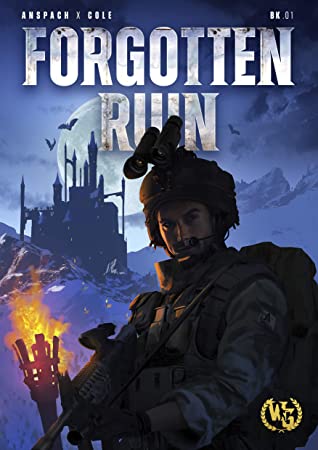
Jason Kasper’s The Night Stalker Rescue is a prequel novella (to a series I haven’t yet read) featuring the mission of saving a downed helicopter pilot in an anti-terror operation in the Philippines gone wrong. Short and cheap, it’s the kind of book that works best as a “literary snack.” And that’s often fine.

This is a 51% snack, but it’s a fun 51% snack. About the only real quibble I had was having the book be written in first instead of third person. I think the latter is better for thrillers because you don’t have to either have a severely limited view or give the protagonist ridiculously good situational awareness. But this isn’t a deal breaker at all.

The fundamentals are sound and the story works. This is a solid “appetizer” that makes me want to read more from its author, and that’s always good news about a book.

Review: The Hungry Dead of Yu-Ching And Other Stories

The Hungry Dead of Yu-Ching And Other Stories

From Sea Lion Press author Paul Leone comes The Hungry Dead of Yu-Ching And Other Stories, a series of horror-fantasy-thriller tales spanning history. From the ancient past to the Cold War and beyond, he brings to life one supernatural confrontation after another. Each story is short but sharp and never wears out its welcome.

I might be biased given the preferred subject matter of Fuldapocalypse, but I liked the “Red Dawn [no relation to the movie], Operation ___” stories the best. It’s very hard to go wrong with Soviet commandos facing extranormal enemies, and I grinned at every word of those tales. Not that the others were bad by any means, but these were my favorite.

In short, this is a very fun collection. I enjoyed it a lot and highly recommend it.

Review: Operation Siberia

Operation: Siberia

William Meikle’s Operation Siberia is not deep fiction. But it is very fun fiction. With a recommendation from The Sci-Fi Fantasy Reviewer and a love of prehistoric megafauna that stretches back to David Macaulay’s The Way Things Work, I knew I had to read this book. And I was not disappointed.

The plot is basically a Jurassic Park knockoff that descends into what’s essentially “Scotsmen vs. Yetis”. Done with solid execution, it’s a great cheap thriller to pass the time. While not deep even by genre fiction standards, I enjoyed it a lot. Meikle takes a great premise and applies it well.

Differing Fandoms, And What That Means For Alternate History

Seeing a post on the different “Eagle” and “Sparrow” fandoms made me think of this blog. After all, it started off trying to be small and selective to a small and selective group of literature. And then it ended up reviewing lots and lots of fiction in genres anything but those. Now, that post has its issues, but the general trends hold up.

Wargaming is an ideal “Eagle” fandom, small, selective, and often focused on exact details and quality. In contrast, cheap thrillers are a perfect “sparrow” fandom, where many are simply interchangeable and quite a few readers aren’t picky at all. Neither of these are bad things in the slightest. One can enjoy a deep simulator and a shallow mobile game just as much. But they are clearly different.

In conventional World War III fiction, it’s very easy to see the spectrum from “Eagles” (War That Never Was, wargames, especially advanced ones, etc…) to “Sparrows” (Ian Slater, other trend-hopping fiction). For all my criticism of Larry Bond, an underappreciated advantage of his books is an ability to balance between the extremes, making, or at least sincerely trying to make, something that’s technically adept enough for the “eagles” and relatable enough for the “sparrows”.

But where I’ve seen the biggest dichotomy is in alternate history. Like any other genre/type of fiction, it has its “eagles” and “sparrows”, and it’s made worse in my eyes from inherent divisions. IE, the same person is unlikely to consume Brad Smith’s World War 1985, Bridgerton, and Hotline Miami just because they’re all “alternate history”.

And internet alternate history, starting off as a pretty obvious “eagle”, has gradually changed. If I had to describe a lot of it, I’d use the term “a sparrow with the trappings of an eagle”, a sort of Mimikyu. There’s exposition, stock photos, and wikiboxes with exact details and little/no effort to make a broadly appealing narratives. Yet a lot of these events are contrived, ill-researched-and accepted.

The reason why I found New Deal Coalition Retained‘s conventional World War III so legitimately fascinating and not just bad was because it embodied this trend and (negatively) stood out so much from the Fuldapocalypses I knew so much about. Military alternate history (especially the American Civil War and World War II) has this reputation for being more “eagle-y” than a coordinated F-15 flyover of Lincoln Financial Field.

Here comes this war with absolutely no thought put into its logic beyond the absolute basic trappings of Clancy/Bond (which I think might have been copies of copies), a knockoff of World War II, and a desire for BIG CASUALTY NUMBERS. Yet it’s broad-scope told in a pseudo-Hackett way of pure exposition mixed with a handful of vignettes. While the most extreme example, it illustrates the strange evolution of internet alternate history through its blatant and noticeable issues.

A Thousand Words: Action PC Baseball

Action PC Baseball

I think my favorite sports simulator of all time is Action PC Baseball. Of all the (worthy) baseball sims I’ve tried, this hits the “just right” level of simplicity and depth. Instead of being a “tycoon” game, it’s a single season replay/simulator that requires a lot of manual setup. It’s also an individual game simulation that’s pretty easy and relaxing to play, with a game able to be finished in minutes with the right settings.

This seems like Jekyll and Hyde, but these elements actually complement each other well. If I’m in the mood for some relaxing time-passing, I can just fire up a single game controlling both teams and enjoy it for that. If I have the time and energy for creating massive “what-ifs”, I can focus on building the rosters (which is frequently very fun). Though simple and a little hard to get into, the UI is very smooth once figured out.

In short, this simulator is one that has given me many, many hours of fun, and different varieties no less.