What really brought down general aviation

I was looking at histories and such concerning the post-WW2 decline of general aviation in America. Most of the stated reasons center around costs, regulation, lawsuits, and changing demographics. None of these I’m denying were factors, even major ones. But I came across something that was very eye-opening and was not mentioned in most of the usual ones.

That was the decline in its practicality. One amusing side-part of the “flying car” discourse is that in a way, in the early postwar period, flying cars in the way we think of them kind of existed. See, in the early postwar period, as long as you could afford something that still always cost at least the equivalent of six figures today just for the airframe (ie you were a rich professional), flying in your own aircraft over the Depression-adjacent countryside was frequently the quickest and most convenient way to get from point A to point B. Whether it was for the luxury of a getaway or the necessity of business travel, there was a practical use.

Later on this eroded with two big things, which I shall provide graphical illustrations of.
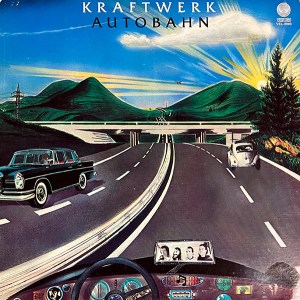
Yep, better roads and better, cheaper, and more accessible commercial air travel. Which meant a lesser actual need for private planes, which naturally had giant ripple effects. At the very least it’s an underappreciated piece of the pie.

The First (and best?) Rock Opera

The first rock opera can be considered the Moody Blues’ Days of Future Passed. It tells the story of one day from morning to night. (It happens to also be an excellent album in its own right). Most people know this as where Nights in White Satin came from, but every track is great. My favorite is “Evening”, both “Tuesday Afternoon” and “Evening Time To Get Away”.

No track is wasted on pointless “story”, which is something that afflicts the otherwise excellent Tommy and The Wall. My favorite story concept album at any rate.

A Thousand Words: The Woodstock Movie

Woodstock

The Woodstock music festival is probably the most overrated cultural event ever. A ramshackle mess that could have very easily turned into a 1960s Fyre Festival or something much worse, all it gave was a huge mess in an upstate farm, music, and… a documentary film.

A massive reason-perhaps the biggest reason-why the concert is so well remembered is Michael Wadleigh’s masterpiece. Easily the best documentary/concert film I’ve seen, it cuts from the performances (of varying quality in every sense of the word) to interviews with dazed hippies, musicians, and the festival organizers, to things like the rainstorm and Wavy Gravy’s pronouncements, all done with amazing cinematic skill.

I could point out that despite being intended to be sympathetic, the interview subjects and even the whole festival doesn’t exactly look the best. But that’s the beauty of it, with the film being detailed and close (again in multiple senses) enough to give the viewer enough evidence to a make a judgement call. Its main goal was to chronicle, and chronicle it did.

The SL-1 Disaster

One of the most overlooked but the single most fatal (in terms of direct casualties) nuclear incident on American soil is the SL-1 disaster. Occuring at the height of the Atoms For Peace phase in 1961 in a remote part of Idaho, it’s understandable that it wasn’t as publicized. But it is an ‘incredible’ story, one that seems to combine the worst parts of Chernobyl and the Byford Dolphin.

The US army was experimenting with small reactors. One such reactor was the SL-1. On January 3, 1961, three men were performing maintenance on the ‘shut down’ reactor. John Byrnes moved a control rod too far, causing the reactor to go prompt critical and immediately explode in a blast of radioactive steam. Byrnes and fellow technicians Richard Legg and Richard McKinley were killed.

That Byrnes’ moving the control rod caused the disaster was well established. But since all with possible knowledge of why he did that died in the explosion, that part remains mysterious. The most likely explanation is simply that the ill-built reactor had a rod get stuck, and while Byrnes pulled he moved it too far. Other theories range from a distraught Byrnes over a failing marriage not paying attention, Legg pulling a prank that caused Byrnes to get startled and yank on the rod, and most infamously the theory that a love triangle involving Byrnes, Legg, and their spouses led him to intentionally cause a murder-suicide.

We will never know the why.

Classic Cars Were Terrible

So yeah, time to bust the legend of super-classic cars. In short. They sucked.

This video shows the biggest reason I dislike “classics”. They were/are horrifically, monstrously, massively unsafe. Bad seatbelts even assuming people wore them (they didn’t), cars that were basically metal sculptures designed with no concern for the people inside in mind, and yeah.

Ah, but what about the handling? Good question. Your car engine was either so underpowered that a modern econobox can match it or it was a gargantuan rocket inside a frame that could barely contain it, which doesn’t exactly help with safety. And said engines burned through gas so massively that the supposed halcyon days of cheap gas (even beyond inflation) often actually weren’t. Oh yeah, and they were tremendously space-inefficient.

But they built them to last unlike todays evil capitalist planned obsolesence machines, uh…? Well, I’ll just point out that an odometer on an old car being a full order of magnitude (10 times/1 digit) lower in max numbers speaks for itself. But even if it didn’t, you remembered the survivors who stuck around, the lovingly maintained Cadillacs and not the five millionth Chevy Nova that instantly broke down.

So yes, in everything except raw performance (and sometimes not even then), this rightfully regarded bottom-feeder 2017 Mitsubishi Mirage is vastly superior to the fin-boats of old.

The War Thermos

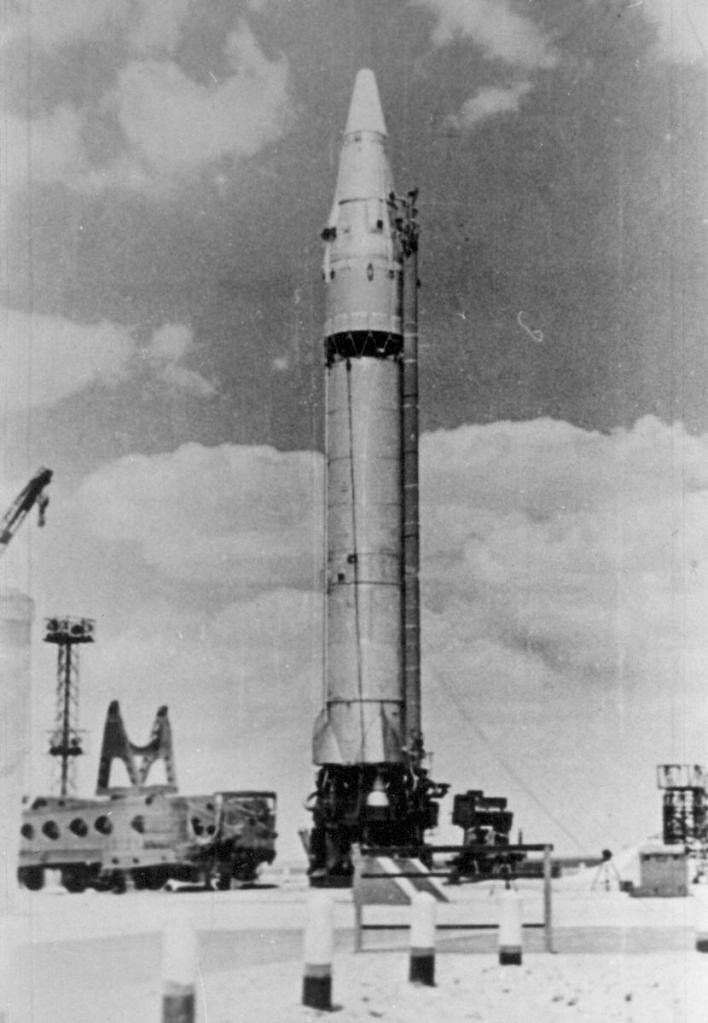
Readiness issues with liquid oxygen rockets historically retired them from the ICBM role once alternatives became practical (be it storable liquid or solid fuels). Yet one technological curiosity was an attempt to work around the issue.

A variant of the R-9/SS-8 ICBM with the typically obtuse Soviet industrial designation of 8K77 had the vacuum flask principle applied to its oxygen tanks. At least in theory, it would keep the liquid oxygen cold long enough for a fueled missile to wait on alert in a crisis. Vacuum flasks are of course better known in the capitalist west by their brand name turned generic name, the thermos.

It would be very cold and then very, very hot.

A Thousand Words: The Starfighters

The Starfighters

Generally speaking, to make a good Mystery Science Theater 3000 episode, the movie itself has to have some redeeming qualities. Obviously not good qualities, but signs of basic competence and the ability to do something memorable. The Starfighters is the exception to this rule. For it is simultaneously one of the best MST3K episodes and one of the worst movies shown on the program.

The movie can be summed up as “lots of stock footage of F-104s, intercut with terrible stiff acting to fill out the movie.” Famously there are two long scenes of the planes refueling in midair. Which is about as exciting as it sounds. And stock footage of them flying. And stock footage of them bombing, as well as stock footage of them firing AGM-12 Bullpup missiles.

There is one genuinely interesting thing in the movie, and that is a line that accurately shows the 1960s approach to aviation safety. Given the F-104’s infamously high accident rate, it rings even more ironically. Basically, back then the dominant theory was that every crash was the pilot’s fault and the solution basically amounted to “git gud”. Said mindset is blatantly stated in one scene where people discuss the safety of the plane.

But other than that, this is a great mock of a bad, bad, bad movie.

Operation El Paso

OPLAN El Paso was a proposed campaign in the Vietnam War to block off the Laos trails by land. One southern and two American divisions would deploy by air and hold the terrain. This corps-sized blocking force could theoretically do what no amount of airpower realistically could: stop the flow of troops and supplies south.

It may have been a missed opportunity to decisively change the (conventional) course of the Vietnam war-or a chance for the northerners to inflict a huge number of politically sensitive casualties on the Americans in a place where it was near its supply bases and they were farther. If one of the people responsible for the plan was skeptical that it could work, you know it could very well end up going the way of the similar Lam Son 719.

A Thousand Words: Billy The Kid VS Dracula

Billy The Kid VS Dracula

When I saw the title of the 1966 film Billy The Kid vs. Dracula, I knew I had to watch it. With a name like that, you know you’re in for something special. And this indeed was something very special. A vampire Western that hits every single cliche of both genres, the story is that Billy The Kid has reformed (!) and aims for a new peaceful life, but his fiancee is threated by Dracula.

Actually, there’s one point in which the movie is surprisingly progressive for its time: The inevitable Native American attack on the stagecoach is explicit as only happening because Dracula killed one of the previously stated as friendly ones and blamed it on the other passengers. Apart from that, it differs in how stupid and clueless everyone, including female lead Melinda Plowman, is. I was rooting for the vampire, especially because John Carradine (David’s father) delivers one of the few good performances as the monster.

This is very much a B-movie with B-movie problems, but its pure weirdness means it’s worth a watch.

A Thousand Words: Airport

Airport: The Movie

I was not exactly the fondest of the original novel Airport. So what did I think about the Burt Lancaster movie, which basically created the disaster genre? It was mixed, but I’m willing to give it a break based on its limitations. Having read the book first was not the best way to appreciate the movie, especially as it tracks the plot well. Too well.

First off, the cinematography is dated and clunky. This isn’t the movie’s fault, but it was one of the last “old fluffy Hollywood” movies, and it was made just before movies got more dynamic and more of an edge (the low body count in this compared to later disaster films is something.) But that’s not really its fault.

What I do think is its fault is trying to cram too many subplots from the book into an inherently shorter movie. A looser adaptation would have been preferable, especially because the book is not very movie friendly. It has too much overhang of “look inside an airport” and less focus on the main “a plane is in danger” plot.

Thankfully, the cast and crew are undeniably talented, and they do the best within these limitations. It’s easy to see why it made so many imitators, and at the time, it would have been seen rightfully as a giant spectacle.