Review: Gadget

Gadget

Nicolas Freeling’s Gadget is a book about a terrorist nuclear weapon. It can sort of be described as Red Army (villains win) meets The Sum of All Fears (nuclear terrorism). Only without the strong points of ether and with the latter’s weaknesses.

See, if you really, really loved the scenes in Fears where the nuclear bomb is being constructed, you will like this book. In fact, if the editor had chopped the entirety of that novel down to just the bomb construction scenes and ended the book right when it was successfully brought to the target and detonated, you’d have something very much like Gadget-a dry, technical nuclear tale.

I’ve pondered before why most nuclear terrorism novels were the way they were. The reason is “because it’s more dramatic than this”. If you absolutely need a detailed Herman Melville’s Nuclear Bomb story, this is the book for you. Otherwise, stay away.

Review: The Burma Wars

The Burma Wars

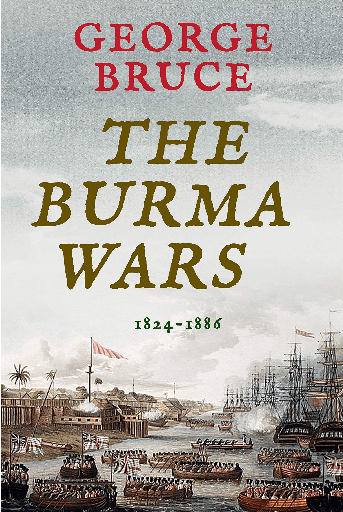
Because Myanmar/Burma features so prominently in my current novel draft, I figure I’d look at George Bruce’s The Burma Wars , a history of the British conquest. There were three large Anglo-Burmese wars, but Bruce mostly concentrates on the first. This is understandable, as the latter two were uninteresting squashes.

Bruce is every bit the Empire fan you’d expect a British pop-historian of the 1970s to be, but he still gives the Burmese credit when due. They were comparably armed, had a knack for building fortifications quickly, and the Anglo-Indian force that went against them was logistically troubled and questionably led. And yet, the British still eventually won, and it only got better/worse from there.

I wouldn’t make an old piece of popular history the sole source on any big historical event, but this at least made for a good starting point. I’m glad I read it.

Review: Manhattan Massacre

Manhattan Massacre

In the mid-1970s, the Mack Bolan inspired “Men’s Adventure” genre reached either its height or its nadir with a trio of series overseen (and often written by) Peter McCurtin. The Sharpshooter, The Marksman, and The Assassin were a jumbled mess of mobster slayers intended purely to be released as quickly as possible. Their sloppiness led to internal inconsistencies in such minor issues as the main character’s name.

Anyway, Manhattan Massacre features interchangeable mobster hunter Robert “The Assassin” Briganti, who joins fellow interchangeable mobster hunters Johnny “The Sharpshooter” Rock and Philip “The Marksman” Magellan on a mobster-killing revenge trip. The book doesn’t really have much of a plot beyond killing mobsters, and its prose is weird. It alternates between long overdescriptive passages (especially concerning weapons, such as the insistence on saying that Briganti carries a Canadian 9mm Hi-Power) and short crude sentences with lots of exclamation points!

This is not a good book, and it’s kind of offensive even by 1970s cheap thriller standards (A scene where Briganti meets Black Power activists is particularly horrible in both political and literary terms) . But it’s weirdly amusing to see a genre at its most frenetic. I did not regret reading this-uh, book.

Review: Diggstown

Diggstown

Leonard Wise’s Diggstown is a 1978 novel about a small town in the Deep South that is obsessed with boxing to the point that it’s named after a local who became a world champion. It’s also about an attempted swindle by a scam artist from up north that leads to boxer Honey Roy Palmer having to run a gauntlet of ten Diggstown dwellers in the ring. A colorful sports thriller, it nonetheless works a lot better as a comparably low-stakes sports novel than when it tries to be a serious thriller.

This unsteady wobbling also applies to its treatment of sensitive and difficult topics. For a 1970s book set in the south, I was pleasantly surprised to see it being tasteful and well-handled in terms of race. Yet the same cannot be said about it regarding its sex scenes. Those are not tasteful or well-handled.

The book also tries to be too setting-focused, taking its time before it finally gets to the climactic boxing matches. Yet once it gets there, those are as well-written as any other good sports fiction. You could do a lot worse than this book if you like boxing or old thrillers.

A Thousand Words: The Assassination of Trotsky

The Assassination of Trotsky

Directed by Joseph Losey and starring Richard Burton as the title character, The Assassination of Trotsky is often placed on many “worst movies ever” lists. It is a well deserved placement. For this is a terrible, terrible movie. And it’s deliberately terrible-it’s not due to circumstances, but due to creative choices.

First off is Richard Burton’s performance. His Trotsky looks like a cheap Colonel Sanders mascot and acts like that aging beatnik professor you had in college and loathed. You will learn absolutely nothing about the historical context from this film. In fact, the only way to make sense of the incoherent plotting is to assume that Losey thought the audience would already know everything historically relevant.

Second is the massive, massive padding. Since it doesn’t take ninety minutes to have an ax hitting someone in the head (SPOILER ALERT!), Losey fills the movie with filler. This includes a scene involving rabbits being raised, a long gondola ride where Stalin’s image appears in the water, and, worst of all, a long and gruesome bullfight scene. The only attempts at suspense involve dragging every scene out and playing minimalist music. This gets old after about, oh, two such scenes.

About the only sympathetic character is Romy Schneider’s “Gita”, who is as confused with the situation and disgusted with the bullfight as the audience is. Sadly, she cannot carry on her own, and is the subject of a padding scene as well.

This is a terrible, terrible mess that’s almost so bad it’s good. Almost.

Review: The Voroshilov Lectures

The Voroshilov Lectures

The Voroshilov Academy was/is one the most prominent Soviet/Russian military training centers of all time. In the late 1980s, a peek behind the curtain emerged. An Afghan officer named Ghulam Wardak attended the academy in the mid-1970s and carefully transcribed the courses. Wardak later fought with the mujaheddin and escaped to the United States, where staff from the US Army’s Soviet Army Studies Office eagerly edited and published his notes. Since its publication, the CIA’s FOIA reading room has declassified similar lectures and studies from there that support Wardak’s interpretation of them.

In three volumes (two on strategic and one on operational combat), the lectures go into detail about how to plan and execute a Soviet campaign in 197X. Most importantly, they occurred in a time period that finally allowed for the discussion and making of purely conventional plans. The lectures and planning do not take the naive belief that a Fuldapocalypse would stay conventional from start to finish, but they do view non-nuclear war as important. (Of course, with Soviet conventional superiority at the time, they’d have a vested interest to keep it non-nuclear as long as possible…)

Obviously much of these lectures need to be taken with a pile of salt. There’s obvious politically uh, slanted passages and some of the advance rates seem a little too optimistic. But these are nonetheless an invaluable resource for the wargamer and/or conventional World War III historian. As detailed Soviet primary sources, they excellently fill a previously blind spot in knowledge.

Review: Survival Guns

Survival Guns

John Rourke may be the fictional poster child of “survivalism”, but the factual one was one Mel Tappan. His most famous work was 1979’s Survival Guns, a book going into detail as to what one should have in their ‘survival battery’.

The important thing to note is that Tappan was an inauthentic, poor-health charlatan. Like an anglerfish, he attained his prominence through a relationship with a more powerful woman-in this case, marrying a wealthy heiress, Nancy Mack (of the truck brand fame). Thus he wasn’t exactly in touch with the ‘common man’, and the fact that his clients were almost all similarly rich Walter Mittys didn’t exactly help matters either.

With this knowledge in mind, why he popularized the “super-lair” type of countryside compound can be a lot more easily understood. He acted as if everyone could buy a concrete barbed wire lair because he himself could. Survival Guns assumes one has an unlimited budget, as evidenced by its recommendation for an ornate Perazzi shotgun (!) This is like recommending someone use a Ferrari for off-roading.

For all its questionable advice, Tappan’s book is a weirdly amusing look at an obsessive culture and a legitimately good historical resource for seeing how “prepping” trends got started.

New Command Scenario For Testing

It’s been a while, but I have a new Command: Modern Operations scenario up for testing, 2KW Sub Strike.

I’ve wanted to do a scenario set in a mid-70s Second Korean War where the north smells an opportunity in the immediate aftermath of Vietnam. After much thought, I settled on “do a submarine scenario”, which also plays to one of my favorite strengths of having the player be objectively outmatched and having to manage the best they can.

With a few diesel subs, you have to take on an aircraft carrier shielded by, among others, a hypothetical guided missile battleship and a brand-new Spruance destroyer. Are you up for it?

Review: The Iron Dream

The Iron Dream

Norman Spinrad’s The Iron Dream is an alternate history satire of the er, “issues” in lowbrow fiction. In it, Adolph Hitler doesn’t go into politics, instead becoming a pulp science fiction author. The book primarily consists of an in-universe novel involving the manly men of Heldon triumphing over hideous mutants and their masters, the mind-controlling Dominators. Does this remind you of anything?

This book is not subtle in the slightest concerning its message of the er “dubious” parts of adventure fiction. I could feel a tone of “Ok, here’s a very obvious reference? Do you get it? Ok, here’s another one. Get it? And to make absolutely sure that you get it, I’ll have an in-universe epilogue that explains everything”. My own reaction was “I get it! All right, I get it. Seriously- I GET IT.”

Thankfully, it’s quite understandable why Spinrad is so forceful. The stories of people not getting it despite his best efforts speak as to why. But it’s also dated in some ways. First, the type of exact “thud and blunder” prose/story he was parodying is now long obsolete. Second, it’s interesting to see a huge example of something coming not that long after its publication that was both prominent and different from the tone-Star Wars. Star Wars features a multispecies alliance of often-ugly aliens fighting a human-dominated empire. It may be a single example, but it’s the biggest example.

Beyond that, I can still understand and sympathize with the message. It’s one of the reasons why, while not a deal breaker, I tend to not like science fiction that has alien species’ introduced purely to be antagonists. However, I’ll admit it also feels a little like punching down at a very easy and very obvious target.

Nonetheless, this type of satire is very hard to write well. I know this firsthand. Of all the parodies of conventional WW3s I’ve tried to write, all of them I’ve junked as being too inaccurate and/or mean spirited. So Spinrad probably succeeded as best as he could, and the biggest satirical part does come across as him knowing his source material well.

Review: The Betsy

The Betsy

Harold Robbins was an author with a…. “reputation”. As successful as he was sleazy, Robbins turned to the car industry in The Betsy. The number of fictional novels centered specifically around the automobile industry is tiny-it makes conventional World War IIIs look like Harlequins in comparison.

It’s a story of sleaze, the struggles of Ford-esque Bethlehem Motors, and more sleaze. Oh, and bureaucracy as well. There’s a lot of that too. Robbins’ writing “style” can be determined right from the very start, as the first-person narrator appraises his nurse.

However, the rest of the book is a bizarre jumble. There’s the ridiculous exaggerated sleaze that everyone knows him for along with countless meetings about cars and the titular car in particular. It has the personalities of Ford, but the market share of one of the struggling “independents” like AMC, the “auto side isn’t profitable while the non-auto side is, so we want to leave the auto business” situation that characterized Studebaker, and oh yeah, the actual car companies of the past still exist as well alongside this upstart.

The impression is one of knowing the basics but not the whole. The Betsy is supposed to be powered by a turbine, making it the car version of the T-80 tank. Compared to its rivals with conventional engines, it would probably, like that tracked vehicle, offer a little more (theoretical) performance, regardless of raw power, at a lot more expense. Chrysler’s turbine car program failed. A struggling, close-to-stopping car company likely wouldn’t/couldn’t have funded it. The impending gas crisis or any fuel price increase would probably stop it, and it’s unlikely even a initial success would…

…Yeah, I’m probably overthinking things. It’s just I’ve read so much about the actual history of the actual auto industry that it feels like I’m obligated to critique it that way. But I do think Robbins threw down the gauntlet by including so many meetings and so many details.

Anyway, there’s meetings, weird sex scenes, more meetings, car scenes, even more meetings, even more weird sex scenes, flashbacks, and did I mention meetings? This unfocused narrative isn’t helped by the perspective shifting from first to third person at various intervals. While the prose is decent when not having to describe anything either tasteless or dull, the plotting is horrendous.

The obvious comparison is to Sidney Sheldon, who relished in “gilded sleaze”. But Sheldon was far more coherent in his writing and, as weird as it sounds to say it, actually more tasteful as well. Go read Sheldon instead of Robbins if you want “sleaze in high places” done better.