Review: Dead Simple

Dead Simple

deadsimplecover

The ninth book in the Blaine McCracken series, Dead Simple marked a point where it took a very long hiatus afterward.

It’s easy to see why. This book devolves into “Captain Beefheart Playing Normal Music” in a way that no previous Blaine McCracken book did. McCracken is, in the early parts, treated as aging and vulnerable-a problem both in terms of thematic dissonance and how he’s back to his old self instantly when the climax happens. The moments of whimsy and craziness that make the series so amusing feel half-hearted at best. The storyline is closer to a mundane “shoot the terrorist” than any previous McCracken, the MacGuffin is the least interesting and most bland in the series to date, and its historical-treasure subplot felt awkward and out of place, like it was trying too hard to follow the exact path of a Clive Cussler novel.

If this was in isolation with a new hero named, I dunno, Bruce McDowell, I’d have considered it a decent, slightly eccentric, run-of-the-mill “51% thriller”. But in comparison to its gonzo predecessors, it can’t help but fall short. Leaving the series buried for over a decade before a fortunate revival might have been for the best if the alternative was to stagger on into mundanity, losing everything that made Blaine McCracken fun and distinctive to begin with.

Review: Day Of The Delphi

Day Of The Delphi

delphicover

Despite being the sixth in the series, Day Of The Delphi is actually the first Blaine McCracken book I’d heard of. How had I heard of it? Well, it’s quite a story. Shamus Young, one of my favorite video game commentators, had listed it as one of his least favorite books ever. Naturally, this piqued my interest and I found the greatest thriller protagonist name ever. A little later, I heard the name “Blaine McCracken” again, got The Omega Command, and never looked back.

As for Day Of The Delphi itself, it’s excellent-by Blaine McCracken standards. The previous entry, The Vengeance of the Tau was still good, but it suffered from having the first disappointing central gimmick in the series. McCracken returns to form in this ridiculous epic.

The tone of this book (and the whole series) can be summed up by a scene disappointing to me. The disappointing scene did not involve any inconsistency, by now routine super-gambits, or laughably inaccurate designations of weapons. All those are in the book, but they aren’t the disappointing part of it.

No, the disappointing scene was a fight in a slaughterhouse that failed to take advantage of the potential to use live cows as weapons. McCracken uses the ramrod to kill an enemy. It needed more “battle cattle”. Other than the lack of battle cattle, this was a ridiculous Blaine McCracken spectacle extraordinaire. Yes, even by the standards of other books in the series.

It doesn’t have a MacGuffin that’s weird, but it makes up for by having an incredibly ridiculous (the plan of this book’s super-conspiracy ranks as dumb even by the standards of Blaine McCracken super-conspiracies) main plot. Some might reasonably think that’s bad. To me, I view it as part of the fun.

Review: SEAL Team Seven Direct Action

SEAL Team Seven 4: Direct Action

directactioncover

The SEAL Team Seven series, however much I enjoyed the first installment, is not the kind of series where reading every book in order is the most appropriate. So I decided on Direct Action for two main reasons. The first is that the summary seemed a little interesting. The second is that it’s the first book after original author William Keith was replaced by another writer under the “Keith Douglass” house name.

So, Lt. Blake Murdock (it’s not quite Blaine McCracken but it’s close) has to lead his SEALS into Lebanon to destroy a plant producing counterfeit American money, fighting Hezbollah and the Syrian Army in the process. The prose is a little clunkier and the action somewhat more extreme than the first book, but it’s still a good cheap thriller.

In fact, this book manages to have its cake and eat it too in a good way. It manages to have its SEALS scything their way through enemy fighters, soldiers, commandos, BMPS, and helicopters while at the same time throwing semi-plausible bits of “friction” in their path to make them earn their mission-and not without loss.

A part of me has “glass half empty” thoughts where I think “what if the big-name technothriller writers did a slightly higher-brow version of this instead of clunking along with an increasingly obsolete Cold War thriller model?” and lament what wasn’t. But another part of me has “glass half full” thoughts where I can just enjoy this well-done cheap thriller for what it is.

Snippet Reviews: August 1-11 2019

It’s time for more snippet reviews.

The Omicron Legion

The fourth Blaine McCracken book, The Omicron Legion continues Land’s style of ridiculous plots, quadruple-crosses (yes, I’m using that word), and BLAINE MCCRACKEN action. If you liked the past Blaine McCracken books, you’ll like this a lot.

The Mercenaries: Blood Diamonds

This Peter Telep (under a pen name) novel would be a routine 2000s thriller if not for one thing-the dialogue. It’s ridiculously and constantly crazy. This wouldn’t be too big of a deal if the actual story was goofy to match, but it’s supposed to be a serious tale of weary mercs in the southern African wilderness.

While it at least it stands out a little because of that, this book really ought to be focused around a Macguffin giant magical diamond that can power a super-deathray, not a stash of normal ones.

Terror in Taos

One of the Penetrator novels, Terror in Taos serves up all the 1970s “vigilante vs mobsters” action one could possibly want. By the standards of the genre, it’s very good. The action, which includes hero Mark Hardin storming a desert castle, is good. There’s even a bit of semi-mystical Native American stuff that makes it even more ridiculously over-the-top and fun (yes, it could easily be tasteless and offensive to a modern audience, but this is a 70s action novel-what did you honestly expect?).

Special First Anniversary Review: The Sum Of All Fears

SPECIAL FIRST ANNIVERSARY REVIEW: THE SUM OF ALL FEARS
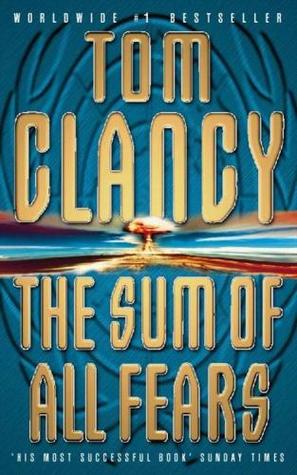
sumofallfearscover

This is it. For the first anniversary of Fuldapocalypse, I felt I had to review something big by a big-name author. And The Sum Of All Fears was not exactly a difficult choice. I felt it had to be Clancy, and I wanted to pick what’s often regarded as his absolute height.

Now, I’m not and have never been that much of a Tom Clancy fan. Even in his Hunt For Red October/Red Storm Rising-era “early, lean” period, I’ve felt he was never more than decent, and that his rise was more about circumstance and being able to tap a national mood than actual standout writing. And his later period (at least from Executive Orders onward) is just bad.

Enter The Sum Of All Fears, between them. It’s 1991, right before the Soviet Union collapses. How does it hold up? Well, that’s a tough question. What bizarrely helps is that judging it by the standards of something like Executive Orders, as opposed to The Hunt For Red October (to say nothing of books by other authors), means that any improvement over that clunker makes it look better. Also beneficial is that The Sum Of All Fears is over 100,000 (!) words shorter.

Comparing the two, they have a very similar structure. There’s a bunch of plot threads and they move forward for hundreds of pages with all the speed and gracefulness of a NASA Crawler making its way through the aftermath of the Boston Molasses Disaster. Then in the final couple hundred of pages or so, the plot becomes vastly more focused, moving fast and much, much more smoothly.

And here’s where The Sum Of All Fears beats out Executive Orders dramatically. The latter’s final act was nothing but a dull, triumphalist stomp. This is a far more somber and unflashy piece with the goal being to stop a war rather than fight one. If I had to pick out a strange analogy, it’s the “peaceful resolution” paths of Undertale or a Fallout game. Jack Ryan being Pacifrisk or a speech-maxed protagonist is more conceptually interesting than him as a cook-shooting action hero or as a president.  Here’s the sharp-tongued analyst doing sharp-tongued analyst things in a way that takes advantage of a character built as a sharp-tongued analyst.

This also has the best villain(ess) I’ve read in a Tom Clancy book, in the form of national security advisor/presidential girlfriend Elizabeth Elliot. In a strange way, I liked that she was just petty, shallow, and wrong in a world of blindly ideological supervillains. She’s also one of the few fictional characters that I could instantly pick an ideal actress for-in this case, Amy Poehler (aka Regina’s mother from Mean Girls).

So was The Sum Of All Fears a Team Yankee-style pleasant surprise for me?

Not really. First, there’s still the rest of the book. The plot threads aren’t as tangled as in Executive Orders, and they fold back into the final climax better (there’s nothing like EO’s useless “rednecks with a bomb” subplot in Fears), but they’re still there and clunking along. The setup portion of the book has its share of out-there plots (The “Swiss Guards For Middle Eastern Peace” is very zombie sorceress ) and axe-grinding political figures. Not to the extent of Executive Orders, but still there.

Second, the book is plagued by what felt to me like what can only be described as self-indulgence, even in the conclusion. There’s the infamous chapter (actually, chapters) devoted entirely to a nuclear bomb exploding, but the descriptions of actually building the stupid thing get a much larger word count than they deserve. The adventures of various submarines, aircraft, and electronics get giant infodumps. That’s to be expected, but what really pushed me over the line to “Ok, you’re going ‘Look how much I know’ constantly ” was talking about the vice presidency, from its initial “loser gets in” to the post Twelfth Amendment ticket system.

In the first act, this contributes to the bad pacing. In the climax, it neuters some of the punch (there’s nothing like going from Denver being nuked to a rote description of something far away). This would have been a good finale to the Jack Ryan series. But it had to go on, and some of the elements that weren’t so bad here move on to devour it in later books (which are set up here in plot points that do nothing but slow down the main plot of the current book even more).

If The Sum Of All Fears was four hundred pages long, focused completely on the nuclear bombing and subsequent near-World War III, and written as something completely self-contained by a writer who expected no further success, it would be a good technothriller, if a little clumsy. But it’s over a thousand and clearly written by someone who (accurately) saw nothing but new books, dollar signs, and ever-lighter editing ahead of him.

So, for my conclusions on The Sum Of All Fears, I’d say that the people who argued that this book marked when Clancy jumped the shark were right. It has most of what made his post-USSR books as bad as they were, and the redeeming part is its conclusion. Had it gone with something different (like more direct action, which Clancy never was the best at), I would have viewed it as just a slightly better Executive Orders. But it has that well-done, appropriate climax.

That leaves The Sum Of All Fears as a deeply flawed novel that still has a good conclusion and can serve as an ideal stopping point for Jack Ryan-if not for the writer, then for the reader.


Review: Firefall

Firefall

Ed Ruggero’s Firefall was a disappointment.

On paper, it had a lot to recommend. It was written by a veteran Ranger. I heard good things about his premier novel, 38 North Yankee (which I still haven’t read yet). Because of these, I had high hopes for it.

Sadly, it was a let-down for two reasons. The first was the simple prose. It’s just ‘meh’. Not absolutely bad or unreadable. Just “meh”, a middle of the road cheap thriller that was firmly in the forgettable middle of the pack. The second is the plot, a rare case when the post-USSR scramble for different opponents turned out poorly. The zombie sorceress in charge of coming up with the opponent pulled “neo-fascist German militia” out of her hat.

This made me disappointed in it. It probably made me disappointed more than I should have been, but still. The zombie sorceresses were purely and simply unnecessary. The list of potential opponents that can credibly threaten a ranger company/battalion is much, much longer than the remaining national-level challenges that technothriller writers tried desperately to find. What would be a mild opponent (in big picture terms) to a heavy brigade is something far worse to a light, unconventional one. In many cases, the ranger unit would need every force multiplier available to not just get crushed.

So what I was hoping for was someone using genuine expertise to lend a slightly fanciful story a hand. What I got was merely decent prose in service to a story that exemplified a bad trend in action/technothrillers. Namely, taking an out-there concept/threat and treating it in a bland, po-faced way.

Firefall is not bad, and viewed in another context it would work as a “51% book”, but I still found it disappointing.

Review: The Guns Of The South

The Guns of The South

gotscover

Harry Turtledove’s classic alternate history novel started when another author complained to him that the cover art on one of her books was as anachronistic as “Robert E. Lee holding an Uzi.” After that, writing a book about South African time travelers changing the fate of the American Civil War via a huge quantity of AK-47s was in order.

Guns of the South is a frustrating book, because it manages to be good, bad, and unnerving at the same time. The good part of the book is in its action and use of viewpoint characters. It has only two, Lee himself and low-ranking soldier Nathan Caudell, and the perspectives they can apply are well taken advantage of. As for the action, it keeps it well-written even when one side has muzzleloaders and the other AKs-and that’s not always the case.

The bad part is mainly in its ultimate antagonists, the time travelers themselves. These rank in my eyes as some of the worst villains I’ve ever seen in fiction. Besides the moral issues which I’ll discuss in a bit, they’re ultimately dumb and mysteriously stop taking advantage of their high technology and training at exactly the moment it’s convenient for the plot.

The unsettling part is that Guns of South has a disturbing feel of Confederate apologism to it. I think it’s just the result of unintended consequences, but still. Make Confederate protagonists who a modern audience will find relatable and sympathetic, and there’s going to be some (no pun intended) whitewashing. The two biggest problems are the Confederately ultimately phasing out slavery without much protest and the behavior of the time travelers. Said time travelers are stupidly and cartoonishly racist in ways that exist to make the CSA look better in comparison. It’s not only creepy, it’s lazy and annoying-and makes them even worse as antagonists.

This is still readable and it’s still one of Turtledove’s better books, lacking the bloat a lot of his later novels have. It’s just weighed down by its terrible villains.

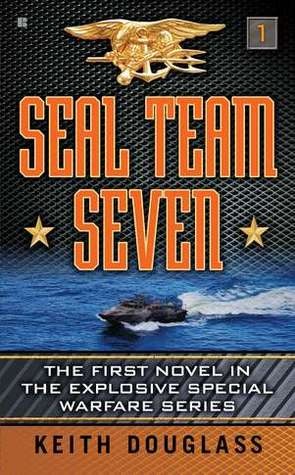
Review: SEAL Team Seven

SEAL Team Seven

st7 coverjpg

This book about a certain amphibious special forces unit is quite possibly one of the best 1990s military/techno-thrillers I’ve read. It spawned a huge series, and I can see why. SEAL Team Seven is very, very good.

The book tells the story of Lt. Blake Murdock, the son of a powerful political family (while present, the clunky politics in this book aren’t too bad) and his titular team as they’re called to action in a big crisis. Because this is a 90s thriller, the antagonists are a zombie sorceress-assisted mix of renegade Japanese and renegade Iranians who’ve taken control of a freighter loaded with plutonium. SEAL Team Seven has good fundamentals and manages to have its cake and eat it too.

It starts with a well-written battle in post-Desert Storm Iraq. Then the opening act introduces and humanizes the characters. When the main conflict starts, the action is highly well done and manages, for the most part, just the right mixture of “grounded” and “fantastical”.

SEAL Team Seven isn’t literary fiction or anything like that, it’s still ultimately just a cheap thriller that has a lot of cheap thriller components and cliches. But it’s an excellent cheap thriller.

Review: Fortunes of War

Fortunes of War

While Stephen Coonts is one of the classic technothriller writers, I’d actually never read any one of his books in full until now. Picking Fortunes of War, a late 1990s technothriller after his sales had peaked, is kind of like wanting to start listening to Yes with Big Generator.

Now that that shoved-in prog rock reference is out of the way, I was interested in this because of its depiction of a second Russo-Japanese War. One of my Command Live scenarios deals with such a thing itself, so I was curious to see how a spectacularly successful author handled it.

Who and What

Let’s see, an unconventional opponent (Japan) with some sort of super-gimmick weapon (Super fighter aircraft),  attacks a helpless Russia for zombie-sorceress induced reasons. This is very 1990s technothriller. In fact, this is one of the most 1990s technothrillers that ever technothrilled in the 1990s, even more so than poster child Cauldron. The 90s contrivances are there, and the technothriller “snapshot and superweapons” model, going from aircraft to submarines to dogfights to knife/fistfights is there.

Apart from that, it’s a little iffy with characterization (even by the standards of the genre). The American “Volunteer” F-22 pilots are too numerous and the book too short to really examine in depth. One final bit of serendipity happens in this novel. The villainous Japanese Prime Minister is named “Abe“-I was reminded of The Hunt For Red October having a “Putin” in it as well.

DEEP HISTORY OF TEM

This is slightly less infodumpy than the absolute worst the genre has to offer, although it’s still very, very description-heavy. One interesting part is that Coonts can leverage two pieces of genuine but “new enough to be exotic and techno-thrillery” technology-the F-22 and JDAM-style munitions.

Zombie Sorceresses

Ok. Apart from the geopolitics (Belligerent Japan, Russia being worse than it was even at its 1990s nadir), and the technology, the big zombie sorceress contrivance is in nuclear weapons. Russia has disarmed (almost) all of its nuclear weapons as a foreign aid condition so that the conventional invasion of Siberia, but kept a few for the plotnuke climax. Japan has developed a few in secret, also for the plotnuke climax.

Tank Booms

There are two types of action scenes in this book. The first are the aerial combat scenes, something which the Distinguished Flying Cross recipient Coonts knows very well. The second are the technothriller/action scenes like fistfights or anti-submarine warfare that he doesn’t have as much firsthand experience with. And it shows.

Even the former are let down a little by a few too many exact-detailed “and the missile exploded in exactly 2,003 fragments, turning the enemy plane into 1,200 fragements and its pilot into 320 fragements” scenes.

The Only Score That Really Matters

By the standards of 1990s technothrillers, this is very good for what it is. It’s technically competent and has its authors expertise in his subject matter carry it above the pack. But in some ways it feels more artificially stilted, like its creator’s most vigorously creative days are behind it. So, suspiciously like 1980s Yes (to swing back to progressive rock).

Still, it makes me want to check out Coonts’ earlier books, and that’s endorsement enough for me.

Review: Death Watch

Death Watch

So, after over two dozen books, the Survivalist series came to a close with 1993’s “Death Watch.” In some ways, the series was lucky to have progressed for as long as it did. Similarly to the technothriller, the action-adventure genre that typified Jerry Ahern’s other work declined massively in mainstream popularity when the Berlin Wall fell, with many series (always ‘cheaper’ and lower-margin than the likes of Clancy and Dale Brown) getting outright cancelled.

So surviving for two years after the end of the USSR and getting a proper conclusion instead of just a pulled plug made the Survivalist a lucky series. But the end was overdue.

Who and What

By this point, the increasingly science fiction Survivalist series has stopped being remotely post-apocalyptic in any fashion. There’s the world-threatening ‘catastrophe’ of the week, the secret supervillain lairs, the Nazi mad scientist and his pre-programmed clones, and so on.

Long series tend to fall into three general, understandable pits. One is simple repetition of what happened before. One is what I like to call, after Bill Hicks’ classic Gulf War joke, the “Elite Republican Guard” effect, where the antagonists become less credible-seeming. The other, a reference to a Twilight 2000 module, is what I call “Arkansas vs. The Blimps”, where they grow more outlandish as a way of avoiding repetition. The blimp effect isn’t always bad and can sometimes be beneficial.

By the time of “Death Watch”, all three were in effect. The repetitive parts were more small-scale (and worthy of being covered in different sections), while the other two were bigger. The “Elite Republican Guard” is embodied by, in the face of this supposed peril, a decent-sized passage being devoted to the main character’s wedding, and said wedding being handled nonchalantly. “Arkansas vs. The Blimps” is the sci-fi subject matter.

And the book is kind of rushed. Everything is resolved in one book, and the final denouement is just one chapter at the end.

DEEP HISTORY OF TEM

Ahern’s long description of weaponry keeps coming back. For instance, one passage describing a character at the wedding lists the gun they have, the brand of the gun they have, the caliber of the gun they have, and the brand of holster that they have.  This is not an aberration.

Zombie Sorceresses

The Survivalist has always been zombie sorceress heavy, but the later sci-fi parts made it reach new heights. It went from “pulpy post-apocalyptic” to “pulpy sci-fi with action-adventure scenes and familiar weapons.”

Tank Booms

The action hasn’t gotten any worse over the last 26 books, but it hasn’t really gotten much better either. While still good by cheap thriller standards, if someone like me was crazy enough to read all the books in a row, well, I’ll just say it felt awfully repetitive to have Rourke shoot a guy with his Detonics for the 500000000000000000th time. And I don’t think the best author in the world could have improved it (not like that author would have written a 27 book long cheap thriller epic)

The Only Score That Really Matters

This is the final installment of a decade-long soap opera which has the usual problems of something moving too slow suddenly forced to wrap up quickly. The Survivalist series, in my opinion, should have ended around the tenth or eleventh book. The main characters survived, ensured the future of humanity, and accomplished the clear goal. Instead it was followed by more than a dozen books of sci-fi-with-Colt.45-soap-opera-adventure.

While the later Survivalist books are interesting to look at, I’d be loath to actually recommend them to all but the most devoted Jerry Ahern and/or “weird pulpy fiction” fans. And Death Watch symbolizes the later books at their most er, “different”.