Weird Wargaming: The Abrams-SPH

The year is 1995. Faced with either leaping into the unknown with a clean-sheet system or plugging along with legacy platforms, several contributors to Armor Magazine decided to pursue a middle ground. In the November-December edition, they unveiled their contraption: An Abrams-chassis 52-caliber (same as the PzH2000 and Archer) self propelled howitzer with an autoloader and a whopping 80 rounds inside.
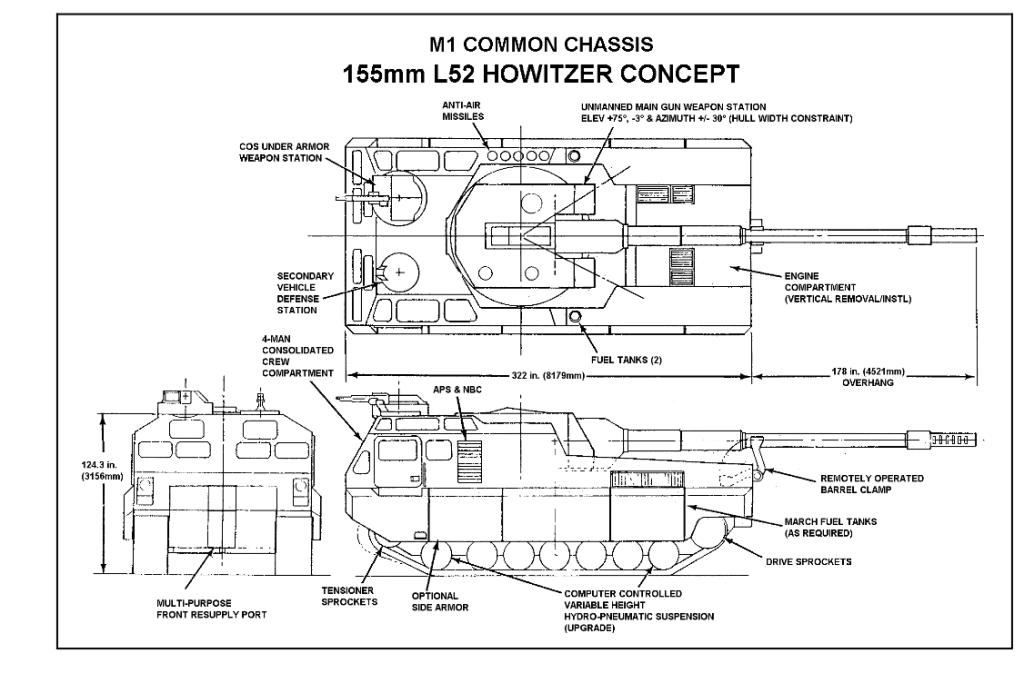
The M1-Arty, or AFAS/M1. Of note is the Archer-esque “backwards” layout of the main gun.

AFAS/M1 would fire 4 to 8 rounds in a Simultaneous Impact Mission (SIM) between 6-40 km. All rounds will impact within 4 seconds (first-to-last round). This requirement can be attained with an effective combination of a battle management system, fire control system, global positioning system (GPS) and an autoloader.-claim for its power from the article.

A resupply vehicle on the same chassis would also be designed. The AFAS/M1 had a target weight of 55 tons.

For all the unusual elements about its design, in practice this beast would have been deployed conventionally. In action, it would have served with heavy divisions/brigades in the usual format. It could be simmed by using the offensive stats of the PzH-2000. Yet it still stands out, in appearance if nothing else.
Review: The Iraqi Army

The Iraqi Army: Organization and Tactics

The NTC special text dubbed “The Iraqi Army: Organization and Tactics” is a valiant attempt at quickly trying to adapt to a different enemy. While the Iraqis used lots of Soviet equipment, their actual doctrine was more British-based on paper and often varied from both (usually for the worse). Just all on its own, it’s a fairly conventional and standard OPFOR document. But I find the context incredibly fascinating.

Like in Lester Grau’s much later The Russian Way of War, a tightrope had to be walked between the observed performance and the theoretical doctrine. Given the latter country’s vast paper trail and its known obsession with quantifying everything, separating the two was/is an easy task. As is/was noticing when theory inevitably diverged from practice, from Grozny to Hostomel.

Here, not so much. The Iraqi Army was notoriously slapdash, so the challenge was even greater. One example I like is that an Iraq War wargame supplement even told the player not to try and use any kind of standardized formation for them at all (!). On the more important doctrine, it acknowledges the flaws shown in the war with Iran, but cautiously and wisely goes with what can be paraphrased as “This may have been an aberration, treat them as a mechanized force worthy of their equipment”. That in many cases they turned out not to be showed the importance of assuming strength rather than weakness.

As a primary source, this is a very interesting snapshot. Plus it’s in the public domain and available readily now.

A Thousand Words: Alien3 The Gun

Alien3: The Gun

Based off the ugly duckling of the Alien franchise (infamous for killing off the beloved non-Ripley cast of Aliens, for starters), Sega’s Alien3: The Gun was an arcade lightgun shooter a la Revolution X. Unlike that “how do you do fellow kids” game, this actually manages to be atmospheric. The visuals match the movie’s themes well, and the music is excellent.

In fact, this is the rare game that manages to have its cake and eat it too. Alien properties, following in the wake of the second movie, have this tendency to turn xenomorphs into uglier Koopa Troopas, being generic expendable enemies. (The game Alien: Isolation was a deliberate reaction to this trope). Naturally, a light gun arcade game can only do that… but it still manages to be chilling and foreboding too.

Then there’s how the action is jury-rigged into the movie plot. The player controls an anonymous marine who somehow ended up on the doomed Sulaco and goes through all the parts of the actual movie. There are robots, including a giant tank. Despite there being hordes of xenomorphs, the real one from the actual movie is inexplicably more durable as a boss. And finally, the last boss, in a game full of hideous monsters is….. a human with a flamethrower. It would be annoying in other contexts, but here it’s endearing.

This is the rare quarter-muncher with class and poise, and a pleasant surprise from a genre with low expectations.

The Differences

Just as how Hector Bywater’s The Great Pacific War got a lot of specifics from the later conflict off but the general feel of a Japanese-American war completely right, I figured I’d look at my Soviet/Romanian War (which I’ve outlined) and see the differences.

  • First, the absolute biggest. Instead of being against an elected government and earning massive condemnation, this is against the odious regime of Nicolae Ceausescu. The prevailing outside sentiment would be sympathy for Romania’s people, but very little for their government.
  • Second, the force structure of the invaders is different and both stronger and weaker. Belarus has been replaced with Bulgaria, which has mobilized a gargantuan army in and of itself-albeit an army that still uses T-34s (really, there were units with those, as in Romania, up until the very end). Whereas the Union of Soviet Sovereign Republics, for the most part (especially in its Mobile Force units), is a lot deeper than what I’ve seen from the Russians IRL in terms of substantive modernization (where a lot of old equipment, and, more importantly, stuff like few night vision devices and still using unsecure commercial radios beneath their shiny digi-flora uniforms)
  • Third, the invasion is a lot smoother out of the gate (note that I’m not speculating on the ultimate outcome in real life as of now). This is because, if nothing else, Romania is a lot smaller, less populous, and the invasion force is a lot bigger. Oh, and said horrendous Romanian government leading to apathy rather than near-unified disdain.

However, one thing that did appear in fiction and fact is the use of high-risk to the point of questionable VDV (Airborne Forces) operations. Of course, given their prominence, this is of little real surprise. Also, writing this post was tough, as is anything in a fluid, confusing situation.

A Thousand Words: Streets of SimCity

Streets of SimCity

When I was young, one of my favorite games to play was Streets of SimCity, a car action game that could take place in actual SimCity 2000 maps. Unfortunately, my frustrations with it were there even then. And now? Looking back without rose-tinted glasses, I can say: It sucks.

Here’s the first thing that illustrates why it sucks: You have no turrets and have to turn your entire car to aim like it’s some kind of wheeled StuG. Second thing. You can’t run anyone over. Because Maxis didn’t want to be too violent, Sims are just these weird bald sprites that you can’t really interact with (a contrast to SimCopter, where you can land on or push people out of your helicopter). Even the story hedges, with you being a stunt driver and all the action taking place in-universe on shows-within-a-game.

That it’s a blatant ripoff of the far better Interstate 76 is another blow against it. Combine this with terrible performance and worse physics, and you get a spinoff that spins off the road.

Review: Parting Shot

Parting Shot

Written by nuclear expert James Kunetka, Parting Shot promised a more grounded, realistic look at the infamous “The Germans have a nuclear bomb” World War II alternate history. When I saw the Sea Lion Press review, I knew I had to get it. So I did.

It’s indeed the most plausible “WWII German nukes” AH out there. In fact, it’s arguably too much so. This is a rare example of the kind of book that’s possibly too realistic for its own good. The Germans go with a gun-type device, because that’s the easiest to build. Although that arguably just shifts the bottleneck from the physics package itself to uranium enrichment-it’s why I’m certain that’s the reason the Iraqis went with a more complex but less U235-hungry implosion design. But then again, having a cheap thriller drag you into plausibility arguments isn’t the best itself.

And make no mistake-the final fight leaves no doubt that this is intended as a thriller. Only the contrivances of that (and other scenes) mixed with the intent to be more realistic leads to an awkward stumble. The very nature of a program that wasn’t even close becoming unrealistically successful is jarring in and of itself. And even the bomb proper didn’t really work for me, being a cheap thriller cliche just short of “HITLER LIVED!”

Finally, the structure of the book works against it being a good thriller. Having stuff told in the past tense and jumping between past and (then) present takes away a lot of the drama. This is still an ambitious book, but it kind of falls apart from that very quality. If it’s too realistic for its own good, it’s also too scattered.

A Thousand Words: Doom

Doom

For the 666th post on Fuldapocalypse, I figure I’d do a “suitable” piece. It was either than or something on the SS-18 missile, whose NATO designation cannot be a coincidence (18=6+6+6=designation name “Satan”.) But I digress.

The id Software masterpiece that popularized the First Person Shooter genre, Doom is the deep, complex story of a sole surviving spacesuit burly man against a giant horde of demons. Ok I kid. But it is still one of the most successful and influential games of all time, ported to a degree that it’s become a meme/security/programming challenge to see if a certain device can be made to run Doom.

What makes Doom interesting and effective even decades after its initial release is that it’s a movement game. The “Doomguy” can run around at massively high speeds, and most of the enemy projectiles can be dodged. Thus it’s about player movement skill. Later cover-shooters are more about player timing skill. And the awkward turn-of-the-millenium games that took place after hitscan and slow characters but before cover mechanics were mastered-

-Well, the only “skill” involved is knowing the layout and how many powerups are there. It’s a kind of deterministic rut that stands as one of those things that doesn’t bring nostalgia. But the rapid movement of Doom is one that definitely does. This is a classic for a reason.

Review: The Day After Tomorrow

The Day After Tomorrow

Allan Folsom’s debut novel, The Day After Tomorrow (no relation to the 2000s movie) is-something. It’s definitely one of the best worst novels I’ve read recently. The prose is as blocky as it is purple (including, yes, the love scenes), and most importantly, much of the book is just people traveling. It’s supposed to be an unwinding conspiracy thriller…

…But it has an anti-Goldilocks effect. It’s too unrealistic and bombastic to be a cloak-and-dagger story, too dull and clumsily written to be an action novel, too narrow in scope to be a pop epic, and too shallow to be a character novel. And then there’s the big twist.

See, this book is basically a novelization of They Saved Hitler’s Brain, down to his actual head playing a role in the plot (although this one is not yet alive). It boils down to using convoluted superscience to clone/revive Hitler, for….. uh….. Anyway, the biggest part of the plot is foiled by someone other than the doctor and detective who serve as the protagonists, leaving a reasonable assumption of “what’s the point”?

Well, the point is that I learned of this book from a bad review. And while I don’t recommend it to anyone “normal”, I had a blast reading it.

Fatadin Mukhamedov

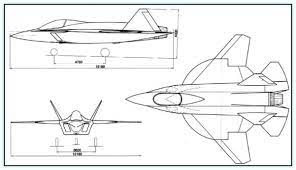
In one of those weird footnotes of aviation history, Mukhamedov, like Stavatti in the west, has been a maker of so-called “paper planes”. The company owes its existence to Fatadin Mukhamedov, a Soviet/Tajik engineer who had a successful career with the big bureaus (for instance, the Dushanbe center of Mikoyan) before striking out on his own. No actual aircraft were produced by the Mukhamedov bureau before Fatadin’s death in 2013, but the bulk had one specific shape.

Mukhamedov designed everything from fifth-generation fighters to gargantuan transports with the same distinctive circular inner wing. The most practical and achievable design was an advanced jet trainer/light strike aircraft for the competition eventually won by the Yak-130. Not coincidentally, the design may have found its way to Iran as the would-be HESA Shafaq. All of the other circular planes were just interesting and distinctive dreams.

But, in other timelines, dreams can come true….

A Thousand Words: Sonic Adventure

Sonic Adventure

I was a child when Sonic Adventure first came out on the Dreamcast. I was also one of the rare few who got to see it new and firsthand. At the time it looked impressive. Now with hindsight, it’s basically the Yak-38 of video games.

The Forger was basically a tech demo of a V/STOL fighter that got shoehorned into being an operational aircraft out of desperation. It was horrendously underpowered and unsafe. Likewise, this is a massively erratic way to show off all the things the Dreamcast could do more than an actual game. Sonic himself is a barely controllable pinball. Everyone else is there to represent something “new” and “amazing”. Tails can fly. Knuckles is there to have the same kind of collectathon gameplay pioneered in Mario 64. Amy-uh, does, basic puzzle stealth? Gamma the robot does third-person shooting by way of locking on, and Big the Cat infamously has that classic element of a speed game: Fishing. Slow paced fishing at that.

The cinematography in the cutscenes is utterly horrendous with the slightest point of comparison to anything else. And this introduced the storyline elements that would explode to horrendous proportions in Shadow and 06 and remain with the series even to this day. Which is to say, a combination of mystical mumbo-jumbo, Dr. Robotnik/Eggman messing with something he shouldn’t, and tons of new characters with each installment.

What I consider interesting is that Super Mario 64, made by Nintendo from a position of strength, did not do anything like this. It kept the same basic excuse plot as the past installments, and didn’t feel like it had to push anyone new very hard. Sonic Adventure, made by Sega from a position of weakness, had to stretch, and it failed in that regard.

The tragedy of this for the series was that instead of trying to improve the fundamental controls, Sonic Team focused on one gimmick after another. Mechs, teams, guns, telekinesis, anything but razor-sharp platforming. Adventure didn’t cause the famous 3D pit all by itself, but it started the process of digging.