Review: A UN Legion

A UN ‘Legion’: Between Utopia and Reality

Stephen Kinloch Pichat’s A UN ‘Legion’: Between Utopia and Reality is a very inconsistent book. This may be due to its subject matter, which involves the various proposals for a UN standing army, proposals made since before the formal United Nations Organization even existed.

About half the book, at least figuratively, is written in a particularly bad form of “academic-ese”. I had trouble getting through it and I read long dissertations for fun (seriously). Even if unintentional, the problem is that the political obstacles to such a force are so obvious and so easily explained that any long statement will become unfulfilling.

That being said, the other half of the book is a concise, well-written, and well-sourced example of various proposals. They come in two categories. The first is a gigantic “World Army”. The earliest proposals, made during World War II, fit this category, with numbers that seem big to a modern reader but weren’t back then. “World Armies” frequently were capped by a standing high-readiness force (think the 18th Airborne Corps or maybe the USMC/VDV).

The second is a smaller and more theoretically practical “UN Army”, a comparably small force designed for specific contingencies. One of the most detailed examples, which Pinchat describes, is the ‘Vital Force’/’UN Legion’ proposal amounting to several brigades of light to medium troops. Others amount to similar versions of the same thing-something that can conduct most normal peacekeeping missions, but without the ad hoc nature of existing setups.

I’m a little reluctant to recommend a book that sinks to such lows, but it’s still a good resource. It’s just a bit of a shame it’s not better laid out, but this is an academic history and the text is still good when it counts.
Review: Sandstorm

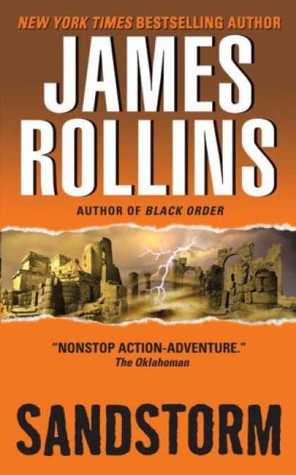
Sandstorm

sandstormcover

James Rollins’ Sigma Force series begins with Sandstorm.

I might have a little bit of “hype backlash” because of the way this series has been praised so much. I might also be used to ridiculous thrillers because of the way I’ve actively sought them out, so what seems utterly crazy to a less prolific reader might not be that way to me.

That being said, this was a very good, very out-there cheap thriller. I’d describe it as a more tacticool version of Clive Cussler. The ridiculous technobabble and ancient puzzle-solving is there, but the action (which is both incredibly frequent and often janky) is more conventional and, for lack of a better word, “tactical”, save for an amazing scene where someone dual-wields pistols on horseback. While I like it, it’s not the best ever in my eyes.


Review: Life Without Giamotti

Life Without Giamotti

Sean Munger’s surreal Life Without Giamotti may be one of the most influential books I’ve read, with its surrealism influencing so much of my thinking with regards to fiction that I’ve sometimes had to step back and look to see if the tracks are there. For instance, my story thought of the pilot who finds his wingman is just a shell is, upon even a brief inspection, very much inspired by it. Possibly too much so. Oh well.

The narrative is a strange and unconventional one about an author and his character who has gained sapience. Perhaps fitting, it’s very hard to review. How can one score a book like this? It’s a strange book. Either you’ll think it’s a thought-provoking psychological story, pretentious emptiness, or a sum of parts that doesn’t quite add up to a whole. At times I’ve felt each of those opinions about this book.

Yet it’s well-written technically and its prose is sound. I can’t help but recommend it, to see if another reader will find it appealing.

Review: The Return of the Dog Team

The Return of the Dog Team

It’s time for Fuldapocalypse to dive into the world of “William W. Johnstone’s” novels. Johnstone himself wrote (and apparently considered his proudest work) the original Last of the Dog Team in 1981. By 2005 he was dead, though he lived on as a “Tom Clancy’s”-esque brand name, with its sequel being written “with” “Fred Austin” (who I’m convinced is just a house name).

To be honest, this isn’t really that bad-or that good. Yes, the heroes are ridiculous unstoppable Mary Sues, but this is far from the only book to have that issue. Yes, the military details are frequently inaccurate, often to excess (behold the “A-130” gunship helicopter), but that’s also common. Yes, there’s axe-grinding politics and horrible stereotypes, but-you get the idea.

In a strange way, William W. Johnstone stood out. This doesn’t. It’s just “shoot the terrorist” mush that hundreds of writers have done better without the baggage attached to the name. It’s a little better technically than Johnstone himself, but still. People remember the 1899 Cleveland Spiders. They don’t remember the 2002 Kansas City Royals.

Review: Destiny In The Ashes

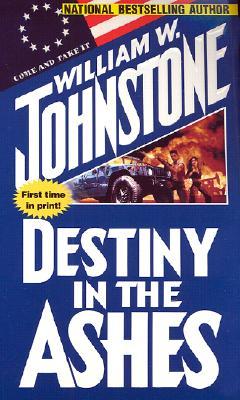
Destiny In The Ashes

ashesdestinycover

William W. Johnstone’s Destiny in the Ashes is the 32nd (!) book in the series. Released near the end of Johnstone’s life, there are legitimate questions as to whether it’s the work of Johnstone the person or “Johnstone”, the pen name used by his niece and an army of ghostwriters behind ironclad NDAs since his death. I will only say that it reads like the real Johnstone and certainly isn’t any better than anything unambiguously written by the real Johnstone.

It took over ten books for Jerry Ahern’s Survivalist to stop being truly post-apocalyptic. It took Johnstone less than one. Instead it was focused entirely on societal commentary, if the commentary came from a pretentious, incoherent redneck.

The “plot” of this book is a Middle Eastern terrorist is striking the “US” run by the EVIL LIBERAL GUN GRABBERS, and they are forced to call upon Raines in the Great People’s SUSA Utopia for help. Raines steps up, in part with lectures about the inferiority of helicopters for troop insertion compared to HALO jumps. Naturally, the Americans go in with helicopters and get killed, while the Rebels HALO drop with ease.

The “military action” in this book (and the whole series, I must add) is legitimately strange and not just poorly written. It would be one thing if, by accident or design, it involved unrealistic and overly cinematic action. There’s some of that, but there’s also hunched strategy sessions that just make no sense and end in Mary Sue stomps.

The conclusion of this book involves an effortless jaunt out to Iraq in a passage that reads like a far worse version of a Chet Cunningham SEAL Team Seven novel. This continues the trend made far earlier in the series when Johnstone ran out of domestic “punks” for Raines to kill and had to send him abroad to get more.

The writing is terrible, the pacing is only somewhat bad, the plotting is terrible, and the characterization is extra-terrible. Yet, if it makes sense, the Ashes series is genuinely and distinctly terrible. A horrendous writer got a conventional publisher to produce and distribute literally dozens of his picture-book war stories and become successful enough that he endured as a “Tom Clancy’s” -esque brand name. That’s what makes it stand out.

Review: Bloodstorm

SEAL Team Seven: Bloodstorm

st71 cover

A Chet Cunningham SEAL Team Seven novel, Bloodstorm is a strange book. It features a globetrotting chase to hunt down loose ex-Soviet nukes, going everywhere from Libya using them in a Dale Brown-ist fashion to Afghanistan (in a pre-9/11 book) to Syria.

There’s the usual tons of weapon descriptions, including a “Bull Pup” (two words) that matches the ill-fated OICW in terms of what it does. Like Frontal Assault, this is a hyperactive thriller that zips around the world over the span of a comparably short book-and yet it still feels overly padded. Cunningham was no stranger to writing out large quantities of books very fast, and this feels like one of them, with a huge amount of  sloppiness. While a cheap thriller is better off moving too quickly than moving too slowly, there are better books of this type out there.

A Thousand Words: xXx: State Of The Union

xXx: State Of The Union

One of the few comparative advantages that books have over visual media in the spectacle department is that huge feats can be added with no extra cost. The time and money spent on an author writing something is, for most intents and purposes, the same whether the author is writing a nonviolent office romance or a baseball third baseman fighting evil Georgists on the moon.

The flip side is that this makes most thrillers hard to actually adapt. Only the most successful can get movie/TV adaptations, and those have a bunch of risks. Smoothed out, they have many changes. Enter xXx: State Of The Union, the movie that most accurately shows the spirit of the most ridiculous “airport thrillers.”

The original xXx, starring Vin Diesel, was considerably worse. That was a period piece dated immediately in the “90s X-Treme” area (despite being released in 2002). This sequel, starring Ice Cube, manages to transcend all of that. You have stormtroopers in futuristic masks participating in an American coup attempt. You have a tank battle on board an aircraft carrier. You have a finale where a car’s tires are deliberately ripped so it can go on train tracks (where of course it fits perfectly).

Somehow it all added up so that this one and only representation of the craziest cheap thrillers ended up getting on the screen with a budget that did it justice. Something with this exact blend of “amazingly stupid” and “stupidly amazing” very rarely comes around. And that it is why, in spite of all its many, many faults, I just love this movie.

Review: The Book Of Basketball

The Book Of Basketball

I’ll be honest, The Book Of Basketball was one of my favorite sports books, as fit someone who grew up reading Bill Simmons’ web columns. Now it looks worse in hindsight. And I don’t mean the tasteless jokes.

The secret about Simmons is that his difference from the stuffy old sportswriters is and was a matter of style, not substance. There’s the same focus on the capital-N Narrative, the “he’s got that clutch spirit” eye test, and the sort of only-a-sportswriter-can-see-it “intangibles” that aren’t talent anyone can see or statistical/tactical analysis an expert can. It’s just dipped in sleazy jokes and pop culture references.

The not so-secret part about him is his unashamed Celtics fandom. This ranges from harmless (much of the description) to mildly annoying (ranking Celtics high and then clumsily placing Magic Johnson and Kareem Abdul-Jabbar ahead of Larry Bird to go “see, I’m not biased-see”) to the seriously flawed (Having an entire chapter devoted to excoriating Wilt Chamberlain while praising Bill Russell).

The opinionated history of the NBA section is funny, somewhat informative, and really well-written. It should have been stretched to the then-present, instead of, say, the sections complaining about the MVP award and the abominable “Russell, then Wilt” chapter. There’s the inevitable “Of course a surviving Len Bias would have been a legend and not the kind of Christian Laettner/Danny Manning-esque player who’s great in college but merely good by pro standards” section.

Then there’s the Hall of Fame Pyramid, where his concept of the best 96 players of all time, from Tom Chambers to Michael Jordan are listed. It’s a fun but obvious attempt to have the cake (see, it’s a logical ranking-a formal ranking) and eat it too (“This guy knew The Secret [a banal “teamwork” cliche Simmons tries to pass off as profound], I don’t need numbers”). Take a combination of Simmons’ previous antics and an obsession with winning championships (and not the kind of obsession an actual player or even a fan understandably has, but a specific “I’d rather be Robert Horry [7 titles] than Charles Barkley [0 titles]” statement) and the result is not that good.

The anecdotes are often well-done, but lose their power when submerged in a combination of inconsistent use of stats (Simmons goes from fluffy “stats” like total All-Star appearances to an overimpressed Thomas Friedman-esque reaction to advanced stats to the sort of “You can’t measure heart”-style quotes that the likes of Fire Joe Morgan would rightfully tear to pieces), and the cliches. The Team Player against the Selfish Greedy Superstar, the man who can rise to the occasion and grab the ring vs. the man who just doesn’t have it in him. This Manichean writing is dinosaur sports commentary at its worst.

This book feels like a long-range two pointer, inefficient and outdated. There are some good moments, just like how there are still justified long two shots. But, with a decade of hindsight and a more open mind, there’s more bad than good here.

A Thousand Words: Yume Nikki

Yume Nikki

The early indie game Yume Nikki is, even by the standards of what this blog has become, a strange choice. It’s a cult classic art/puzzle game. There really isn’t that any plot or explanation beyond the surreal illustrations as a pigtailed shut-in named Madotsuki wanders around various dreamworlds. For an indie game, it has a distinct, memorable artstyle, and its early origin, much like Cave Story’s, helped it along significantly.

Of course, the other side of this is that it combines the type of low-intensity gameplay later referred to derisively as “walking simulation” with (barring looking it up online) often impenetrable puzzles. It’s definitely a cult classic, but it’s easy to see why it hasn’t become anything more.

There could hardly be anything less like the usual fare of Fuldapocalypse. Which is kind of why I selected this. A huge part of the appeal is in wondering what everything is and what it means-all the many, many, many guesstimates of who Madotsuki is, what happened to her, what all the monstrous dreams mean, and even the seemingly obvious ending, add to the appeal of mystery and uncertainty.

It would be ruined if there finally was a definitive, official explanation for everything.

And yet, in the technothriller and especially “alternate history as a genre” style of story, massive detail is a centerpiece. This could just be apples and oranges, but a thought that often comes across when I read such tales is “Is this detail really necessary? Would it often be better, or at least not any worse if it wasn’t spelled out so much?”

It’s good food for thought.

Review: USA Vs. Militia Series

USA Vs. Militia Series

Ian Slater’s USA vs. Militia series is one of those bizarre footnotes in military thriller writing that I just had to check out in full. A while ago, I reviewed Battle Front, which is actually the third installment. Having since read all five books, now I can give my opinion on the entire series.

I described Battle Front as “This book is about 5-10% crazy goofy, and about 90-95% dull tedium.” In short, this is applicable to the entire series, particularly the last two books. These involve more pedestrian hunt-the-MacGuffin plots with small unit heroes that serve as a perfect example of “Captain Beefheart Playing Normal Music Syndrome”. The most bizarre part is a general personally leading this formation, and it has all of Slater’s numerous writing weaknesses without the appealing strengths. If it consisted of two books with action somewhat below the Marine Force One line, I’d have barely given them a second thought.

But the series is more than that.

At its best, you have ferocious fights between the federal army and militia in technicals with add on “reactive armor” (Slater is, to put it mildly, not the best with terminology). You have Abrams’ deploying from C-130s. And of course, you have preternaturally well-organized and numerous militia romping through the country. To try and make them viable, Slater turns every federal commander and soldier who isn’t Mary Sue Douglas Freeman into hopeless bumblers. It’s still badly written in actual practice save for some bizarre prose turns Slater uses, but the novelty is still something.

There’s two more distinctive elements. The first is the politics. Now, normally you’d expect a book about a second American civil war to be monstrously political. This, surprisingly isn’t. Or at least it feels oddly detached, coming from an Australian-Canadian having to look across the border through a distorted, second-hand lens.

The second is a complaint I’ve heard a lot about Slater’s World War III series, and which I saw firsthand here-he has absolutely no concept of continuity. There are references to the Third World War, references to the Gulf War, jumping references to real events that happened before the book in question got published, contradictory historical references, and no real sense of overall progression. The series ends on a strange half-conclusion, with the out-of-universe reason for its stoppage obviously clear from its publication date of December 2001.

This series occasionally can be an interesting curiosity, but it’s a mere curiosity without much substance.