Review: Aurora Invasion

Aurora: Invasion

What better book series to review on the Fourth of July than the ridiculously star-spangled Black Eagle Force? Aurora Invasion is a later entry in Steinke and Farmer’s “masterpiece”, where the BEF battles a new opponent-aliens.

This is a weaker entry in the series. Part of this is because its authors never were the best in terms of literary fundamentals to begin with, something very true here as well. A bigger reason is that, believe it or not, the rest of the series is so bizarre that fighting UFOs is actually more grounded than some of the other stuff the BEF gets up to.

This is still a decent out-there cheap thriller, but there are better books even in its own series.

Review: The Tenth Circle

The Tenth Circle

The latest, and as of now the last Blaine McCracken book released, The Tenth Circle is a frustrating misfire. While Dead Simple was, for the most part, a consistent middling slog without Land’s past spark, this occasionally shows the craziness that makes most of the series such a treat-and then drops dramatically.

The book opens with a delightfully preposterous and ridiculous set piece that does Blaine McCracken justice as he destroys an Iranian nuclear site. If the rest of the book was like that, I’d be giving it a wholeheartedly positive review. Unfortunately, it isn’t.

The problem is that the rest of the book is just too inconsistent. It’s often too self-serious for its own good-and then it returns to individually out-there set pieces. It’s not as (comparably) bad as Dead Simple and a lot of the fun is still there, but shares the problem in that its central core is a more conventional thriller that revolves only around the use of exotic explosives. Yet unlike its immediate predecessor, Pandora’s Temple, it just doesn’t live up to the classic McCrackens.

Review: Kirov

Kirov

Having started later in John Schettler’s massive series, it’s taken me quite a while to actually pick up the original book. I had very low expectations and somehow managed to still be disappointed by Kirov. This might seem strange, but it makes sense.

The book stars a “Frankenstein-Kirov” assembled from the rest of the class on a live fire exercise during a period of heightened tension before it’s timeshifted back to World War II. I’d heard this book was a tinny Final Countdown/Axis of Time knockoff. I suspected this book would be a tinny Final Countdown/Axis of Time knockoff. I was right.

So why the extra disappointment? Well, the structural issues from later in the series I saw were there from the start. The descriptions are over-detailed, the action scenes are too precisely described, and the dialogue is still extremely clunky. Worse, it’s more concentrated, for lack of a better word, instead of being incredibly spread out. The plot has the main characters acting in ways intended to set up battles in a forced way.

Finally, though the timeshifting, feuding and cosmic changes are there from the start, the main scenario of “modern ship fights a 1940s fleet” just isn’t as interesting as the the places the later books go. So even knowing what I was getting into, I found the first Kirov book to be a letdown.

Review: The Foundation (Steve P. Vincent)

The Foundation

Not to be confused with Asimov’s sci-fi classics, Steve P. Vincent’s The Foundation is a cloak-and-dagger story. In it, journalist protagonist Jack Emery battles the super-conspiracy known as the Foundation for A New America. The Foundation thus takes its place alongside the Patriots, Those Who Slither In The Dark, “Valhalla”, the Kataru, the Delphi, the X Syndicate, the Y Syndicate, the Socrates Club, the Council of Ten, the “Wise Men”, and even more super-conspiracies I’ve forgotten about.

(Look, I read a lot of cheap thrillers with super-conspiracies in them, all right?)

This is very much a 51% book through and through. There’s a super-conspiracy, there’s a conventional war between nuclear states in the background where no one seems particularly concerned with it going nuclear (did the zombie sorceresses come in?), and, slightly unusual for the genre, the main antagonist is a woman. Otherwise it’s just middling cloak and dagger fiction.

Review: Red Hammer 1994

Red Hammer 1994

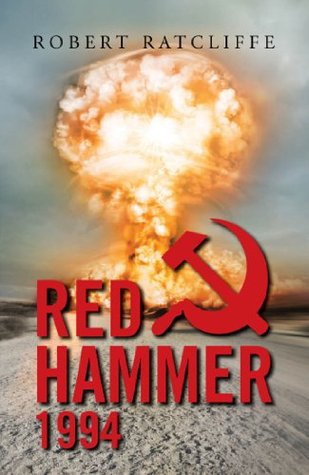
Robert Ratcliffe’s Red Hammer 1994 is a tale of an alternate nuclear World War III in the early 1990s. The feared regression to authoritarianism takes place in post-1991 Russia, and its leader proceeds to launch a nuclear strike on the west. Cue a big picture, wide-scope look at everything from bombers to silos to submarines to, yes, conference rooms.

The characters feel just like they’re just there to operate military equipment instead of being actual characters. The plot is basically “have a nuclear war that stays mainly counterforce and thus only mauls civilization instead of wrecking it totally, and show every part of it in set pieces”. The grounded and frequently realistic (at least technically) nature of the book is somewhat admirable, but works against it when questionable moments like a giant force of super-Spetsnaz in the continental US emerges-or for that matter, the basic plot happening at all. The ending is incredibly abrupt (and not in a plausible Dr. Strangelove way) and the most positive elements are some of the set pieces themselves.

This is what it is. If you like technical detail and want to see Herman Melville’s Story Of A Moderate Nuclear War, you’ll like this book. But if you want a solid narrative, this isn’t it.

Review: Primary Target

Primary Target

Jim Heskett and Nick Thacker’s Primary Target is not the deepest story, nor does it have the most plausible premise. Basically, circumstances lead to assassin Ember Clarke having to participate in a trial by combat, fighting off other assassins trying to kill her over the course of several weeks.

However, in spite of this setup, it’s well done. Yes, it has the “this isn’t a movie but I do super stuff anyway” gripe I’ve seen far too often, and its premise deserves action far more bizarre and over the top than what actually occurs. But the book remains a solid cloak and dagger thriller.

Granted, I’m not the biggest fan of such novels, but I still like variety. And this is cloak and dagger done very well.

Review: The Weekend Warriors

The Weekend Warriors

Reading James Burke’s The Weekend Warriors means I’ve now read all ten of the alternate history conventional World War III series I’d identified. So how is it?

Telling the story of National Guard soldiers and their families during a 198X Fuldapocalypse, Burke uses some plot devices I’ve thought would have worked, like using fictional unit designations. He also aims for characterization and doesn’t hesitate to show the duller parts of military life. The result is something that tries to be something fuller than just tanks exploding…

…With an emphasis on tries. A lot of the high-level military details are anachronistic and in some cases outright “off”. The most jarring example to me was how the Soviets would focus on NORTHAG (which would be true) and thus do nothing but special forces operations in the American sector at the beginning of the war (which would not be). The action suffers from the same rough prose as the rest of the work and sometimes devolves into listing armaments in full.

Because of this, it comes across as being like a somewhat worse Chieftains-a tale of a conventional World War III that’s ambitious, but erratic and unpolished in execution.

Review: The Protocol

The Protocol

The initial book in J. Robert Kennedy’s James Acton series is The Protocol. This secret history conspiracy archeology thriller comes at sort of the tail end of my reading binge of this “genre”. Having read a lot of them, I’ve returned to more conventional cheap thrillers and have moved on for now.

This book embodies the reason why. A 51% book with an ancient mystical MacGuffin and super-conspiracy is still a 51% book if it has middling, mundane action. Especially if the MacGuffin itself is an unoriginal ripoff (as this is-I’ll just say there was an Indiana Jones movie that had the same kind of artifact and leave it at that). Just because something seems more outlandish than the blandest “shoot the terrorist” novel on paper doesn’t mean it comes across that way when actually reading it.

I’m not against ancient bizarre MacGuffins and super-conspracies in the slightest. But just having them doesn’t make them the equals of the best thrillers any more than using a similarly shaped bat makes one equal to a baseball Hall of Famer. It’s a lesson I’ve learned throughout my binge, and this is a good, even if not the most pointed, example of that.

Review: The One Who Eats Monsters

The One Who Eats Monsters
monstercover

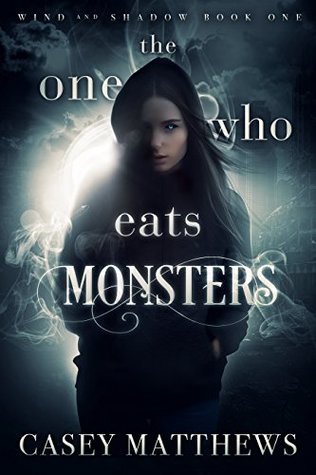
Once again, Fuldapocalypse takes the plunge into a new genre. After seeing a good review of it on Spacebattles, I decided to read Casey Matthews’ The One Who Eats Monsters for myself.

This of course, is an “urban fantasy” novel, where you have supernatural entities hidden inside the modern world. Ryn, the protagonist is one of them, an ancient humanoid creature and vicious ‘hunter of monsters’. Throughout the book she alternates between being a vigilante and protecting a politician’s daughter she begins to develop very human feelings for.

Urban fantasy isn’t really a genre I read much of, although more for matters of admitted personal taste than any actual, inherent dislike. With that in mind, it was good for what it was. It definitely has some notable flaws. The human dialogue was often, er, “subpar”, and there were dramatic contrivances that made sense in-universe but still felt forced from a storytelling perspective.

But that’s more than made up for by the book having exactly what a cheap thriller needs to succeed-good action and good pacing. This definitely has both, although the sequel hook segment at the end is incredibly rushed.

The characterization is mixed but still ultimately positive. Many of the other characters are either shallow, stereotypical, or both. However, Ryn’s “monster with a conscience” is well-done, and that’s what matters most. Even the romance (and this is not a romantic fiction blog) is done surprisingly well-done.

One interesting note is that this is technically an alternate history novel. Among other things, supernatural shenanigans prolonged the existence of the Soviet Union (ah, those Fuldapocalypse zombie sorceresses). It reminded me, alternate history reader and writer, of this very big phenomena where a lot of fiction could be reasonably labeled “alternate history”, but because there’s no real incentive to do so, it isn’t.

I’m still not exactly a fan of urban fantasy, but I don’t regret taking a chance on a different genre with this book.

Review: Opening Moves

Opening Moves

At the start of this blog, I thought that William Stroock’s World War 1990 was the worst World War III work of fiction I’d read. That is no longer the case. Colin Gee’s The Red Gambit: Opening Moves now holds, as of this post, that dubious “honor”.

Why have I made such a bold claim?

First, the prose is very poor and the book incredibly long and clunky. (And it’s just the beginning of a series!). This alone would have been enough for me to not recommend it. However, there’s more. Like Dragon’s Fury, it manages to stumble into seemingly all of the worst parts of the “big war thriller” (overdescription, characters that are too flat and too many at the same time, etc…) all at once. I mean, it has two conference room scenes in a row just at the beginning.

It also has the issue of being very close to World War II. This is one of the trickiest time periods to write a World War III in (for reasons of both military logic and storytelling) and it’s safe to say, especially given just how early Stalin attacks in-universe and how Japan allies with the Soviets (!), that Gee doesn’t do it right.

Although the biggest problem is how horrendously stereotyped everyone is. After reviewing Gee’s Atlantisch Crusaders, I kind of expected this, but that doesn’t make it any better. While terrible stereotypes don’t break a cheap thriller by themselves (if they did I’d have never read a single Casca book), this doesn’t present itself as a cheap thriller.

It presents itself as both a “crunchy” tale of military detail and as a sweeping war epic. For the former, the stereotypes, contrivances, and extreme premise counter whatever technically accurate rivet-counting details appeared. For the latter, the storytelling is just far too clunky for it to work.

Thus the stage is set for a truly gigantic mess. There’s stereotypical pulp, there’s overly rote “lines on a map” fiction, there are overlong big-picture doorstoopers, and then there’s this, which somehow manages to be all of the above.