The Military Techno-Thriller: A History

The Military Techno-Thriller: A History

I absolutely loved Nader Elhefnawy’s “The Rise And Fall Of The Military Techno-Thriller.” So when I found that he’d written a recent big-picture overview of the genre , I was delighted and eagerly snapped it up. Rather than starting with the classic ‘invasion novels’ of the late 1800s, Elhefnaway moved even further, beginning in the 1600s.

Thus begins a multi-century tour de force, deftly pointing out not only the books themselves but also the cultural context behind them. This book is both long enough to be comprehensive (mostly) and short enough to be easily readable, making it the best of both worlds.

The picture it paints of the “techno-thriller” per se is of a genre that could only really thrive at one very specific sort of time. It has to exist in a period of heightened military tension that can’t spill over into any sort of massive backlash and a period of novel technology at the same. Such a period existed around the turn of the 20th Century and in the 1980s. At least in the latter case, it was not sustainable even without “events”, and with the “events” (ironically consisting of a war in the first period and a peace in the second), both were doomed.

There are a lot of fascinating insights that made me go “a-ha”, for lack of a better term. Elhefnawy’s statement that “Full-scale great power war scenarios like Clancy’s Red Storm Rising, Coyle’s Team Yankee or Ralph Peters’ Red Army (1989) were in the minority” matches what I found after starting this blog-my “blind man touching the elephant” background in wargaming and alternate speculation made me think the ‘big-war’ subgenre of that sort was considerably larger than it actually was. Another insight I found intriguing was the notion that Red Army was as successful as it was because it was novel in large part compared to other Fuldapocalyptic tales. And the tone of the writing, being frequently critical but never sneeringly dismissive, works very well too.

I think my biggest substantive disagreement with Elhefnawy’s conclusions is his depiction of the technothriller now. He mentions the “rise-of-China/return-of-Russia” change in geopolitics, but argues that “Nonetheless, the cultural trends evident in the 1990s proved quite robust”. I think that shift gave the the technothriller a bigger bump in popularity than he gives it credit for, especially given the headwinds it’s had to work against (the fragmentation of publishing and pop culture).

And while I don’t want to nitpick the omission of certain areas in something that’s meant to be a general overview, there’s a few I where thought more detail could have been warranted. In particular are what he calls the “vigilante novels” (ie, Mack Bolan). These are interesting in that they provide a parallel track of pop culture that both stood apart from and moved closer to the technothriller across the length of time. That phenomenon gets a segment but deserved more. There’s also the long-term “squeezing” of the mainstream publishing industry, and a deeper look at how that and the push for big, higher-margin books both helped and hurt the technothriller would have been nice. (It’s mentioned several times, but never in too much depth).

Still, these are just very small critiques for an excellent book that examines an overlooked genre through a variety of interesting perspectives in a highly readable way. I cannot recommend The Military Techno-Thriller: A History enough for fans of the genre.

Review: Atlantisch Crusaders

Atlantisch Crusaders

Collin Gee’s Atlantisch Crusaders tells an alternate history tale of World War II. Namely, it tells the story of an armistice in the west that leads to the formation of an Anglo-American volunteer unit in the Waffen-SS that joins Barbarossa. Now the reputation of World War II fiction, especially concerning those two letters, had me on very, very high alert. I was not going to give it any slack.

In literary terms, it was neither as bad or good as I feared. Historical war fiction isn’t really my cup of tea (I read this primarily because of the alternate history aspect and likely wouldn’t have if it had been a straight historical war novel with volunteers from another country), so I’m not the best judge. It’s not as bad as it could have been (the writing isn’t too bad) but it’s not also not as good as it could have been (the writing is dry and a little AAR-y). So if this was the story of a totally fictional war between Teutonia and Krasnovia without any other context or baggage, I’d have dismissed it as a “49 to 51%” book and left it at that.

But it isn’t. And alarm bell after alarm bell roared in my mind as I read this book. There’s a mention of the “unique comradeship that set the Waffen-SS apart from other forces” early on. Then they cross the border, and the words “hordes” and “human waves” are used to describe the Soviet counterattacks. To be slightly fair, the book does take place in 1941, when the skill gap between the two armies was at its height-but remember, no slack.

But then there’s the whitewashing. One of the first things the legion sees as it enters the USSR is the aftermath of a massacre-committed by Stalin’s security forces. Then there’s tale after tale of captured members of the Atlantisch Legion and their brutal, cruel fate at the hands of the Soviets. It’s not ahistorical, but the one-sidedness combined with the overall tone of the book made me uneasy, to say the least.

In contrast, it takes about 2/3s the length of the book before some of the SS volunteers finally commit an atrocity-and it’s one they’re quickly punished for, and one which many feel “uneasy” about. There’s the handwringing of “oh no, these war crimes are happening”, with the whole “Look, we’re the good noble warrior Waffen-SS, we’re not the murdering Totenkopfverbande-SS” dodge.

Even the nature of the battles the legion fights, with many spectacular affairs against Red Army regulars and their huge arrays of tanks and artillery, is both suspicious (being rear area security is more likely) and contributing to the “wehrabooism” of it all. It read like a western Cold War depiction of the Eastern Front-but it was written very recently. And the rest of the book is not good enough-not nearly good enough- to make up for the moral queasiness I felt with this.

Review: Israel’s Next War

Israel’s Next War

Martin Archer’s Israel’s Next War was… strange. I’ve read my share of “boom boom goes the tank” war “thrillers” where there are what feels like five million characters (very few of whom are interesting) and five billion weapon descriptions (very few of which are relevant). Thus I was bracing for the book to be like that, and I was not wrong. But it goes a lot deeper than those surface issues.

First, there’s the action itself between Israel and an alliance of its traditional enemies, where I went “No. No. This isn’t how it would go” on many occasions. I guess I just can’t help myself, being the avid wargamer and historian that I’ve been. Something unrealistic, flawed, or not the most well researched isn’t a deal-breaker (far from it). But given the quality of the rest of the book, it went from eyebrow-raising to  head-shaking. Some of it is good, if a little rote. But more of it isn’t, and it all feels like Archer’s sources were:

  • A half-remembered History Channel piece on the Yom Kippur War.
  • Various “Modern Military Equipment” coffee table books.
  • Command And Conquer Generals.

The technology is all over the place, and the equipment is neither consistent nor particularly accurate. Combined with a dull non-war plot, this would feel like a ramshackle technothriller, if not for the final icing on the cake. That would be the writing style.

Archer writes the book in first person, constantly shuffling back and forth between first-person viewpoints with a label preceding their section. The nadir of this is a character named only “The Iraqi Lieutenant Colonel”, but the others aren’t much better. The prose alternates between the “BBGTT” classic of “Infodumps-R-Us” and something that’s surprisingly (and jarringly) “bouncy”, for lack of a better word. It clashes, to put it mildly.

For all those flaws, it’s not the absolute worst, either in plausibility or or in drama. But the “quirks” noted above push Israel’s Next War from being potentially bad and dull to bad and slightly weird. At least I had fun making this review.

Review: PRIMAL Origin

PRIMAL Origin

Jack Silkstone’s PRIMAL series kicks off with a bang in PRIMAL Origin. This tale of supermercs features solid action, humor that makes the characters more than just the automatons found in the worst action books, and, most importantly, a car chase in a Toyota Prius (it’s a bit of a long story).

This is the kind of book that’s tough to review, not because it’s bad, but because I find it a lot easier to explain how I didn’t like something than how I did. Well, I liked this book. I liked it a lot. As a cheap thriller, it’s excellent and hit all the right notes.

Review: The Fourth Reich

The Fourth Reich

bef4cover

After the cataclysmic misfire of Blood Ivory, the Black Eagle Force series returns to its greatest form in The Fourth Reich.

Following in the wake of such great literary works as the Bionic Commando video game and that deep, haunting movie, They Saved Hitler’s Brain, the book pits the BEF against the high-tech Reich from its base in South America. Any book that has Hitler reawaken in a clone body and immediately demand to know where his mustache is can’t be truly bad.

And the BEF is never more in its element then when it’s dogfighting against Horten flying wings. This is the kind of enemy they were made to face. Thus this book, for all its slight clunkiness, remains as big a joy as Eye Of The Storm and Sacred Mountain were.

Review: Blood Ivory

Blood Ivory

befbloodivory

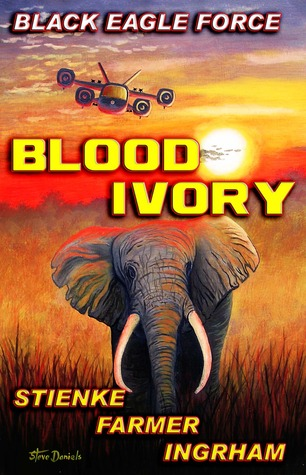
Blood Ivory is the fourth entry in the Black Eagle Force series, detailing the super-team in their super-VTOL aircraft as they face terrorist poachers and cruise ship hijackers.

It’s also where the series simply collapses like the Hornets did in one infamous 2009 playoff game. Almost everything good and distinctive about it isn’t there, and everything that’s bad and derivative about it is. The names get even worse, and the politics (particularly at the “climax”) go from “stupid, wish-fulfilling, and strangely charming” to “stupid, wish-fulfilling, and creepy”.

But those are the least of its problems. There are two bigger ones.

  • The fundamental flaws with the rest of the series are there, and made even worse by a descent into jumping technothriller plots.
  • Substantially worse, the central “more Mack Maloney than Mack Maloney” gimmick is tossed aside almost completely. Past BEF books, particularly the first two, had opponents suitable for the super-VTOLs. This one just doesn’t.

What’s left is what amounts to two intertwined fourth-rate “small unit thrillers” that have, you guessed it, most of the weaknesses and few of the strengths of that subgenre. They’re too silly to be good “serious” thrillers by far, and they’re too mundane to be good “goofy” thrillers.

It’s uncommon to have a book series misfire so dramatically in one entry, especially one without excuses like editorial pressure (this series is self-published) or changes of writers (not evident here). But this book misfires indeed. It’s like the time Captain Beefheart tried recording “normal” music, taking something where the eccentricity was the biggest draw and leaving only mush.

Review: Citizen Warrior

Citizen Warrior Series

J. Thomas Rompel’s Citizen Warrior series is an interesting example of how the “lowbrow cheap thriller” series has evolved and in some ways gone full circle, as well as an example of how external political changes can affect writing. It’s also something that goes from “kinda OK” to “kinda not OK”.

The first book,  The 4th Branch can be viewed as just another throwaway cheap thriller. The plot, aka “STOP THE TERRORISTS AND THEIR DRUG CARTEL ALLIES”, is not distinct even by cheap thriller standards. The characters are barely there, with the most development given to the cliche stereotypical puppy kicking antagonists. The right-wing politics are axe-grinding and constantly reinforced.

As an action novel (when it finally gets going), it’s merely decent. Better than a flop or even “51% novel”, but not at the level of one of the all-time greats. But what it is a good example of is a genre that’s going full circle. It’s a return to the “vigilante” style of cheap thriller.

The prevailing style (there were obviously exceptions) of cheap thriller protagonist in the 1970s was the “vigilante”, following in the wake of Mack Bolan. In the 1980s, as evidenced by Bolan himself, it shifted to the “secret agent” paradigm. This returns to outside-the-law vigilantism. For someone like me who overanalyzes cheap thrillers, I thought it was interesting.

The second book, One Down, is only interesting in how changed political circumstances can change some of the tone of a novel. Let’s just say that the first was published in 2016 and the second was published in 2017. Other than that, it kind of fails.

The politicization gets tiresome and makes the main characters look like whining complainers, not determined heroes. Most of the heroes and villains are the same, the new ones aren’t interesting, and the stakes are arguably lower than in the first book. The action isn’t any better, and one scene where the heroes far too easily take on foes that include machine gun-carrying technicals felt a bit too far.

That is also interesting in that it dips a little bit into the “secret agent” type of thriller, unlike the clear “vigilante” style of the first book. This study is more interesting than anything actually within the pages of One Down.

Review: Return of The Starfighter

Return Of the Starfighter

bef3cover

It says something about how crazy the Black Eagle Force series is when a book with the premise of a Chinese catamaran supercarrier leading a would-be invasion of the west coast prompted in part by the Federal Reserve’s loose monetary policy is one of the tamer and more grounded entries. And yet, that is how Return Of The Starfighter felt. The BEF fights alongside restored and upgraded Cold War aircraft (like the F-104) to battle the invasion fleet.

The Black Eagle Force series is kind of like the literary equivalent of the Postal 2 video game. It’s rather “dubious”, makes no sense,  always teeters on and sometimes crosses the line from “tasteless” to “offensive”, and isn’t the best set up, but the pure spectacle is what makes it enjoyable.

Lose the spectacle and the series loses its appeal, turning into a too clunky, too descriptive, too infodump-heavy technothriller. Return of The Starfighter, coming on the heels of Sacred Mountain’s goofy-crazy ridiculousness, tones it down ever so slightly and ends up looking a little like an avant-garde band’s attempt to play “normal” music. That some of the plot and battle elements are inevitably repeating by the third installment also doesn’t help.

It’s still over the top and still has its sense of wonder. This series, thankfully, isn’t devolving into later-Clancy levels of over-seriousness and pretentiousness by any means. But for a series that runs on crazy, going closer to mundanity takes away the greatest fun. Even if the mundanity comes in the form of a two-hulled mega-aircraft-carrier.

Review: Scythian Dawn

Scythian Dawn

scythiandawn

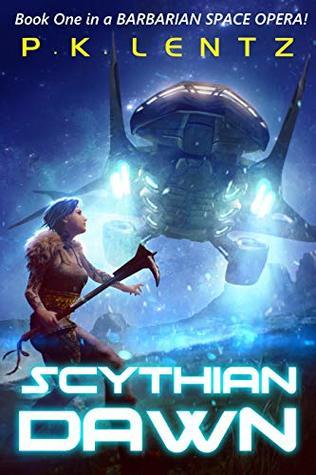
I’ve always had a soft spot for the underused Central Asia in fiction. So when I saw P. K. Lentz’s Scythian Dawn, I knew I had to pick it up. It’s a self-proclaimed “barbarian space opera”, and I was intrigued from the start. That sums it up-it’s nomadic warriors against spaceships. And no, it’s not a stomp or a lopsided game of Civilization.

The execution of the book is merely decent, but I’m willing to accept a decent execution for a very imaginative premise. After all, a Central Asian princess-turned nomad-turned enhanced fighter is more interesting than a spacesuit commando by far.


Review: Any Means Necessary

Any Means Necessary

anymeansnecessarycover

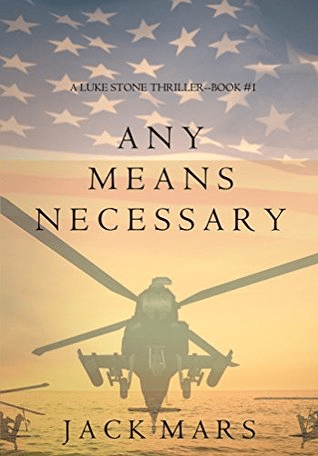
Jack Mars’ debut thriller in the Luke Stone series, Any Means Necessary, was interesting to comprehend. The way I appreciated it was something. The book itself stars super-agent Luke Stone as he battles a Cheap Thriller Evil Plot, and it’s the kind of cheap thriller that has one foot in action movies (read, the protagonist can stay awake for days and jump from a helicopter to a car, crash said car, and still be fine) and the other in 24.

Without spoiling anything, the antagonists shift midway from one cliche cheap thriller foe to another cliche cheap thriller foe. It’s very, very much a “21st Century Thriller” where the technothriller and action adventure genres (always closer than it sometimes seemed) kind of mushed together. And it’s definitely a “51% book”, the kind that’s perfectly fun and adequate, if not excellent even within its genre.

But as an independent novel it’s a different kind of “51% book”. If a mainline commercial 51% book is like a packaged pastry on a store shelf, independent 51% books like this are like the kind of homemade scratch-baked dessert that may not be the most sophisticated or even best-tasting, but still is good and has a kind of “heart appeal”. And this describes Any Means Necessary very well. It’s a homemade apple strudel of a book. And you could do worse than homemade apple strudels.