Review: American Secret Projects: Airlifters

American Secret Projects: Airlifters

Craig Kaston and George Cox’s two volume series on American airlifters is one of the main reasons for the recent fascination I’ve had with these cargo-bearing beasts. Like a lot of books in the series, both are excellent. However, one of the volumes outshines the other, though through no fault of the authors.

The first volume is well-written and illustrated, but it describes a time period where, for the most part, it’s just variations on big-bellied freighter aircraft. The second volume has a lot of those too, but also has weird shapes, VTOLS, napkin company projects that make Mukhamedov and Stavatti look like Boeing and Airbus, and so much more.

If you have to get one book, get the post-1961 volume. But both are well worthy of any aviation history enthusiast’s bookshelf. Fair warning-you may twist your brain into a pretzel trying to estimate just what some of these oddballs can and can’t transport. It’s what I’ve been doing a lot, and I have no regrets.

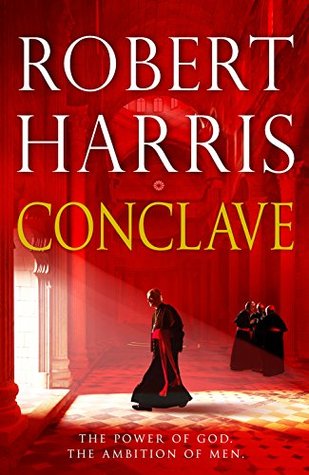
Review: Conclave

Conclave

There’s this only half-joking thought I’ve often stated in regards to book writing that, if you’re stuck, just write the characters fighting a bunch of crazy bikers. This is a lesson I learned from The Survivalist. And I saw something like that in a place I didn’t expect.

Robert Harris’ Conclave is the tale of a papal succession by a well-known author who’s written the alternate history classic Fatherland. He does not have the cardinals face off against crazy bikers. But he does have them encounter what seems like everything else. The writing itself is often good, and certainly Harris’ skill is on display. The setup of the book is excellent, save for a contrivance where a secret cardinal manages to slip into the conclave in spite of historical precedent.

…And then the plot goes off the rails into more and more melodrama. One of the papabili is felled by baby mama drama. Then another, who steered the baby mama into the Vatican to crush his rival, has his machinations uncovered and his candidacy sputters. Then the main character finds the papal equivalent of Regina George’s Burn Book and metaphorical chaos happens. Then there’s a terror attack outside the chapel (really) and literal chaos happens.

With all of the rivals having shot themselves in the foot (and the book has gotten to the point where a papabili cardinal pulling a Plaxico Burress wouldn’t be surprising), Mr. Sneaky Cardinal then becomes pope. Then in the final twist, it turns out that the new pope was born a girl , mixing the Pope Joan legend with the likes of such highbrow epics as Fate Stay/Night and Sleepaway Camp. The book ends with Pope Joan Angela Saber I Innocent XIV taking the throne.

I mean no transphobia, and think that you could make a perfectly tasteful, good, and profound novel with that (and its discovery) as the premise. But as the biggest swerve in a book full of them, it still comes across as bizarre and tacky. Even if the concept is quite doable, the execution here falls flat.

In fact, as another review in the conservative Catholic World Report has noted, Harris’ sources in the acknowledgements are a little questionable. Imagine a military novel where the sources are well-intentioned and good-hearted but obviously slanted antiwar activists and axe-grinding Pentagon Reformers, and you can get an idea for how skewed this is (even if I agree with a lot of it on the merits as a nonreligious descendant of Lutherans).

This isn’t the equivalent of one of the worst popes ever. But it isn’t one of the best either.

Review: Final Target

Final Target

John Gilstrap’s Final Target is a Jonathan Grave retread. “Grave gets in a tussle down south of the Rio Grande” is basically the plot of the book. Which he’s done before. Oh, and he helps rescue a group of kids/teenagers as well. Look, cheap thrillers don’t exactly have the most intricate plots.

Being a retread, this is a 51% book. There’s little in it that hasn’t already been done in previous Grave novels. But this is a 51% book in the best possible way. It’s comfortingly familiar, and all the fundamentals are sound. The writing is good and so is the action. There are worse things to read than a book in a series you like that demonstrates all the qualities that made you enjoy the series in the first place.

Review: British Cruisers

British Cruisers

Norman Friedman turns his knowledgeable eye to one of the most arbitrary ship classes in British Cruisers. Going from the early 20th Century to the Cold War, he covers the enigmatic ship type that can best be summed up as “bigger than a contemporary destroyer, but not too big”. From wartime workhorses to unusual goofy designs, Friedman leaves few Royal Navy stones unturned.

The final desperate attempts at large capital ships after 1945 are the most interesting to me. The large “escort cruisers” started off as ASW helicopter ships, then grew into the famed de facto light carriers they became and were later used as. Everything else was rightly shelved. But this is a typically excellent technical history of cruisers in all eras.

Review: McNamara’s Folly

McNamara’s Folly: The Use Of Low-IQ Troops in the Vietnam War

Involving applicants and draftees who would previously have been rejected, Project 100,000 was one of the least-covered but most horrendous parts of the Vietnam War. Hamilton Gregory, who served along multiple “entrants”, writes one of the most scathing and personally touching history books in McNamara’s Folly. I say “personal” because I have some mental conditions, and growing up, went to school with others with traits very similar to those described in the book. To send these people into battle, whatever one thinks of the Vietnam War as a whole, feels particularly wrong-as did the theory that military service would make them better.

Project 100,000 was done mostly to avoid tapping into a National Guard/reserve force that came from a wealthier and more politically sensitive background (only around a hundred National Guardsmen were killed in action in the whole war). Its recruits were killed in action at a rate three times greater that of serving soldiers as a whole. Officers of all ranks hated the program, and their reactions ranged from trying to steer the “Moron Corps” (or less nice terms) people into the least dangerous areas to having them be the point man on patrols because of perceived expendability. Gregory is clear to point out that he could not find any confirmed cases of Project 100,000 recruits being deliberately executed by their compatriots to prevent their ineptitude from resulting in more deaths, but the constant rumors are telling.

Weaving personal experiences (such as one particularly chilling story of a fellow recruit who didn’t even know that the Vietnam War was happening when he entered boot camp) with scholarly research, this is an excellent recounting of a project that benefited no one, save for maybe the North Vietnamese.

Review: A Pius Legacy

A Pius Legacy

If A Pius Man was weird, this is weirder. With the pope kidnapped and put on trial, a “thriller” ensues. This book suffers from a research failure comparable to that of a “Clive Cussler’s” novel where a random Brazilian spoke Spanish. Only that was a one-off not really central to the plot, and this concerns the main element. It has The Hague listed as being in Belgium. Repeatedly.

The same weird thriller elements continue in this installment. The political defenses of Catholicism turn into everything short of digging up the corpse of John XXIII for Cadaver Synod 2, Traditionalist Boogaloo. There are subplots reminding me of Lunnon-Wood’s Dark Rose where seemingly everyone both armed and Catholic turns into defenders of the Vatican.

This is a very quirky book. But I like quirky.

Review: The German Aircraft Carriers

The German Aircraft Carriers

A book devoted to German aircraft carriers could have all the pages be blank and still be technically accurate. After all, the decision to not go ahead with them was one of the very, very few good ones the country made in World War II. But Simon Beerbaum’s work on them manages to show an excellent train of thought. For most of the actual writing and layout quality, what I said about the Russian carriers book applies just as well to this. What’s interesting is the content.

You might think that a compilation of never-built German designs would have a lot of weird ones as gargantuan as they were impractical. And you would be right. But there was a method to the madness of several. Intended as commerce interdictors, the carrier designs mostly had substantially large gun armament but smaller airwings. They resembled a pre-missile version of the Kiev “air carrying cruisers” in that regard. The book also covers postwar helicopter/VSTOL designs proposed by shipyards for export customers. It’s an interesting look at an interesting set of designs.

A Thousand Words: WMMA5

WMMA5

Grey Dog Software’s World of Mixed Martial Arts 5 is an excellent mixed martial arts simulator/tycoon game. It’s best to keep your game worlds small as loading times are still an issue, but that’s the only (small) sour note in a very sweet game. As a tycoon, you can participate in building your own MMA empire, and learn the hard way that trying to do right by either your fighters or your fans has financial consequences.

Or you can just smash the figures together in the game’s Quick Fight mode, which is where I spend most of my time with it. The character editor means you can create anything from all-rounders to monomanical specialists who can’t strike or can’t grapple (or both!) As MMA has even more “moving parts” than boxing, making a proper sim is tough. Thankfully, this delivers.

Review: Invasion Downfall

Invasion: Downfall

DC Alden’s Invasion series is infamous. After reading Downfall, the first installment in the series, I soon found that this infamy is completely deserved. First, the obvious part: This is a book about an Islamic superstate invading the UK. And it has the politics you’d expect from such an invasion novel. Yes, there’s a lot objectionable about it, including the “traitorous fifth column in waiting” trope taken to extremes even by the standards of the genre.

Of course, I found something else objectionable, which is that it started off in a conference room. And we see a lot of those, and not in a well-handled way. At least the “setup phase” isn’t too long, even if what’s going to happen is completely obvious.

When push finally comes to shove, the military action is not exactly a rival to Larry Bond. The enemy uses a surprisingly bland array of mostly western equipment (not helped by later editions trying to make it “contemporary” by erratically changing names), and there are iffy set pieces like an E-3 letting itself get in range of a short-range missile. The infamous “strong but weak” trend that I was already on thin ice about picks up. “The horrible hordes can easily overrun England-but they can lose multiple strategic aircraft in one battle with named characters.” Like a slightly less intense version of Joly’s Silent Night, nearly all of the British military is incapacitated by irregulars before the conventional forces land.

Just a little bit more research and/or imagination would have made the battles a lot better. As would having the opponents actually earn their victory in Operation أسد البحر. The actual book is a “get the conference rooms right, but not the battles” mediocrity.

Review: The Soviet/Russian Aircraft Carriers

The Soviet/Russian Aircraft Carriers

It’s time to ring in the new year with…. another history book. This one is Simon Beerbaum’s book on Soviet and Russian aircraft carriers. It’s not just about the Kiev and Kuznetsov classes, which I feared it might have been. On the contrary, it has everything from pre-WWI czarist proposals to post-revolution plans for converting surplus ships (with limited technology/resources, it would have been easier to finish a large warship as a carrier rather than an armored, big-gun battleship) to never-weres like the Ulyanovsk and Project 11780 Kherson “Ivan Tarava” helicopter amphib based on the Kiev.

This is an amateur enthusiast project, so it has issues with formatting and inconsistent quality in the line drawings. Those are small issues, and if I had a bigger gripe, it’d be that far too little attention is given to the actual air wings of those carriers-the entire reason they’re built. It’s vague, especially when there’s no shortage of equally fascinating never-were carrier planes as well (from the Yak-141 to navalized MiG-23s to other exotics).

Still, this book does what it sets out to do. For a country whose carriers have arguably all been prestige peacocks, a lot of designs were made. If you want an intro to these flattops, you could do a lot worse than this book.