
My newest book, Viola Air, is now out.
I’m excited, writing it was the smoothest experience I’ve had in a long time. 2025 actually saw me able to write and complete two full-length books in one year, something I hadn’t managed before. So enjoy this pop epic of a plane factory in Ohio!
Tag: Aircraft
What really brought down general aviation
I was looking at histories and such concerning the post-WW2 decline of general aviation in America. Most of the stated reasons center around costs, regulation, lawsuits, and changing demographics. None of these I’m denying were factors, even major ones. But I came across something that was very eye-opening and was not mentioned in most of the usual ones.
That was the decline in its practicality. One amusing side-part of the “flying car” discourse is that in a way, in the early postwar period, flying cars in the way we think of them kind of existed. See, in the early postwar period, as long as you could afford something that still always cost at least the equivalent of six figures today just for the airframe (ie you were a rich professional), flying in your own aircraft over the Depression-adjacent countryside was frequently the quickest and most convenient way to get from point A to point B. Whether it was for the luxury of a getaway or the necessity of business travel, there was a practical use.
Later on this eroded with two big things, which I shall provide graphical illustrations of.
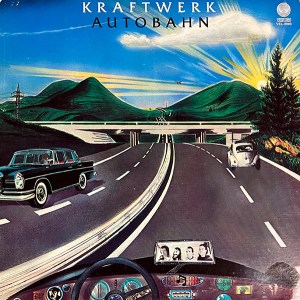

Yep, better roads and better, cheaper, and more accessible commercial air travel. Which meant a lesser actual need for private planes, which naturally had giant ripple effects. At the very least it’s an underappreciated piece of the pie.
Review: Airlords of the Ozarks
Twilight 2000: Airlords of the Ozarks
Twilight 2000 had the problem of reaching a good stopping point (escaping Europe) but then being commercially successful enough to continue. Airlords of the Ozarks is a very blatant example of how the style shifted, to the point where I once used the phrase “Arkansas vs. the Blimps” to describe other settings doing the same.
I feel now that GDW might have written itself into a corner and for better or worse had to change tack instead of copy-pasting classic adventures only in different continents. But to go from brutal survival to almost Jon Land/Mack Maloney level conflicts against airships with nuclear missiles? It may have been too far in the opposite direction. But I don’t fault them for trying.
Plus Airlords is still vastly, vastly better than the abomination that is Kidnapped!
The Italian Lesson
What has been said, and said accurately is that drones and tactics surrounding them are advancing and moving extra-fast in Ukraine. Yet counter-intuitively, this is a case for not rushing forward with swarms. Note: It is still important, and rapidly getting C-UAS, especially hard-kill weapons and proper training, is high priority.
Because this isn’t the first time this happened. And the (often unfairly) scorned Italian military of World War II is a stark example why.
So in the 1930s, automotive and aircraft technology was indeed roaring forward at a “Moores Law For Tanks and Propeller Planes” rate. Now I’m oversimplifying, but here’s what happened: Italy didn’t have the economy or resources for multiple huge waves, so they “modernized” too early , and were left with tons of biplanes and tiny tankettes .
I remember seeing a lecture on US interwar armor where even though he didn’t mention Italy or anything similar, he did use that as a reasonable answer for why America was slow in the same period. Now I mentioned the defensive priority being higher. Anti-tank guns and AA guns even if underpowered are still going to be useful in ways strictly worse tanks are not.
Review: Skygods
Skygods: The Fall of Pan Am
Written by aviator and former Pan Am captain Robert Gandt, Skygods is the most fun I’ve had reading a history book in quite some time. First, I want to get the small negatives out of the way: This is very much a David Halberstam style ‘History as Narrative’ book, so I’d recommend taking specific claims with even more grains of salt. That said, everything important I did find corroborating evidence for.
The good part of this “history as narrative” is well, it feels great to read, flowing smoothly and going into the minds of people in a way that Gandt can clearly write from personal experience. And what he says about Pan Am is both interesting and dismal.
Pan Am’s decline, arguably inevitably terminal, started long before Lockerbie. It started long before deregulation. The impression I got from Skygods was that Pan Am was basically to airlines what Harley Davidson is to motorcycles: A wheezing lummox with poor fundamentals whose longevity was/is due to mystique over any practical advantage. There’s also the “British Industrialization” problem Pan Am had where being the first to do big international routes meant they were stuck with the most baggage.
So this is a great book I highly recommend for anyone, not just aviation/history enthusiasts.
The UAV Illusion
So RUSI fellow Justin Bronk has given focus to what I’ve kind of grasped but struggled to articulate myself: Small UAVs are not a panacea.
A smaller piece by the same author.
The short version is:
- The weirdest analogy I have but one I believe is comparing FPV/etc… drones to B-17s and the like. There’s been a giant debate about the effectiveness of WW2 strategic bombing. The Western Allies had less a choice in it than one might think. Until 1944 it was the only direct offensive ability they had, and being shielded by water made it viable. Similarly, Ukraine’s use of drones, as Bronk explains, is a necessary one, just like that a result of desperate circumstance. But it’s not the circumstance and abilities that others, just like how no one had the WAllies circumstances there, will have.
- Practical effects, which very few people are mentioning- namely, relying on drones against a force that’s spent three years optimizing against them is like relying on deep pass plays against the Lawrence Taylor Giants (ask yourself how the Joe Gibbs teams behaved offensively most of the time).
- Finally and most crucially, Bronk brings up it’s the Walter Payton in Super Bowl XX / SA-2 not scoring that many direct kills in Vietnam problem. Which is that what’s causing drones to be effective is massive amounts of traditional weapons: Normal artillery, mines, missiles, and backed by UAVs in the traditional spotter role.
A very good splash of cold water. This isn’t to say these aren’t dangerous and won’t get better, but it helps to have perspective beyond highlight reels. Speaking of which, here’s a veteran talking about the side you didn’t see.
Review: Hard Landing
Hard Landing
Thomas Petzinger’s Hard Landing is a 1995 book about the corporate wars in the airline industry. It’s naturally dated, but that’s not something it can help. I view it as a very good book that could have been great. Why?
On the plus side, there’s lots of things even I didn’t know. Everything from FDR’s attempt to renationalize the air transport industry that served as a rare early bungle to how the Gulf War was truly what finished off Pan Am is there. This is a very detailed history.
On the minus side, it misses the forest for the trees too often. We get long, long descriptions of meetings and takeovers mixed with the occasional vignettes that aren’t really relevant. Yet it’s not good at articulating the basic problem with airlines, similar to sports betting of all things: It’s hard to truly differentiate the product, and costly sales wars are one of the few weapons marketers have.
But there’s a lot more good than bad here. It just hit a triple instead of an inside the park home run.
Diving Into A True Disaster
So the NTSB has conducted its hearings and giant document release on the tragic DC collision in January. You can take a gander at the primary sources here, there’s a lot of them (yep, NTSB is very, very thorough). Because I developed an interest in studying systemic breakdown of air disasters some time before the collision, I’ve been following it (knowing them actually makes me more comfortable flying because of all the massive safety efforts.) Being I can read these things better than a lot of people, I’m going to give my takes. Warning: These are from an amateur non-aviator and I’ve been mostly looking at the helicopter ones.
Who Was At Fault?
Immediately, the helicopter for not seeing the incoming plane. The controller for letting a crew with literal tunnel vision try to see and steer itself instead of just having it stop (I call it, trying to save the helicopter from itself). That said, it’s not helpful to say someone immediately should have zigged instead of zagged. Or to try to exactly apportion blame since it doesn’t work out like that.
Because the overloaded DCA airspace was such a nightmare that something like this-I’m honestly surprised it didn’t happen sooner. The close calls were huge and massive. Like, yeah. Totally massive.
I’ll admit from pretty early on I was reminded of Charkhi Dadri, a somewhat similar but far worse disaster in 1996 with a 747 and Il-76 that remains as of this post the worst midair collision ever. Same overloaded capitol airspace with a bizarre civil/military boundary and the use of small vertical separation that was bound to fail miserably. There the immediate “fault” was entirely on the Il-76 for slipping a thousand feet while the controller gave perfect direction and the 747 stayed where it was supposed to, but that was not nearly as important as the systemic issues.
Was This a DEIsaster?
Short answer is no. Longer answer is that yes, Lobach was indeed not the greatest pilot and was wobbly and insufficient on the disaster flight (which should have been called off and failed) but did not fit the “stupid DEI bimbo” caricature many on the internet claimed. (Not that it’s really relevant but a massive interview with her boyfriend seemed to debunk the claim she was a lesbian). (The PAT unit from the readings actually had a much higher than normal amount of women in it from one of the documents).
What she was was a commissioned pilot with a fairly small and highly uneven amount of flight hours, and that her issues were not uncommon among junior commissioned crews, crews who probably should not be allowed into the most dangerous airspace ever. (Training flights in that area for all but specialized careful missions like route knowledge for a true emergency should not have been happening).
In any event the male instructor made the most crucial catastrophic decisions.
So, What Was the Swiss Cheese Failure
(Try my best to summarize, which I’m not the best at): DC had been incredibly overcrowded with both helicopter and commercial traffic for political reasons. Little-used runway 33 was seeing more use, including on the fatal collision. The helicopter crew was granted permission to see and avoid, a foolhardy one given the night vision goggles and light pollution. They looked at an airplane operating on the main runway and assumed that was the “traffic in sight”. It wasn’t.
To me I think the most revealing thing was how -sincerely – overconfident the army was. Everyone from safety officers (who treated birds as the most dangerous collision threat) to the accident crews themselves were disturbingly blase about working around commercial traffic. In later informal podcasts/interviews, veteran pilots who in some cases flew the exact route seemed honestly surprised at how bad it was from the aircraft’s end. They did not come across as making excuses.
Lessons
I’ll say I don’t know what the changes besides the obvious ones could or even should be. DCA is very dangerous by nature (as demonstrated before when, despite the fundamental differences, many similar things from a less-than-ideal aircrew to dubious controller decisions contributed to an earlier famous disaster), and important people should probably bite the bullet and drive to Dulles.
Review: The Last Republic
The Last Republic
The alternate history of the beginnings of a war between a US and an independent, Iran-allied Utah/Deseret, The Last Republic is one of those books that is only distinguishable by its premise. It would be a medium-grade techno-thriller if it involved real places. Granted, given the comparative scarcity of technothrillers today, that would be praiseworthy (mildly), but it doesn’t, of course.
The bizarre alternate history, which is very much a soft AH (Iraq with a surviving Saddam is similar to real life Saudi Arabia in terms of relationship with the US, both sides use historical F-16s, etc…), is what makes this stand out. Still, I just don’t think the author took advantage of it as much as he could. Could that have made it worse? Quite possibly. But would it have made the book much more interesting? Quite possibly as well. As it stands, it’s a 51% book with weird sauce.
Review: Aviation Stories For Curious Kids
Aviation Stories For Curious Kids
Reading a book made extensively with AI is a genuinely interesting feat for me. The illustrations in Aviation Stories For Curious Kids give it away from the start-diffusion image models are notoriously bad at making airplanes without an established outline. That the text parts follow the Q and A quiz model of “Here’s things in a whimsical tone, now a question” gives it away more, though I’d be curious how much was manual.
As it sticks to the famous events that LLMs can (generally) get right (even if it’s just big sample size), there isn’t much too objectionable here. The exception is Laika, which is treated as a wonderful canine adventure and not a cruel sacrifice of a dog one on what everyone knew was a one-way trip for the sake of a publicity stunt.
At least it’s interesting, which is more than I can say about a lot of books reviewed here. Even if it’s not exactly recommended.
 Fuldapocalypse Fiction