What really brought down general aviation

I was looking at histories and such concerning the post-WW2 decline of general aviation in America. Most of the stated reasons center around costs, regulation, lawsuits, and changing demographics. None of these I’m denying were factors, even major ones. But I came across something that was very eye-opening and was not mentioned in most of the usual ones.

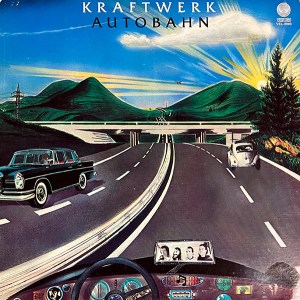
That was the decline in its practicality. One amusing side-part of the “flying car” discourse is that in a way, in the early postwar period, flying cars in the way we think of them kind of existed. See, in the early postwar period, as long as you could afford something that still always cost at least the equivalent of six figures today just for the airframe (ie you were a rich professional), flying in your own aircraft over the Depression-adjacent countryside was frequently the quickest and most convenient way to get from point A to point B. Whether it was for the luxury of a getaway or the necessity of business travel, there was a practical use.

Later on this eroded with two big things, which I shall provide graphical illustrations of.

Yep, better roads and better, cheaper, and more accessible commercial air travel. Which meant a lesser actual need for private planes, which naturally had giant ripple effects. At the very least it’s an underappreciated piece of the pie.

A Thousand Words: NARC

NARC

The 1988 Williams arcade game NARC is probably the most 1980s piece of interactive media developed. Playing as super-cops in biker helmets Max Force and Hit Man, you blast your way through a drug empire of hobos, dealers, weed-growing Rambos, prostitute-kidnapping clowns, henchmen who couldn’t decide if they wanted to dress like mobsters or construction workers, and attack dogs, ruled by a giant biomechanical head-worm. None of that is exaggerated or false.

There is nothing subtle or easy about this game. It’s meant to have you win solely by pushing in quarters. (Who’s the addiction inducing dealer now?) But it is fun and is well, incredibly 1980s.

Gaming’s Ford Edsel

Looking at retrospectives for the infamously legendary recent video game bust Concord , I thought a lot of “wow, this really is the Ford Edsel of video games.” And I mean that specifically.

This video is as good as any for explaining in short terms what Concord was. That said:

  • It wasn’t actually that bad mechanically
    The Edsel was no worse in performance or safety than any other car of its era. Whatever issues it did have could be understood as it being brand new and not ‘broken in’. Likewise, Concord wasn’t a Memetic Bethesda Launch glitchfest with a lot of its immediate issues being… brand new and not ‘broken in’.
  • The timing was terrible
    The Edsel launched in a recession where the cars in its market segment were the hardest hit. Concord launched when hero shooters had gone from “hot” to “disco in 1982.”
  • The visual design was bad
    I don’t think I really have to elaborate here.
  • Expectations were far too high
    Concord was supposed to be a big merchandising and spinoff paradise as well as a tentpole franchise. The Edsel was supposed to be an entire division like Lincoln, the slightly above average in the brand ladder.

    Amazing how history can rhyme.

Review: Airlords of the Ozarks

Twilight 2000: Airlords of the Ozarks

Twilight 2000 had the problem of reaching a good stopping point (escaping Europe) but then being commercially successful enough to continue. Airlords of the Ozarks is a very blatant example of how the style shifted, to the point where I once used the phrase “Arkansas vs. the Blimps” to describe other settings doing the same.

I feel now that GDW might have written itself into a corner and for better or worse had to change tack instead of copy-pasting classic adventures only in different continents. But to go from brutal survival to almost Jon Land/Mack Maloney level conflicts against airships with nuclear missiles? It may have been too far in the opposite direction. But I don’t fault them for trying.

Plus Airlords is still vastly, vastly better than the abomination that is Kidnapped!

A Thousand Words: Gone Home

Gone Home

A 2013 game about a young woman exploring her now-deserted family home, Gone Home has been pretty controversial back in the day, being one of the first video games classified as the dreaded “Walking Simulators.” Now that I’ve played it, it’s weirdly better in terms of actual gameplay but worse in terms of central plot than I’d expected it to be.

So the game is not just “hold forward to win while listening to some pretentious narration” like too many of its successors were. It’s really atmospheric, you have to do some exploring even if it ultimately boils down to “go everywhere and interact with everything”, and it’s no worse in terms of kinetic gameplay or lack thereof than say, the classic PC adventure Myst. That’s the good part. It’s still just a short fun experience but there’s substance to it.

The not so good part is that the “secret” hidden is a melodramatic teen drama where I saw every twist and development coming despite not really knowing the game before I played it. The first world problems of upper-middle class America here just aren’t that intriguing.

That said, I have to give this a positive overall score. It is better than the firebreathers have made it out to be.

Review: Skygods

Skygods: The Fall of Pan Am

Written by aviator and former Pan Am captain Robert Gandt, Skygods is the most fun I’ve had reading a history book in quite some time. First, I want to get the small negatives out of the way: This is very much a David Halberstam style ‘History as Narrative’ book, so I’d recommend taking specific claims with even more grains of salt. That said, everything important I did find corroborating evidence for.

The good part of this “history as narrative” is well, it feels great to read, flowing smoothly and going into the minds of people in a way that Gandt can clearly write from personal experience. And what he says about Pan Am is both interesting and dismal.

Pan Am’s decline, arguably inevitably terminal, started long before Lockerbie. It started long before deregulation. The impression I got from Skygods was that Pan Am was basically to airlines what Harley Davidson is to motorcycles: A wheezing lummox with poor fundamentals whose longevity was/is due to mystique over any practical advantage. There’s also the “British Industrialization” problem Pan Am had where being the first to do big international routes meant they were stuck with the most baggage.

So this is a great book I highly recommend for anyone, not just aviation/history enthusiasts.

Review: The Last Republic

The Last Republic

The alternate history of the beginnings of a war between a US and an independent, Iran-allied Utah/Deseret, The Last Republic is one of those books that is only distinguishable by its premise. It would be a medium-grade techno-thriller if it involved real places. Granted, given the comparative scarcity of technothrillers today, that would be praiseworthy (mildly), but it doesn’t, of course.

The bizarre alternate history, which is very much a soft AH (Iraq with a surviving Saddam is similar to real life Saudi Arabia in terms of relationship with the US, both sides use historical F-16s, etc…), is what makes this stand out. Still, I just don’t think the author took advantage of it as much as he could. Could that have made it worse? Quite possibly. But would it have made the book much more interesting? Quite possibly as well. As it stands, it’s a 51% book with weird sauce.

Review: Airframe

Airframe

Michael Crichton’s Airframe is a book I really, really wanted to like given my interest in disaster investigation and systemic failure. One of the issues is that I already knew a lot about the topic. But there’s two more.

The first is that has Arthur Hailey meets Herman Melville levels of “look how much I know/research I did.”. The second is that air disaster investigations, while a fascinating topic, are one of the worst main topics for a thriller novel, especially with the setup Chrichton makes. He has to use a large impending sale as a mostly artificial way to increase the stakes, race the clock, and create a conflict (said conflict is: The accident might cost the manufacturer a large order. Oh the huge manatee!) The reality is that disaster investigation is one of the least punitive or conflicting events there is, with the worst being various stakeholders understandably trying minimize their direct fault. Which can be problematic and difficult, but isn’t exactly Jon Land conspirators trying to rule the world.

Spoiler Alert: The problem is that it tries to shoehorn the Aeroflot “kid in the cockpit” disaster in, when a far more interesting and realistic method would be to have even the highly trained pilot making a mistake, especially given that what happened (tried to keep controlling it manually too long, which is what someone with a lot of skill would be more vulnerable to falling for.)

So yes, this doesn’t get off the ground. Metaphorically speaking.

Review: War Dispatches Volume 1

War Dispatches Volume 1: Stories from the Front Lines of World War III

War Dispatches Volume 1 (note: not the most smooth title) is what is known in the anime/manga industry as an “omake” to Alex Aaronson’s 1980 World War III alternate history. It’s a set of stories that didn’t quite fit into the main books, but were/are still interesting enough to be told. These take place in the Middle East, from the Caspian Sea Monsters to MiGs in the sky to BMDs on the ground.

Being omakes, they are limited in scope. But this is no knock on their quality. In fact, they’re influential and good enough that I’m already starting work on a similar set of vignettes set in the Soviet-Romanian War. How’s that for a positive opinion?

A Thousand Words: Titan

Netflix’s Titan

Netflix’s new documentary Titan is about the submarine that sank near the Titanic in 2023. It’s a well-produced film with many heartfelt interviews. However, I felt it wasn’t as good as it could have been, with one small thing the filmmakers did have control over and a much larger thing that they didn’t. Let me explain.

I think the film could have gone into more detail on showing what a proper deep-sea submersible looks, sounds, and feels like. It would have highlighted Rush’s obsession with making the nautical equivalent of the Bonney Gull even more effectively. While I can understand why they might not have wanted to get too technical, I also think i could have been explained in ways a non-scientist could understand.

The larger issue is that the cause of the disaster really wasn’t very complex. Disasters typically have a ‘swiss cheese phenomenon’ where a bunch of ‘holes’ in the countermeasures all align. So even if the initial catalyst was simple, the situation where it could become catastrophic was not. This isn’t the case here. The carbon fiber hull was fatally and fundamentally flawed, and Rush was a megalomaniac who believed his own propaganda.

That said, this is a worthwhile movie and some of the non-technical parts are actually the most interesting and telling. The CBS crew falling for Oceangate’s potemkin village is a perfect example of how the media can get strung along by people who seem like they know something. I found the host being assured by their safety checks interesting-it’s the kind of thing that seems right and would be if the hull was fundamentally sound, but the equivalent of an early Comet isn’t going to care if the fuel gauges are moving correctly. The other thing is how we see Rush trying to put women who had no seafaring experience into being the pilots of the submarines because he wanted to stand out in the media-another strike against it.

For all my nitpicks, this is a worthy documentary about a real-life terrible person who did terrible things.