Review: Steel World

Steel World

steelworldcover

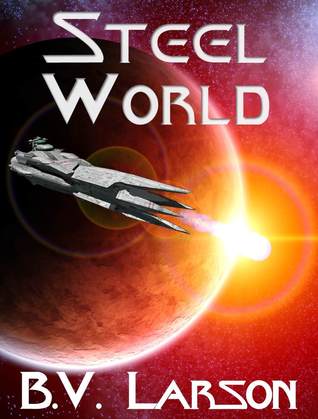
For BV Larson’s Steel World, I returned to a familiar place-the land of spacesuit commandos. Almost every single value checks out. Dystopian background? Check. The main character is a super-special spacesuit commando in a super-special spacesuit commando unit (in this case, a secret dirty tricks “Legion”)? Check. The main characters use nothing more than power armor and ray guns that don’t seem to really do much? Check. The tactics are iffy and everyone uses Roman ranks? Check.

The only novel feature, besides the use of “rules of war” that are clearly structured to enable the plot, is revivification. However, in practice all it does is remove tension, best summed up by having people -multiple times at that- want to be “killed” for the sake of convenience.

For all my complaining, Steel World manages to dodge the biggest problem with the subgenre. Its training sequences are not overly long, and I was thankful for that. And for all its issues, it’s still readable and fun as a mindless spacesuit commando novel.

Review: Red Storm Box Set

The Red Storm Box Set

James Ronsone and Miranda Watson’s “Red Storm” series ran for six books. The omnibus box set I bought contained the first three- “Battlefield Ukraine, Battlefield Korea, and Battlefield Taiwan”.

This checks all the boxes. Lots of conference room infodumps with generals and leaders? Check. Huge descriptions of everything? Check. Characters whose sole characterization is at best an infodump and (more frequently) at worst a “Steel Panthers Characterization” where they’re just paper placeholders who crew military equipment? Check. Hopping around viewpoint characters around the world with what feels like no rhyme or reason? Check. And the cherry on top is the Hackett-style “city trade” plotnukes, as Oakland and Shenyang go boom.

This is what I thought I’d be reading en masse when starting Fuldapocalypse. Thankfully, it hasn’t been what I actually have been reading. Reading countless non-dry, non-World War III books has allowed me to view this in a better perspective than I had before. In the past, I’d have probably just denounced it with a combination of fire-breathing and eye-rolling.

I still view this as a subpar book-it’s in the awkward, neither fish-nor-fowl area of being too “literary”, gimmicky, and inaccurate in a rivet-county way to be a War That Never Was-style pure play by play while being too bland and disjointed to be an actual literary book. But now I can weirdly appreciate it for trying to scratch a specific itch. My mindset has gone from “this is bad” to “this has flaws and isn’t really my thing.”

If a sort of “Hackett but with some technothriller gimmicks” style book is your thing, you could do worse than this series.

Snippet Reviews: August 1-11 2019

It’s time for more snippet reviews.

The Omicron Legion

The fourth Blaine McCracken book, The Omicron Legion continues Land’s style of ridiculous plots, quadruple-crosses (yes, I’m using that word), and BLAINE MCCRACKEN action. If you liked the past Blaine McCracken books, you’ll like this a lot.

The Mercenaries: Blood Diamonds

This Peter Telep (under a pen name) novel would be a routine 2000s thriller if not for one thing-the dialogue. It’s ridiculously and constantly crazy. This wouldn’t be too big of a deal if the actual story was goofy to match, but it’s supposed to be a serious tale of weary mercs in the southern African wilderness.

While it at least it stands out a little because of that, this book really ought to be focused around a Macguffin giant magical diamond that can power a super-deathray, not a stash of normal ones.

Terror in Taos

One of the Penetrator novels, Terror in Taos serves up all the 1970s “vigilante vs mobsters” action one could possibly want. By the standards of the genre, it’s very good. The action, which includes hero Mark Hardin storming a desert castle, is good. There’s even a bit of semi-mystical Native American stuff that makes it even more ridiculously over-the-top and fun (yes, it could easily be tasteless and offensive to a modern audience, but this is a 70s action novel-what did you honestly expect?).

Review: Reflexive Fire

Reflexive Fire

reflexivefirecover

Special Forces veteran Jack Murphy’s Reflexive Fire is a very strange kind of thriller. The low-level action is very well done, gritty and gory with almost the right amount of “semi-plausibility” and “exaggeration” (I learned about Murphy’s books from Peter Nealen’s posts on them, and could see the similarities in the action immediately). The high-level plot is this huge mega-stakes mix of ancient conspiracy theories, and to say it doesn’t fit the best with the low-level action is a huge understatement. It’s like a video game with ARMA’s mechanics but Metal Gear Solid’s plot. There are Blaine McCrackens that have less ridiculous plots and MacGuffins than this.

The pacing is very jumpy, with lots of viewpoint characters (it’s a rare instance of “just a name and nationality” Steel Panthers Characterization in a small-unit action book) and a very long “Herman Melville’s Guide To Building And Training Your Dream Army With The Help Of A Super-Conspiracy” section. There’s some hamfisted politics that don’t really add anything and are ruined by the presence of the super-conspiracy.

That being said, this was Murphy’s first novel in the series, and he demonstrated enough legitimate strengths for me to be forgiving of its many weaknesses. Plus, if I have to choose between a bland middling book that doesn’t stand out from the pack or a zigzagging, “really good in one way, bad in others, and quirky to boot” book that does, I’m choosing the latter instantly.

Special First Anniversary Review: The Sum Of All Fears

SPECIAL FIRST ANNIVERSARY REVIEW: THE SUM OF ALL FEARS

sumofallfearscover

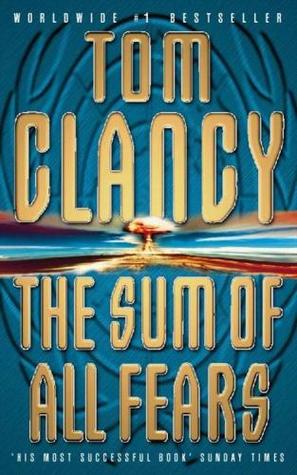
This is it. For the first anniversary of Fuldapocalypse, I felt I had to review something big by a big-name author. And The Sum Of All Fears was not exactly a difficult choice. I felt it had to be Clancy, and I wanted to pick what’s often regarded as his absolute height.

Now, I’m not and have never been that much of a Tom Clancy fan. Even in his Hunt For Red October/Red Storm Rising-era “early, lean” period, I’ve felt he was never more than decent, and that his rise was more about circumstance and being able to tap a national mood than actual standout writing. And his later period (at least from Executive Orders onward) is just bad.

Enter The Sum Of All Fears, between them. It’s 1991, right before the Soviet Union collapses. How does it hold up? Well, that’s a tough question. What bizarrely helps is that judging it by the standards of something like Executive Orders, as opposed to The Hunt For Red October (to say nothing of books by other authors), means that any improvement over that clunker makes it look better. Also beneficial is that The Sum Of All Fears is over 100,000 (!) words shorter.

Comparing the two, they have a very similar structure. There’s a bunch of plot threads and they move forward for hundreds of pages with all the speed and gracefulness of a NASA Crawler making its way through the aftermath of the Boston Molasses Disaster. Then in the final couple hundred of pages or so, the plot becomes vastly more focused, moving fast and much, much more smoothly.

And here’s where The Sum Of All Fears beats out Executive Orders dramatically. The latter’s final act was nothing but a dull, triumphalist stomp. This is a far more somber and unflashy piece with the goal being to stop a war rather than fight one. If I had to pick out a strange analogy, it’s the “peaceful resolution” paths of Undertale or a Fallout game. Jack Ryan being Pacifrisk or a speech-maxed protagonist is more conceptually interesting than him as a cook-shooting action hero or as a president.  Here’s the sharp-tongued analyst doing sharp-tongued analyst things in a way that takes advantage of a character built as a sharp-tongued analyst.

This also has the best villain(ess) I’ve read in a Tom Clancy book, in the form of national security advisor/presidential girlfriend Elizabeth Elliot. In a strange way, I liked that she was just petty, shallow, and wrong in a world of blindly ideological supervillains. She’s also one of the few fictional characters that I could instantly pick an ideal actress for-in this case, Amy Poehler (aka Regina’s mother from Mean Girls).

So was The Sum Of All Fears a Team Yankee-style pleasant surprise for me?

Not really. First, there’s still the rest of the book. The plot threads aren’t as tangled as in Executive Orders, and they fold back into the final climax better (there’s nothing like EO’s useless “rednecks with a bomb” subplot in Fears), but they’re still there and clunking along. The setup portion of the book has its share of out-there plots (The “Swiss Guards For Middle Eastern Peace” is very zombie sorceress ) and axe-grinding political figures. Not to the extent of Executive Orders, but still there.

Second, the book is plagued by what felt to me like what can only be described as self-indulgence, even in the conclusion. There’s the infamous chapter (actually, chapters) devoted entirely to a nuclear bomb exploding, but the descriptions of actually building the stupid thing get a much larger word count than they deserve. The adventures of various submarines, aircraft, and electronics get giant infodumps. That’s to be expected, but what really pushed me over the line to “Ok, you’re going ‘Look how much I know’ constantly ” was talking about the vice presidency, from its initial “loser gets in” to the post Twelfth Amendment ticket system.

In the first act, this contributes to the bad pacing. In the climax, it neuters some of the punch (there’s nothing like going from Denver being nuked to a rote description of something far away). This would have been a good finale to the Jack Ryan series. But it had to go on, and some of the elements that weren’t so bad here move on to devour it in later books (which are set up here in plot points that do nothing but slow down the main plot of the current book even more).

If The Sum Of All Fears was four hundred pages long, focused completely on the nuclear bombing and subsequent near-World War III, and written as something completely self-contained by a writer who expected no further success, it would be a good technothriller, if a little clumsy. But it’s over a thousand and clearly written by someone who (accurately) saw nothing but new books, dollar signs, and ever-lighter editing ahead of him.

So, for my conclusions on The Sum Of All Fears, I’d say that the people who argued that this book marked when Clancy jumped the shark were right. It has most of what made his post-USSR books as bad as they were, and the redeeming part is its conclusion. Had it gone with something different (like more direct action, which Clancy never was the best at), I would have viewed it as just a slightly better Executive Orders. But it has that well-done, appropriate climax.

That leaves The Sum Of All Fears as a deeply flawed novel that still has a good conclusion and can serve as an ideal stopping point for Jack Ryan-if not for the writer, then for the reader.


Review: Homecoming

Homecoming

homecomingcover

John Schettler’s Homecoming is two things. The first is yet another entry in a ridiculously long soap opera Axis of Time knockoff with a Kirov battlecruiser sent back in time to World War II. While it’s been stated that this book could serve as a standalone beginning and people didn’t need to read the previous 40 (!) books to get it, I still felt a little lost.

The second is a contemporary World War III and a glorified let’s play/after action report of Command: Modern Air/Naval Operations (think a stiffer version of The War That Never Was). When I read the battle scenes, there was this suspicious part of me that went “ok, these are so rote and so exact that it looks like he was simming them through Command or Harpoon or some other wargame.” And it turns out that he was.

I was happy because of all my work with and use of Command. No matter what my feelings are regarding the literary quality of such a work, I felt happy and kind of proud of it being used in such a fashion.

As for leaning so heavily on wargaming itself, well, I’ve kind of adopted a more “glass half-full” approach to it. In the past, I’d have probably denounced it dramatically along the lines of “why should I read about a wargame when I can play it?”. Now, in no small part thanks to my horizons being broadened by many other books, I’ve softened somewhat.

I still can and will criticize books (like this) for being too much like a rigid let’s play/after action report. I still feel using wargaming as an exactly transcribed play-by-play (ie, 10 A-6 Intruders escorted by eight F-14 Tomcats launched to bomb ________…) rather than just to get a general feel for the situation (ie, “how much of a threat is ______’s air force to a carrier air wing? What’s a good figure for how many aircraft I should have the protagonist carrier lose?), isn’t the best way to go if one is making a literary story.

But at the same time, I’ve gotten a renewed appreciation for wargaming in fiction, even in cases like this. What I feel it does is add at least some more plausibility than would be the case in a less-researched book. And it simply isn’t the case that moving the “technical plausibility and detail” slider forward causes the “literary quality” slider to automatically go backward.

Leaving the battles aside, one of the biggest issues with Homecoming is the pacing, especially in matters of conversation. Let me just say that it’s easy to see why the Kirov series had 40 books before this one. It’s a shame, because a series that involves a time-traveling battlecruiser and properly wargamed-out divergences holds a lot of promise. It’s just the execution leaves something to be desired.

Review: Escalation

Escalation


Escalation by Peter Nealen is meant as a kind of spiritual successor to his American Praetorians series. It starts in a dystopian future world where everything bad in current society is made dozens of times worse, and every taken-for-granted part of the international order is going to crumble. I was reminded of an old classic alternate history timeline called “For All Time” , where in place of the postwar western world, we get…. something else.

I have mixed feelings on all this. On one hand, most of the time, like a lot of the best political commentary, the exaggerations are close enough to be genuinely chilling. On the other, that every single shoe drops stretches my credibility a little too far, and some of the pushing that does go too far stretches it even more. Still, compared to his axe-grinding contemporaries, Nealen is both more intelligent with the political commentary and  better at making it more important and relevant to the main plot.

Said main plot is a struggle to fight through a war-torn Slovakia. Nealen’s action is, as always from him, top-notch. The soldiers of the Triarii (the protagonist organization) face everything from tanks to ordinary enemy footsoldiers in well-written action that balances well between “just grounded enough” and “just spectacular enough”. The biggest problem is an insistence on a big-world, big-battle story told through a first-person viewpoint. This doesn’t really work as well, and it’s a credit to Nealen’s skill that it’s not an even bigger problem.

I still prefer the breezier, less political and lower-scale Brannigan’s Blackhearts books from Peter Nealen, but a lot of this is just preferring apples to oranges. It’s good that he’s willing to push the limits, and for all its faults, I enjoyed Escalation.

Review: Out Of The Ashes

Out Of The Ashes

outoftheashes

William W. Johnstone’s The Ashes series (not to be confused with the cricket series) is one of the worst long-running series ever. I might even be bold and say that it’s the single worst chronological series made by a mainstream commercial publisher that I’ve read. Even if it isn’t, it’s certainly up there. They, along with the The Big One novels, were some of my first exposure to “bad books” as I knew them.

In a fashion strangely typical of me, I read the later Ashes first, finding them via the ancient 2000s method of buying them in a bookstore. Somehow these monstrosities were successful enough to reissue after their initial publication date. So a curious thought came to me. Was there a chance, in spite of what I’d heard and read in other reviews, that the early Ashes might have been good, or at least not terribly bad? Could they have started as second-rate but readable Survivalist knockoffs and then devolved into the rambling political screeds and one-sided, toothless battles I knew them as? Did they have merit?

Well, now I’ve finished Out Of The Ashes, and I can confidently give an answer to that question. N-O-P-E.

  • The book starts with an introduction to paperback pulp author (hmm….) and former supermerc Ben Raines nobly turning down a chance to participate in a coup attempt against the EVIL LIBERAL GUN GRABBERS.
  • Then the General Jack Ripper-style conspirators, in an overlong “first act”, trigger the apocalyptic nuclear war everyone who saw the covers of the book knew would happen. It’s like if someone watched Dr. Strangelove and read the opening of a Larry Bond novel at the same time while glugging down bottle after bottle of whiskey, and then wrote something down while drunk.
  • Then Raines wakes up and experiences arguably the lamest and tamest Easy Mode Apocalypse ever, where he has no problem finding supplies (including weapons in a convenient arsenal) and bedding one beautiful woman after another while he battles and effortlessly kills all sorts of stereotypes. After this, any attempt to truly be considered post-apocalyptic stops. For what seems like the rest of the series.
  • Then the political tirades start getting even worse, with Raines starting his authoritarian Huey Long-on-steroids paradise utopia where unemployment is 0% and everyone is educated “properly”, and no one can be truly rich. But it’s not communism or socialism because of guns. Yes, he uses that exact argument in the book.
  • Then the strawman journalists, in a scene that seemed, and probably was longer than any of the actual battles, are taken to the Tri-State Glorious Peoples Democratic Republic Utopia for another exposition.
  • Then the federal EVIL LIBERAL GUN GRABBERS, in a scene that dials up the gore and squickiness (but not in a good way), slaughter the “paradise” and force Raines to return to guerilla warfare, setting up the rest of the series (don’t worry, he’ll be back commanding unrealistically huge armies and ruling Utopia 2.0 soon enough).
  • Finally, some of the Tri-States survivors and allies kill the EVIL LIBERAL GUN GRABBERS. The end, but not of the series, with its 34 (!) more installments.

Whew.

So what are the issues that plague this book and its XXXIV sequels? If I had to choose only three (and there are a lot more than those), I’d say these.

  1. Johnstone cannot write action well, and he cannot pace well, the two things cheap thriller writers need to be able to do. Pretty much every single fight amounts simply to “and then Raines shot them”, they almost never last more than a few paragraphs, and the tone of the book is such that removes the “well, they’re realistically short” justification. There are a very small number of exceptions, but it’s not worth digging through 34 books of slop when even a mediocre cheap thriller leaves Johnstone in its dust.
  2. The story frequently goes from “product of its time” to “ugly and creepy” in terms of offensiveness. The prose doesn’t help one bit, with it sounding clunky, creepy and oddly juvenile.
  3. Johnstone is not consistent or coherent in the slightest with his political tirades. Not only that, but they make the main character look pathetic, like a grumbler instead of Jerry Ahern’s stoic badass John Rourke.

This book, and this series, is one of the worst of all time.


Review: The Gamma Option

The Gamma Option

The third Blaine McCracken book, The Gamma Option continues the crazy twists and turns, the crazier plot swerves, nonsensical politics, and surprisingly solid fundamentals that marked the previous two installments. It does yo-yo a little more into “amazingly stupid” (to give any detail on these moments and twists would be to spoil them, but rest assured-they are very, very, dumb)  but still has a lot of “stupidly amazing” moments. My favorite of these is Chekov’s Monster Truck.

See, Blaine McCracken notices a monster truck parked nearby when he goes to interview someone. I knew when I read the passage that the monster truck was not Jon Land’s attempt at some kind of weird literary metaphor, nor was it just a bit of background description. I knew that McCracken was going to end up driving it in a chase scene. And drive it he did.

This is everything I expected from a Blaine McCracken book, and it has all of the ridiculous appeal that makes reading them such a treat.

Review: Skeleton Coast

Skeleton Coast

Arguably the very first “cheap thriller” I read was Fire Ice, in Clive Cussler’s NUMA Files. By this point (unbeknownst to me at the time), he had already entered his “Tom Clancy’s” phase, farming out a lot of spinoffs to different authors. One of my favorite and most enduring books of this time is Skeleton Coast.

The Oregon Files involves the titular super-ship disguised as a tramp freighter and its commander, Juan Cabrillo. Here it battles African rebels and a plot by an evil environmentalist to cause an environmental crisis (Trust me-do not expect the plots of Cussler books to make sense). There’s also the classic Cussler “Historical Flashback To The Present MacGuffin” scenes, which I was never the fondest of.

What makes Skeleton Coast succeed is its climactic battle. In many other books, the Oregon hasn’t really faced threats that are worthy of its armament and abilities. Here, it fights an army with all its firepower, and the result is very well done by cheap thriller standards. It feels a little more natural and a little less gimmicky than other Cussler books. For someone wanting to experience the huge “Cussler Franchise”, this book is one of the better entries.