Technically Adept

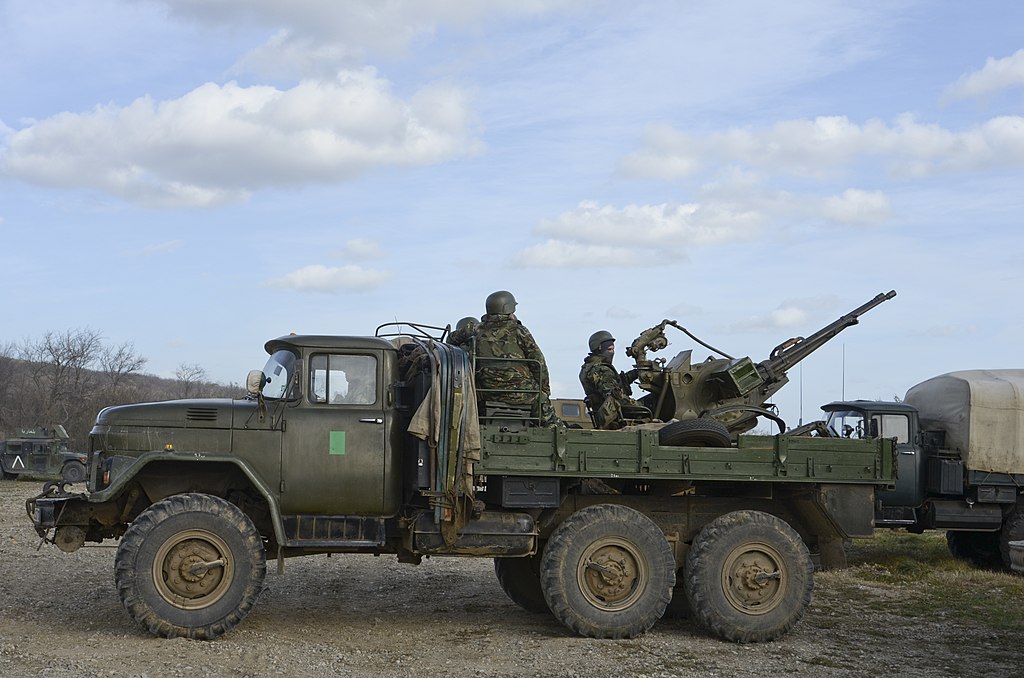
Probably the most iconic weapon associated with technical trucks is the Zu-23 double barrel 23mm AA gun. What I’ve found fascinating is the basic reason why.

There’s an interesting convergence here. First off, yes, it’s a very good medium autocannon that’s cheap and common enough that even the poorest can get them en masse. Its use in battle is obvious. Yet its its dimensions more than anything else that puts it in the goldilocks sweet spot.

On one hand, its big and heavy enough that it needs to be mounted on a vehicle to move quickly. But it’s light enough that it can be effectively operated from the back of a pickup truck. Function followed form.

The Stingley and the SA-2

Time to look at one of my favorite examples of “Statistics don’t tell the whole story.”

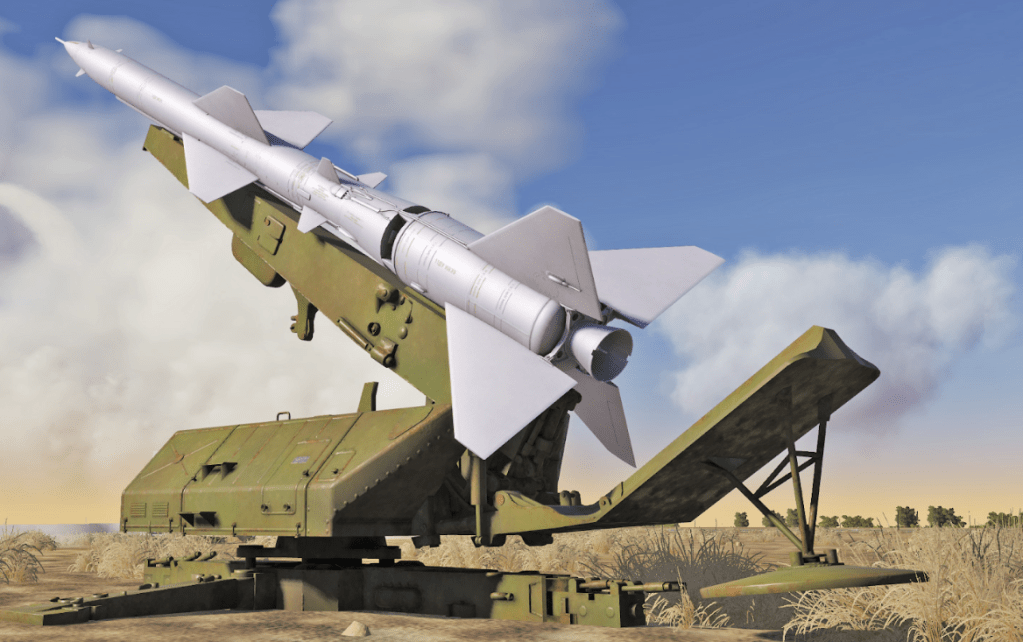
This is the SA-2/S-75 SAM. In Vietnam it accounted for only a single digit percentage of American losses. So it must be ineffective-right?

This is Texans cornerback Derek Stingley Jr who just got a monster contract. But he’s never had more than five interceptions in a season, good but not even close to league leading… Overpaid, or?

Or maybe SA-2s forced planes down low into the teeth of AAA and maybe the best corners succeeded because opposing QBs are deterred from throwing in their direction to start with.

What Artillery Mobility Means

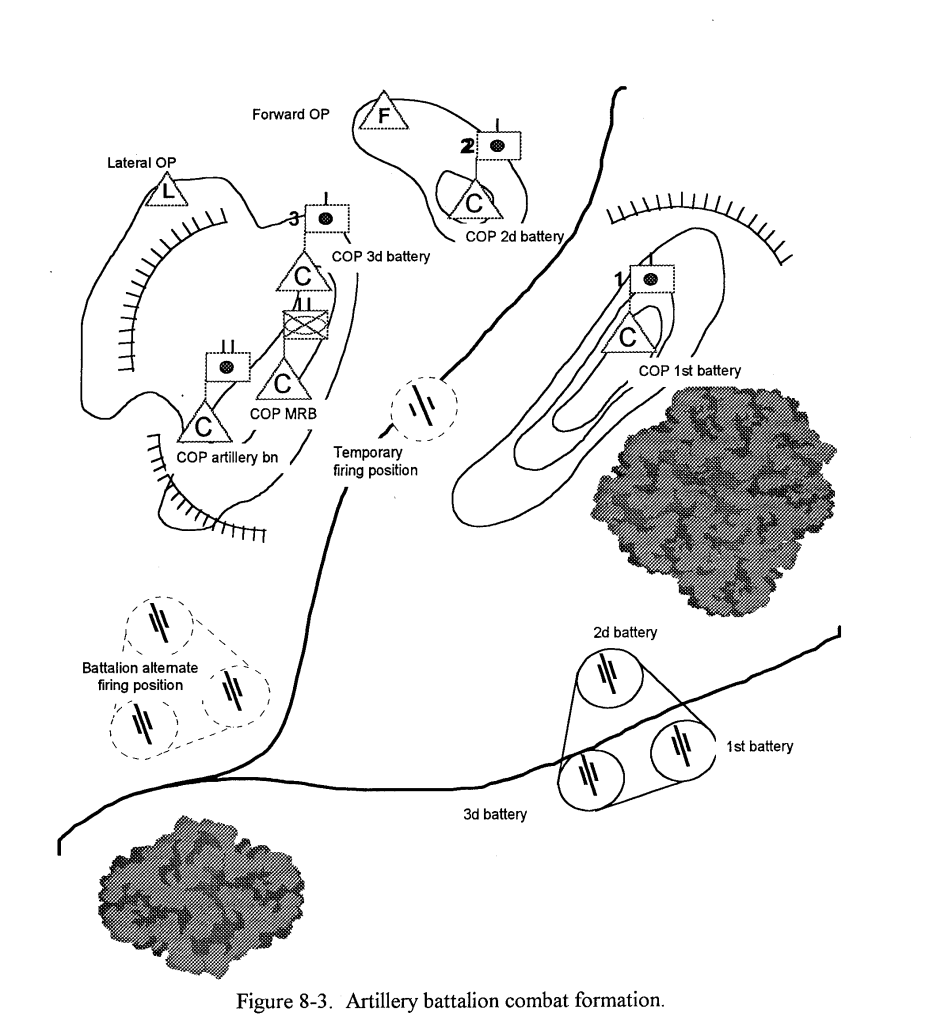
From the Heavy OPFOR Tactical:

Now a 199X Soviet-patterned formation isn’t going to be representative of everything (in particular, the commander is not always going to double as a forward observer), but it’s worth noting that the movement involves narrow movement around different parts of the same observed, prepared area, not wide ranging, sweeping kiting.

Now redeployment is another story, and it’s where the artillery is going to be more inherently vulnerable and varies a lot on the circumstances. IE not so much in a stabilized front like WWI, post-1951 Korea, or contemporary Ukraine, but a lot in a classic Fuldapocalypse, 2003 Iraq, or the Southern African brush. It also depends on how much the artillery has to actually fire (because if it’s forced into moving/hiding, then it’s effectively suppressed).

So for the fictional case study of the Soviet-Romanian War:

  • The northern front is going to be advancing extremely rapidly, close to the best-case paper projections. Deployed artillery will cover the armies when they have to stop, but even the Sovereign Union will struggle to keep their mega-barrages during the rapid advance. Thankfully (for the invaders) enemy counter-artillery capabilities are very weak, especially in the context.
  • The southern front has a lot fewer SPGs (and even less advanced ones) and has to bludgeon its way across a very wide river and through fortified areas. There’s just less room to move and the opponent’s capabilities (due to their better units and C3I on this front) are more dangerous.

Making vehicles in Stable Diffusion

Simple guide to how I bash together vehicles in Stable Diffusion.
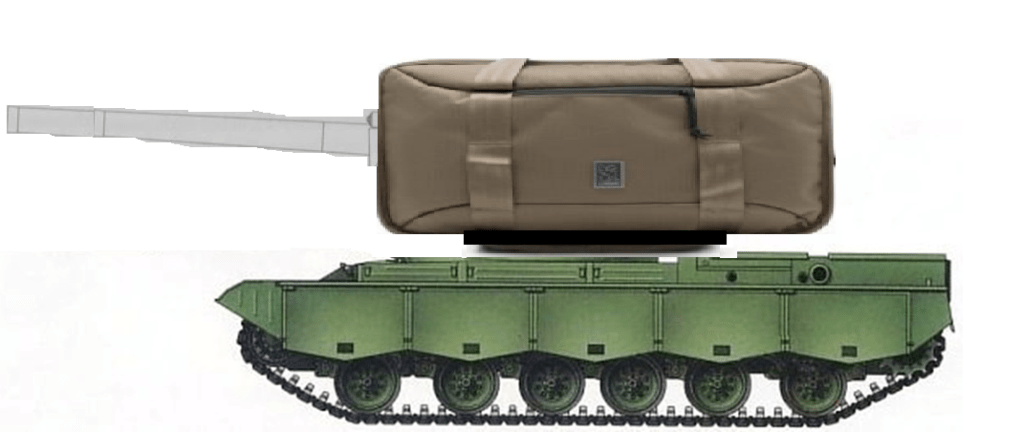
First assemble the shape. In this case it’s the bottom of a tank, a suitcase (!), and a line drawing of a large-caliber field piece.

Then load up Stable Diffusion with a controlnet, in this case, depth.

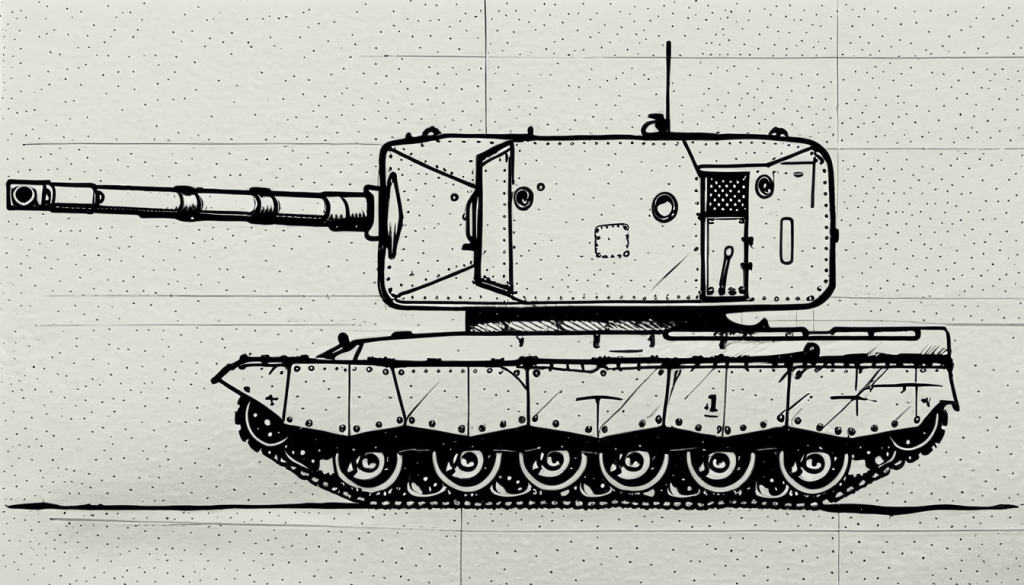
Use the model and prompt (In this case I use Helloworld 6.0), make sure the controlnet is enabled but not too high, and you get…

One self-propelled AH vehicle!

How the Fuldapocalypse Skewed Artillery

Fair warning: This is done by an armchair enthusiast with absolutely no practical experience and whose sole experience comes from reading things. I could be totally and completely wrong about many things. Now that that’s out of the way, a look at how a Fuldapocalypse-centric doctrine has skewed perceptions of artillery to the point where Ukraine came as a surprise to many.

To put a long story overly short, the current paradigm in Ukraine is:

  • Largely static front
  • Lots of drones flying around on both sides (which translates to deadlier air power, which in turn makes it a bigger threat)
  • Limited resources

So you can see why smaller, easier to conceal towed guns are liked more.

Now compare this to the Fuldapocalypse:

  • Mobile front
  • Less threat from air but extremely good counterbattery fire
  • Lavish (prewar) spending to afford SPGs.

See the difference?

Now the interesting thing is Caesar-style “truck SPGs”, ie artillery pieces on open wheeled chassis. They have shown the weaknesses of both-ie they’re soft like a towed gun and big like an SPG (and even less maneuverable). However, they’re not really designed for either kind of large-scale war.

Tactical vs. Strategic Nukes

So it’s worth noting that “Tactical” and “Strategic” nuclear weapons are a vague comparison. There’s a saying I’ve heard that what defined a nuclear weapon as “tactical” in the Cold War was if it detonated on German territory or not. Certainly a lot of “tactical” warheads had/have more power than the very strategic pair of WWII bombs.

Now you can just say “use” and that’s a fair definition. But I like to define it as range of the delivery system. So even if say, the legendary “Atomic Annie” cannon’s shell is in the same yield ballpark as the Little Boy, its short range qualifies it as a “tactical” system while a bomb carried by a long-range B-29 or similar plane counts as “strategic”.

It’s as good a distinction as any.

Fire Control in the Soviet Romanian War

Because I’m inspired by WWIII87 doing something similar and since I don’t think I’ll ever touch on the topic in any proper All Union successor, here it goes. It was in my mind, now it’s not. Enjoy.

Like with most wars since 1900, if not since the invention of gunpowder, the Soviet-Romanian War in All Union was won by artillery. While the Soviets had far more and far more advanced tube pieces, fire control was a lot more varied on both sides.

Top Tier

The top tier of fire control lay in the front level assets and units in the mobile corps, from battalion to corps itself. These contained most of the what the “recon strike complex” needed to succeed and did. Drone (and advanced non-drone) spotters, high performance datalinks, widespread designators for smart munitions, and advanced digital computers, all of it was present and used to great success. Perhaps the biggest air/artillery feat was the near-destruction of the Romanian 6th Tank Division before a single bullet was used in direct fire. The Romanians and allied Bulgarians had nothing like it. This was what caused a gigantic amount of alarm in the US and western militaries…

…although calmer heads pointed out that while still dangerous in the extreme, the Romanians had very little ability to disrupt the system.

Medium Tier

The medium tier was done by most regular Soviet units in the traditional division/army formation and the best Bulgarian/Romanian units. This involved fire control computers and other technological advantages, but still showed signs of stiffness and weakness in comparison to their upper tier (not the same as ineffectiveness, of course).

Low Tier

The low tier was largely manual and familiar to anyone in World War II, and was conducted by the bulk of Bulgarian and Romanian units, as well as a few low-category Soviet units mobilized for the war. There were many reasons why the southern front was less open and why the Romanian defense there was more effective: Units of mobilized Bulgarians instead of high-tech mobile brigades, the use of the Danube and more defensive lines, the proximity of Bucharest meaning that there was a “back to the wall” attitude, and many of the regime’s most loyal and stubborn units being deployed there prewar, possibly for political reasons.

Yet one has to be better C3I on the Romanian side (a large fortified area meant they could use field telephones and other such rugged measures far better) and worse such measures on the Soviet/Bulgarian side (especially as they had to go on the offensive). Which in turn made fire control better/worse.

Solving The Madness

Ok, “How many shells were fired in the opening megabarrage of a multi-front offensive operation, such as a Fuldapocalypse or All Union’s invasion of Romania?”

Going with the latter because it’s my book, I finally have an answer that’s easier than a vague “Over a million.” Going with “Sustainability of the Soviet Army In Battle” and “Front Operations 1977” as main sources.

A unit of fire for each artillery piece translates to about 80 for 120-122mm, 60 for 152mm, 160 for BM-21s, and 120 for smaller mortars (sust., pg 68). GENFORCE Mobile has similar numbers but adds 40 for big 203+mm pieces. I’ll just split the difference and say 70.

“Thus, for instance, in armies operating on the axis of the main attack, the expenditure of artillery and mortar ammunition in the first day of combat actions without the use of nuclear weapons may be 2.0 to 2.5 units of fire” (front. pg 309)

A front is described in the same document as having 3,400 to 4,200 artillery pieces (front pg. 12), so a very basic napkin calc for two fronts gives 1,176,000 shells. That’s about 25,000 tons even if you assume “only” the weight of a D-30 round for each shell.

So yeah, 100-150 x the number of total artillery pieces for an extremely basic ballpark figure.

The Cluster Debate

So the Americans have provided cluster weapons to Ukraine. Unsurprisingly, the internet debates around them have not been the most fruitful or productive. The consistent opponents are one thing in that I find their arguments as flawed as they are understandable. Yes, it’s perfectly fine to be concerned about unexploded ordnance and collateral damage-as if there wasn’t plenty of that already, most of it caused by…. someone other than Ukraine.

But the more interesting thing to me has been the talk, largely from OSINT accounts, of treating clusters as an unstoppable superweapon. Between this and the Bayraktar TB2 slobbering of days past, it’s as big a sign as Michael Jordan’s baseball career that excellent talent in one area doesn’t equal having it in another. Anyway,

  • Concern about unexploded bomblets, and not just for collateral reasons, is valid.
  • Clusters are situational and even in the past before “normal” shells got better designed, had many situations where they were worse. They also had some where they were better.
  • Cluster shells will still be extremely useful, if only because they’re a fresh source of things that things that go boom.

Weird Wargaming: The 185mm artillery

Using a ballistics calculator, I came up with a 185mm artillery piece with the following performance. Why that? Because few/no real guns have the caliber, and I wanted something between 152/155mm and 203mm. When not obtained via the calculator, results are extrapolated from the S-23, the closest real life equivalent, with some enhancements like faster loading and lighter weight to simulate better technology:

185mm Artillery:

Maximum range: 27-41 km, depending on ammunition.

Rate of fire: 2 rounds/minute

Average shell weight: 70-75 kilograms

Approximate Mass: 13,700 kg

The artillery piece is usually self-propelled on a tracked mount, but towed variants do exist. It tends to serve as a corps/army level weapon whose primary goal (and largest shell portion) is counter-battery and other missions where range is more important than size, although it can do anything a big gun can. Advanced users have developed nuclear shells for it, and the usual conventional ammunition types (regular HE, cluster, etc…) have been made.