Donks

There is a type of car called the “Donk”. Usually but not always a large vintage car in its base, anything with four wheels can theoretically be “donkified”. It apparently started with hip-hop musicians in the American South, but the concept is universal.

A donk can be considered the inverse of a lowrider, in that it’s a “high-rider”. The car, usually ornate, is given very large wheels with thin tires and has its suspension raised as high as possible, the springs stiffened both for prestige and to ensure the chassis doesn’t bump the wheels.

Donks look good. But don’t expect them to handle like a formula one racer.

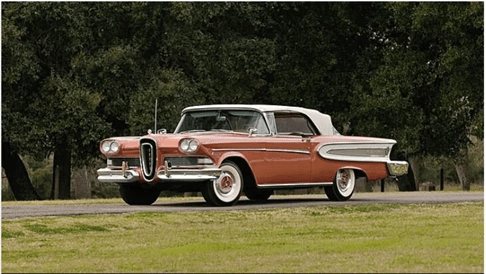
Gaming’s Ford Edsel

Looking at retrospectives for the infamously legendary recent video game bust Concord , I thought a lot of “wow, this really is the Ford Edsel of video games.” And I mean that specifically.

This video is as good as any for explaining in short terms what Concord was. That said:

  • It wasn’t actually that bad mechanically
    The Edsel was no worse in performance or safety than any other car of its era. Whatever issues it did have could be understood as it being brand new and not ‘broken in’. Likewise, Concord wasn’t a Memetic Bethesda Launch glitchfest with a lot of its immediate issues being… brand new and not ‘broken in’.
  • The timing was terrible
    The Edsel launched in a recession where the cars in its market segment were the hardest hit. Concord launched when hero shooters had gone from “hot” to “disco in 1982.”
  • The visual design was bad
    I don’t think I really have to elaborate here.
  • Expectations were far too high
    Concord was supposed to be a big merchandising and spinoff paradise as well as a tentpole franchise. The Edsel was supposed to be an entire division like Lincoln, the slightly above average in the brand ladder.

    Amazing how history can rhyme.

A Thousand Words: Initial D

Initial D

One of the most famous car racing works of fiction and the biggest reason why people know the ‘eurobeat’ subgenre of electronic music, Initial D is the reason why there are so many memes of cars and “RUNNING IN THE NINETIES” and “GAS GAS GAS”. It’s the story of ‘touge’ racing through winding mountain roads, tofu deliveryman/prodigy driver Takumi Fujiwara, and the Toyota Corolla AE86, which thanks to it has gained popularity well beyond what a mid-80s Corolla would get.

Seriously, it’s like how in Red Storm Rising the Iceland invasion was a crazy jury-rigged gamble but so much else treats it like normal and standard. The whole point is that it’s an underestimated clunker. It’s like a tank novel with an M48 or T-54 or something with an ace crew and everyone thinks it’s the tank. But I digress.

This is basically an action show/manga with cars instead of glowing superheroes. The most famous “First Stage” initial (no pun intended) anime adaptation holds this to the core: With early CG and blaring music, characters dramatically take actions graaaaaduallly and somehow have the ability to hold huge monologues and conversations while roaring through perilous streets. It honestly sounds better than it actually is, with the pattern of ‘how is this ’86 winning’ being worn down even then.

But still, that music…

A Thousand Words: BeamNG Drive

BeamNG Drive

One reason why Fuldapocalypse hasn’t been updating much is BeamNG Drive. It is an automobile sandbox with realistic physics that allows someone to do so much. Now on its own the game does not look like much. You can drive around maps that range from tiny to several virtual square kilometers, do some challenges like races or time trials or seeing how far you can get on an almost empty fuel tank, etc…

But that is like saying like sports is just throwing/kicking a ball around. With just the stock game (and the mods for this are numerous and excellent), you can control everything from big truck fronts to tiny old cars. The seemingly mundane can turn into fun, like towing a trailer with cargo many times the weight of the car pulling it, and doing so on a dirt mountain road without mishaps (easier said than done).

You have to make your own fun in BeamNG, but there’s a lot of it.

Classic Cars Were Terrible

So yeah, time to bust the legend of super-classic cars. In short. They sucked.

This video shows the biggest reason I dislike “classics”. They were/are horrifically, monstrously, massively unsafe. Bad seatbelts even assuming people wore them (they didn’t), cars that were basically metal sculptures designed with no concern for the people inside in mind, and yeah.

Ah, but what about the handling? Good question. Your car engine was either so underpowered that a modern econobox can match it or it was a gargantuan rocket inside a frame that could barely contain it, which doesn’t exactly help with safety. And said engines burned through gas so massively that the supposed halcyon days of cheap gas (even beyond inflation) often actually weren’t. Oh yeah, and they were tremendously space-inefficient.

But they built them to last unlike todays evil capitalist planned obsolesence machines, uh…? Well, I’ll just point out that an odometer on an old car being a full order of magnitude (10 times/1 digit) lower in max numbers speaks for itself. But even if it didn’t, you remembered the survivors who stuck around, the lovingly maintained Cadillacs and not the five millionth Chevy Nova that instantly broke down.

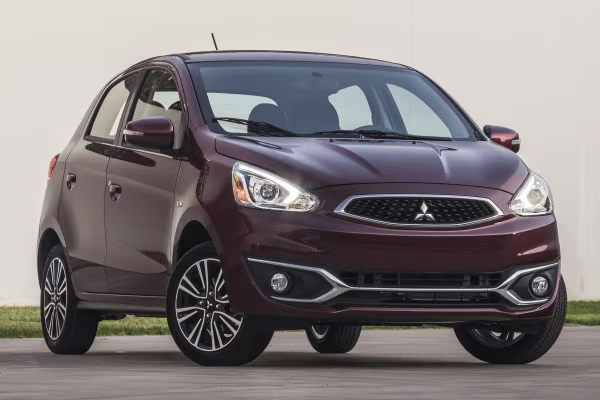
So yes, in everything except raw performance (and sometimes not even then), this rightfully regarded bottom-feeder 2017 Mitsubishi Mirage is vastly superior to the fin-boats of old.

Review: The Reckoning

The Reckoning

David Halberstam was one of the most legendary historical writers. In The Reckoning, written at the height of the 1980s auto crunch, he turned his eyes on Ford and Nissan, trying to find what made carmakers on both sides of the Pacific go. Halberstam has a talent for writing. Unfortunately, that very skill makes it uneven.

It does a good job describing formative events like Henry Ford’s family drama and the 1953 labor dispute at Nissan that shaped not only it but the entire Japanese auto industry. It also does well when looking at individual workers caught up in the mess. Although I have to say that it’s very hard to write about the auto industry and not make it interesting. The field is just so inherently complex and full of colorful stories.

So what are the problems? Well, it’s dated for one. This isn’t as bad as it could have been. Yes, it’s a more than a little “JAPAN GOOD”, but certainly not to the excess of some other bubble era publications. After all, this shows the Japanese industry warts and all. It also aptly points out in its study of the South Koreans how the rest of Asia was cracking its knuckles and preparing to charge-which came to pass.

No, the biggest obvious problem is that it’s too “Bruce Springsteen”. Which is to say it has the tone of a wealthy suburbanite who idealizes the blue collar worker’s struggle too much. Its slobberingly positive portrayal of UAW head Walter Reuther is the most obvious part of it, with even sympathetic history works on that man being far more critical and full than Halberstam’s hagiography. This also leads Halberstam to idolize the “Manufacturing Men” over the supposed “bean counters” who nickel and dimed every car to pieces. (Not surprisingly, Robert McNamara in his pre SecDef days is there and scorned).

This leads to the next problem that someone with any kind of interest in the auto industry can see: It’s too centered around the capital-N Narrative of the Good Manufacturing Man being brought down by the Evil White Collar Consultant. The “Manufacturing Men” in both continents could get away with running hog wild simply because their industry was in a boom. Once it busted, they simply had to start penny pinching. After all, the first Japanese car company to close a plant and downsize was… Nissan. All this is combined with something that, for all his research, Halberstam didn’t actually have much familiarity with, and it showed. It’s also catnip for the mostly well-off target audience of the book.

Still, for all its problems this is something I’d definitely recommend.

Review: The Machine That Changed The World

The Machine That Changed The World

The product of a large MIT study of the auto industry, The Machine That Changed The World attempts to tell the story of “lean production”. The two other production types of motor vehicles mentioned in the book are obvious: Handmade/custom “craft production”, only used for a handful of low-unit firms, and classic assembly line “mass production”. But what is “lean production”? This was and still is a hard question to answer. But in its attempt, the book is an excellent study of the car industry.

One hand, this is a masterpiece in many ways. It’s a very technical but also very accessible study. It shows the difference between the older and newer ways of auto production very clearly. And its anecdotes are good in and of themselves.

But it also has some pretty serious flaws. This book is not only dated, but also was released at the absolute peak of the Japanese market bubble. So its veneration of Japanese production when the industry had a huge tailwind and was yet to experience a massive stress test needs to be taken with a large quantity of salt.

That being said, while not the most definitive book on auto production, it’s still a great historical resource.

Review: Wheels

Wheels

Arthur Hailey’s Wheels, published three years after Airport, turned its attention to the auto industry. While I’ve been a fairly new study to the aircraft industry, I’ve been interested in cars for much, much longer. So I knew I had to at least try this book. Especially because there are bizarrely few novels about the auto industry’s shenanigans. The biggest names are just this and The Betsy, which barely counts as a coherent book.

This is only somewhat more focused than Robbins’ scattershot, crazed novel. And it’s less focused than Airport. While that had a big broad soap opera and industry exposition that concluded with a rushed thriller plot, this is nothing but a Detroit drama. Or to be more specific, a series of Detroit dramas that range from car design to the struggles of a poor assembly line worker to the not-exactly-scintillating subject of middle class adultery.

I can respect this book for what it is-a lot of the research holds up, even if Hailey once again fell for futurist wonders being just around the corner (room-temperature superconductors in this case). It does work as a snapshot of an utterly rotten industry that was practically begging for the imports to come and whip it into shape (Published in 1971, the only reference to Japanese cars is a Subaru 360-esque “four wheeled motorcycle” that no one likes). But it doesn’t really work as a practical narrative.

Weird Wargaming: The Jeep Compass Army

Using variants of civilian vehicles from Model Ts and Rolls Royces in World War I to the omnipresent Land Cruisers and Hiluxes of today is nothing new. But I saw a proposal from an Indian armoring firm (which also advertised the boxiest armored vehicles ever) for uparmored Jeep Compasses, and my brain sparked. After all, compact crossovers like it are so common now, so why not send them to war? This isn’t like the classic jeep, even in its latest form.

Well, there’s obvious reasons against it. It can barely fit five normal-sized people without wargear. Five big soldier men with all their equipment would probably be a nonstarter. You could use it as a pure weapons carrier-but the disadvantages of that would be obvious as well. There are plenty of off the shelf SUVs far more suitable… but I don’t care.

The Compasses would be used by recon/raiding teams, being too small (regardless of how many people you can stuff inside) to be a line carrier. The least bad option, of gun vehicles, involves a crew of three with extra munitions in the (gulp) trunk/back. Even then, the Compass has a max payload of only around 1,100 pounds/500 kilograms. Which would probably have been eaten up by the armoring, but I’ll let it slide for now.

So, here it goes:

  • Command vehicle: Unit commander, driver, comms equipment, aide, maybe lighter machine gun RWS.
  • Personnel Carrier: Driver, 2-4 additional troops, lighter machine gun RWS.
  • Weapons Carrier: Driver, Gunner, Commander, either light missile or heavy machine gun.

The number of vehicles of each type depends on the exact mission. And the Jeep Compass could be replaced by any light SUV. And I do not recommend actually trying these small light SUVs unless you have no other choice.