Rediscovering Attrition

Every so often an observer will encounter a war (the Ukraine conflict being the most recent) and then find that numbers, firepower, and the dreaded capital-A Attrition still matter, as they always have. Some of this is just seeing technological hype being inevitably worn down by realistic imperfection. But more of it is just because of the annoying way the Liddell-Hart/Boyd/Lind “MANEUVER WAR” crowd has wormed its way into military discourse.

Ok, so a lot of it is just WWII mythology of the Germans running circles around the French. But guess who’s amplified all that? Yep, the maneuverists. And in Liddell Hart’s case going all the way back to the first ever recorded battles where the “Indirect Approach” always won. So much as how people become legitimately shocked when, after a long dose of Pierre Spreyism, it turns out a new piece of military equipment actually works, they also become shocked when it turns out that fortifications are indeed viable if not essential, that the Big Breakthrough is hard, that maneuver has limits, and that there are few substitutes for force and attrition.

Studying actual doctrine even in maneuverist periods doesn’t make one surprised. After all, a Sov Kras Don Circ Heavy Opfor operational maneuver group gets going with a massive breakthrough concentration of firepower and stays going through mobile organic firepower. But going by popular media does.

On The Term “Thunder Run”

One of the most curious military terms is “Thunder Run”. It originally referred to an armored push into Baghdad in 2003. It has since come to generally mean “any fast, tank-heavy offensive, especially into closed terrain where tanks are otherwise not the most suited.” Especially one that’s inherently high-risk, as this was. It takes nothing away from the skill and courage of the 2003 Thunder Runners to point out that the conventional Iraqi army in that period was massively flawed and worn-out and that it could have easily failed against a more capable opponent, as happened in a similar attempt in the Yom Kippur War.

However, I find it even more interesting in terms of etymology. See, the name “Thunder Run” is pretty self-descriptive. It’s an attack that’s swift like a thunderbolt and involves dozens of thundering-ly loud armored vehicles running towards the opponent. In other words, its something that even someone with little such experience can grasp the meaning of.

World War III Sports

With the actual war done, the WW31987 blog turns its attention to the really important things: Sports! My personal hunches, since this is in July/August.

  • MLB stops the season and probably either voids it (sure beats the real life World Series cancelations of the 94 strike and the 1904 boycott), or goes straight to the playoffs after the war ends.
  • The NFL hasn’t started yet and won’t start the first game until the second week of September, and the war ends in late August. (Ironically, there was a disruptive strike that year, dunno how the war would affect that). Given its lucrative nature, I can see a wait and see approach followed by starting the season after the war.
  • The NBA and NHL start in the late fall and are thus largely unaffected.
  • For European soccer leagues, I’d say it depends on the country. The historical Bundesliga started several days before the war would have begun, though a crisis could have averted it. My hunch is that the countries not directly hit (ie, France, etc…, would just launch a delayed and possibly shortened season after the war’s end), while Germany, the nuke victims, and the Scandanavian countries that were invaded would wait and possibly cancel the seasons.

One footnote: 2020 was the historical season that Mike Trout qualified for the Hall of Fame (played in at least 10 seasons). With obvious fears of the season not being able to be completed due to COVID, there was talk as if it would count as official. The Hall responded by saying that 1994 counted for the sake of eligibility, and thus even a World Series less 2020 would as well. Or a World Series-less 1987.

Big Vs. Little Targeteering

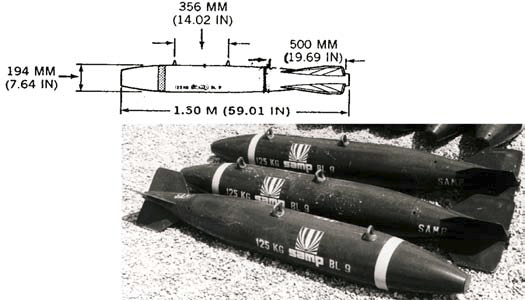
With regards to unguided bombs, one of those things that’s still a little iffy to me is what’s more suited for a few big bombs and what’s for a bunch of little ones. I can guess, with something like a strongpoint or large building being viewed as worthy of a giant demolisher while a group of enemy infantry/soft-skins is better suited for a large stick of small fragmentation ones.

I also have this suspicion that general purpose bombs are acceptable for most aerial targets. This is backed up by the data from the Gulf Wars showing the bulk of dropped bombs being Mk82s and derivatives. And of course, anything that can explode is not useless. Both of these below have uses and both can be deadly.

A Brief History (And Explanation) of Rocket Tossing

Anyone who has recently seen any footage of helicopters in Ukraine has witnessed what I call “Rocket Tossing”. The helicopter lifts its nose, fires off a ton of rockets indirectly, and then peels away. It has the impression of an improvised, ineffective tactic. But it’s not the former and is arguably not the latter.

It’s important to note that doctrine of the 198X Fuldapocalypse era, both western and eastern, details rocket tossing at length. The huge helicopter losses of Vietnam, the precedent of the Iran Iraq War (where the tactic was used constantly), and that air defense wasn’t exactly getting worse all made for sound reasons to know it. So indirect helicopter fire isn’t that surprising.

So how effective is it? Well, it’s basically a light multiple rocket launcher that can fly. Unguided multiple rocket launchers are area weapons, optimized to cover a large piece of land quickly at the expense of long-term rate of fire. (This is why rockets are considered ideal for chemical warfare). Ideal? Not really. Cost-effective? Probably not. But useless? Nah.

RIP Jim Brown

Jim Brown, former Cleveland Browns football player, activist, actor, and mixed martial arts commentator, has just passed away. RIP to a football legend. Calling him the greatest running back of all time is not particularly controversial, unlike other such claims. He rushed for more yards per game than anyone else at his position and did so in a low-offense era.

Betting on Obscure Sports

I’ve said multiple times that the depths to which sportsbooks scraped the bottom of the barrel in the spring of 2020 was darkly amusing and inspiring at the same time. The thing is, they were doing this before the crunch. And after. Maybe not to the extent of splashing Taiwanese women’s basketball on their front pages, but you still could and can find really weird sports. And the use of obscure sports is a glaring weak point for integrity.

So who actually bets on the Laotian 2nd Floorball League?

Well, from what I’ve gathered, there’s three main categories of bettors. Only one of these is beneficial to the sportsbook, and is probably the reason they keep doing it. None are what would be considered beneficial to society or even the sports betting ecosystem as a whole.

Degenerates

The most innocent group of people to bet on obscure markets consistently (as opposed to the occasional novelty bet that no one expects anything out of) are “degenerates”, the same gambling addicts who will just bet on whatever’s in front of their faces. If it’s the middle of the night and some soccer league halfway around the world is what’s on the screen, they’ll bet it. Everything from table tennis to bizarre half-rink hockey to totally legitimate Indian cricket. This was in fact the reason for those Eastern European ping pong leagues running around the clock and existing at all-it was to ensure that there was something on screen at all times, purely for the purposes of gambling.

Something that greases the skids for a huge and inevitable problem with gambling doesn’t seem like the best thing. But it’s sweet and virtuous compared to the other two.

Line Munchkins

Many of the sharp/plus EV [Expected value] bettors are these, pouncing on whatever mismatch they get. They have little to no handicapping or serious modeling ability (the stereotype is that they’re green lumberjacks who don’t even know the players). After all, obscure sports are the most vulnerable to bad/slow lines. Which of course leads to the cycle of them getting restricted/banned after the book finds out.

I find neither the sportsbooks themselves who blast ads about the road to riches yet restrict successful bettors nor the line munchkins (coming from a tabletop RPG term for players who crudely optimize for maximum power) who act like martyrs to genius instead of people who gamed the system to be very sympathetic. So something that amplifies this sludgy mess does not seem desirable.

Crooks

The smallest, weakest, and most obscure sports are the most vulnerable to manipulation and fixes. So naturally either fixers or people aware of the fix will flock to bet on these crooked games. I don’t think I need to really explain why this is a bad thing.

What Next?

On one hand, the sportsbooks can simply not list the Guinea-Bissau Ferret Legging Third Division, the regulators can forbid it, and the data providers (the biggest, most important, and least visible part of the whole ecosystem), can not provide information about them. On the other, it only takes one offshore data provider and an offshore book wanting to fill that niche to break the restrictions.

So yes, like a lot of sports betting issues, this is not completely solvable. I do think that forbidding bets on the lowest hanging fruit-minor league baseball and tennis or low-division college basketball to use an American example, would still be a wise and prudent thing to do.

Cuban T-72s

I’ve used the term “Cuban T-72s” to refer to a very interesting phenomenon in fiction, especially contemporary fiction. Which is to say, something that’s technically inaccurate but makes an incredible amount of intuitive sense. And it’s technically achievable as well. What is a Cuban T-72?

Well, despite being one of the premier Soviet clients, Cuba has never operated T-72 tanks. T-72s are, of course, a common Soviet export tank. So even though Cuba historically never moved beyond the T-62 despite being actively engaged in Angola, if a thriller novel or alternate timeline had them operating that autoloaded tank, I would let it slide.

So if the rest of the work is pretty good, I can let things like wrong calibers off the hook. Especially if there’s an understandable reason why the author would think that way. Note that this only applies to small things like that-someone like Ian Slater who constantly gets the easiest-to-check facts wrong is not a “Cuban T-72.”

The Non-Russian SSRs and nuclear weapons

There is one argument, especially after the 2022 invasion, about Ukraine (and the other non-Russian ex-SSRs) and nuclear weapons. This goes: They gave up their nuclear weapons in exchange for largely meaningless and unenforceable diplomatic agreements, which was a mistake that Ukraine paid for and Kazakhstan might have.

Many informed nuclear commentators have pointed out that the launch codes/infrastructure were still in Russian hands, that Ukraine had no actual control, and that the ICBMs in particular were ill-positioned for deterring their former owners. This is all accurate, as is the staggering cost of making a usable nuclear program during a time of massive political and economic upheaval (Ukraine’s implosion in the 1990s made Russia’s look like a modest recession, and Kazakhstan had effectively no army of its own immediately after independence)

But there is another opposite fallacy, which is that the decision was more or less out of their hands. Because all the nuclear weapons were under Russian control, there was no real choice involved. This is also flawed. The nuclear weapons weren’t immediately usable, but to act like there was a Ward Of Russianism on them is wrong. Ukraine had extensive infrastructure and science on its territory (including a missile plant), while Kazakhstan’s uranium industry meant that it was already over the biggest hump for a usable bomb-the materials.

So it was not technically impossible for the non-Russian SSRs to maintain a nuclear weapons program. You can argue that it was politically and economically so, and probably correctly. But it was not a technical issue. The republics had agency, and they likely prevented a far earlier Russian invasion by relenting.