The First (and best?) Rock Opera

The first rock opera can be considered the Moody Blues’ Days of Future Passed. It tells the story of one day from morning to night. (It happens to also be an excellent album in its own right). Most people know this as where Nights in White Satin came from, but every track is great. My favorite is “Evening”, both “Tuesday Afternoon” and “Evening Time To Get Away”.

No track is wasted on pointless “story”, which is something that afflicts the otherwise excellent Tommy and The Wall. My favorite story concept album at any rate.

Tanks of the Soviet-Romanian War

Main Battle Tanks of All Union’s Soviet-Romanian War, starting with the victors.

Sovereign Union

  • T-94. The star of the tank scenes in All Union, the T-94 was inspired most heavily by the Object 640/Black Eagle prototype with its advanced gas turbine, low turret and crew position, and much more. It also has a heavy remote turret with an aircraft-adapted 23mm autocannon (for improved anti-soft target AND hitting things not worth a main gun shell). This was an actual proposal. Most advanced Sovereign Union tank of the war, used only in some mobile corps.
  • T-84. The T-84 was chosen as the “low” tank in the high-low mix (ie T-64/80 and T-72 in real life). The real reason was as a bribe to the Ukrainian SSR where a potential situation was defused by All-Union President Yatchenko. Ukrainian firms would get preferential choices in procurement while Crimea was handed back over. T-84s were used in mobile corps and some high-category legacy divisions and had the most advanced suites of the “125mm classics.”
  • 125mm Classics: IE the T-64, T-72, and T-80, in various states of upgrade. Even the mobile corps had many of these. The 7th Mobile Corps famously had only T-64s and BMP-2s. Not much else to say except that T-64s were disproportionately used because so many units were drawn from the Ukrainian SSR where they were historically based.
  • T-62/55s: These classics were minimum viable tanks that did minimum viable tank things, seeing service in low-category legacy divisions.

Bulgaria

  • T-72. The most advanced Bulgarian tank, which showed their limitations compared to the Sovereign Union.
  • T-62. Bulgaria was the only NSWP country to use the T-62, and they saw extensive use (and losses). Likewise with the T-55, the most common Bulgarian tank.
  • T-34. The absolute contrast between the electronically linked supertanks and Bulgaria fielding hundreds of T-34/85s in its crazed mobilization was one of the big ironies of the war.
  • LPT-100. A fictional tank based on a real proposal, this like several other semi-improvised vehicles could be built in Bulgaria, so it was used by the Bulgarians. Others included APCs on bus chassis and uparmored jeeps from local factories.

The Atomic Bombs Are Not Controversial

Every August 6 this comes around, and I have to give my take. No, the atomic bombs were not controversial and were entirely justified. Totally justified. When Japan was already being starved and firebombed, when the bloodbath of Okinawa was fresh in sight, to not use the superweapons would be wrong even by 2020s standards, much less 1940s ones.

Were they horrific? Definitely. Were they a magic win button that guaranteed a peaceful surrender in place of an invasion that could have killed a million Americans and ten-twenty times as many Japanese? Not by themselves. Could you have wished the war would have ended without them? Of course.

But there was no way they were not being used, and they very well could have prevented something worse. Much worse.

Diving Into A True Disaster

So the NTSB has conducted its hearings and giant document release on the tragic DC collision in January. You can take a gander at the primary sources here, there’s a lot of them (yep, NTSB is very, very thorough). Because I developed an interest in studying systemic breakdown of air disasters some time before the collision, I’ve been following it (knowing them actually makes me more comfortable flying because of all the massive safety efforts.) Being I can read these things better than a lot of people, I’m going to give my takes. Warning: These are from an amateur non-aviator and I’ve been mostly looking at the helicopter ones.

Who Was At Fault?

Immediately, the helicopter for not seeing the incoming plane. The controller for letting a crew with literal tunnel vision try to see and steer itself instead of just having it stop (I call it, trying to save the helicopter from itself). That said, it’s not helpful to say someone immediately should have zigged instead of zagged. Or to try to exactly apportion blame since it doesn’t work out like that.

Because the overloaded DCA airspace was such a nightmare that something like this-I’m honestly surprised it didn’t happen sooner. The close calls were huge and massive. Like, yeah. Totally massive.

I’ll admit from pretty early on I was reminded of Charkhi Dadri, a somewhat similar but far worse disaster in 1996 with a 747 and Il-76 that remains as of this post the worst midair collision ever. Same overloaded capitol airspace with a bizarre civil/military boundary and the use of small vertical separation that was bound to fail miserably. There the immediate “fault” was entirely on the Il-76 for slipping a thousand feet while the controller gave perfect direction and the 747 stayed where it was supposed to, but that was not nearly as important as the systemic issues.

Was This a DEIsaster?

Short answer is no. Longer answer is that yes, Lobach was indeed not the greatest pilot and was wobbly and insufficient on the disaster flight (which should have been called off and failed) but did not fit the “stupid DEI bimbo” caricature many on the internet claimed. (Not that it’s really relevant but a massive interview with her boyfriend seemed to debunk the claim she was a lesbian). (The PAT unit from the readings actually had a much higher than normal amount of women in it from one of the documents).

What she was was a commissioned pilot with a fairly small and highly uneven amount of flight hours, and that her issues were not uncommon among junior commissioned crews, crews who probably should not be allowed into the most dangerous airspace ever. (Training flights in that area for all but specialized careful missions like route knowledge for a true emergency should not have been happening).

In any event the male instructor made the most crucial catastrophic decisions.

So, What Was the Swiss Cheese Failure

(Try my best to summarize, which I’m not the best at): DC had been incredibly overcrowded with both helicopter and commercial traffic for political reasons. Little-used runway 33 was seeing more use, including on the fatal collision. The helicopter crew was granted permission to see and avoid, a foolhardy one given the night vision goggles and light pollution. They looked at an airplane operating on the main runway and assumed that was the “traffic in sight”. It wasn’t.

To me I think the most revealing thing was how -sincerely – overconfident the army was. Everyone from safety officers (who treated birds as the most dangerous collision threat) to the accident crews themselves were disturbingly blase about working around commercial traffic. In later informal podcasts/interviews, veteran pilots who in some cases flew the exact route seemed honestly surprised at how bad it was from the aircraft’s end. They did not come across as making excuses.

Lessons

I’ll say I don’t know what the changes besides the obvious ones could or even should be. DCA is very dangerous by nature (as demonstrated before when, despite the fundamental differences, many similar things from a less-than-ideal aircrew to dubious controller decisions contributed to an earlier famous disaster), and important people should probably bite the bullet and drive to Dulles.


Technically Adept

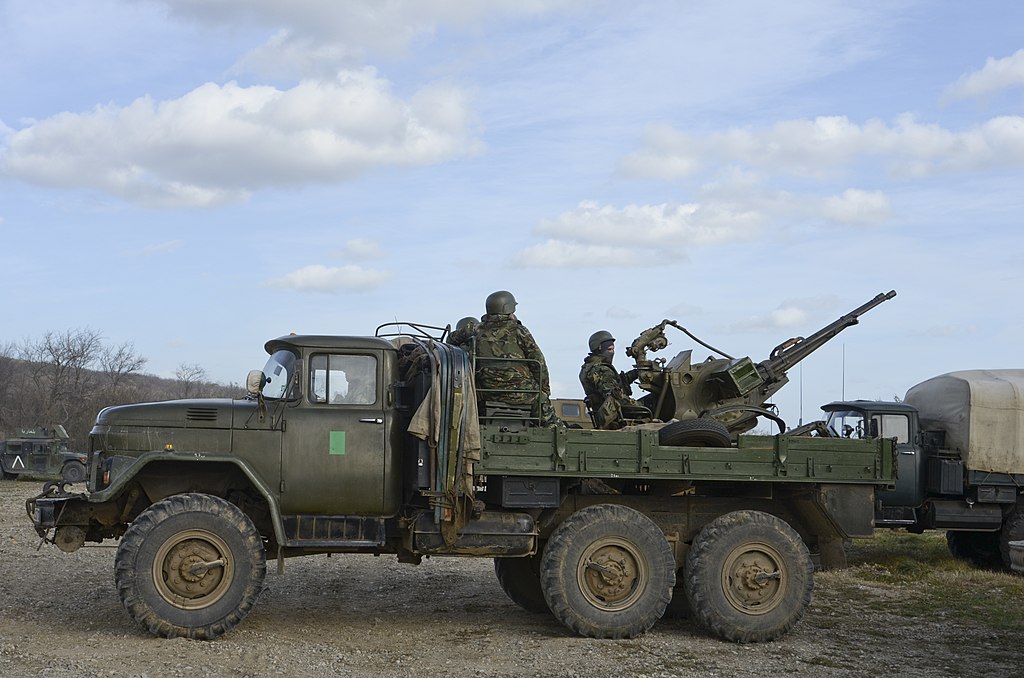
Probably the most iconic weapon associated with technical trucks is the Zu-23 double barrel 23mm AA gun. What I’ve found fascinating is the basic reason why.

There’s an interesting convergence here. First off, yes, it’s a very good medium autocannon that’s cheap and common enough that even the poorest can get them en masse. Its use in battle is obvious. Yet its its dimensions more than anything else that puts it in the goldilocks sweet spot.

On one hand, its big and heavy enough that it needs to be mounted on a vehicle to move quickly. But it’s light enough that it can be effectively operated from the back of a pickup truck. Function followed form.

Gor The Infamous

A while ago on Fuldapocalypse I reviewed the first, comparably sane (but only comparably) entry in the “legendary” Gor series, Tarnsman of Gor. Since then, it quickly devolved into what it became infamous for. Which is to say, a series devoted entirely to talking about how the natural, right, and proper order of things is for men to be masters and women to be slaves. And I mean this literally.

One might think that Gor would have a tiny fig leaf of sword and planet adventure to go into ‘slave sleaze’. While true, it also has a tiny fig leaf of ‘slave sleaze’ to go into talking in gargantuan walls of text repeatedly saying the exact same monologue repeatedly. So why has it become so infamous?

I think there’s a few reasons. The first is that it had a degree of mainstream (by sci-fi standards) exposure. More “importantly”, it had a small degree of mainstream pretentiousness. So in its heyday (and in a smaller book market), you had this thing that acted like heroic fantasy and wasn’t honest enough to admit on the cover that it was smut. And it rubbed a lot of people quite reasonably the wrong way.

Women in the Cockpit

The International Society of Women Airline Pilots has a graph (at least as of 2023, but the trend should be clear) of stats involving female aviators. (And yes, to get this out of the way, there is no significant difference in accident rates and never was).

  • India is a surprising large first at around 12%
  • Scandinavia is likewise surprisingly LOW at around 4% (worse than the 5.5% of the knuckle-dragging Yankees)
  • Global average around 6%
  • East Asia has an abysmal rate that leaves everyone else in their dust. Even the Middle East has substantially more.

I do think the skew is going to stay because no matter how good the policy, pilot is about the least mom-friendly career by its very nature. But it’s still a very interesting look at demographics.

Text LLMs

Not despite but because I’m a writer, I’m looking more at text AI LLMs/models and using them. Why? Well, we have to go back to Leopold Stokowski, a legendary conductor who supposedly saw one of the first sound mixers and went “uh, so what do you need me for?” He of course then got to work studying and using them, knowing he couldn’t be left behind from this combination threat and opportunity. Image AI generators have been beautiful for me because they didn’t overlap. Writing ones do overlap, which is why I’m finding them interesting.

Part of the reason (besides knowing they’re just a rich man’s autocomplete dependent entirely on inputs) I was less panicky about AI is because my family has lived through a lot of creative technical changes already. Musicians may not like and not use synthesizers if they can help it, but they have to know how they work. Same for writing.

Hyperfans

I just came up with an alternate aviation term. Hyperfan, referring to such gigantic bypass ratio-turbines as the NK-93 and Rolls Royce Contrafan. These so far never-were powerplants get amazing fuel efficiency-at the cost of basically everything else. Like complexity, size (that drag can’t be good), and other stuff I don’t know because I’m not an aeronautical engineer.

In real life these concepts get names like “shrouded propfans” which are very cumbersome and not very intuitive. Furthermore, there isn’t a consistent definition of them. Hyperfan is obvious and very smooth-flowing. It’s a hyper-powered fan engine to the layman, and that’s who names them.

Paradrops

The problem with large parachute drops, especially post-World War II, is that you need to be able to get a bunch of large transport planes to the DZ. However, if you are able to do that, chances are you won’t need to do something as risky as a parachute landing anyway.

Then you run into the issue of whether or not the resources spent on guarding the paradrop are worth it or not. There’s a reason why large operational/strategic paradrops are more in the theoretical than real. However, even theoretical offers an advantage. The force in being strategy means that a defender must prepare for the possibility that a paradrop could happen.