The Stingley and the SA-2

Time to look at one of my favorite examples of “Statistics don’t tell the whole story.”

This is the SA-2/S-75 SAM. In Vietnam it accounted for only a single digit percentage of American losses. So it must be ineffective-right?

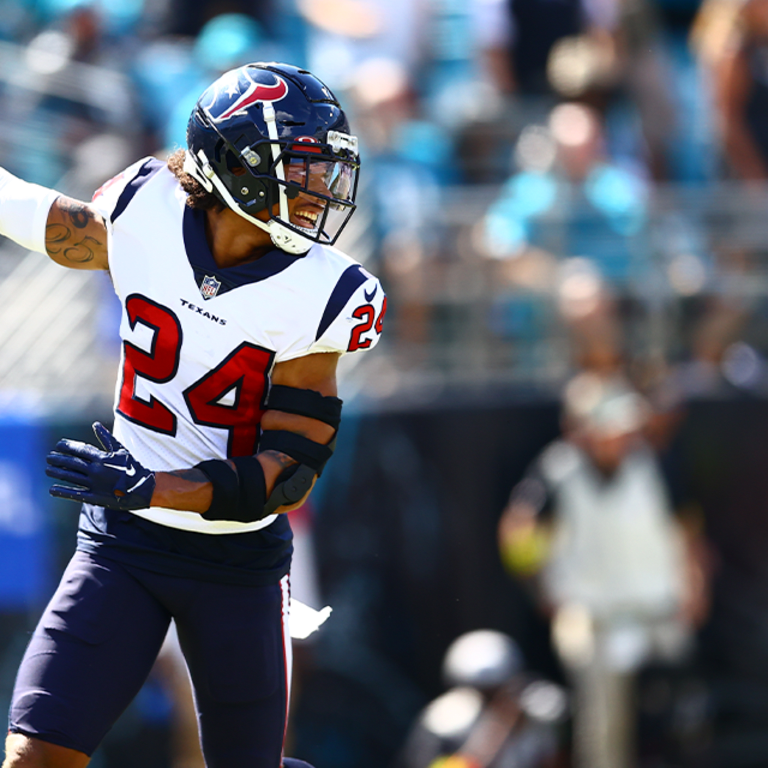
This is Texans cornerback Derek Stingley Jr who just got a monster contract. But he’s never had more than five interceptions in a season, good but not even close to league leading… Overpaid, or?

Or maybe SA-2s forced planes down low into the teeth of AAA and maybe the best corners succeeded because opposing QBs are deterred from throwing in their direction to start with.

The Draft Bust That Changed History

It’s almost Super Bowl time, and it’s Black History Month. So I figure I’d post this tiny bit of gridiron history I was checking out. So if you were to list pioneering black quarterbacks overcoming the past stereotypes of the position to thrive in pro football, maybe you’d pick the first starter in the modern era, Marlin Briscoe. Or maybe Doug Williams, the first to win a Super Bowl. Or Warren Moon, the first superstar.

How about seemingly forgettable draft bust Andre Ware? Picked out of Houston college by the Detroit Lions no. 7 overall in 1990, he sputtered out in the pros. Now the “how” isn’t really the point of this article. From what I’ve read, it was a college scheme that didn’t really translate well to the pros, especially at the time. That white quarterback David Klinger followed a similar “went to Houston, was drafted high, and was a pro bust” seems to support that. But again, that’s not really the point.

The point is that Ware set a precedent for drafting black quarterbacks very high that has never stopped. Looking at later drafts:

  • 1995: Steve McNair: 5th overall
  • 1996: Tony Banks: 42nd overall, second round, however was first quarterback picked
  • 1999: Donovan McNabb (2nd), Akili Smith (3rd), Daunte Culpepper (11th), this was the final nail in the coffin

Now obviously high draft picks are not total evidence of prejudice being eliminated. But it is interesting to note see the exact moment when, in practical terms, the tide turned.

The Offshore Coach Scam

So I saw a tweet by an offshore sportsbook, in about the 302,122,877th time they’ve done something like this. It declared that Deion Sanders was the favorite to be the next head coach of the Dallas Cowboys and listed odds. Now I was skeptical to put it mildly. As for the actual next one, well, that could be overtaken by events and who knows, maybe it will be Mr. Primetime.

But the point is that sports journalists for the 302,122,877th time took up on these odds and repeated them. Now there’s nothing wrong with repeating genuine futures odds. Just because a chance of something is slim doesn’t mean it won’t happen, and it gives an idea what oddsmakers (including at sharp books) and the market think is the best situation. However…

…This is not the case. The numbers here are basically pulled at random, and instead of letting sharps bet in, they’re from a ‘soft book’ with very low limits. It’s a publicity stunt, and sportswriters ALWAYS fall for it by repeating these things.

Review: The Athlete

The Athlete

With football/handegg season now upon us, I figure a sports book is in order. As good as any other is Jon Finkel’s The Athlete, a biography of Charlie Ward, a quarterback who won the Heisman Trophy and then went on to a long and successful pro career…. as a basketball player. Especially since, by basketball standards anyway, Ward wasn’t even very tall.

To get the negative out of the way, this is a rose-tinted view of him that excuses one of his most infamous incidents (which thankfully just amounted to him saying something dumb and not doing anything). It also praises him as if he was Jim Thorpe or Bo Jackson, which is just a little too much in my eyes. But it’s still an interesting look at a man who succeeded in two places where almost everyone can’t succeed in one.

A final interesting piece is that Finkel doesn’t really try to answer the counterfactual everyone is going to ask: Could Ward have been a viable NFL quarterback? Could have been Russell Wilson two decades earlier, or an undersized runt who’d get crushed by pro defenders? The correct answer is “We don’t know”, but it’s a little disappointing to not even consider it.

While not the best book, this is a good look at someone I knew growing up from his time on the Knicks.

Review: Is There Life After Football

Is There Life After Football: Surviving The NFL

A look at life as an American Football player by sociologists and former NFL player James Koonce, Is There Life After Football is a very interesting and evenhanded tale of how football players (and to a degree many other athletes) struggle culturally. While very few of its points are surprising or shocking, it’s well-written and handled.

The authors are eager to debunk some of the skewed and sensationalist claims of football players recklessly spending piles of money and then ending up as brain-damaged hobos. Careful to cite formal studies, they point out that there isn’t a disproportionately high amount of either financial or legal trouble amongst NFL veterans (a point others such as former player Merrill Hoge have made)-but that it still can and does often happen, with a look at the cultural dynamics to see why.

Indeed this manages to mostly avoid the twin sportswriting perils of what I call the “Johnny Manziel” and “Colin Kaepernick” paths, to use two quarterbacks who both got (in?)famous for things that had nothing to do with their play on the field. The Manziel route is classic media focusing on the freak show excesses, portraying the players as overpaid, under-mature babies, often with moral scolding. (Spoiler alert: Some players are just that). The Kaepernick route is the more modern “sensibility” in which every single player is an underpaid exploited victim of Evil Capitalist Society.

If I had to quibble, I’d say that they lump NFL players too closely together. The stats are skewed by short-career replacement level players, and the compartmenalization of different positions and paths is well-known. Their talk of the “conveyor belt” should have brought more attention to hyped prospects who flame out. The authors mention old-timers who had to work in the offseason and bubble fringe players who knew very well that they were living on the edge. But I’d be curious to see the end result of the worst of all worlds-a sheltered pampered college stardom followed by just legitimately not having the talent to match at the pro level.

But these are minor concerns for an excellent book.

Review: Three Week Professionals

Three Week Professionals

Though not the deepest sports book, Ted Kluck’s Three Week Professionals tells the story of the 1987 NFL replacement players with humor and the right tone. On one hand, the players had more of a justification for striking than was often the case given the lack of free agency and the sport being incredibly harsh. On the other, it was poorly handled and working-class people even at the time thought little of it.

As both a time capsule and a short breezy history, this book is good. Not deep, but it’s not supposed to be. It is fun and that’s what matters.

My NFL Dream Team

With the Super Bowl just around the corner, I figure I’d make my thoughts on an NFL all-time-all-star team. Just the offense in this case, using the modern pro “1 RB- 3WR- 1TE” standard.

Quarterback

Ok, the most crucial decision. As someone of modern sensibilities, I want a quarterback with legs. But as someone who appreciates context, I also want someone who thrived in a pass-unfriendly era. Now is there someone who fits both those categories?

Why yes there is!

Fran Tarkenton, who can stretch defenses with his legs and be good with his arm. If I have to pick a traditional pocket QB, I’d go with Joe Montana.

Running Back

Jim Brown. I don’t think I have to explain this.

Wide Receivers

Jerry Rice as my first wide receiver, for reasons I don’t have to explain. Randy Moss as the second, likewise. For my modern representation, my third will be Justin Jefferson.

Tight End

Rob Gronkowski. Enough said.

Offensive Line

  • Tackles: Antony Munoz, Forrest Gregg. The Bengal Immovable Object will be the main QB protector. One architect of the Packers Sweep will be good.
  • Center: Mike Webster, the center-piece of the Steel Curtain
  • Guards: Bruce Matthews, Jerry Kramer: Matthews is an all-around lineman who could and did play any position there. Between him and another Packers Sweeper, it’s hard to go wrong.

Review: If We’d Just Got That Penalty

If We’d Just Got That Penalty

The words “Sports Alternate History” got me interested in the new Sea Lion Press anthology If We’d Just Got That Penalty. I read it-and the result was sadly as disappointing as the New York Jets season. (Which Jets season? Answer is “Everything since 1968 is valid”). So in the interest of fair and honest criticism, I’m giving an honest and (hopefully) fair review.

I’ll start out by saying that sports AH and short stories are an uphill climb. Sporting AH tends to be fairly trinketized due to the end result often plausibly nothing more than different results on a trophy or standings chart and the divergences just “if the ball only moved three inches to the left.” That being said, at best this has middling short stories.

At worst, there’s ones like a really convoluted pure exposition “tale” involving changes to both Haiti and various forms of “football”. It’s a sincerely well thought out and well-researched premise that ends up being executed in the worst possible manner. Others have the impression of being benchmarked against internet alternate history, which is kind of like benchmarking your isekai story against jumpchains or your basketball team against the Washington Generals.

SLP has made some good alternate history, but this unfortunately isn’t it.

The GEC Dome

I’ve had a dream in my mind for how I wanted the GEC Dome, a fictional football stadium, to look. It was to have a sort of pseudo-castle exterior. While attempts with prompts alone to make it in Stable Diffusion failed, making a reference image and careful controlnetting succeeded in making several far closer concepts.