A Thousand Words: BeamNG Drive

BeamNG Drive

One reason why Fuldapocalypse hasn’t been updating much is BeamNG Drive. It is an automobile sandbox with realistic physics that allows someone to do so much. Now on its own the game does not look like much. You can drive around maps that range from tiny to several virtual square kilometers, do some challenges like races or time trials or seeing how far you can get on an almost empty fuel tank, etc…

But that is like saying like sports is just throwing/kicking a ball around. With just the stock game (and the mods for this are numerous and excellent), you can control everything from big truck fronts to tiny old cars. The seemingly mundane can turn into fun, like towing a trailer with cargo many times the weight of the car pulling it, and doing so on a dirt mountain road without mishaps (easier said than done).

You have to make your own fun in BeamNG, but there’s a lot of it.

Review: Dragon’s Wings

A 2013 book by noted PLAAF watcher Andreas Rupprecht, Dragon’s Wings is one of the first looks behind the curtain of the Chinese aircraft industry. Though now obviously old, it’s still a good snapshot into the past. Besides the familiar J-6/7s and the newer domestic J-8/10-etcs, it provides a look at many of the never-were (and frequently technically impossible at the time) aircraft proposed.

However much it’s shown its age, it’s still a great book. It’s an excellent coffee table book for aircraft enthusiasts.

Claude Larson and Library Music

There lived a German musician named Klaus Netzle who more often went by the stage name Claude Larson. Although Netzle had many more aliases, as befit a stock music composer.

I find his work rather interesting. Meant as disposable background music, he wrote in many genres, and composed and performed many, many songs. Him and others like him made albums that filled vast business libraries but, with few exceptions, were not known to the general public until the internet.

I give you one of my favorite Claude Larson tracks:

Review: Secret Luftwaffe Projects

Secret Luftwaffe Projects

Through diligent research and the uncovering of the original drawings and plans, Walter Meyer sheds some light in Secret Luftwaffe Projects. As a basic guide to the Luftwaffe wunderwaffe napkinwaffe, this is excellent. It also doesn’t pretend to be anything that it’s not, and doesn’t extrapolate or make wild claims.

But what it is is (deliberately) broad, shallow, and focused entirely on the basics. Each wunderplane gets a very short description of its role and a sheet of its (intended) stats. There’s no context or even reasonable speculation, but this isn’t the kind of book for this. It’s an encyclopedia of planes that never were, and in that role succeeds beautifully, complementing rather than competing with other books on the same subject.

And besides, it’s very fun to see all the crazy contraptions one after another. I recommend this book to any aviation enthusiast or anyone interested in the bizarre, because a lot of the planes here are just weird. But what did you expect?

Review: Luxury Fleet

Luxury Fleet

Professor Holger Herwig’s Luxury Fleet is the single best book on the Imperial German navy that I’ve read. It manages to be both detailed and fun, going into political squabbles and technical details while remaining easy to read. Reading it really gets you a feel for the “Luxury Fleet”, or “Tirpitz’s Folly”.

It’s great to read this alongside Andrew Gordon’s The Rules of the Game, an equally effective study of its adversary. But if you’re into naval history at all, this is well worth a purchase on its own.

Frankfurt Football

I have a crazy alternate history idea to spread American Football. So,the NFL’s desire to expand outside of its comfort zone has been mixed. But still, this alternate history enables the powers of the other kind of football to cash in. Many if not most European clubs best known for their soccer teams are in fact multi-sports, all under one umbrella. So for the sake of local laws and convenience, they’re technically the American Football branch of the club. Even if everyone but the kicker is an imported player from the states.

Frankfurt, being in the American military sector in the Cold War, has some of the most exposure to American popular culture. Therefore, its dominant team, Eintracht Frankfurt, gets an American football franchise. Of course, one quirk of the German 50+1 structure that ensures (nominal) control over a club by its members means that it and other German entries to the NFL would theoretically have a similar organization as the Green Bay Packers.

Silly? But that’s what AH is for. And besides, their team emblem looks like it’d fit perfectly on an American football helmet.

Weird Wargaming: The Axis Contraptions

After World War II, various veterans of the vanquished (to put it that way) offered to design and make various military platforms. Only a few actually entered production. Kurt Tank designed the HF-24 Marut and sputtered-out Pulqui jet fighters. An Italian submachine gun, the TZ-45, found its way into the Burmese Army. Most fell victim to the same culprits: A combination of Cold War military aid and cheap Allied surplus sweeping them aside, while not being high-performance enough to beat them that way.

Yet for alternate historians/wargamers/writers wanting to add various wunderwaffe to their scenarios, it’s not that implausible that a few could slip through here and there. They’d mostly be out of the way unless history moved to that region (for instance, the Willy Messerschmidt-designed HA-300 would undoubtedly see service in the Arab-Israeli Wars if it entered mass production.) But they could still be done.

What would be most interesting would be the really exotic and large Luft 46 aircraft and wunderpanzer tanks. Those would probably need veto-able foreign engines (or other less obvious components) and would be no picnic to design. But they would be the most fun to play.

Even Cheapies Are Expensive

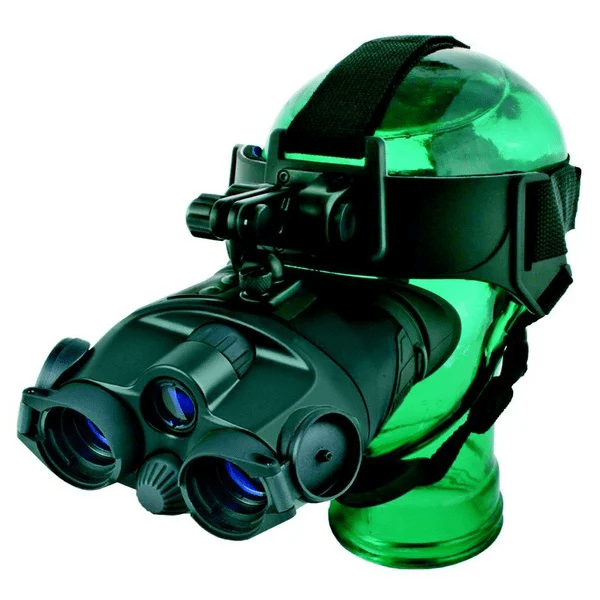
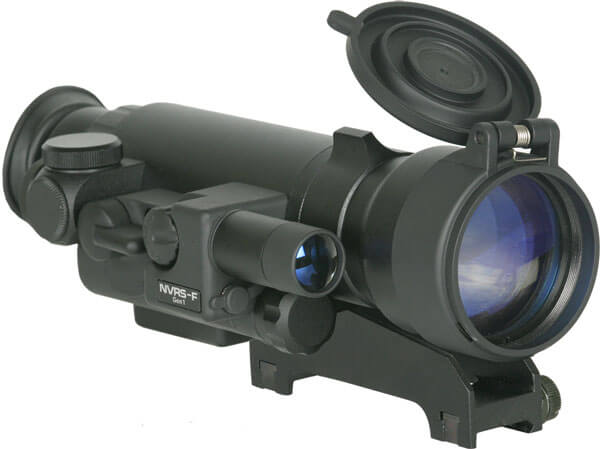
So take these cheapie eastern night vision division devices: Good for a range of 150-200 meters depending on context, around $700 a pop. Both goggles/binoculars and rifle scopes for different contexts.

Yukon Tracker
Yukon NVRS Scope

To equip the line personnel (defined here as those in the actual fighting regiments/brigades) of one small division in the absolute most oversimplified fashion would be around $7-10 million, depending on the exact size. Getting around 5,000 sets, but then there comes the hard part: Maintaining 5,000 sets, keeping track of 5,000 sets, making sure that those 5,000 sets aren’t lost (via honest or dishonest means…), and so on.

Now apply this to almost any even slightly expensive piece of military equipment and you can see why, for instance, Egypt still issues its draftees equipment left over from the Yom Kippur War. That’s an extreme example, but you can see how even the individually “cheap” stuff can be expensive, particularly for less funded armies. And you can see both the political and military advantage of reserving such a thing for “elite” units if one has no choice but to only acquire a limited number of said items.

And you need a lot of stuff, to the point where it’s almost an “I, Pencil” situation. Boots, uniforms, load bearing equipment, helmets, packs, shelters, it all adds up. The bottlenecks can appear where you wouldn’t think they would. For instance, many people know of WWII Germany’s fuel shortages, and historians know of their special alloy shortages, but what a lot of either don’t know is of their cotton shortage resulting in less effective leather load bearing equipment.

Review: The German Aircraft Carriers

The German Aircraft Carriers

A book devoted to German aircraft carriers could have all the pages be blank and still be technically accurate. After all, the decision to not go ahead with them was one of the very, very few good ones the country made in World War II. But Simon Beerbaum’s work on them manages to show an excellent train of thought. For most of the actual writing and layout quality, what I said about the Russian carriers book applies just as well to this. What’s interesting is the content.

You might think that a compilation of never-built German designs would have a lot of weird ones as gargantuan as they were impractical. And you would be right. But there was a method to the madness of several. Intended as commerce interdictors, the carrier designs mostly had substantially large gun armament but smaller airwings. They resembled a pre-missile version of the Kiev “air carrying cruisers” in that regard. The book also covers postwar helicopter/VSTOL designs proposed by shipyards for export customers. It’s an interesting look at an interesting set of designs.

Review: Hitler’s Last Levy

Hitler’s Last Levy

Hans Kissell was chief of operations for the German “Volkssturm” (lit. “People’s Storm”), the infamous last-ditch militia created at the end of World War II. In Hitler’s Last Levy, published in German in the 1960s and translated decades later, he told their story. It’s an interesting look at a horrific footnote.

The Volkssturm was both a desperation formation and Martin Bormann’s attempt at making his own pet army (like the SS was for Himmler or the Luftwaffe ground formations were for Goering). Kissell goes into detail and includes a massive amount of direct primary sources. While this is a work by a German WWII commander, its subject matter makes it at least a little better than the usual “we fought in our unstoppable kitty-tanks until we ran out of ammunition and fought totally cleanly” memoirs. It’s impossible to portray the ragged old men as some kind of super-army, and they had far less opportunity to commit war crimes simply because by that point they were losing. And Kissell doesn’t hesitate to point to their (many) weaknesses.

Because of this, and because of the wealth of primary sources and details (for instance, describing how on paper, some Volkstturm battalions had an organic battery of captured anti-tank guns), I recommend this for anyone wanting to know about them or similar emergency territorial formations. Yes, it’s dated and slanted. But it’s not nearly as bad in those regards as you might think.