Review: Firefall

Firefall

Ed Ruggero’s Firefall was a disappointment.

On paper, it had a lot to recommend. It was written by a veteran Ranger. I heard good things about his premier novel, 38 North Yankee (which I still haven’t read yet). Because of these, I had high hopes for it.

Sadly, it was a let-down for two reasons. The first was the simple prose. It’s just ‘meh’. Not absolutely bad or unreadable. Just “meh”, a middle of the road cheap thriller that was firmly in the forgettable middle of the pack. The second is the plot, a rare case when the post-USSR scramble for different opponents turned out poorly. The zombie sorceress in charge of coming up with the opponent pulled “neo-fascist German militia” out of her hat.

This made me disappointed in it. It probably made me disappointed more than I should have been, but still. The zombie sorceresses were purely and simply unnecessary. The list of potential opponents that can credibly threaten a ranger company/battalion is much, much longer than the remaining national-level challenges that technothriller writers tried desperately to find. What would be a mild opponent (in big picture terms) to a heavy brigade is something far worse to a light, unconventional one. In many cases, the ranger unit would need every force multiplier available to not just get crushed.

So what I was hoping for was someone using genuine expertise to lend a slightly fanciful story a hand. What I got was merely decent prose in service to a story that exemplified a bad trend in action/technothrillers. Namely, taking an out-there concept/threat and treating it in a bland, po-faced way.

Firefall is not bad, and viewed in another context it would work as a “51% book”, but I still found it disappointing.
Snippet Reviews: June 2019

So this “snippets” feature is here so I can share books I recently read, but which I would struggle to write in a longer review. So here it goes.

Third Law: Let It Burn

Third Law: Let It Burn is the sort of throwaway cheap thriller it’s hard to write about. It’s at the prose level of a lower-grade self-published book and with a lot of really blocky paragraphs. But at the same time it’s not totally bad, and it worked for a day’s read. The only thing really interesting is that it’s one of the first books I’ve read since Ian Slater to have a domestic militia as the antagonist.

Sweetwater Gunslinger 201

William LaBarge’s Sweetwater Gunslinger 201 is basically “Herman Melville, but with aircraft carriers”. This is not an insult. It’s the story of fighter pilots on an aircraft carrier, not facing any technothriller-level threat (but indeed facing the Libyan Air Force over the Gulf of Sidra-it had to have some action). Good for what it is.

Texas Lockdown

Robert Boren’s Texas Lockdown is the first book out of thirteen in the Bug Out: Texas series, which is itself a spinoff of the Bug Out series (13 books) and Bug Out California (15 books). It’s a combination invasion novel, survival novel, and (unsubtle) political novel. It’s adequate, if cliche, and its focus on the characters makes it better than some. But I’m skeptical as to it being a good starter for a series that long.

Review: Atlantisch Crusaders

Atlantisch Crusaders

Collin Gee’s Atlantisch Crusaders tells an alternate history tale of World War II. Namely, it tells the story of an armistice in the west that leads to the formation of an Anglo-American volunteer unit in the Waffen-SS that joins Barbarossa. Now the reputation of World War II fiction, especially concerning those two letters, had me on very, very high alert. I was not going to give it any slack.

In literary terms, it was neither as bad or good as I feared. Historical war fiction isn’t really my cup of tea (I read this primarily because of the alternate history aspect and likely wouldn’t have if it had been a straight historical war novel with volunteers from another country), so I’m not the best judge. It’s not as bad as it could have been (the writing isn’t too bad) but it’s not also not as good as it could have been (the writing is dry and a little AAR-y). So if this was the story of a totally fictional war between Teutonia and Krasnovia without any other context or baggage, I’d have dismissed it as a “49 to 51%” book and left it at that.

But it isn’t. And alarm bell after alarm bell roared in my mind as I read this book. There’s a mention of the “unique comradeship that set the Waffen-SS apart from other forces” early on. Then they cross the border, and the words “hordes” and “human waves” are used to describe the Soviet counterattacks. To be slightly fair, the book does take place in 1941, when the skill gap between the two armies was at its height-but remember, no slack.

But then there’s the whitewashing. One of the first things the legion sees as it enters the USSR is the aftermath of a massacre-committed by Stalin’s security forces. Then there’s tale after tale of captured members of the Atlantisch Legion and their brutal, cruel fate at the hands of the Soviets. It’s not ahistorical, but the one-sidedness combined with the overall tone of the book made me uneasy, to say the least.

In contrast, it takes about 2/3s the length of the book before some of the SS volunteers finally commit an atrocity-and it’s one they’re quickly punished for, and one which many feel “uneasy” about. There’s the handwringing of “oh no, these war crimes are happening”, with the whole “Look, we’re the good noble warrior Waffen-SS, we’re not the murdering Totenkopfverbande-SS” dodge.

Even the nature of the battles the legion fights, with many spectacular affairs against Red Army regulars and their huge arrays of tanks and artillery, is both suspicious (being rear area security is more likely) and contributing to the “wehrabooism” of it all. It read like a western Cold War depiction of the Eastern Front-but it was written very recently. And the rest of the book is not good enough-not nearly good enough- to make up for the moral queasiness I felt with this.

Review: PRIMAL Origin

PRIMAL Origin

Jack Silkstone’s PRIMAL series kicks off with a bang in PRIMAL Origin. This tale of supermercs features solid action, humor that makes the characters more than just the automatons found in the worst action books, and, most importantly, a car chase in a Toyota Prius (it’s a bit of a long story).

This is the kind of book that’s tough to review, not because it’s bad, but because I find it a lot easier to explain how I didn’t like something than how I did. Well, I liked this book. I liked it a lot. As a cheap thriller, it’s excellent and hit all the right notes.

Review: Starship Troopers

Starship Troopers

sstcover

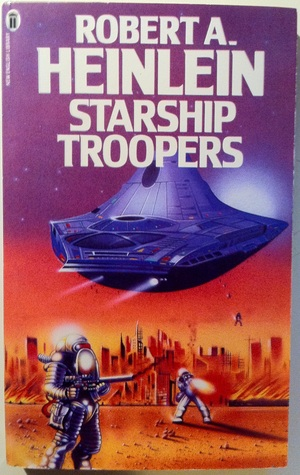
Ah, this book. Starship Troopers is a misunderstood classic. It’s also something where the influence is worse-considerably worse- than the content of the book itself. Heinlein’s famous tale of the Mobile Infantry deserves a lot of scrutiny, and it’s very, very hard to give a “conventional” score.

For the book itself, if the average military sci-fi cheap thriller is an apple, this is definitely an orange. Viewed as a coming of age story, a training story with realistic drudgery, and (however worthy or unworthy the politics) a political piece, Rico’s story is better than it would seem from the perspective of “how many explosions are there?”. If I had to give a critique of the orange that’s independent of that, I’d say the writing tone is a major problem.

The book is written in a sort of, for lack of a better word, “Gee-whiz” style that I recognized from another Heinlein book of the time I read, Tunnel in the Sky. This style happens to not go well with any of the elements. Not the “Space Herman Melville”, not the politics, and not what action there is.

If it was just an orange,  I’d feel better about it. It’d just be a type of orange that I could personally dislike to a degree, but still understand why others would like the taste. However, it’s an orange that influenced a whole lot of apple farmers.


When reading military sci-fi and then reading what I call “contemporary action”, there are differences that drag the former down. Perhaps the most obvious, and the most obviously taken from Starship Troopers, is filling every first part of the first installment with training. Contemporary action heroes, in contrast, tend to just stride in wholly trained. There are exceptions, but those are the trends I’ve seen.

Imagine if, somehow, the romantic-ish Vigdis subplot of Red Storm Rising made the book popular to readers of romance fiction (let’s just assume the zombie sorceress mind control was particularly effective that day). Now imagine that what sometimes feels like every fluffy romance novel you read adopts the structure of a technothriller, with a lot of viewpoint characters, a lot of sitting in conference rooms giving details of little particular relevance to the (crowded out) main characters, and a general “big-picture” scope that doesn’t seem to fit the small, intimate story you’d expect from a romance. And you just stand there going “no, no, Red Storm Rising wasn’t a romance, it was the story of a third world war! It didn’t really fit but people are copying it anyway!”

That’s what Starship Troopers has done to military science fiction. I don’t want to put too much blame on it or any one book, but it’s a definite influence in that negative direction, and, apple or orange, I don’t see the original as being good enough to make up for the way it pushed its genre down the road of the (pun very much intended) “spacesuit commando.”

Review: Blood Ivory

Blood Ivory

befbloodivory

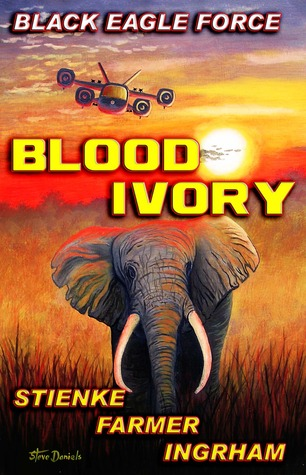
Blood Ivory is the fourth entry in the Black Eagle Force series, detailing the super-team in their super-VTOL aircraft as they face terrorist poachers and cruise ship hijackers.

It’s also where the series simply collapses like the Hornets did in one infamous 2009 playoff game. Almost everything good and distinctive about it isn’t there, and everything that’s bad and derivative about it is. The names get even worse, and the politics (particularly at the “climax”) go from “stupid, wish-fulfilling, and strangely charming” to “stupid, wish-fulfilling, and creepy”.

But those are the least of its problems. There are two bigger ones.

  • The fundamental flaws with the rest of the series are there, and made even worse by a descent into jumping technothriller plots.
  • Substantially worse, the central “more Mack Maloney than Mack Maloney” gimmick is tossed aside almost completely. Past BEF books, particularly the first two, had opponents suitable for the super-VTOLs. This one just doesn’t.

What’s left is what amounts to two intertwined fourth-rate “small unit thrillers” that have, you guessed it, most of the weaknesses and few of the strengths of that subgenre. They’re too silly to be good “serious” thrillers by far, and they’re too mundane to be good “goofy” thrillers.

It’s uncommon to have a book series misfire so dramatically in one entry, especially one without excuses like editorial pressure (this series is self-published) or changes of writers (not evident here). But this book misfires indeed. It’s like the time Captain Beefheart tried recording “normal” music, taking something where the eccentricity was the biggest draw and leaving only mush.

Review: Citizen Warrior

Citizen Warrior Series

J. Thomas Rompel’s Citizen Warrior series is an interesting example of how the “lowbrow cheap thriller” series has evolved and in some ways gone full circle, as well as an example of how external political changes can affect writing. It’s also something that goes from “kinda OK” to “kinda not OK”.

The first book,  The 4th Branch can be viewed as just another throwaway cheap thriller. The plot, aka “STOP THE TERRORISTS AND THEIR DRUG CARTEL ALLIES”, is not distinct even by cheap thriller standards. The characters are barely there, with the most development given to the cliche stereotypical puppy kicking antagonists. The right-wing politics are axe-grinding and constantly reinforced.

As an action novel (when it finally gets going), it’s merely decent. Better than a flop or even “51% novel”, but not at the level of one of the all-time greats. But what it is a good example of is a genre that’s going full circle. It’s a return to the “vigilante” style of cheap thriller.

The prevailing style (there were obviously exceptions) of cheap thriller protagonist in the 1970s was the “vigilante”, following in the wake of Mack Bolan. In the 1980s, as evidenced by Bolan himself, it shifted to the “secret agent” paradigm. This returns to outside-the-law vigilantism. For someone like me who overanalyzes cheap thrillers, I thought it was interesting.

The second book, One Down, is only interesting in how changed political circumstances can change some of the tone of a novel. Let’s just say that the first was published in 2016 and the second was published in 2017. Other than that, it kind of fails.

The politicization gets tiresome and makes the main characters look like whining complainers, not determined heroes. Most of the heroes and villains are the same, the new ones aren’t interesting, and the stakes are arguably lower than in the first book. The action isn’t any better, and one scene where the heroes far too easily take on foes that include machine gun-carrying technicals felt a bit too far.

That is also interesting in that it dips a little bit into the “secret agent” type of thriller, unlike the clear “vigilante” style of the first book. This study is more interesting than anything actually within the pages of One Down.

Guns of Cheap Thrillers

I’ve found there are three main categories of firearms writers use in cheap thrillers. I want to note that all three can be done well or done badly, and that even them being chosen poorly is almost never a story-breaker on its own.

Category A: Generic

Common to people with little knowledge of the subject matter, Category A firearms tend to be fallbacks on the most generic, widely used, and widely known boomsticks. Stuff like “M-16s, AR-15s, AK-47s, Glocks”, and “RPGs”.

Done Well: Common weapons are common for a reason. In many, arguably even most cases, you don’t really need to know the exact details. Just “the guard had a Glock” or something along those lines can do in many cases. Or even less.

Done Poorly: When it’s clear the author wasn’t doing much research and just took what they heard. This is clear when it’s accompanied by an incorrect caliber or some other fairly obvious detail, ie, one thriller with a “.25 Glock”. Often this is a “brown M&M” (from an infamous Van Halen contract that had a request for a bowl of M&Ms but no brown ones to make sure the contractors were reading it closely) that shows something else is off.

Category B: Specific

This ranges from knowing the specific kind of what a certain country/organization uses to the kind of exact descriptions [certain obscure AR-15 variant by certain obscure company] in [certain obscure caliber] with [certain obscure accessories] firing [exact weight of the bullet].

Done Well: In many cases, it’s more accurate to have someone who, for whatever reason, doesn’t use the most common firearm. It can add legitimate flavor and be a “bowl without brown M&Ms” in a good way.

Done Poorly: Besides the inherent issues with overly detailed exposition, this can be jarring if its combined with bad research in regard to something else. That something can even be other weapons-I’ve found super gun-exposition and terrible detail in anything bigger than a belt-fed MG. It’s like a sports story where the car used to drive the characters to the stadium is overly detailed (“A 1999 Ford Crown Victoria LX with a 4.6 liter V8…”), but then once they get there, says “And then they watched the Yankees win the Stanley Cup with twenty dunks.”

Category C: Exotic

There’s a lot of overlap with the first two categories here, but I feel it’s worth mentioning. Basically, “exotic” weapons that are very big (Desert Eagles! .44s! .44 Desert Eagles!), operate on a very unconventional system (The infamous G-11), or both are a staple of classic action-adventure fiction.

Done Well: I don’t fault an author for wanting to throw in their favorite obscure “pieces”, I do the same in a lot of my CMANO scenarios with aircraft and ships, and especially if they know what they’re doing, it can be fun. Like knowing the impractically of a Desert Eagle but giving it to a Ziggy Sobotka-esque dummy as a sign of his style-over-substance personality, or knowing the legitimate advantages/capabilities of an exotic and using it.

Done Poorly: This can have the flaws of either category, amplified by the nature of the weapons themselves. The “common exotics” lean more to Category A, while ones the author has a specific liking to move more to Category B.


Review: Strike Vector

Strike Vector

strikevectorcover

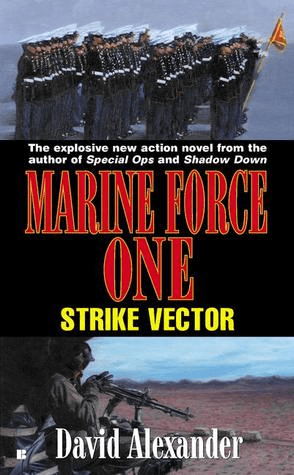
Strike Vector is the the second book in the Marine Force One series. Whereas the first book was a 51% book, this feels a little worse.

The plot deals with Marine Force One going on a mission to stop smuggled superweapon MacGuffins from reaching Saddam Hussein (this book was published in 2002). The opening part has a lot of badly written sexual sleaze to it (guess how much that adds to the novel), and the main action portion, as Maj. Saxon and his team fight their way through the Middle East, has such wonders as an AC-130 engaging MiG-29s in aerial combat and managing to destroy one of them before being shot down.

As for the main event, it has three problems. The first is the devolution of its main character. In the first book, Saxon was an ass. Here he’s an undeveloped trigger-puller who’s just there to fight and be present for the battles.

The second is that the battles themselves never really rise that high. The writing on them is still very much at the “51% level”, and the main characters are a little too capable for the tone. The character of Maj. Saxon may be toned down, but the fighting capability of Maj. Saxon is still very, very great. The third is that there are a few too many gimmicks in the action scenes, a few too many fights for the sake of fights.

The result is a slightly worse-than-normal entry in a middling series.

Review: Contract For Slaughter

Contract For Slaughter

contractforslaughtercover

The first book in the “Eagle Force” series, Contract For Slaughter was released in 1989 by Dan Schmidt, a veteran of the action-adventure genre who wrote literal dozens of Mack Bolan tales. Coming close to the tail end of the 80s action-novel boom, it provides a very, very good example of it.

It’s a team-centric book where a group of colorful mercenaries in the low single digits (in this case four people) form and fight. This is both a first installment (so it has a not insignificant space devoted to the “forming” part) and it’s short (so there’s less room for the final fight). Though to be fair, a lot of the “forming” segments involve fighting too. Lots and lots and lots of fighting. The action is solid for a book of this genre, even if not the absolute best, and Schmidt wasn’t afraid to throw a curveball in terms of the plot and enemies.

What stood out to me, at least a little, was how the weapons were basically 80s Action Novel Bingo. What felt like every single flashy and exotic writers toy showed up in the pages of this book. Ooh, big MM-1 grenade launchers! Ooh, super-advanced G11 rifles! And of course, the classic giant pistols (can’t forget them). Even Jerry Ahern’s beloved Detonics show up as well.

This was one of the cheapest of the cheap thrillers, but I had lots of fun with it nonetheless.