Hungary’s Humongous Divisions

In the late 1940s, Hungary, fresh off Soviet conquest and the statistical worst hyperinflation ever recorded, was rebuilding its military. Not surprisingly, the plans reportedly called for a force structured along Soviet lines and doctrine. But surprisingly, the centerpiece was on ridiculously large infantry divisions. How large? Paper strength of at least 25,000 people, but that doesn’t describe all of it.

No, comparing the number of infantry battalions ultimately under divisional control draws this insanity into better perspective. The archetypical triangular infantry division has nine (three in each of three regiments/brigades). The square division largely rejected as too big and clunky had twelve (three in each of four regiments). This had sixteen. Four regiments of four battalions each.

There’s a reason why these actually weren’t made and why, even beyond the impact of the 1956 rebellion and short leash, Hungary’s army in actuality remained conventionally Soviet-styled for the rest of the Cold War.

Review: Hell to Pay

Hell To Pay: Operation Downfall and the Invasion of Japan

With the atomic bombing in the news thanks to the Oppenheimer movie, I figured I’d had to take a look at D.M. Giangreco’s Hell to Pay, an analysis of what would likely happen if the dreaded invasion of Japan was likely launched. Spoiler alert: Hundreds of thousands of Americans and over ten million Japanese would have almost certainly been killed.

With clear and concise arguments that cite primary sources from both sides, Giangreco makes the case very convincingly. With their backs to the wall and years of experience and preparation, the Japanese would face a strung-out American fleet. This book certainly gives credibility to the statement that the atomic bomb was actually the most humane choice.

Those interested in WWII or alternate history should definitely read this book.

The Wargirl

Made in Stable Diffusion

Anyone who’s seen my retweets knows how much I like tacticute. And Stable Diffusion gives me the chance to make tacticute in a variety of styles, clothes, and poses. The styles of these military women trend away from the fluffy model and more towards the semi-practical. I tend to give them shorter hair, and in the more photorealistic models, a rougher, harsh edge to their appearance. They may be tigresses worn down by the horrors of what they serve in, but they still have a kitten on the inside. But I digress..

Anyway, for the sake of fiction (obviously real life policy is complex and depends on so many factors), I must admit towards having my military females tending to be something other than armored infantry grunts. (All Union’s Cholpon is a medic, something women have done in battlefield support for thousands of years). Besides that, there’s vehicle crews, agents, even things like the descendants of the WWII Soviet scout-snipers. It’s not keeping them in the back and it’s definitely still putting them in harms way.

Even if there’s a mitigating factor in-setting (ie power armor,magic,even just the tone of things), I still have this bias. And I don’t mind if it’s done right, nor do I think it’s impossible to do right. I guess it’s just a partially subconcious reaction to the trend of “strong female girlboss who’s 5 foot 2 and scrawny and can do the most stereotypically masculine things better than the men can”.

Review: Nixon’s War

Nixon’s War

Rick Kester’s Nixon’s War is one in an “alternate presidents” series of alternate history novels. How is it? Well, uh, not very good.

This alternate Cuban Missile Crisis gone hot starts in a conference room. And continues in a conference room. I can sympathize trying to balance exposition with storytelling (after all I’ve had to do it myself many times). This doesn’t really strike a balance. Especially as it jumps to everyone from Lee Harvey Oswald to Elvis Presley to random civilians. All of whom talk like they were in a conference room.

(There’s a lot of exposition, ok?)

Anyway, the B-59 goes ahead with the nuclear torpedo launch that it avoided in real life, and World War III begins. This is at least a slight improvement over the conference room mania, simply because you can’t make a nuclear war completely boring. However, the exposition continues apace. Worse, it’s not even accurate as constant references to “5.7mm” bullets are made, a caliber that didn’t come into being until decades after the events of the book. And apparently the US Army is adopting the Browning Hi-Power (I guess the author likes FN weapons?)

The last third of the story propery after the (realistically) skewed war is mostly just people bumbling around in an uninteresting fashion. The reader is treated to philisophical debates and infodumps on everything from child care policy to plutonium reactors. In fact, the final section of the book is nothing but historical exposition. And this isn’t a small afterward-it’s about a quarter of the whole thing!

I don’t want to be too hard on this book. It does sincerely try to have a wide variety of characters reacting to World War III, does have a large number of battles, and tries to be a good “big war thriller”. It just doesn’t really succeed, which is a shame.

Rediscovering Attrition

Every so often an observer will encounter a war (the Ukraine conflict being the most recent) and then find that numbers, firepower, and the dreaded capital-A Attrition still matter, as they always have. Some of this is just seeing technological hype being inevitably worn down by realistic imperfection. But more of it is just because of the annoying way the Liddell-Hart/Boyd/Lind “MANEUVER WAR” crowd has wormed its way into military discourse.

Ok, so a lot of it is just WWII mythology of the Germans running circles around the French. But guess who’s amplified all that? Yep, the maneuverists. And in Liddell Hart’s case going all the way back to the first ever recorded battles where the “Indirect Approach” always won. So much as how people become legitimately shocked when, after a long dose of Pierre Spreyism, it turns out a new piece of military equipment actually works, they also become shocked when it turns out that fortifications are indeed viable if not essential, that the Big Breakthrough is hard, that maneuver has limits, and that there are few substitutes for force and attrition.

Studying actual doctrine even in maneuverist periods doesn’t make one surprised. After all, a Sov Kras Don Circ Heavy Opfor operational maneuver group gets going with a massive breakthrough concentration of firepower and stays going through mobile organic firepower. But going by popular media does.

Review: For Whom The Bell Tolls

For Whom The Bell Tolls

It’s not often that Fuldapocalypse reviews a genuine classic, but today it does with Hemingway’s For Whom The Bell Tolls. There’s pretty good reasons for this. Classics are either deserved legends or overhyped clunkers in my eyes. Guess which one this is.

This story of Robert Jordan, an American volunteer in the Spanish Civil War, is a slow, dull, and most of all pretentious slog. And get used to seeing “Robert Jordan”, because Hemingway spells his full name out in basically every single mention. He also has Spaniards talk like the King James Bible or Silver Age Thor. I was basically going “Ok, that bridge that ROBERT JORDAN is sent to destroy had better have the whole fate of the war hinging on it” not long into the book.

Maybe this would work for someone else. But it didn’t for me.

Review: North Korea’s Hidden Assets

North Korea’s Hidden Assets

H. John Poole returns to Fuldapocalypse with North Korea’s Hidden Assets, a warning about how North Korea may be stronger than anticipated. Or rather, that’s a central message in a meandering book. The content here ranges from loooong descriptions of Iwo Jima fortifications (because as a country occupied by Japan, they were undeniably influenced by its doctrine. Legit link, but not worth the obsession he shows) to constant tirades against the clunky, idiotic American doctrine and how the North Koreans have so much better military culture and small unit tactics.

Some of the book’s arguments are good. Poole spends a lot of time legitimately arguing against mirror-imaging a Second Korean War as being a repeat of the mechanized charge to take the entire peninsula that was the first. He argues and reasonably so that the north would be more likely to bite, hold, and wear the Americans and southerners down to win at the peace table. And the fortifications and tactics from the first Korean War are at least more relevant. So are the surprisingly few times he looks at contemporary North Korea (the nominal point of the whole thing)

But this book is mostly axe-grinding. It’s also hypocritical in that Poole portrays it as some kind of secret hidden source when almost all of its analysis comes from official US government documents-showing at least someone else already there knows of a worst-case perspective on North Korea. There are much better serious studies of that opponent out there.

Defenders of the Danube

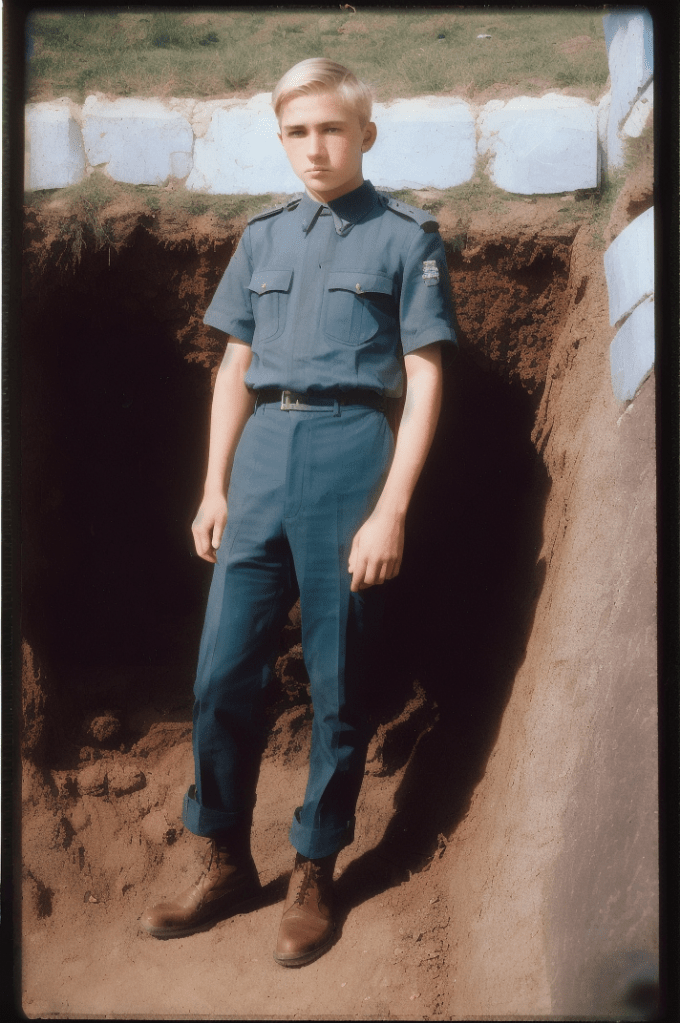
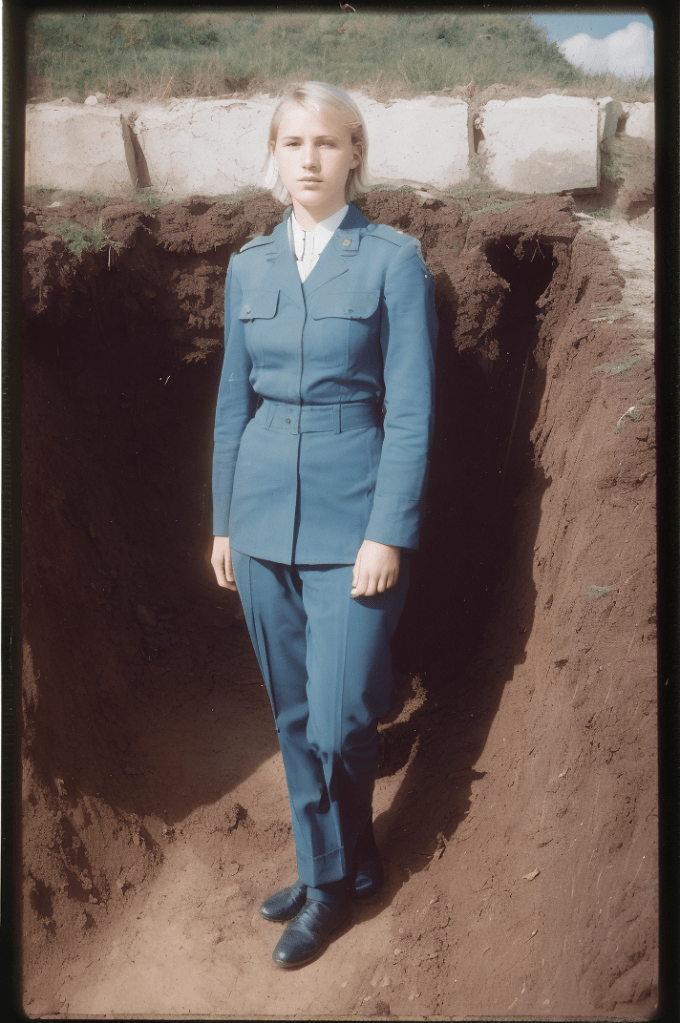
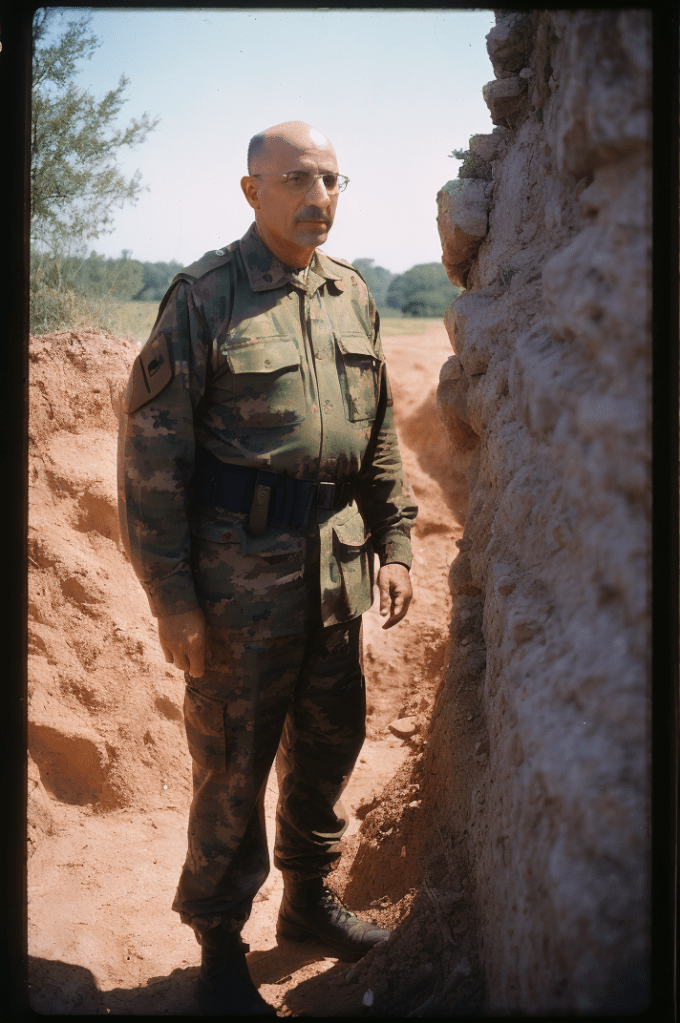
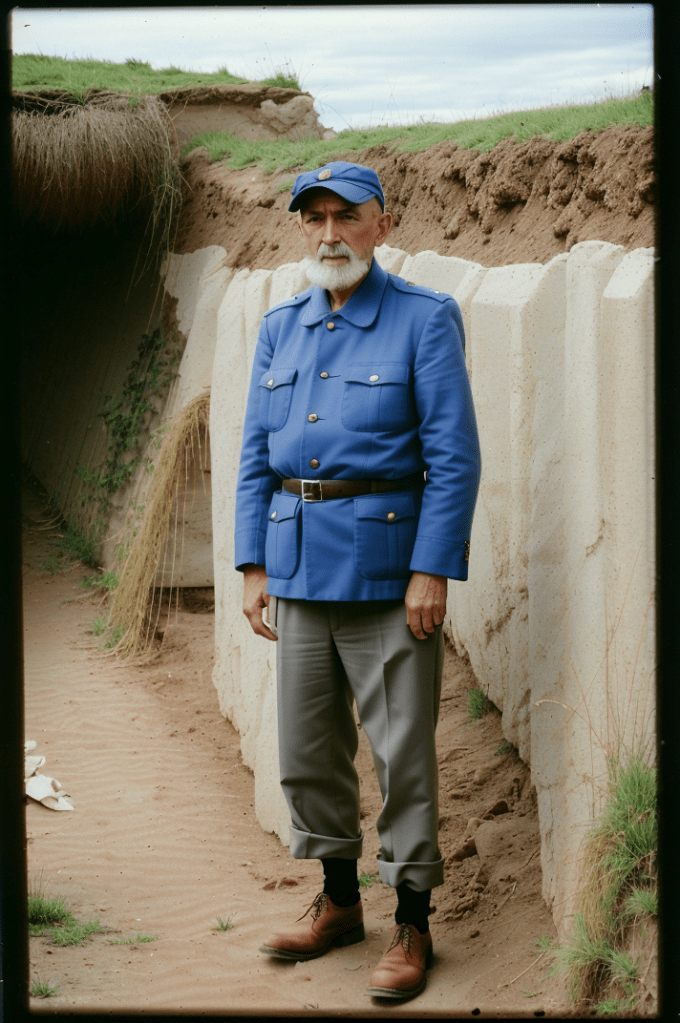
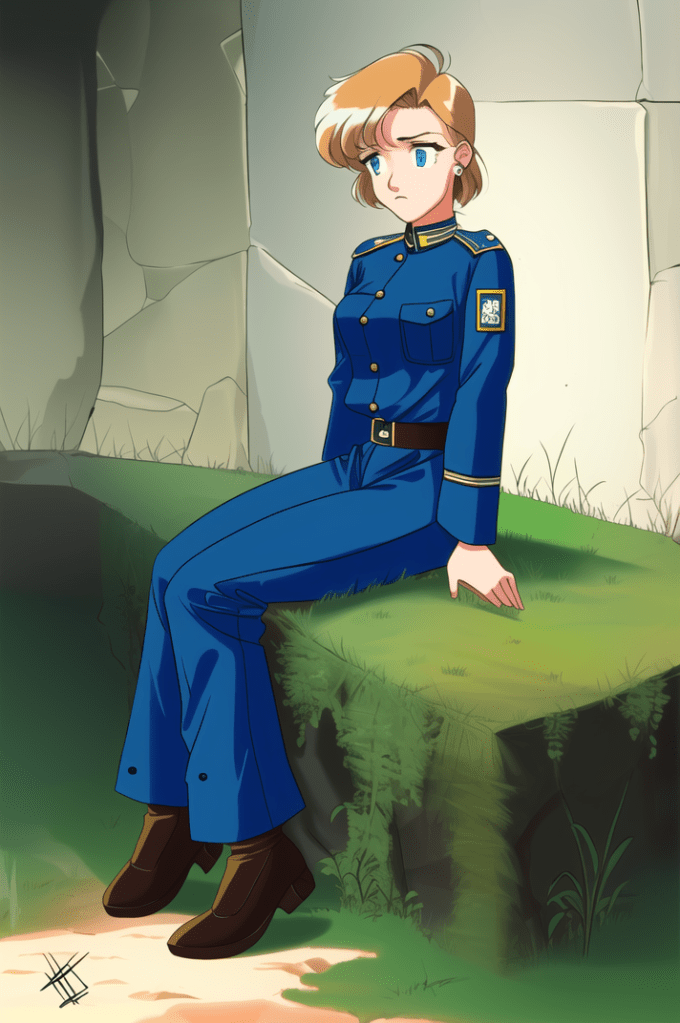
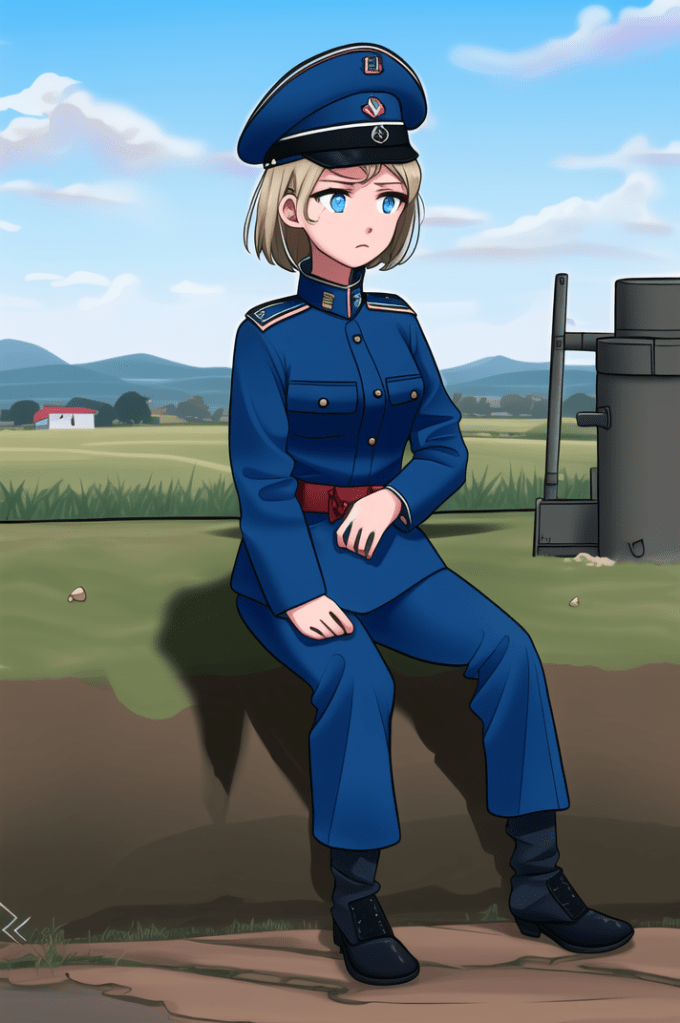
The narrative of the Soviet-Romanian War in All Union focused largely on the northern front, where advanced mechanized units burned through the Romanian countryside in a rapid (but not bloodless) stomp. However, by far the hardest going was the southern front, a push across the Danube with Soviet and (majority) mobilized Bulgarian troops.

Shown here are several of the Romanian defenders in fortifications prior to the battle. Most of the troops in the fortified positions were mobilized Patriotic Guards , almost all from areas ineligible for the (itself stretched and mobilized) regular army: Women and men both too young and too old for “regular” service.

There was very little standardization for these desperation formations in terms of either equipment or uniforms. The blue uniforms designed for the Patriotic Guards can be seen in these [pseudo] photos and drawings of them in the fortifications prior to the war, but so can plain and camouflage uniforms.

All pictures made in Stable Diffusion.

Note: Stable Diffusion, at least the models I use most, is currently not very good at doing exact military equipment pieces well. Hands are pure genius in comparison. Hence why I don’t have them actually holding weapons. You can justify it by saying that the Securitate was afraid of mutinies or wasting ammo. -C

Seleucian Special Forces APC

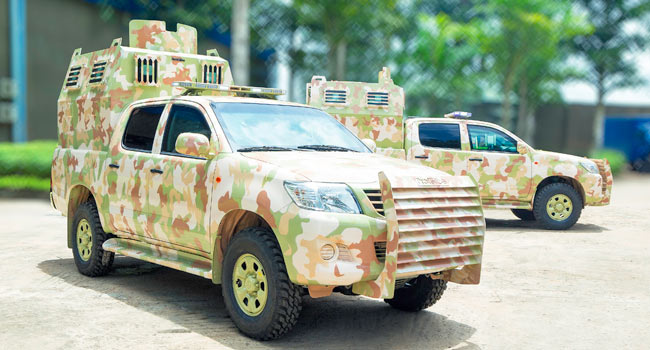
Stable Diffusion gave me a chance to make something I’ve long imagined: A truck-APC belonging to a Seleucian (one of my OPFOR countries) Motorized Special Forces unit. First, the picture itself.

There are many existing heavy-duty pickup conversions like this: An armored pickup with the bed replaced by a capsule that’s even more fortified.

(You get the idea)

Now for their organization: Seleucia’s large “Special Forces” components are motorized to varying degrees. The quotation marks are because few of them are what NATO would consider “special forces”, with many being simply conventional troops with better training and motivation than the other ragged masses of that country’s huge army. Still, Seleucian motorized SF have shown their capability.

A Seleucian motorized SOF battalion is similar to a light infantry one, only with armored personnel carriers. As the mere “transport” capacity is prioritized, motorized SOF often ride in older and/or cheaper vehicles-like armored pickup trucks. APCs frequently hide after dropping off their dismounts. A common defensive tactic for Seleucian commandos is to drive close to an ambush site, conduct the ambush on foot, then scramble back to their carrier and move to another one later on.

However, it is not uncommon for Seleucian motorized SOF to accompany heavy units of tanks and SPGs in conventional operations. Here they fight similarly to Stryker/BTR style infantry in faster wheeled APCs of other countries. In conventional defensive operations, motorized SOF have a somewhat unusual role as mobile antitank detachments. Thanks to their skill, mobility, and flexible organization, SOF battalions with large amounts of of anti-armor weapons can be used similarly to the tank destroyers of other nations.

The Saxon and BTR-152 are examples of the basic style of APCs frequently found in Seleucian motor SOF units. Tracked vehicles, mostly basic ones like M113s and MTLBs, are rarer but not unheard of, especially where the terrain suits them.