
A while ago I did a post on the various Sovereign Union Mobile Corps in All Union, which included their “mascot” animals that appeared on each emblem. Now that Stable Diffusion XL has been released, I’m delighted to say that their logos became a reality. (Note: Some are rougher than others. Goal was general idea)
17th Corps

Starting things off is the 17th Corps that heroine Cholpon Murad-Kyzy served in during the Soviet Romanian War. Its mascot is the Huma Bird, and I chose the output/prompt that didn’t look so much like an eagle. Located in Central Asia, it serves as the de facto strategic reserve corps, being ready to go east, west, or south in equal measure.
5th Corps
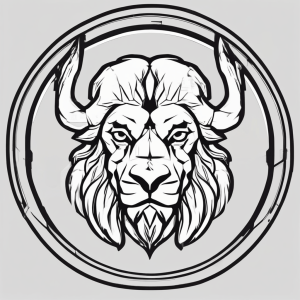
The Belarusian 5th Corps is a bison. Historically, it was the only such corps actually made (and not have a bison as its symbol.)
7th Corps

The 7th Corps is an elk. Not much else to say about it.
26th Corps

The Northwestern TVD’s 26th Corps has the Karelian Bear Dog as its mascot animal. It did not participate in the Soviet-Romanian War, but in the event that the All Union and Northern Fury timelines were fused into one combined World War III, it would be the central Soviet force in Norway.
28th Corps
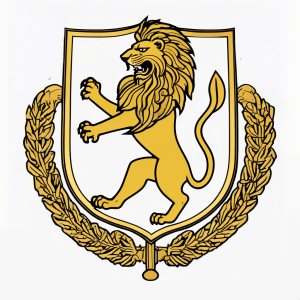
The Lviv-centered 28th Corps is one of the main units opposite new archrival Poland. Its symbol is a fairly plain lion.
64th Corps
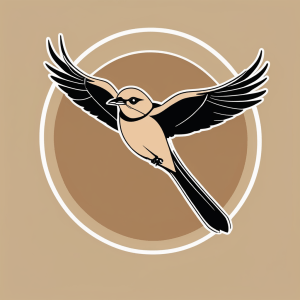
The Donbass-garrisoned 64th Corps was in many ways the “pet” unit of legendary reformist president Anton Yatchenko, who happened to come from that area. Its symbol is a nightingale, and it was one of the key units in the Romanian War.
32nd Corps

The Crimea-based 32nd Corps was the only such one to serve in the southern Danube Front, and it only entered the battlefield after the initial Soviet-Bulgarian force had established firm bridgeheads on the northern side of the river. It’s the corps with the most focus on amphibious, airborne, and light infantry operations. Rumor has it that part of it is earmarked for a separate attack on Iceland. Its mascot is a hippocampus, a mythical literal sea horse.
43rd Corps

With its cartoon mosquito being the most whimsical logo of the entire army, the 43rd Corps is the primary mobile corps opposite the old and rising enemy: China. Because of this, it was never even considered being sent west to Romania in 1998.
57th Corps
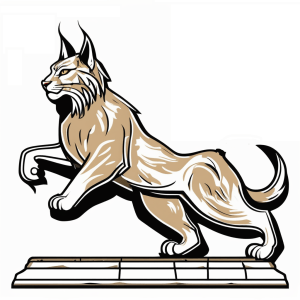
The leaping lynx that is the 57th is the other Far Eastern mobile corps. Like its “brother” the 43rd, it did not fight in the Romanian War. However, it was on standby along with the 26th in case a second mobilization and major operation needed to be launched (it didn’t).
 Fuldapocalypse Fiction