Review: Starmada

Starmada 30th Anniversary Edition

I was looking for something to scratch my spaceship wargaming itch. A set of generalist rules that you could apply to basically any setting and have a semi-reasonable approximation of things. Enter Starmada. Now its newest 30th anniversary edition, it lets you build and battle on the tabletop whatever ships you can imagine.

Naturally as a generalist set it lacks specific gimmicks, with anything offensive having to be translated into weapon qualities (ie a big area blast would be “proximity”, and a powerful kinetic cannon shell would be “crushing”) and anything defensive being translated to either “screens” (roll above X or the attack fails) or “shields” (takes a hit before anything else). You get the idea.

It requires some imagination. But if you have imagination and a willingness to abstract, well let me just say that even my initial crude playtesting sessions had me beaming bright. Want to play as a cumbersome pure brute force fleet going against an agile but brittle rapier? This lets you do all that and then some.
The Imperium Vs. The Death Star

So the question has to be asked: What about this?

Original source

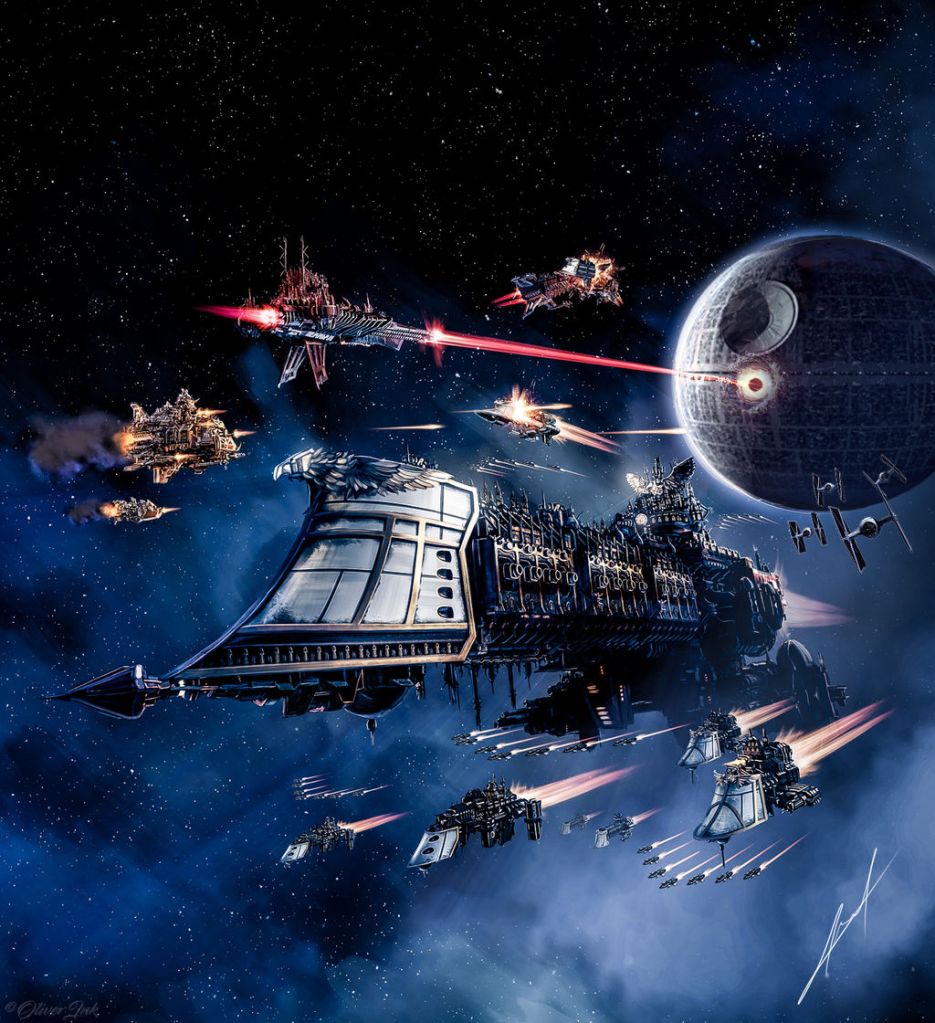
A Star Wars/Warhammer 40k crossover has to include the battles of evil vs. slightly more justified evil and feature a large Imperial Navy cathedral armada going up against the Death Star (presumably with its own array of Star Destroyers). Now I have put some actual thought into this.

  • The Imperium is not likely to be terribly fazed by the Death Star, thanks to confrontations with giant horrific superweapons being known as “Wednesday” over there.
  • If they cannot overpower it via masses of lances, nova cannons, and whatever other exotic tricks they’d undoubtedly pull out (ie psychic lashes, vortex torpedoes to just shunt it into the warp, etc…), for the main Imperial Navy it would be difficult to duplicate what the Rebel Alliance did. The reason simply is because Warhammer 40k space fighters are substantially larger than their Star Wars counterparts, and their ordnance is the same.
  • However, moving in for a pinpoint strike on a difficult but decisive target is the exact thing that Astartes were made for. So trench runs of Thunderhawks, vacuum chainsword fights, and tossing a melta bomb down the port would make for a fitting story.

Naming a Submarine Class

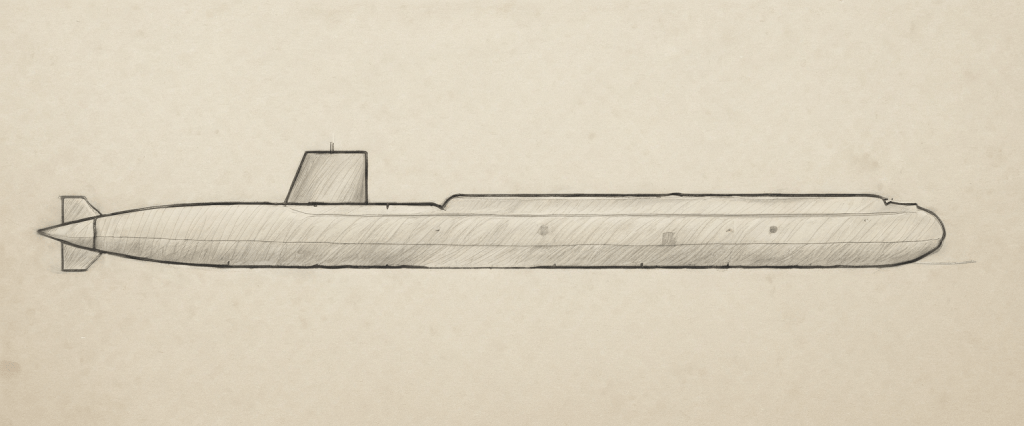
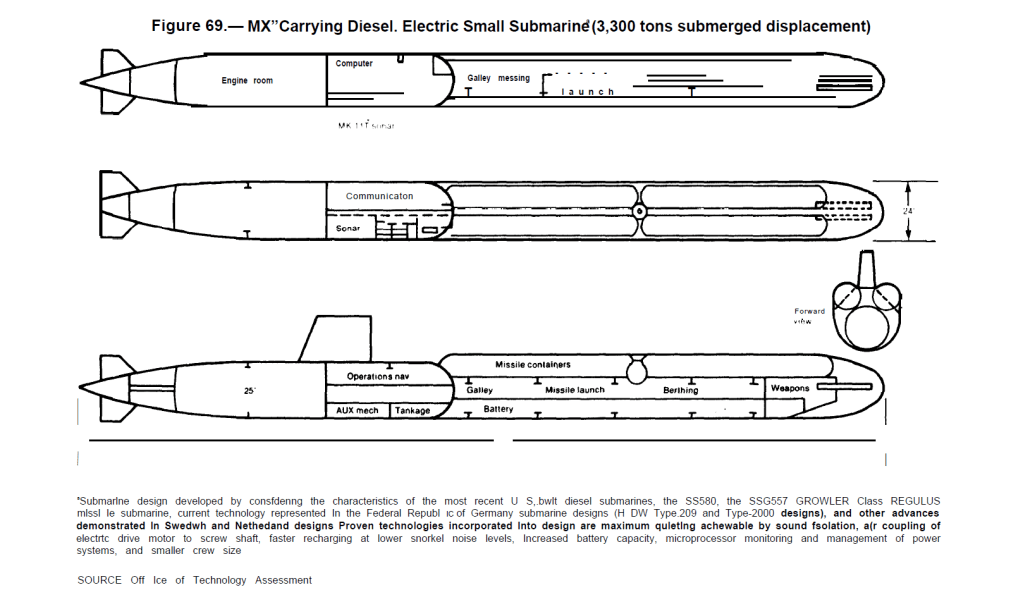
I’m torn with submarine names for the MX-SSB class, a real proposed design that I’m using in All Union

(Bottom picture made in Stable Diffusion from the outline of the sub above)

The problems are:

  • The class is large at circa 50 boats, so the naming scheme needs to support such a large class.
  • There is no historical precedent since the US never used diesel missile subs, much less in large numbers.
  • Both fish and people just don’t seem right to me (subjective I know)

I’m leaning towards lakes (ie, the Lake Tahoe class with some/all of the Great Lakes thrown in), but am wondering if there’s something that just can click. Thoughts?

Review: Black Seas

Black Seas

TK Blackwood’s 199X Fuldapocalypse (or should I say Yugoslavpocalypse) continues in Black Seas. Not surprisingly given the title, it centers around the biggest missile age naval battle ever. The centerpiece is an alternate history classic: The nuclear Ulyanovsk-class carrier (I’m still debating whether to have them be in All Union or not, btw…)

That alone makes it a guilty pleasure for me (I’m definitely including the slightly similar Kherson-class “Ivan Tarawa” large landing ships in that universe, btw…). It’s certainly able to juggle a ton of plot elements as well as any other successful technothriller. Plus it has an Iowa-Kirov showdown! (A sadly realistic Iowa-Kirov showdown, which is all I’ll say about it, but still)

So yeah, this is a worthy successor to the past entries in the series and a fun WW3 naval showdown in its own right. I highly recommend this.

Review: USS Stonewall Jackson

USS Stonewall Jackson

The book USS Stonewall Jackson is about a submarine with that name as it battles the North Koreans. Leaving aside issues with the name (which was real ), it’s also a new-build American diesel submarine. (For those rivet-counters, it’s based on the new Soryu-class).

This is basically a run of the mill technothriller, only shortened. Actually, it feels like a minimum viable technothriller, where the plot elements of such a book are stuffed into as small a space as possible (in this case only over slightly a hundred pages). This makes the technothrillery-parts that do take up pages (I’m talking rivet counts, because of course) all the more jarring.

This book basically stands as an example of why you actually need “filler”. While it may seem to be (and often is) unproductive padding, without any of it you get a distorted work like this.

A Thousand Words: Under Siege

Under Siege

Steven Seagal has had a career trajectory that very few artists have duplicated. Imagine a one or two-hit wonder who, next thing you know, is making cheap grindhouse flicks on behalf of a dictator. Well, with Seagal you don’t have to imagine.

Anyway, the lone movie of his that many people like unironically is the cheap thriller Under Siege, AKA Die Hard On A Battleship. The plot is a very simple one and involves villains taking over the USS Missouri and Seagal being the one to stop them. Look, it’s not exactly a deep and intelligent movie, all right?

Thankfully, it is a fun movie. A very fun movie. It has Tommy Lee Jones and Gary Busey as delightfully crazy and corny supervillains, a chance to see a battleship in action, and takes full advantage of its setting. I think it goes without saying that a warship is one of the better places to set a Die Hard knockoff.

Review: Memories of Midnight

Memories of Midnight

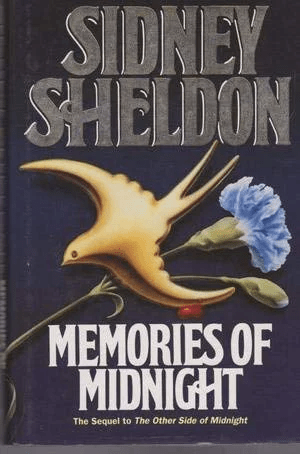
Sidney Sheldon’s The Other Side of Midnight was his breakout mega-successful novel. It is also by far the worst he’s written in hindsight. So you can guess why I was less than enthusiastic about reading its sequel, Memories of Midnight. The least interesting book and setting getting an expansion?

Thankfully, I could see from the first few dozen pages that this was better. The Sidney Sheldon formula he developed after Midnight was obvious, and that’s not a bad thing. Young Constanin Demiris is more interesting as he heads to Saudi Arabia, and Sheldon’s research into both the mechanics of oil drills and the “desert queen” phenomenon where scarce western women become fifty times more attractive in such an environment is a lot better than “here’s Aristotle Onassis”.

Sadly, we had to return to Catherine The Dull, the “heroine” of the last book before she got amnesia (long story). Which leads to a pattern in this book: When it goes back to its wretched predecessor, it doesn’t often work (although shipping tycoon Demiris is far better an antagonist than the two in Midnight, or even the past version of himself). When it stretches its legs into the world of the pop epic Sheldon excelled at so much, it works. There’s even an eerily prophetic courtroom scene where a super-defense lawyer in a high profile case uses a physical prop (I won’t spoil it) in a way that reminded me of the later OJ Simpson trial to get his client acquitted.

This weird trend makes it below average by Sheldon’s standards. But below average is still better than “bottom of the barrel”. It’s far better than its direct predecessor and in isolation is perfectly readable, but I still wouldn’t recommend it as anyone’s first Sidney Sheldon book. Even an excellent conclusion that involves a million double crosses and Chekov’s Heating Boiler (seriously, it was foreshadowed in a way that made me smile) can’t totally redeem it. But it can make for a massive improvement….

Not that that’s saying much.

Review: Hell to Pay

Hell To Pay: Operation Downfall and the Invasion of Japan

With the atomic bombing in the news thanks to the Oppenheimer movie, I figured I’d had to take a look at D.M. Giangreco’s Hell to Pay, an analysis of what would likely happen if the dreaded invasion of Japan was likely launched. Spoiler alert: Hundreds of thousands of Americans and over ten million Japanese would have almost certainly been killed.

With clear and concise arguments that cite primary sources from both sides, Giangreco makes the case very convincingly. With their backs to the wall and years of experience and preparation, the Japanese would face a strung-out American fleet. This book certainly gives credibility to the statement that the atomic bomb was actually the most humane choice.

Those interested in WWII or alternate history should definitely read this book.

Review: Nixon’s War

Nixon’s War

Rick Kester’s Nixon’s War is one in an “alternate presidents” series of alternate history novels. How is it? Well, uh, not very good.

This alternate Cuban Missile Crisis gone hot starts in a conference room. And continues in a conference room. I can sympathize trying to balance exposition with storytelling (after all I’ve had to do it myself many times). This doesn’t really strike a balance. Especially as it jumps to everyone from Lee Harvey Oswald to Elvis Presley to random civilians. All of whom talk like they were in a conference room.

(There’s a lot of exposition, ok?)

Anyway, the B-59 goes ahead with the nuclear torpedo launch that it avoided in real life, and World War III begins. This is at least a slight improvement over the conference room mania, simply because you can’t make a nuclear war completely boring. However, the exposition continues apace. Worse, it’s not even accurate as constant references to “5.7mm” bullets are made, a caliber that didn’t come into being until decades after the events of the book. And apparently the US Army is adopting the Browning Hi-Power (I guess the author likes FN weapons?)

The last third of the story propery after the (realistically) skewed war is mostly just people bumbling around in an uninteresting fashion. The reader is treated to philisophical debates and infodumps on everything from child care policy to plutonium reactors. In fact, the final section of the book is nothing but historical exposition. And this isn’t a small afterward-it’s about a quarter of the whole thing!

I don’t want to be too hard on this book. It does sincerely try to have a wide variety of characters reacting to World War III, does have a large number of battles, and tries to be a good “big war thriller”. It just doesn’t really succeed, which is a shame.