Review: Speedrunning

Speedrunning: Interviews With The Quickest Gamers

David Snyder in Speedrunning tackles the titular way of playing video games. It looks good on paper, interviewing numerous champion speedrunners and explaining how the basics work. The problem is its format and layout. It’s like trying to play Dark Souls on a drum set, and he doesn’t quite manage it.

So this first consists of explanations of speedrunning, which are a little cookie-cutter but still essentially accurate for an absolute beginning. Then Snyder gets to interviewing speedrunners, which isn’t really the best way to go about it. I might be a little stereotypical, but speedrunners are a group not generally known for their wit or sociability. More importantly and specifically, the interview subjects go straight into huge technical details which contrast with the basics given elsewhere in the book. I don’t blame them, but I blame Snyder for not integrating it better.

A bigger problem is that it’s using text to describe a visual medium. There’s no shortage of speedrun history/explanation videos , and almost all of the record speedruns themselves can be easily seen. Reading a book about it simply can’t compare, even if Snyder was a lot better. So that’s why I can’t recommend this.

Donks

There is a type of car called the “Donk”. Usually but not always a large vintage car in its base, anything with four wheels can theoretically be “donkified”. It apparently started with hip-hop musicians in the American South, but the concept is universal.

A donk can be considered the inverse of a lowrider, in that it’s a “high-rider”. The car, usually ornate, is given very large wheels with thin tires and has its suspension raised as high as possible, the springs stiffened both for prestige and to ensure the chassis doesn’t bump the wheels.

Donks look good. But don’t expect them to handle like a formula one racer.

Review: Skygods

Skygods: The Fall of Pan Am

Written by aviator and former Pan Am captain Robert Gandt, Skygods is the most fun I’ve had reading a history book in quite some time. First, I want to get the small negatives out of the way: This is very much a David Halberstam style ‘History as Narrative’ book, so I’d recommend taking specific claims with even more grains of salt. That said, everything important I did find corroborating evidence for.

The good part of this “history as narrative” is well, it feels great to read, flowing smoothly and going into the minds of people in a way that Gandt can clearly write from personal experience. And what he says about Pan Am is both interesting and dismal.

Pan Am’s decline, arguably inevitably terminal, started long before Lockerbie. It started long before deregulation. The impression I got from Skygods was that Pan Am was basically to airlines what Harley Davidson is to motorcycles: A wheezing lummox with poor fundamentals whose longevity was/is due to mystique over any practical advantage. There’s also the “British Industrialization” problem Pan Am had where being the first to do big international routes meant they were stuck with the most baggage.

So this is a great book I highly recommend for anyone, not just aviation/history enthusiasts.

The UAV Illusion

So RUSI fellow Justin Bronk has given focus to what I’ve kind of grasped but struggled to articulate myself: Small UAVs are not a panacea.

A smaller piece by the same author.

The short version is:

  • The weirdest analogy I have but one I believe is comparing FPV/etc… drones to B-17s and the like. There’s been a giant debate about the effectiveness of WW2 strategic bombing. The Western Allies had less a choice in it than one might think. Until 1944 it was the only direct offensive ability they had, and being shielded by water made it viable. Similarly, Ukraine’s use of drones, as Bronk explains, is a necessary one, just like that a result of desperate circumstance. But it’s not the circumstance and abilities that others, just like how no one had the WAllies circumstances there, will have.
  • Practical effects, which very few people are mentioning- namely, relying on drones against a force that’s spent three years optimizing against them is like relying on deep pass plays against the Lawrence Taylor Giants (ask yourself how the Joe Gibbs teams behaved offensively most of the time).
  • Finally and most crucially, Bronk brings up it’s the Walter Payton in Super Bowl XX / SA-2 not scoring that many direct kills in Vietnam problem. Which is that what’s causing drones to be effective is massive amounts of traditional weapons: Normal artillery, mines, missiles, and backed by UAVs in the traditional spotter role.

A very good splash of cold water. This isn’t to say these aren’t dangerous and won’t get better, but it helps to have perspective beyond highlight reels. Speaking of which, here’s a veteran talking about the side you didn’t see.

Review: Hard Landing

Hard Landing

Thomas Petzinger’s Hard Landing is a 1995 book about the corporate wars in the airline industry. It’s naturally dated, but that’s not something it can help. I view it as a very good book that could have been great. Why?

On the plus side, there’s lots of things even I didn’t know. Everything from FDR’s attempt to renationalize the air transport industry that served as a rare early bungle to how the Gulf War was truly what finished off Pan Am is there. This is a very detailed history.

On the minus side, it misses the forest for the trees too often. We get long, long descriptions of meetings and takeovers mixed with the occasional vignettes that aren’t really relevant. Yet it’s not good at articulating the basic problem with airlines, similar to sports betting of all things: It’s hard to truly differentiate the product, and costly sales wars are one of the few weapons marketers have.

But there’s a lot more good than bad here. It just hit a triple instead of an inside the park home run.

Diving Into A True Disaster

So the NTSB has conducted its hearings and giant document release on the tragic DC collision in January. You can take a gander at the primary sources here, there’s a lot of them (yep, NTSB is very, very thorough). Because I developed an interest in studying systemic breakdown of air disasters some time before the collision, I’ve been following it (knowing them actually makes me more comfortable flying because of all the massive safety efforts.) Being I can read these things better than a lot of people, I’m going to give my takes. Warning: These are from an amateur non-aviator and I’ve been mostly looking at the helicopter ones.

Who Was At Fault?

Immediately, the helicopter for not seeing the incoming plane. The controller for letting a crew with literal tunnel vision try to see and steer itself instead of just having it stop (I call it, trying to save the helicopter from itself). That said, it’s not helpful to say someone immediately should have zigged instead of zagged. Or to try to exactly apportion blame since it doesn’t work out like that.

Because the overloaded DCA airspace was such a nightmare that something like this-I’m honestly surprised it didn’t happen sooner. The close calls were huge and massive. Like, yeah. Totally massive.

I’ll admit from pretty early on I was reminded of Charkhi Dadri, a somewhat similar but far worse disaster in 1996 with a 747 and Il-76 that remains as of this post the worst midair collision ever. Same overloaded capitol airspace with a bizarre civil/military boundary and the use of small vertical separation that was bound to fail miserably. There the immediate “fault” was entirely on the Il-76 for slipping a thousand feet while the controller gave perfect direction and the 747 stayed where it was supposed to, but that was not nearly as important as the systemic issues.

Was This a DEIsaster?

Short answer is no. Longer answer is that yes, Lobach was indeed not the greatest pilot and was wobbly and insufficient on the disaster flight (which should have been called off and failed) but did not fit the “stupid DEI bimbo” caricature many on the internet claimed. (Not that it’s really relevant but a massive interview with her boyfriend seemed to debunk the claim she was a lesbian). (The PAT unit from the readings actually had a much higher than normal amount of women in it from one of the documents).

What she was was a commissioned pilot with a fairly small and highly uneven amount of flight hours, and that her issues were not uncommon among junior commissioned crews, crews who probably should not be allowed into the most dangerous airspace ever. (Training flights in that area for all but specialized careful missions like route knowledge for a true emergency should not have been happening).

In any event the male instructor made the most crucial catastrophic decisions.

So, What Was the Swiss Cheese Failure

(Try my best to summarize, which I’m not the best at): DC had been incredibly overcrowded with both helicopter and commercial traffic for political reasons. Little-used runway 33 was seeing more use, including on the fatal collision. The helicopter crew was granted permission to see and avoid, a foolhardy one given the night vision goggles and light pollution. They looked at an airplane operating on the main runway and assumed that was the “traffic in sight”. It wasn’t.

To me I think the most revealing thing was how -sincerely – overconfident the army was. Everyone from safety officers (who treated birds as the most dangerous collision threat) to the accident crews themselves were disturbingly blase about working around commercial traffic. In later informal podcasts/interviews, veteran pilots who in some cases flew the exact route seemed honestly surprised at how bad it was from the aircraft’s end. They did not come across as making excuses.

Lessons

I’ll say I don’t know what the changes besides the obvious ones could or even should be. DCA is very dangerous by nature (as demonstrated before when, despite the fundamental differences, many similar things from a less-than-ideal aircrew to dubious controller decisions contributed to an earlier famous disaster), and important people should probably bite the bullet and drive to Dulles.

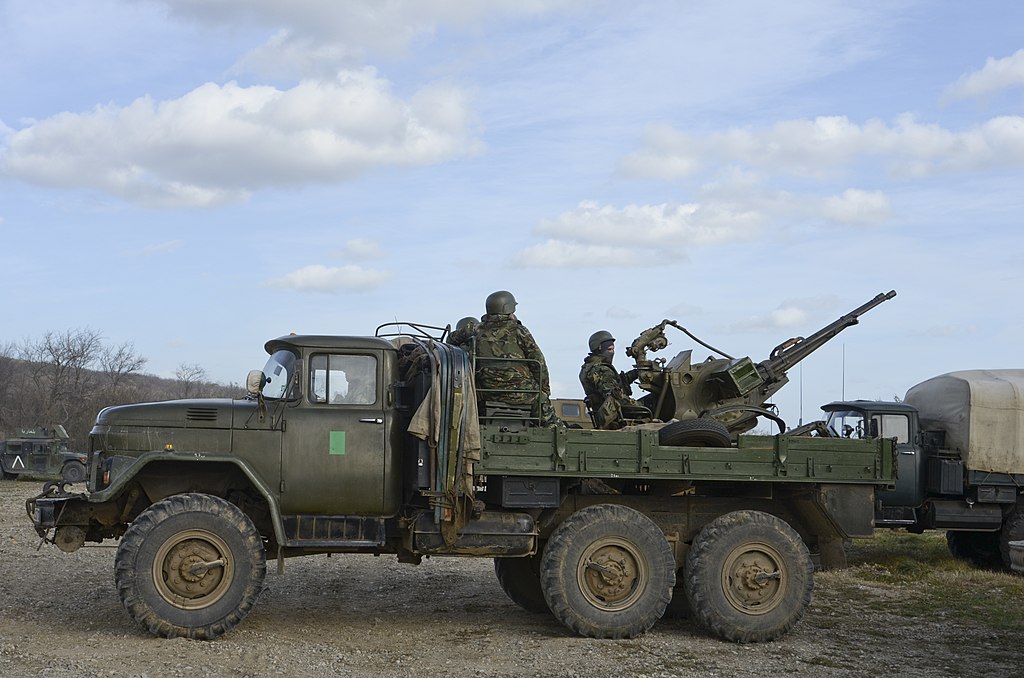
Technically Adept

Probably the most iconic weapon associated with technical trucks is the Zu-23 double barrel 23mm AA gun. What I’ve found fascinating is the basic reason why.

There’s an interesting convergence here. First off, yes, it’s a very good medium autocannon that’s cheap and common enough that even the poorest can get them en masse. Its use in battle is obvious. Yet its its dimensions more than anything else that puts it in the goldilocks sweet spot.

On one hand, its big and heavy enough that it needs to be mounted on a vehicle to move quickly. But it’s light enough that it can be effectively operated from the back of a pickup truck. Function followed form.

Women in the Cockpit

The International Society of Women Airline Pilots has a graph (at least as of 2023, but the trend should be clear) of stats involving female aviators. (And yes, to get this out of the way, there is no significant difference in accident rates and never was).

  • India is a surprising large first at around 12%
  • Scandinavia is likewise surprisingly LOW at around 4% (worse than the 5.5% of the knuckle-dragging Yankees)
  • Global average around 6%
  • East Asia has an abysmal rate that leaves everyone else in their dust. Even the Middle East has substantially more.

I do think the skew is going to stay because no matter how good the policy, pilot is about the least mom-friendly career by its very nature. But it’s still a very interesting look at demographics.

A Thousand Words: Titan

Netflix’s Titan

Netflix’s new documentary Titan is about the submarine that sank near the Titanic in 2023. It’s a well-produced film with many heartfelt interviews. However, I felt it wasn’t as good as it could have been, with one small thing the filmmakers did have control over and a much larger thing that they didn’t. Let me explain.

I think the film could have gone into more detail on showing what a proper deep-sea submersible looks, sounds, and feels like. It would have highlighted Rush’s obsession with making the nautical equivalent of the Bonney Gull even more effectively. While I can understand why they might not have wanted to get too technical, I also think i could have been explained in ways a non-scientist could understand.

The larger issue is that the cause of the disaster really wasn’t very complex. Disasters typically have a ‘swiss cheese phenomenon’ where a bunch of ‘holes’ in the countermeasures all align. So even if the initial catalyst was simple, the situation where it could become catastrophic was not. This isn’t the case here. The carbon fiber hull was fatally and fundamentally flawed, and Rush was a megalomaniac who believed his own propaganda.

That said, this is a worthwhile movie and some of the non-technical parts are actually the most interesting and telling. The CBS crew falling for Oceangate’s potemkin village is a perfect example of how the media can get strung along by people who seem like they know something. I found the host being assured by their safety checks interesting-it’s the kind of thing that seems right and would be if the hull was fundamentally sound, but the equivalent of an early Comet isn’t going to care if the fuel gauges are moving correctly. The other thing is how we see Rush trying to put women who had no seafaring experience into being the pilots of the submarines because he wanted to stand out in the media-another strike against it.

For all my nitpicks, this is a worthy documentary about a real-life terrible person who did terrible things.

Review: Soviet Attack Submarines

Soviet Attack Submarines: Cold War Operations and Accidents

Mark Glissmeyer’s Soviet Attack Submarines is a short book on a subject that should be pretty obvious. It covers all the bases on the Soviet submarine fleet. Though this doesn’t try to go much deeper, which is a problem for me because me being the CMO player I am has me already knowing almost all of what the book had to say.

That specific problem would not be an issue for many or even most other readers, but I still can’t really recommend this book. It’s just insubstantial for lack of a better word. Basically all it says can be found through trustworthy sources online with just a tiny bit of searching. So it’s kind of a glorified fact sheet and little more.