Review: Red Bandit

Red Bandit

Mike Guardia’s Red Bandit is a brief history of the MiG-29, covering its basic designs and all the conflicts it participated in. Do not expect a technical deep dive or a massive tactical overview. This is a short and small book.

It’s also a book that won’t surprise any serious scholar. The MiG-29 was really just a rich man’s Fishbed meant as a point interceptor first and foremost. It did not have the versatility or capability of western 4th gen fighters or the Su-27. In most of the conflicts it’s fought in, it’s suffered heavy losses, though not always by fault of its own. We see its service in the Gulf War to Ukraine in a short overview.

This isn’t the most illuminating book on the Fulcrum. But it is an excellent start for a plane I have a soft spot for.

Review: Russian Gunship Helicopters

Russian Gunship Helicopters

The content of a book called Russian Gunship Helicopters should be pretty self-explanatory. Especially as it’s a Yefim Gordon book. This means you get tons of technical details that are uncited and frequently questionable, mixed with bad formatting and huge diversions into the pros and cons of various scale model kits. And a ton of pseudo-witty quotes that are really jarring compared to technical analysis. They come out of nowhere.

This book naturally covers the Mi-24, Mi-28, and Ka-50. As it was published in early 2013, it’s dated and doesn’t cover things like the Ukrainian and Syrian wars where these saw their first extensive use. It’s one big infodump and model kit review on the Hind, then one on the Havoc, then one on the Hokum.

The biggest problem is that while we get long explanations of what various components are on the helicopters, there’s one glaring omission. That’s how they’re actually used. The Mi-24 with its extensive track record is treated as an afterthought with Wikipedia-level “it flew around and shot things and occasionally dropped off people” simplicity. Reading a single Heavy OPFOR free document gives a lot more info on the actual doctrine of these things.

This is like many aviation enthusiast books: Weird and clunky but detailed. Even if in the wrong ways.

Review: Military Strategy For Writers

Military Strategy for Writers

I’d love to see a book that can concisely explain strategic concepts to non-army nerds. But Stephen Kenneth Stein’s Military Strategy for Writers is not that book.

The biggest problem is the tone. It’s less “here’s what strategy is and why it’s often overlooked” and more “The generals are idiots, the writers are idiots, but I the great Historian shall tell you why all of them are wrong”, a tone that at absolute best is unhelpful.

It doesn’t help that I see typical pop-history cliche sneers that trigger alarm bells. WRT Vietnam and Iraq, for example it,s “hurr durr greeted as liberators” (during the actual invasion, that was largely accurate) and “Hurr durr us did big conventional war in Vietnam not smart coin like the British in Malaysia ” (they did that because the north was also doing it, with large northern armies being a complication that pure guerilla wars never had).

Ironically you could use Vietnam and Iraq to show the limits of strategy. Like the best case in Vietnam was going to be a Korea-style divided country, likely without South Korea’s economic boom. As a powder keg held together solely by a dictator’s lash and with a neighbor that had the ability to stir up trouble and the reasonable fear it could be next, Iraq was always going to pose a challenge.

Anyway, it fails to balance storytelling. Like yes, you get unrealistic amounts of decisive battles in fiction, but that’s because not every work needs or wants to be a hazy grey tale and because decisive conflict works for storytelling.

The Draft Bust That Changed History

It’s almost Super Bowl time, and it’s Black History Month. So I figure I’d post this tiny bit of gridiron history I was checking out. So if you were to list pioneering black quarterbacks overcoming the past stereotypes of the position to thrive in pro football, maybe you’d pick the first starter in the modern era, Marlin Briscoe. Or maybe Doug Williams, the first to win a Super Bowl. Or Warren Moon, the first superstar.

How about seemingly forgettable draft bust Andre Ware? Picked out of Houston college by the Detroit Lions no. 7 overall in 1990, he sputtered out in the pros. Now the “how” isn’t really the point of this article. From what I’ve read, it was a college scheme that didn’t really translate well to the pros, especially at the time. That white quarterback David Klinger followed a similar “went to Houston, was drafted high, and was a pro bust” seems to support that. But again, that’s not really the point.

The point is that Ware set a precedent for drafting black quarterbacks very high that has never stopped. Looking at later drafts:

  • 1995: Steve McNair: 5th overall
  • 1996: Tony Banks: 42nd overall, second round, however was first quarterback picked
  • 1999: Donovan McNabb (2nd), Akili Smith (3rd), Daunte Culpepper (11th), this was the final nail in the coffin

Now obviously high draft picks are not total evidence of prejudice being eliminated. But it is interesting to note see the exact moment when, in practical terms, the tide turned.

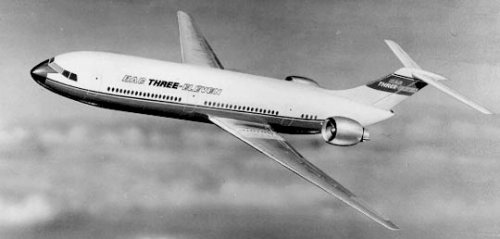
Review: The BAC Three-Eleven

The BAC Three-Eleven: The Airbus That Should Have Been

In one of those “only someone like me would like this book” book purchases, I got Graziano Freschi’s book on the BAC Three-Eleven. The actual never-was airplane itself was an all-British two engine jumbo jet similar to the Airbus A300 only slightly larger and with both engines in the back.

Freschi both describes the plane and makes the argument that it was a mistake for the British to cancel it, as with many (if not all) their big postwar programs, they would spend large sums of money on something and then cancel it, getting the worst of both worlds. His case is weakened by Britain’s poor reputation in such regards, and he kind of hedges from “This would have been a success” to “Britain would have been in a better negotiating position when they rejoined Airbus”.

Though not perfect, it is an interesting look at an obscure plane.

Review: Atomic Steppe

Atomic Steppe

Togzhan Kassenova’s Atomic Steppe is the story of Kazakhstan and nuclear weapons. A Kazakh whose father was an advisor and think-tank head during the crucial early 1990s period, she’s well suited to write it. The bulk of the book is about the horrific environmental legacy of nuclear tests and infrastructure on the country, told excellently.

The problem with the main theoretical part of the book, the nuclear negotiations, is that despite her sincere efforts to show its complexity, the outcome was obvious and never actually in doubt. Kazakhstan had even less chance of preserving a nuclear arsenal than Ukraine or Belarus. That said, there’s plenty of finds from the almost video-game like saga of Americans retrieving super-enriched uranium for disposal to the Russian crews of the nuclear delivery systems flying bombers away and draining the fuel of ICBMs (SS-18s are liquid fueled) to skewer any chance of Kazakhstan being able to seize them.

It’s not a drama, but it’s a good look at atomic history.

Review: The British Carrier Strike Fleet After 1945

The British Carrier Strike Fleet After 1945

In my 5+ years running Fuldapocalypse, I think I may have found the most dull book I’ve ever reviewed. That would be a reference book with the appropriate name of The British Carrier Strike Fleet After 1945. I feel a little bad calling it that because A: It’s a reference book, and B: It actually has quite a lot of good information about British carriers.

However, even by those standards I found it a slog. To put it very mildly. And I read reference books for fun! So I’d still recommend it if you like aircraft carriers. Just be warned.

Review: Seeking the Bomb

Seeking the Bomb

Vipin Narang’s Seeking the Bomb is another nuclear proliferation study, this one focusing on how the bomb was sought, not why. This is an incredibly frustrating to read (but very fun to review) book because of how it wobbles across both extremes of political scientist writing.

Right off the bat a gargantuan flaw comes into being: Having a central thesis heavily committed to theories and charts that simply don’t really translate well into an incredibly complex set of situations with a very small sample size. This is disturbingly common in works by political scientists, of which the author is one. It’s also adversarial in its nature and cites multiple kinds of “conventional wisdom” as wrong, including both other scholarly studies and pop-history claims. This feels like a college work in that it’s written to defend a thesis argument rather than simply study the subject.

Fortunately, this book has a lot of strengths as well. It is very well researched and has an effective categorization of nuclear seekers as either hedgers (building up the known capacity but holding back for political reasons), sprinters (just openly moving ahead at all costs), and hiders (trying to keep it concealed until too late). Its story of how India moved from hedging to blatant hedging (doing an unweaponized explosion in 1974 with obvious hints) to just open use is well done as a case study.

Yet I still feel it lacks somewhat in terms of applying technical capacity. This is not to say the book never acknowledges it-it recognizes that South Africa’s ability to make a domestic enrichment plant and other technologies contributed to it being the one successful hider, praises the scholarship of Unclear Physics even as it disagrees with its conclusions, and mentions that Libya’s program was doomed. But I think more detail, more appreciation for both technical challenges and opportunities, and a couple fictional “Nth Country” hypotheticals would have done better. Almost any reasonably advanced country could sprint to a bomb in the kilotons, even if cruder and more dangerous than established ones, if they really wanted to, and I don’t think Seeking the Bomb comes across as appreciating that in its text.

Still, if this is an uneven book it’s an interesting and well-done kind of uneven, and I don’t regret reading it.

Review: The Big Book of Serial Killers

The Big Book of Serial Killers

It’s hard to find a book with a more accurate title than The Big Book of Serial Killers. This is an A-Z compendium of both solved and unsolved serial murders. Being exactly what it claims to be is… beneficial. It does not shy away from how simultaneously disgusting and pathetic nearly all of them are. Even the smarter ones come across as less Tzeentchian chessmasters and more people who just got away with pulling the same basic trick against soft targets-until they couldn’t.

The book even pads it out by including a few cases of people who weren’t the classic kills-for-the-sake-of it murderers. It includes a handful of terrorists and excessively violent robbers who simply Trevor Phillipsed their way past every victim. The comparative effort of those makes the mentally ill creeps stand out even more.

While its subject matter is obviously not for everyone, this book is excellent for what it is.

Review: Battledrills for Chinese Mobile Warfare

Battledrills for Chinese Mobile Warfare

Against my better judgement, I got another H. John Poole book. The title made me naively think “oh, this could be a set of practical drills approached from a different perspective.” So like any H. John Poole book, this is about 5% reasonable well-thought out arguments (in this case: Formations should be simpler and grenade skill should be focused and emphasized) mixed with 95% incoherent rambling about how artillery is useless.

The “logic” is a classic all or nothing where if the artillery fails to destroy everything in its path and close combat is still necessary, therefore artillery is useless and only suitable for clunky western armies and not cunning subtle ‘eastern’ ones. He even argues that artillery and aid of artillery has not been useful in the contemporary war in Ukraine, which is… something. But not something good.

By this point Poole has lost most of what teaching value his books had, and I recommend avoiding them.