Review: Third World War: The Untold Story

Third World War: The Untold Story

It’s very hard for lightning to strike twice. And in Third World War: The Untold Story, John Hackett tried. He did not really succeed. The problem was that much of the appeal of the original came from being the first out of the gate, whereas by 1982 the zeitgeist had clearly shifted. (An obscure and amusing example comes from the line “World War III is drawing near” in the XTC song Generals and Majors, released in 1980).

While possibly unfair to list the earliest instance of a genre as not having held up well over time, I do believe that Hackett’s work has aged the worst of all the few “big-name” conventional WW3 books. It’s earliest, and it’s clearly meant as an explicit lobbying document in a way that the (still-slanted) other works of that nature did not. And this applies far more to a modestly repackaged version released four years after the original. Because that’s what it is.

This is the book equivalent of one of those “remastered special edition” movie DVD releases. There’s a reason why those, even if the underlying film is sound, do not generate nearly as much enthusiasm as the first, novel release.

Review: The Great Martian War: Invasion

The Great Martian War: Invasion

Scott Washburn’s The Great Martian War: Invasion is a fan-sequel to Wells’ classic War of the Worlds, with the Martians returning for more. There is one piece of bad news about this book and one piece of very good news. The bad news is that the execution never progresses beyond “decent”. This book is very Larry Bond-ish in its big scope, and that’s not always a good thing.

But thankfully, the good news makes up for it. Which is to say that the premise of “Theodore Roosevelt, tanks, and 75mm quick-fire guns against Martian tripods” is such a great one that it only needs a decent execution to be a solid, enjoyable novel. And that it is. The military balance is set up in such a great way, having neither the (deliberate) lopsidededness of either the original or Edison’s Conquest Of Mars.

How can you not recommend a book of this nature to any fan of alternate history or classic sci-fi?

Review: The Night Stalker Rescue

The Night Stalker Rescue

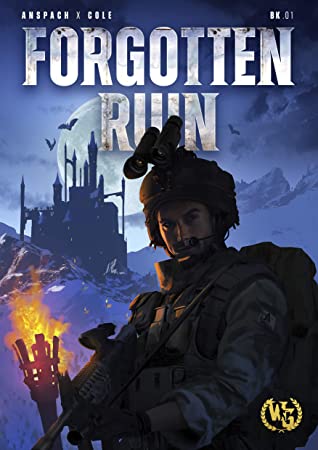
Jason Kasper’s The Night Stalker Rescue is a prequel novella (to a series I haven’t yet read) featuring the mission of saving a downed helicopter pilot in an anti-terror operation in the Philippines gone wrong. Short and cheap, it’s the kind of book that works best as a “literary snack.” And that’s often fine.

This is a 51% snack, but it’s a fun 51% snack. About the only real quibble I had was having the book be written in first instead of third person. I think the latter is better for thrillers because you don’t have to either have a severely limited view or give the protagonist ridiculously good situational awareness. But this isn’t a deal breaker at all.

The fundamentals are sound and the story works. This is a solid “appetizer” that makes me want to read more from its author, and that’s always good news about a book.

Review: The Hungry Dead of Yu-Ching And Other Stories

The Hungry Dead of Yu-Ching And Other Stories

From Sea Lion Press author Paul Leone comes The Hungry Dead of Yu-Ching And Other Stories, a series of horror-fantasy-thriller tales spanning history. From the ancient past to the Cold War and beyond, he brings to life one supernatural confrontation after another. Each story is short but sharp and never wears out its welcome.

I might be biased given the preferred subject matter of Fuldapocalypse, but I liked the “Red Dawn [no relation to the movie], Operation ___” stories the best. It’s very hard to go wrong with Soviet commandos facing extranormal enemies, and I grinned at every word of those tales. Not that the others were bad by any means, but these were my favorite.

In short, this is a very fun collection. I enjoyed it a lot and highly recommend it.

Review: Operation Siberia

Operation: Siberia

William Meikle’s Operation Siberia is not deep fiction. But it is very fun fiction. With a recommendation from The Sci-Fi Fantasy Reviewer and a love of prehistoric megafauna that stretches back to David Macaulay’s The Way Things Work, I knew I had to read this book. And I was not disappointed.

The plot is basically a Jurassic Park knockoff that descends into what’s essentially “Scotsmen vs. Yetis”. Done with solid execution, it’s a great cheap thriller to pass the time. While not deep even by genre fiction standards, I enjoyed it a lot. Meikle takes a great premise and applies it well.

A Thousand Words: Action PC Baseball

Action PC Baseball

I think my favorite sports simulator of all time is Action PC Baseball. Of all the (worthy) baseball sims I’ve tried, this hits the “just right” level of simplicity and depth. Instead of being a “tycoon” game, it’s a single season replay/simulator that requires a lot of manual setup. It’s also an individual game simulation that’s pretty easy and relaxing to play, with a game able to be finished in minutes with the right settings.

This seems like Jekyll and Hyde, but these elements actually complement each other well. If I’m in the mood for some relaxing time-passing, I can just fire up a single game controlling both teams and enjoy it for that. If I have the time and energy for creating massive “what-ifs”, I can focus on building the rosters (which is frequently very fun). Though simple and a little hard to get into, the UI is very smooth once figured out.

In short, this simulator is one that has given me many, many hours of fun, and different varieties no less.

Review: Olympus Rises

Olympus Rises

After reading a novel dragged down by trivialities like “technical realism”, it was an amazing experience reading one that threw all that aside in favor of crazy action. The first entry in the Code of War Series, Jim Roberts’ Olympus Rises is such a story, dealing with a supervillain sci-fi mercenary army and the modern soldiers who end up fighting it. Like the Black Eagle Force series before it, this is not the most fundamentally sound book. And while this goes without saying, anyone bothered by a lack of plausibility probably won’t like this.

However, that doesn’t matter. This is a very, very fun book and I had a great time reading it. Sometimes you just need jetpacks and mecha-ninjas. The many cliches and references I saw actually enhanced the experience in my views. It’s that kind of book, and that’s the kind I frequently take to reading.

Review: Vortex (Larry Bond)

Vortex (Larry Bond)

Larry Bond’s Vortex is a tale of war in southern Africa, as a revanchanist South Africa seeks to retake Namibia, with the opposition of Cuba and the Americans drawn into it. My first proper Larry Bond novel in some time, I wanted to see how this, his last pre-Soviet collapse novel went. And the answer, sadly, is “not too well”.

I knew his style, and, starting this blog, thought it was a lot more common than it actually was. I knew it’d have a lot of conference room scenes. I knew it would have a very long opening act to set up the war everyone knows is going to happen. I knew it would hop around viewpoint characters a lot and focus on each and every part of the war. Yet I wasn’t prepared for how excessive all of it would be. This is the longest, clunkiest, and, I hate to say it, worst Larry Bond I’ve read.

It takes over a hundred pages just to get to the conference rooms. The book has this weird “too hot and too cold” feeling where it stays for a while on a low-rate cloak and dagger plot in the first half and then explodes into too many tangled threads in the second. Naturally, all of this makes the ending too contrived and neat.

This is a shame because the premise-expanding on a real conflict with truly interesting participants and tactics in a theater of war genuinely unfamiliar to many Americans-is a very good one. Which makes it being squandered in this huge mess all the worse. Bond has written much better than this, and his other works have similar-level battle scenes without the structural failings here.

Review: The Hamfist Trilogy

The Hamfist Trilogy

George Nolly’s Hamfist Trilogy consists of a compilation of novels set in the Vietnam air war, as written by a veteran of the Vietnam air war. The books are weirdly breezy and good-natured for war novels, which sets them apart. Especially since it also tries to be generally realistic-Mack Maloney this is not. This is a passion project, for better and worse.

Thus it sometimes feels sloppy. The tone can sometimes come across as overly rambling and not the most suited for the story Nolly is trying to tell, with the first person perspective not always helping. But it gets enough of the basics and little details right that I enjoyed reading it. And I say this as someone who often doesn’t go for straight historical fiction.

Review: Whirlwind

Whirlwind

The 56th book in the Kirov series and the conclusion of its third World War III arc is Whirlwind. By this point, the same issues present in any other installment are there. The prose is what it is, and the “time travel soap opera mixed with wargame AARs” is familiar as well. A large chunk of this book doesn’t even pretend to be a conventional narrative and just recaps the war in detail.

While this (supposedly) second-to-last arc in the series doesn’t just nuke everything and overwrite the timeline like its predecessor, it leaves an uncomfortable feeling. The talk about how weapons and doctrine in-universe evolved gave me the impression that Schettler would pull the football yet again and have yet another four-books-too-long wargame sim. Especially because the main ship plot does have a lot of genuine promise.

The concept of the titular ship’s crew going back in time to stop delightful supervillain Ivan Volkov from destroying the timeline is a great one, and I know very well that you could merge such a plot with wargame scenarios. But even my patience is wearing down with the formula. The circle could be squared if the ship and its crew got a good final conclusion while allowing the toy box lets plays to continue, but I’m not really confident in that happening.