Review: Super Carrier

Super Carrier

supercarrier

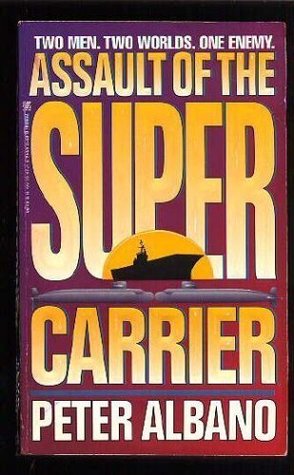
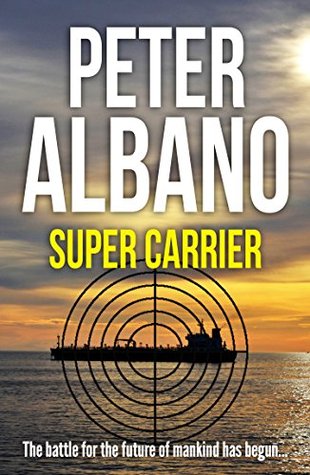
Peter Albano’s “epic” series about a thawed-out Shinano fighting in a world where the clock is turned back lasted for eleven books. With me not considering the first two of be of the highest quality, and hearing that they got very repetitive, I jumped to the second-to-last installment, Super Carrier.

And I probably didn’t jump far ahead enough, for the tenth book is very much like the second, only worse. A gigantic chunk at the beginning is devoted to a overly long mission in a B-24. A smaller but still horrendous portion consists of a tank battle that is not exactly the equal of Team Yankee or Tin Soldiers. Then there’s the “romances” and the girlfriends getting killed horribly for “poignancy”. Neither is written well.

The retro dogfighting also appears clunkier than I remembered it being in the first two books, and the list of horribly written national stereotypes grows even larger. This book is only recommended to people who really liked the past Seventh Carrier entries.

Review: Phantom Force

Phantom Force

A Mack Bolan novel from 1991, Phantom Force is the sort of book that you’d kind of feel would come out of a rushed adventure assembly line. Written by Rich Rainey, it tells the story of the Executioner fighting an evil Japanese cult.

It’s a 51% book through and through. I was not surprised in the least to feel this, for it’s what I expected it to be. No doubt it would accomplish its purpose for the person seeking a small, safe literary diversion. It’s just that even in the context of the cheap thriller, this sort of thing can be done so much better. I inevitably thought of Jerry Ahern’s The Yakusa Tattoo when I read this, and that book’s gonzo excess compared to the rote box-checking of this one could not be more different. You can probably judge for yourself which one would be more memorable.

At this point in time, the pulpy, rapid-fire “men’s adventure” genre was imploding even faster and even more thoroughly than the technothriller. The biggest reason was simple economics-these kind of slim throwaway books were just too low margin in a market already starting to decline and consolidate. The second-biggest was that visual media was now quite able to provide violent, trashy entertainment in a much more suitable form. But a lack of quality cannot be overlooked.

I know this from personal experience. Even when younger and hungry for cheap thrillers, the output of the collapsing Gold Eagle line never appealed to me. I’ve read a few of them since then, but never to the degrees I’ve gone for other lines. And Phantom Force doesn’t seem that much different.

Of course, it’s another comment on the book’s value when writing about the context is more interesting to me than writing about the story itself.

Review: The Hard Kill

The Hard Kill

hardkillcover

Reading The Hard Kill got off to a good start when I saw it was by “the Manning brothers.” Though a coincidence, I was reminded of the quarterbacks. This sports joke got me in the perfect lighthearted mood for a book that defines the term “Cheap Thriller”.

It stars a John Stone out to save his goddaughter and keep the Macguffin out of the wrong hands. Now, I’ve already read cheap thrillers starring a Mark Stone and a Luke Stone, so I guess someone else with that last name was inevitable. The time this book really clicked for me was when John pursued a villain named Karl (which also brings up a sports reference to my mind, one of the the greatest basketball duos ever) in a vehicle chase involving an Audi R8 and a bunch of conveniently placed big vehicles the R8 hits.

Then after that there’s a finale where the main character brings a rifle, a pistol, and a submachine gun to the fight. What I’m trying to say is that this is an incredibly over-the-top thriller despite its pedestrian plot. It’s also incredibly fun. In fact, it’s the most fun I’ve had reading an action hero thriller in some time, and I highly recommend this book to anyone who likes “cheap action”.

Review: Foundation

Foundation

foundationcover

Now I can add Isaac Asimov to the list of famous authors reviewed on Fuldapocalypse, and what better book than his masterpiece, Foundation?

I’m somewhat leery of reviewing massively successful books by famous authors. A part of me has this guarded “it can’t possibly be as good as they say” feeling, and I like giving more obscure stories a platform. But I felt I had to.

The story of the decaying empire and genuis Hari Seldon’s plan is very Shakespearean. By which I mean it’s a well-done story that nonetheless has gotten retroactively treated as something a lot more highbrow than it was upon first release. This isn’t a mere spacesuit commando book, but it’s still much closer to Ken Bulmer than it is to Stephen Baxter.

And while this isn’t Asimov’s fault, a lot of this is dated. There’s the obvious, like treating “nuclear power” as some kind of super-technology. There’s the historical conceits, like taking Edward Gibbon’s view of ancient Rome too closely. Then there’s the central premise of a triumphant technocratic process, the sort of thing embodied most by… Robert McNamara.

Yet I don’t want to come across as too negative. This is very readable, and it’s been so influential for science fiction that seeing where a lot of the tropes became popularized is also fun. This is a “classic” I do recommend.

Review: The Return of the Dog Team

The Return of the Dog Team

It’s time for Fuldapocalypse to dive into the world of “William W. Johnstone’s” novels. Johnstone himself wrote (and apparently considered his proudest work) the original Last of the Dog Team in 1981. By 2005 he was dead, though he lived on as a “Tom Clancy’s”-esque brand name, with its sequel being written “with” “Fred Austin” (who I’m convinced is just a house name).

To be honest, this isn’t really that bad-or that good. Yes, the heroes are ridiculous unstoppable Mary Sues, but this is far from the only book to have that issue. Yes, the military details are frequently inaccurate, often to excess (behold the “A-130” gunship helicopter), but that’s also common. Yes, there’s axe-grinding politics and horrible stereotypes, but-you get the idea.

In a strange way, William W. Johnstone stood out. This doesn’t. It’s just “shoot the terrorist” mush that hundreds of writers have done better without the baggage attached to the name. It’s a little better technically than Johnstone himself, but still. People remember the 1899 Cleveland Spiders. They don’t remember the 2002 Kansas City Royals.

Review: Agile Retrieval

Agile Retrieval

agileretrievalcover

The SOBs series (officially Soldiers of Barabbas, but like Doom’s Bio-Force-Gun, the real implication is obvious) was a Gold Eagle men’s adventure series of the 1980s. Peter Nealen has cited it as one of the biggest inspirations for Brannigan’s Blackhearts. Agile Retrieval is the eleventh book in the series but the first that I read. Though series house name “Jack Hild” is on the cover, the real author was Robin Hardy.

Having read the successors first, I was on guard for the “having seen those, the original doesn’t seem so original”. This didn’t manifest in a negative way. In part this was because a lot of the elements that were copied were positive ones. For instance, giving the main characters lives outside of the action (we see the wedding and family troubles of the protagonists in the entire first part) makes them more sympathetic and human, unlike the mobster/terrorist killing robots that make up a lot of action-adventure. And in part because this entry, a chase for Nazi Macguffins in Cold War Germany, is a little unconventional.

It’s not really unconventional in a good way, though. The flaws (in particular, the stock villains) are still there, while being a little less action-y and a little more cloak and dagger takes away from the strengths of the formula. The “big, vulnerable team” subgenre of action adventure is, in my opinion, the style that offers the most, and to pull back from it is giving up a lot and not really gaining anything in return. While the structure of the series has many strong points, the structure of this particular book does not. After the opening, it doesn’t manage a good climax and remains slapdash throughout. The pool of cheap thrillers of past and present is so big and vast that I cannot recommend this except for completionists.


A Thousand Words: The Hunt For Red October

A Thousand Words: The Hunt For Red October

Probably my first exposure to technothrillers came on the screen, when I watched The Hunt For Red October long ago. The movie is both a classic and, in my controversial opinion, better than the book.

Yes, I said it. The movie distills the essence of the book into one brief tour de force. The main plot is simple enough to distill into screen form without most of the clunkiness that Clancy had even back at the beginning. Yes, there’s more “Hollywood-ism”, but there’s also less of Clancy’s bias.

Technothrillers in general are hard to adapt to the screen because they require a big budget to be effective. In this case, the filmmakers got the budget, got the actors (Sean Connery’s accent notwithstanding), and knew how to separate the wheat from the chaff. The result is one of the best film adaptations of all time.

Review: Covert Action

Covert Action

Chet Cunningham’s Covert Action was one of his last books released, out on a small independent press. While I didn’t think too much of it upon my initial readthrough, now I think it clarifies something that’s been bothering me.

Having read some of Cunningham’s SEAL Team Seven novels, the book itself is basically one of those. The names are obviously changed, but the plot structure of hyperactive zipping around the world and constant action remains unmistakable to someone who’s read the “Keith Douglass” books helmed by him. The problem is that thanks to even iffier fundamentals and considerably worse proofreading, it goes from “ok” to “bad.” The book itself I’d just leave and not really recommend.

But what was the “a-ha” moment for me was how this affected reviewing. This is an example of how some cheap thrillers can feel interchangeable-because in some cases they are. There’s this. There’s the same author doing most of the work on both the MIA Hunter and Cody’s Army series. And finally, in one of the most extreme examples, the “Sharpshooter” and “Marksman” series of ‘shoot the mobster’ novels in the 1970s shared so much and were so rushed that manuscripts from the latter were used for the former, to the point where the main character’s name didn’t stay consistent.

There’s going to be a lot of overlap in a genre that’s formulaic by nature. And not all, or even most of the books I read reach this extreme. But there’s an undeniably sour feeling I’ve been getting as I reach for the keyboard.

The kind of “51% book” that Marine Force One still stands as the best example of can still be perfectly fun to read. But I’m finding, much like I’ve found with books in the same series, that repeated examples of those are getting harder and harder to actually review.

Review: Destiny In The Ashes

Destiny In The Ashes

ashesdestinycover

William W. Johnstone’s Destiny in the Ashes is the 32nd (!) book in the series. Released near the end of Johnstone’s life, there are legitimate questions as to whether it’s the work of Johnstone the person or “Johnstone”, the pen name used by his niece and an army of ghostwriters behind ironclad NDAs since his death. I will only say that it reads like the real Johnstone and certainly isn’t any better than anything unambiguously written by the real Johnstone.

It took over ten books for Jerry Ahern’s Survivalist to stop being truly post-apocalyptic. It took Johnstone less than one. Instead it was focused entirely on societal commentary, if the commentary came from a pretentious, incoherent redneck.

The “plot” of this book is a Middle Eastern terrorist is striking the “US” run by the EVIL LIBERAL GUN GRABBERS, and they are forced to call upon Raines in the Great People’s SUSA Utopia for help. Raines steps up, in part with lectures about the inferiority of helicopters for troop insertion compared to HALO jumps. Naturally, the Americans go in with helicopters and get killed, while the Rebels HALO drop with ease.

The “military action” in this book (and the whole series, I must add) is legitimately strange and not just poorly written. It would be one thing if, by accident or design, it involved unrealistic and overly cinematic action. There’s some of that, but there’s also hunched strategy sessions that just make no sense and end in Mary Sue stomps.

The conclusion of this book involves an effortless jaunt out to Iraq in a passage that reads like a far worse version of a Chet Cunningham SEAL Team Seven novel. This continues the trend made far earlier in the series when Johnstone ran out of domestic “punks” for Raines to kill and had to send him abroad to get more.

The writing is terrible, the pacing is only somewhat bad, the plotting is terrible, and the characterization is extra-terrible. Yet, if it makes sense, the Ashes series is genuinely and distinctly terrible. A horrendous writer got a conventional publisher to produce and distribute literally dozens of his picture-book war stories and become successful enough that he endured as a “Tom Clancy’s” -esque brand name. That’s what makes it stand out.

Review: The Delian Cycle

The Delian Cycle

The quality of Kenneth Bulmer’s “Delian Cycle” of Dray Prescot novels (I got the omnibus edition) can be described in this anecdote. I dove straight through all 27 Survivalists with ease. To get through the five individually shorter Prescots took me considerably more effort. The question is…. why? I know I’ve explained my frustrations in my review of the second installment, but they deserve elaboration. After all, it’s not like I’ve had objections to reading similarly shallow cheap thrillers before.

The biggest reason is the prose, which is incredibly overwrought. It’s very hard to get through and takes away from whatever feelings the action might generate. Bulmer is seemingly never satisfied to use one paragraph to describe something when he can use three, and throw in another made-up word or ten while he’s at it. Still, if I can read Mike Lunnon-Wood, I can read him.

Then there’s the action, which labors under the horrendous prose and is just so constant that it becomes mundane. This is another reason, and it’d be a perfectly good reason. After all, cheap thrillers need to be good with action. But the action still isn’t the worst.

Another issue is the setting. The worldbuilding consists of nothing but throwing out so many names that the omnibus needs a giant glossary at the end, yet all it accomplishes is the creation of a sword and planet theme park, with the “exotic” names and airships and places being pushed so hard they lose any appeal. But it’s not like a bad setting is an absolute turn-off in a genre that depends on execution.

No, I think the biggest problem is the artificial nature of it. The books always involve Prescot getting teleported in and out by the MacGuffin People Star Lords. To use so blatant a setup would be bad, but what makes it worse is that they’re written in a kayfabe “Prescot has narrated this on cassette tapes to Alan Burt Akers [Bulmer’s pen name]” style. What turns this from a gimmick into a flaw is that the tapes are used as get-out-of-trouble cards where-not infrequently during a dramatic moment-Bulmer will just say “and then the tapes are missing, but Prescot clearly got out of it”.

I maintain a weird curiosity for the series, but it’s not very good.