Review: Nothing Last Forever

Nothing Lasts Forever

Sidney Sheldon’s Nothing Lasts Forever is the worst book of his I’ve read since The Other Side of Midnight. The story of female doctors in a California hospital, romance, drama, and of course murder, it has all of his weaknesses but very few of his strengths. Namely it’s overloaded with the “pop” part of “pop epic” while totally lacking the “epic” part.

It’s less pretentious than Midnight but otherwise has the same problems. His female main characters are simply wicked or shallow instead of ambitious and powerful. That combined with low stakes and a decided lack of interest makes it hard to care about anyone or anything.

So it seems like he was in the decline by this point. But that’s understandable, as nothing lasts forever.

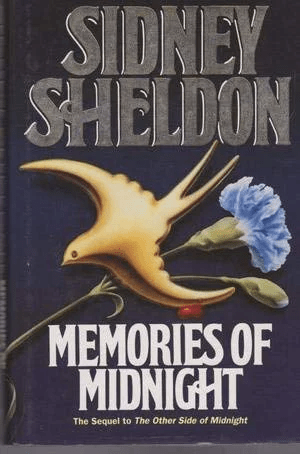
Review: Memories of Midnight

Memories of Midnight

Sidney Sheldon’s The Other Side of Midnight was his breakout mega-successful novel. It is also by far the worst he’s written in hindsight. So you can guess why I was less than enthusiastic about reading its sequel, Memories of Midnight. The least interesting book and setting getting an expansion?

Thankfully, I could see from the first few dozen pages that this was better. The Sidney Sheldon formula he developed after Midnight was obvious, and that’s not a bad thing. Young Constanin Demiris is more interesting as he heads to Saudi Arabia, and Sheldon’s research into both the mechanics of oil drills and the “desert queen” phenomenon where scarce western women become fifty times more attractive in such an environment is a lot better than “here’s Aristotle Onassis”.

Sadly, we had to return to Catherine The Dull, the “heroine” of the last book before she got amnesia (long story). Which leads to a pattern in this book: When it goes back to its wretched predecessor, it doesn’t often work (although shipping tycoon Demiris is far better an antagonist than the two in Midnight, or even the past version of himself). When it stretches its legs into the world of the pop epic Sheldon excelled at so much, it works. There’s even an eerily prophetic courtroom scene where a super-defense lawyer in a high profile case uses a physical prop (I won’t spoil it) in a way that reminded me of the later OJ Simpson trial to get his client acquitted.

This weird trend makes it below average by Sheldon’s standards. But below average is still better than “bottom of the barrel”. It’s far better than its direct predecessor and in isolation is perfectly readable, but I still wouldn’t recommend it as anyone’s first Sidney Sheldon book. Even an excellent conclusion that involves a million double crosses and Chekov’s Heating Boiler (seriously, it was foreshadowed in a way that made me smile) can’t totally redeem it. But it can make for a massive improvement….

Not that that’s saying much.

Review: The Rich and the Righteous

The Rich and the Righteous

I’d already known why Sidney Sheldon had the appeal that he did. One of his strengths that appealed to a lot of readers (including me), was a very simple, easy, and smooth-flowing writing style. The virtues of this writing become far more apparent when you read another “pop epic” that doesn’t have that advantage. Helen Van Slyke’s The Rich and the Righteous is one such book.

The story of a struggle for corporate control, this is like a specific type of airplane. It has an excellent shape regarding aerodynamics. It has excellent sensors and a cockpit layout. There’s just one small problem: Its engine can’t get it off the ground. Likewise, Van Slyke is one of the blockiest, clunkiest authors I’ve read, and thus what should be interesting just sort of taxis down the runway and then falls into a ditch. Ouch.

Which is a shame. But oh well.

Thanksgiving

Happy Thanksgiving to all my American readers. I’m thankful for…

  • Having vaccines against COVID-19, both for my own peace of mind and my older relatives. I love being able to live freely again. Being able to eat comfortably indoors and see my fellow vaccinated relatives is so great.
  • Having the inspiration and drive to write and publish my first full-length novel, The Sure Bet King. Besides having the pride in knowing I could make something 100,000 words long, I also feel like the book reflects the broadening of my horizons. That book’s biggest inspiration is not Larry Bond or John Hackett, but Sidney Sheldon, an old “pop-epic” writer who I didn’t even know about when I started the blog. Having Fuldapocalypse turn into a general review/commentary blog is one of the best creative decisions I’ve made, and this book was the fruit of it.
  • All the great books I’ve read, movies I’ve seen, and games I’ve played this year. I’ve had a lot of fun.

Review: Morning Noon And Night

Morning, Noon, and Night

Sidney Sheldon’s Morning, Noon, and Night is one of his later books, beginning with a ruthless billionaire falling into the sea off of his yacht and dealing with the subsequent power struggle. It is also one of his worst. How so? First, the obvious needs to be stated. Like every single other one of Sheldon’s books, it’s “gilded sleaze” with simple, easy prose. However, this takes things in different directions. And they’re not good directions.

The prose seemed even more bare-bones than the norm for the author, going from a strength to a weakness. More importantly, the book tried to be an outright thriller at times instead of a “pop epic” chronicling a tawdry saga of wealth and romance. Sheldon’s writing style just isn’t suited for pure thrillers, and this exaggerated version of it was even worse.

Also, the stakes seemed petty (with the wealth of its centerpiece character told more by telling than showing), and the plot was confused with a lot of loose threads and super-quick wrap ups. Sheldon has written a lot better, so I don’t recommend this book.

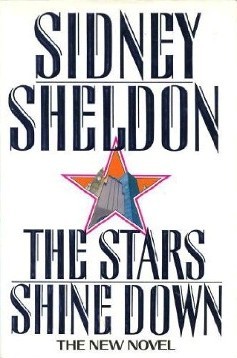
Review: The Stars Shine Down

The Stars Shine Down

Sidney Sheldon’s The Stars Shine Down is the story of ruthless businesswoman Lara Cameron, her rise and fall as she builds a real estate empire and gets entangled with everyone from mob lawyers to piano players. It’s the type of gilded trash melodrama I know very well after reading so many of his books. This one, released later in his life, feels a little less than his at his best. It’s still a very readable book, and it’s still well ahead of The Other Side of Midnight. Yet there’s just so much that brings it down. And it’s not just the formula being familiar to me by now.

The plot is a little more scattershot than what Sheldon was capable of in some of his other books, and the ending feels a little rushed. There are a few weird choices like the decision to have all the Scottish character dialogue in clunky phonetic writing that subtracts more than it adds. Sheldon focuses too much on the nuts and bolts of Lara’s building development, something he doesn’t write well.

One legitimately good part is its main character, with Lara drawing both opposition and sympathy. As Sheldon at his worst wrote characters as either dumb, naive dopes or ruthless Machiavellian masterminds, having someone who can truly have elements of both strikes me as a solid achievement. The protagonist is arguably Sheldon’s best I’ve read so far. It’s just the book around her isn’t.

The Worst Book?

While looking for bad books, I came to this post in the Imaginary Museum blog by Dr. Jack Ross. An excellent piece of writing (even if I didn’t know who frequently mentioned David Lodge was), this paragraph in particular rang extremely true for me:

“Ever since I started writing novels myself, I guess I’ve been a bit more chary of parlour games such as this. There is, however, no accounting for tastes, and it can come as a shock that something you mildly enjoyed yourself can be right up there on someone else’s hitlist. A lukewarm response is the worst fate any book can receive, in any case, so I don’t think being on a list of world’s worst novels is likely to do lasting harm to any of the books (or authors) mentioned above.”

Being a writer and knowing the effort it requires dampening a lot of the previous snark? Check. (I’ll put it this way-I don’t think being a critic has helped me with being a better writer, but I think being a writer has helped me with being a better critic). Tastes differ? Check. (I learned of Jon Land from a massively negative review of one of his books). A mediocre reaction is the worst? Often very true, especially for reviewing as opposed to simply reading.

Onto the main subject, Ross sets out very good criteria for “worst book”, something I’ve used very cavalierly in the past (to my dismay now).

You can’t pick a novel you didn’t manage to finish

You can’t pick a novel by an author you entirely despise

There’s no point in selecting something completely obscure

Since I’ve had a tendency (although it’s waned somewhat now-I’m dropping books I find dull at rates I haven’t in the past) to finish books, the first isn’t an issue. The “obscure” part is, however. I don’t want to get dragged into a fandom war or pick a too-easy target, so I’ll go with “did it appear in mainstream bookstores.” While William W. Johnstone had that honor, the second rule strikes him out.

Thankfully, I’ve long had an answer. Not surprisingly, it is…

Ready for it…

Executive Orders by Tom Clancy. It’s one of the most successful authors ever, so I feel no guilt about slamming it. It’s an exceedingly bad book that almost certainly could never have been published by a first author. And while I’ve been critical of Clancy’s entire catalog, his earlier books were significantly better. It all “clicks” into being my choice of the worst.

(And yes, I’ve heard The Bear And The Dragon is even worse, but I haven’t read that and have no desire to-remember the rules)

If I had to give a second choice, it would probably be Sidney Sheldon’s The Other Side of Midnight. That’s another literary big name, I finished it, and it comes across as significantly worse than his later novels after reading them. Those at least can do the “gilded cheap thriller soap opera” better and have lots of out-there set pieces. All Midnight has is just romance novel stereotypes (that I could instantly tell despite barely knowing the genre) stumbling around for the entire book.

Snippet Reviews: June 2020

It’s time for more snippet reviews.

The Kingdom of the Seven

There are two things you need to know about The Kingdom of the Seven. 1: It is one of the tamer Blaine McCracken books. 2: It features an evil televangelist building an underground city in an old salt mine.

Sword of the Prophet

The final entry in the Cody’s Army series, Sword of the Prophet is a merely middling book. Though not the worst men’s adventure novel ever, it’s not hard to see why this was the last in the series.

If Tomorrow Comes

A Sidney Sheldon novel about a female con artist, If Tomorrow Comes stands out for its ridiculous character arc. The protagonist goes from being a naive fool to a super-genius very quickly.

Snippet Reviews: April 2020

So, it’s time for a few more snippet reviews.

Bloodline

After reading only a few Sidney Sheldon books, I found that Bloodline matches his formula very closely. This is not a bad thing. While it doesn’t exceed the excess of Master of the Game, it comes fairly close, and his story of elite “intrigue” is everything you’d expect.

False Flag

A disappointing second entry in the Jason Trapp series, False Flag keeps the semi-serious tone while turning the plot up to full Roger Moore Bond ridiculousness. It doesn’t work well compared to its predecessor.

Extraordinary Retribution

Erec Stebbins’ second INTEL 1 novel, Extraordinary Retribution, is kind of an in-name-only endeavor. Not only are the politics even more blatant and hamfisted, but the main characters of The Ragnarok Conspiracy only appear at the end as a final deus ex machina. Otherwise, it’s a completely separate story. And not the best-written one.

Adding A Tank Manufacturer

So this thought came to me from a throwaway line in Sidney Sheldon’s Master Of The Game about how the main character’s conglomerate started manufacturing tanks in World War I (along with other war material). How hard is it to slip a tank company into an alternate history?

There’s two boring solutions. One is that it’s easy if the story calls for it, with a focus on armored vehicle economics not usually being beneficial to a book (especially a Sidney Sheldon one). Another is that they can, especially during the World Wars, be just a contractor that built tanks designed by someone else (see a lot of railroad locomotive plants in World War II). A third is that they end up as the main winner for a gigantic wartime or Cold War contract and just become what General Dynamics Land Systems (to give one example) is in real life. A fourth is if severe politics (read-no reliable import partners) are involved.

But privately designed tanks for private sales? That’s tricky. There’s really only a few windows, the interwar and middle Cold War periods. Otherwise, you just have a glut of WWII surplus/early Cold War military aid or an equally huge one of advanced technology/later Cold War surplus.

And even then, for every success like the Vickers MBT, you have failures like the AMX-40 and Osorio, to say nothing of one-customer wonders like the Stingray. Both political power and economies of scale are tough to overcome. Yet there’s always the chance of getting an export order and then having the exported tanks do well enough to trigger more interested customers. It still isn’t going to come close to the T-55 or Patton, but it can work.