Tanks of the Soviet-Romanian War

Main Battle Tanks of All Union’s Soviet-Romanian War, starting with the victors.

Sovereign Union

  • T-94. The star of the tank scenes in All Union, the T-94 was inspired most heavily by the Object 640/Black Eagle prototype with its advanced gas turbine, low turret and crew position, and much more. It also has a heavy remote turret with an aircraft-adapted 23mm autocannon (for improved anti-soft target AND hitting things not worth a main gun shell). This was an actual proposal. Most advanced Sovereign Union tank of the war, used only in some mobile corps.
  • T-84. The T-84 was chosen as the “low” tank in the high-low mix (ie T-64/80 and T-72 in real life). The real reason was as a bribe to the Ukrainian SSR where a potential situation was defused by All-Union President Yatchenko. Ukrainian firms would get preferential choices in procurement while Crimea was handed back over. T-84s were used in mobile corps and some high-category legacy divisions and had the most advanced suites of the “125mm classics.”
  • 125mm Classics: IE the T-64, T-72, and T-80, in various states of upgrade. Even the mobile corps had many of these. The 7th Mobile Corps famously had only T-64s and BMP-2s. Not much else to say except that T-64s were disproportionately used because so many units were drawn from the Ukrainian SSR where they were historically based.
  • T-62/55s: These classics were minimum viable tanks that did minimum viable tank things, seeing service in low-category legacy divisions.

Bulgaria

  • T-72. The most advanced Bulgarian tank, which showed their limitations compared to the Sovereign Union.
  • T-62. Bulgaria was the only NSWP country to use the T-62, and they saw extensive use (and losses). Likewise with the T-55, the most common Bulgarian tank.
  • T-34. The absolute contrast between the electronically linked supertanks and Bulgaria fielding hundreds of T-34/85s in its crazed mobilization was one of the big ironies of the war.
  • LPT-100. A fictional tank based on a real proposal, this like several other semi-improvised vehicles could be built in Bulgaria, so it was used by the Bulgarians. Others included APCs on bus chassis and uparmored jeeps from local factories.

Soviet Romanian War At Sea

Naval forces in All Union’s Soviet Romanian War were bound to play a peripheral role. Romania had a small and weak navy, a relatively short coastline, and massive conventional amphibious landings were geographically dubious and militarily even more so. Constanta was overrun and surrendered almost immediately after the war began. Even Soviet historiography talks very little about what they and the Bulgarians did at sea, mostly just mentioning bombardment, surveillance, transport, and other routine supporting tasks. Most naval infantry units fought on land.

Yet it would be a mistake to assume that the navies did nothing or that there was no drama. Although overshadowed by the crossing of the Danube and the massive deep airborne operations, one of the largest postwar aerial/amphibious landings was conducted in Tulcea County.

  • Units near Bolhrad would cross/lift/fly over or infiltrate via smaller boat.
  • Heliborne units from the Black Sea would stage and make large landings in the depths. Black Sea Fleet aircraft and ships would naturally support them.
  • The Tulcea operation was considered lower priority and was assigned fewer resources and, uncharacteristically, had its commanders given instructions to not try and force it if the initial advance stalled. (In contrast, the Danube Front units tasked with taking the Constana area were told to rightfully treat it as a high-priority one).

Notable events:

  • September 8-9: Landings. Many inoperable Romanian ships destroyed in port.
  • September 8: Romanian corvette M290 sunk by SS-N-14 missile. Romanian submarine SC-02 sunk.
  • September 9: Sole successful Romanian air attack against Soviet Warships. Missile craft Kittivyek sunk by Romanian MiG-21s. Two other unsuccessful attacks. Five aircraft and four ASMs shot down.
  • September 10: Gunboat PSKR-710 destroyed by mine. Four Romanian craft sunk. Romanian submarines Pastrav, SC-01 sunk.
  • September 11: Final attempted Romanian air/missile attack on naval targets. Completely unsuccessful. Romanian submarine SC-05 sunk by Soviet submarine S-39 in the first post-WW2 mutually submerged sinking. Soviet landing ship SDK-303 sunk by mine.
  • September 13: Tulcea operation completed with mutual link-up.
  • September 14: Final surface engagements of the war, a duel between small boats in the north and Bulgarian ships sinking an attempt to flee southeast into the open ocean, presumably to Turkey.
  • September 16: Final naval engagement. Romanian submarine Ton sunk.

The main takeaway was that ASW was successful (no Soviet ships lost, no disruption) but it was under ideal circumstances (being able to just smother a small area).

Rates of Advance in (Fictional) Practice

So a while ago I did the obsessively number-crazed Soviets studies on their planned rates of advance. Looking at my descriptions and map games writing in All Union, I’ve thought “hmmm, how could this go in practice? Or at least fictional speculative practice?”

The Theory

Against NATO, 40-60 km a day on average was the goal. Against a weaker opponent (like one based on the Chinese conventional forces at the time), it was even more, around 70-100. By the 1990s GENFORCE (what I patterned the mobile corps off of), it was down to ideally 30-40, albeit against a stronger opponent.

Romania in Practice

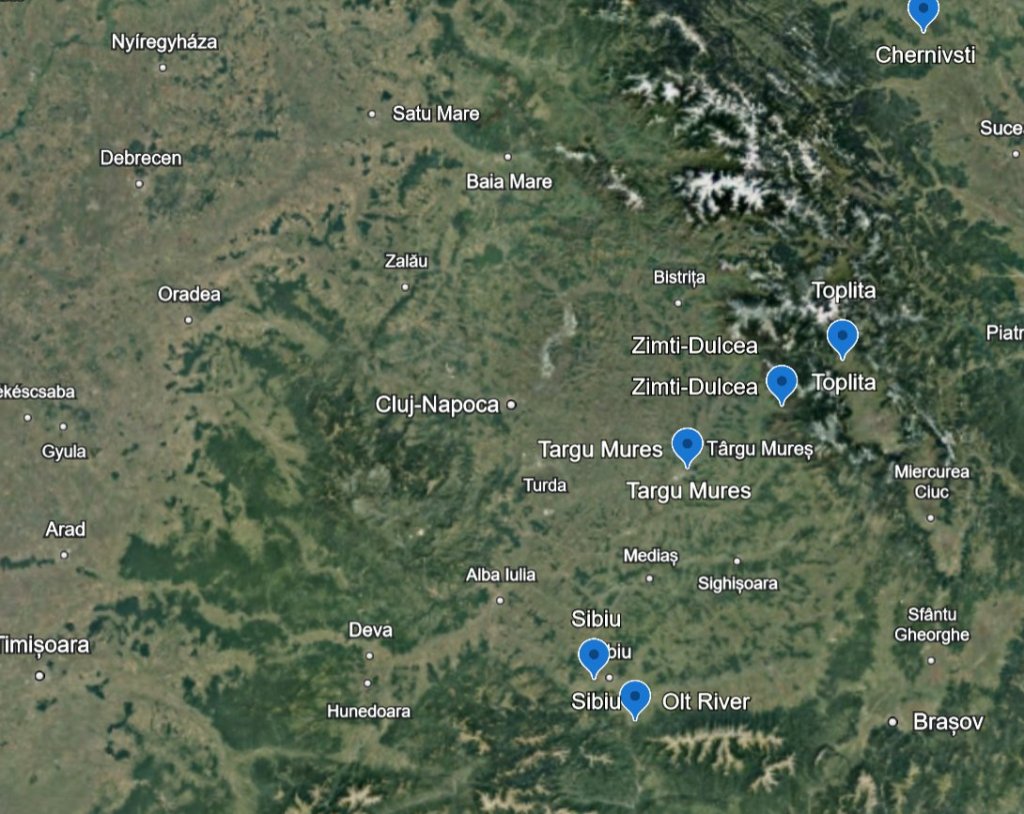
As it stands, I focused mainly on the 17th Mobile Corps, and had a (fairly) detailed route after much Google Mapping. It left a line of departure from near Chernivtsi on September 8, 1998, and came to a final stop around Sibiu on the 16th-17th. On the way it cleared out the important crossroad town of Toplita, crossed the Carpathian mountain roads, and fended off an attack on its bridgehead near Dulcea.

Map is a vague generality. Different subunits progressed around different mountain roads and frontages. Length is hard enough, don’t ask me to do width.. :p

Using a pure napkin calc, this comes to 285 kilometers from the Chernivtsi border region to Sibiu, which leads to 8-9 days of high-intensity fighting, which means a very rough 30-35 kilometers a day. So not bad by GENFORCE standards, especially with a rough terrain making up for a weaker on paper opponent and with the counterattack at Dulcea costing it an entire day.

So not too bad….

The Problem

Of course the definition of “rate of advance” is incredibly arbitrary (does it mean anything in that unit, so can we count a patrol of BRDMs moving far ahead and encountering no resistance before circling and stopping, then the main force reaching that spot without issue later?) and depends a lot, as anyone would admit, on circumstances.

In the same war, many Danube Front formations barely made it past the river, and some that did moved at the equivalent of a brisk walk. But clearly a unit of press-ganged Bulgarians with 1940s equipment having to do an opposed crossing of a very long river and then facing coherent defenders with many fortifications is not the same as a high-tech, high priority force smashing across the plains against a broken foe.

What Artillery Mobility Means

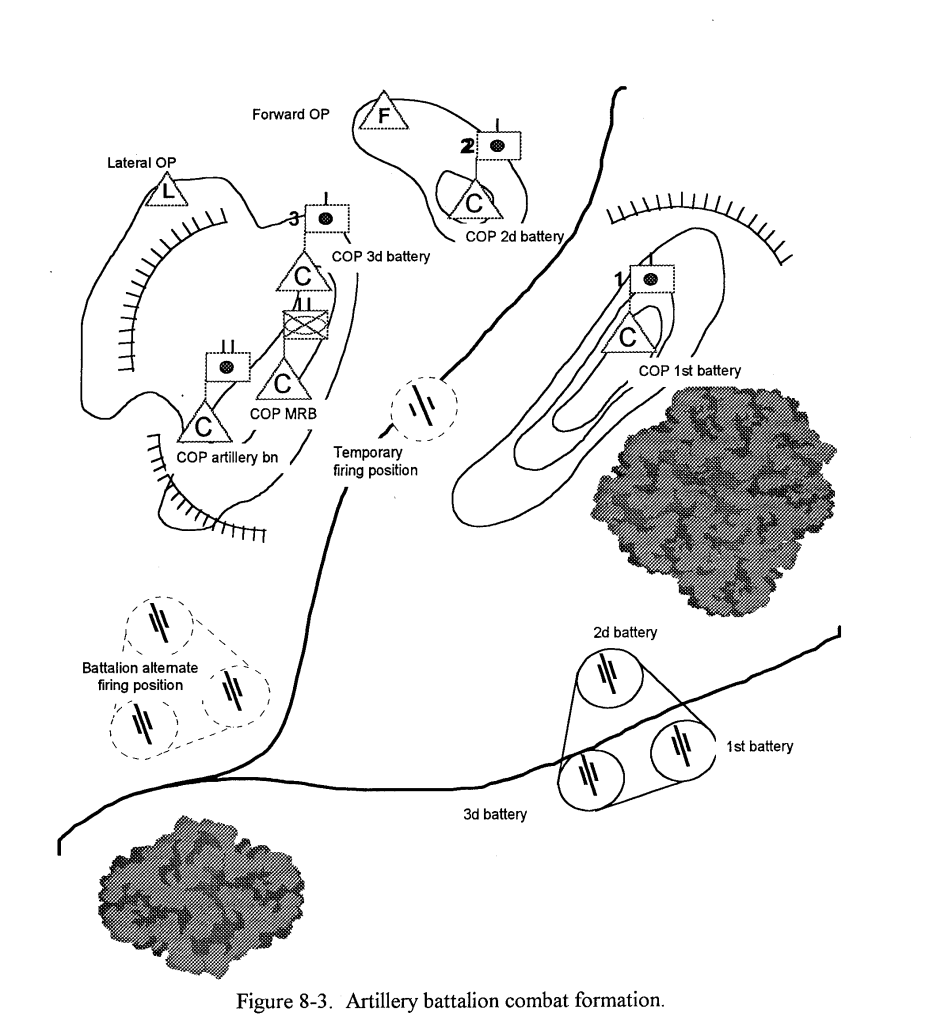
From the Heavy OPFOR Tactical:

Now a 199X Soviet-patterned formation isn’t going to be representative of everything (in particular, the commander is not always going to double as a forward observer), but it’s worth noting that the movement involves narrow movement around different parts of the same observed, prepared area, not wide ranging, sweeping kiting.

Now redeployment is another story, and it’s where the artillery is going to be more inherently vulnerable and varies a lot on the circumstances. IE not so much in a stabilized front like WWI, post-1951 Korea, or contemporary Ukraine, but a lot in a classic Fuldapocalypse, 2003 Iraq, or the Southern African brush. It also depends on how much the artillery has to actually fire (because if it’s forced into moving/hiding, then it’s effectively suppressed).

So for the fictional case study of the Soviet-Romanian War:

  • The northern front is going to be advancing extremely rapidly, close to the best-case paper projections. Deployed artillery will cover the armies when they have to stop, but even the Sovereign Union will struggle to keep their mega-barrages during the rapid advance. Thankfully (for the invaders) enemy counter-artillery capabilities are very weak, especially in the context.
  • The southern front has a lot fewer SPGs (and even less advanced ones) and has to bludgeon its way across a very wide river and through fortified areas. There’s just less room to move and the opponent’s capabilities (due to their better units and C3I on this front) are more dangerous.

Soviet-Romanian Air War

With All Union now on a little cooldown, I figured I’d share my exposition/notes about the Soviet-Romanian air war:

Overall course of the war: Starting on September 8, 1998, the Sovereign Union invaded Romania with two fronts (army groups). The northern Dniester Front was arguably the most advanced and powerful fighting force in history at that time. That combined with good terrain made it sweep south in close to nine days. The southern Danube Front had a more difficult task in the form of more fortifications,more cohesive defense, the daunting task of crossing a massive river opposed, and the bulk of it consisting of forcibly mobilized Bulgarians. Still, after the same nine days they had encircled Bucharest and linked up with the Dniester Front. For the rest of the month they prepared to storm the city, continued bombardment, and tried to push for a surrender that eventually came.

In the end, the USSR lost around 3,500 soldiers and the Bulgarians and other minor allies around 7,000. Romanian casualties are almost literally uncountable with at least 70,000 being essentially confirmed and with estimates as high as 120,000 KIA.

Now for the air:

The USSR’s air force was a curious mixture of everything from the hyper-advanced Su-37 Fermion fighter to dozens of ancient Il-28s. In general, METT-TC was used to allocate things, with older planes doing area strikes with smother/splash damage weapons in the daytime and newer ones using PGMs at night whenever possible. While not perfect, it was extremely devastating.

Romania:

The initial fire strike took out around five hundred Romanian aircraft on the ground, over 80% of its total. This caused a lot of panic in the USAF after the war. A few planes made it through, most notably in the defeat of a Danube Front forward detachment at Alexandria very early on. Otherwise Romanian aircraft were limited to tiny nuisance strikes and suffered very heavy losses while doing so, though surprisingly few to the vaunted SAMs. (Total air superiority+tons of friendly Soviet aircraft = a very short ROE leash and lots of fighter opportunities).

Fire Control in the Soviet Romanian War

Because I’m inspired by WWIII87 doing something similar and since I don’t think I’ll ever touch on the topic in any proper All Union successor, here it goes. It was in my mind, now it’s not. Enjoy.

Like with most wars since 1900, if not since the invention of gunpowder, the Soviet-Romanian War in All Union was won by artillery. While the Soviets had far more and far more advanced tube pieces, fire control was a lot more varied on both sides.

Top Tier

The top tier of fire control lay in the front level assets and units in the mobile corps, from battalion to corps itself. These contained most of the what the “recon strike complex” needed to succeed and did. Drone (and advanced non-drone) spotters, high performance datalinks, widespread designators for smart munitions, and advanced digital computers, all of it was present and used to great success. Perhaps the biggest air/artillery feat was the near-destruction of the Romanian 6th Tank Division before a single bullet was used in direct fire. The Romanians and allied Bulgarians had nothing like it. This was what caused a gigantic amount of alarm in the US and western militaries…

…although calmer heads pointed out that while still dangerous in the extreme, the Romanians had very little ability to disrupt the system.

Medium Tier

The medium tier was done by most regular Soviet units in the traditional division/army formation and the best Bulgarian/Romanian units. This involved fire control computers and other technological advantages, but still showed signs of stiffness and weakness in comparison to their upper tier (not the same as ineffectiveness, of course).

Low Tier

The low tier was largely manual and familiar to anyone in World War II, and was conducted by the bulk of Bulgarian and Romanian units, as well as a few low-category Soviet units mobilized for the war. There were many reasons why the southern front was less open and why the Romanian defense there was more effective: Units of mobilized Bulgarians instead of high-tech mobile brigades, the use of the Danube and more defensive lines, the proximity of Bucharest meaning that there was a “back to the wall” attitude, and many of the regime’s most loyal and stubborn units being deployed there prewar, possibly for political reasons.

Yet one has to be better C3I on the Romanian side (a large fortified area meant they could use field telephones and other such rugged measures far better) and worse such measures on the Soviet/Bulgarian side (especially as they had to go on the offensive). Which in turn made fire control better/worse.

Solving The Madness

Ok, “How many shells were fired in the opening megabarrage of a multi-front offensive operation, such as a Fuldapocalypse or All Union’s invasion of Romania?”

Going with the latter because it’s my book, I finally have an answer that’s easier than a vague “Over a million.” Going with “Sustainability of the Soviet Army In Battle” and “Front Operations 1977” as main sources.

A unit of fire for each artillery piece translates to about 80 for 120-122mm, 60 for 152mm, 160 for BM-21s, and 120 for smaller mortars (sust., pg 68). GENFORCE Mobile has similar numbers but adds 40 for big 203+mm pieces. I’ll just split the difference and say 70.

“Thus, for instance, in armies operating on the axis of the main attack, the expenditure of artillery and mortar ammunition in the first day of combat actions without the use of nuclear weapons may be 2.0 to 2.5 units of fire” (front. pg 309)

A front is described in the same document as having 3,400 to 4,200 artillery pieces (front pg. 12), so a very basic napkin calc for two fronts gives 1,176,000 shells. That’s about 25,000 tons even if you assume “only” the weight of a D-30 round for each shell.

So yeah, 100-150 x the number of total artillery pieces for an extremely basic ballpark figure.

Mobile Corps Emblems

A while ago I did a post on the various Sovereign Union Mobile Corps in All Union, which included their “mascot” animals that appeared on each emblem. Now that Stable Diffusion XL has been released, I’m delighted to say that their logos became a reality. (Note: Some are rougher than others. Goal was general idea)

17th Corps

Starting things off is the 17th Corps that heroine Cholpon Murad-Kyzy served in during the Soviet Romanian War. Its mascot is the Huma Bird, and I chose the output/prompt that didn’t look so much like an eagle. Located in Central Asia, it serves as the de facto strategic reserve corps, being ready to go east, west, or south in equal measure.

5th Corps

The Belarusian 5th Corps is a bison. Historically, it was the only such corps actually made (and not have a bison as its symbol.)

7th Corps

The 7th Corps is an elk. Not much else to say about it.

26th Corps

The Northwestern TVD’s 26th Corps has the Karelian Bear Dog as its mascot animal. It did not participate in the Soviet-Romanian War, but in the event that the All Union and Northern Fury timelines were fused into one combined World War III, it would be the central Soviet force in Norway.

28th Corps

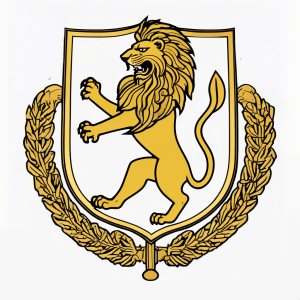
The Lviv-centered 28th Corps is one of the main units opposite new archrival Poland. Its symbol is a fairly plain lion.

64th Corps

The Donbass-garrisoned 64th Corps was in many ways the “pet” unit of legendary reformist president Anton Yatchenko, who happened to come from that area. Its symbol is a nightingale, and it was one of the key units in the Romanian War.

32nd Corps

The Crimea-based 32nd Corps was the only such one to serve in the southern Danube Front, and it only entered the battlefield after the initial Soviet-Bulgarian force had established firm bridgeheads on the northern side of the river. It’s the corps with the most focus on amphibious, airborne, and light infantry operations. Rumor has it that part of it is earmarked for a separate attack on Iceland. Its mascot is a hippocampus, a mythical literal sea horse.

43rd Corps

With its cartoon mosquito being the most whimsical logo of the entire army, the 43rd Corps is the primary mobile corps opposite the old and rising enemy: China. Because of this, it was never even considered being sent west to Romania in 1998.

57th Corps

The leaping lynx that is the 57th is the other Far Eastern mobile corps. Like its “brother” the 43rd, it did not fight in the Romanian War. However, it was on standby along with the 26th in case a second mobilization and major operation needed to be launched (it didn’t).

Defenders of the Danube

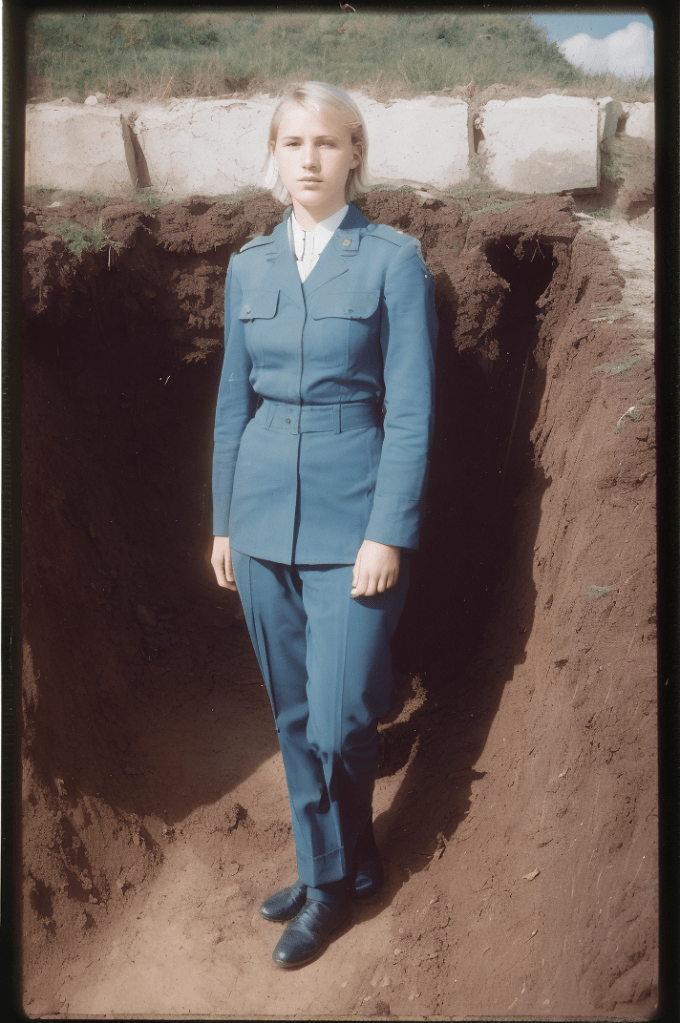
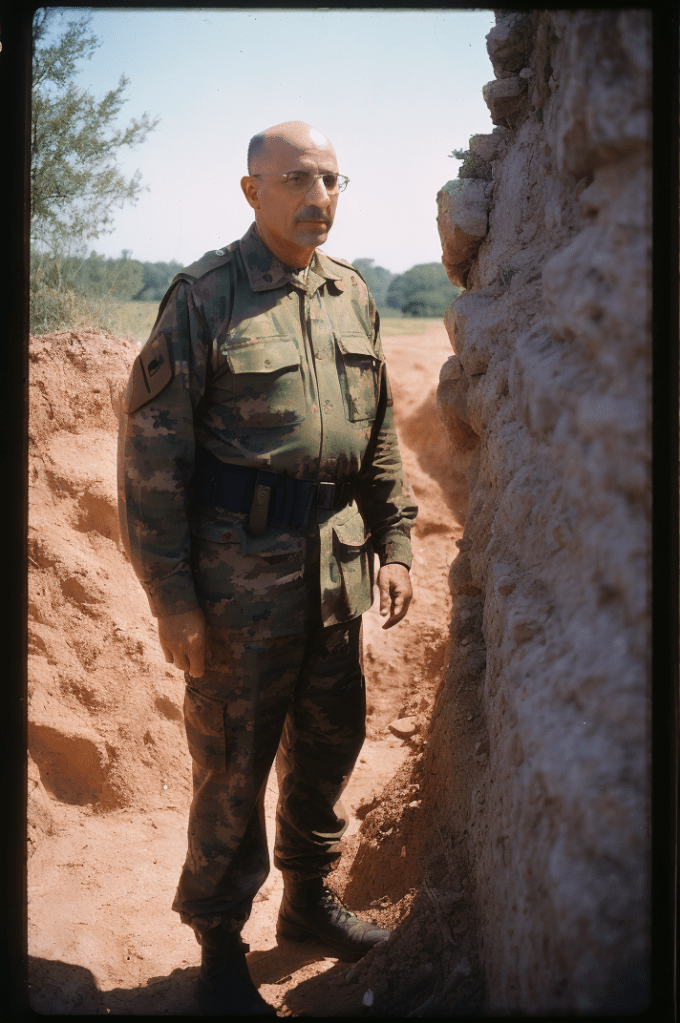
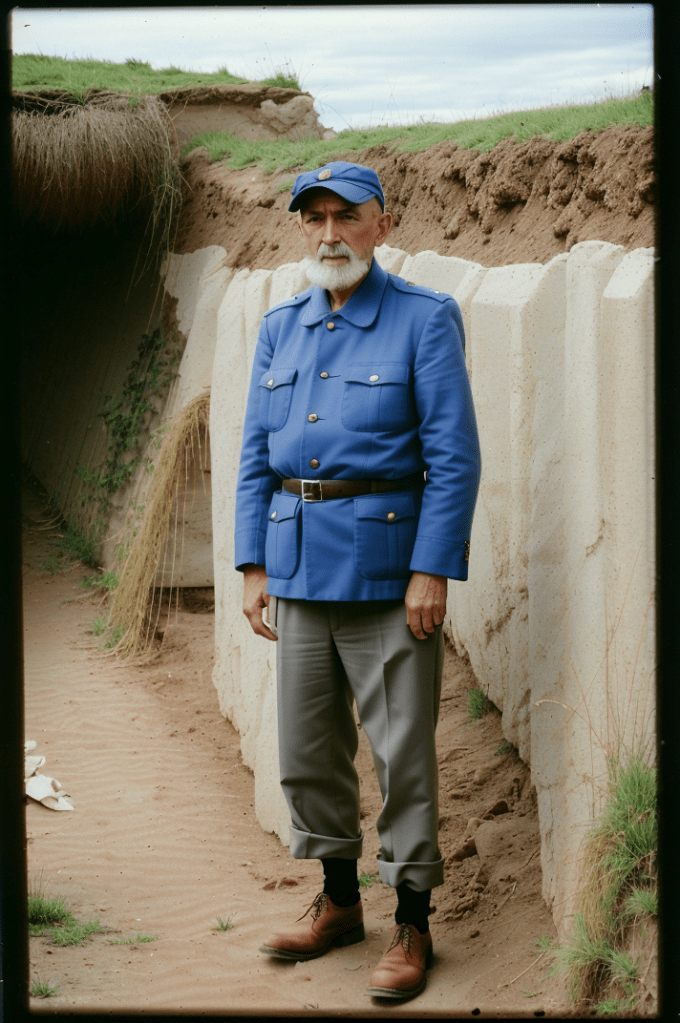
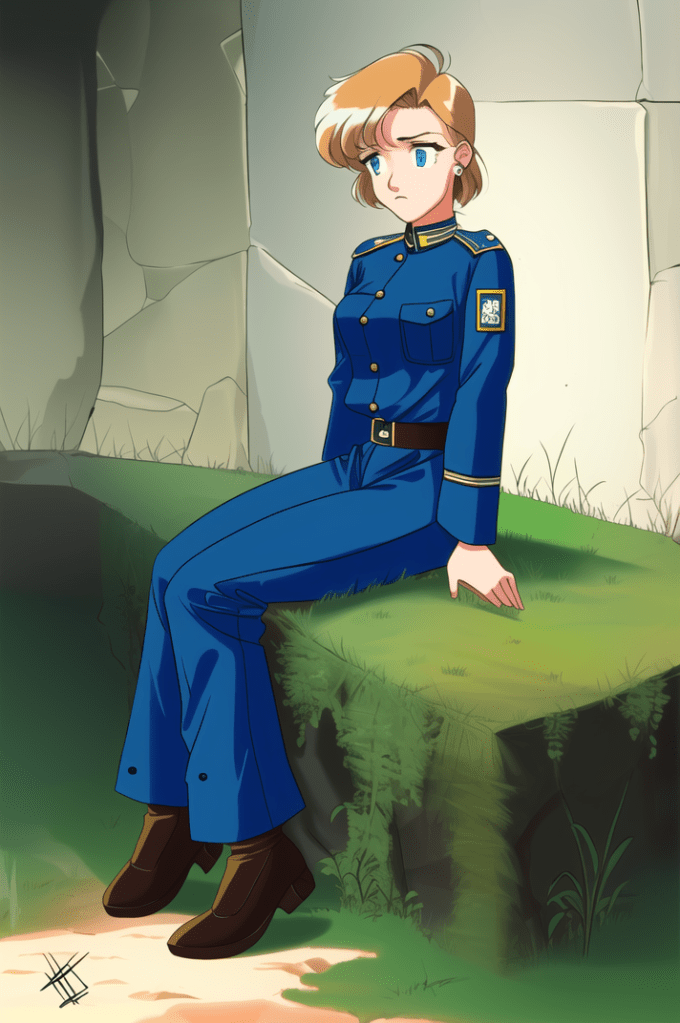
The narrative of the Soviet-Romanian War in All Union focused largely on the northern front, where advanced mechanized units burned through the Romanian countryside in a rapid (but not bloodless) stomp. However, by far the hardest going was the southern front, a push across the Danube with Soviet and (majority) mobilized Bulgarian troops.

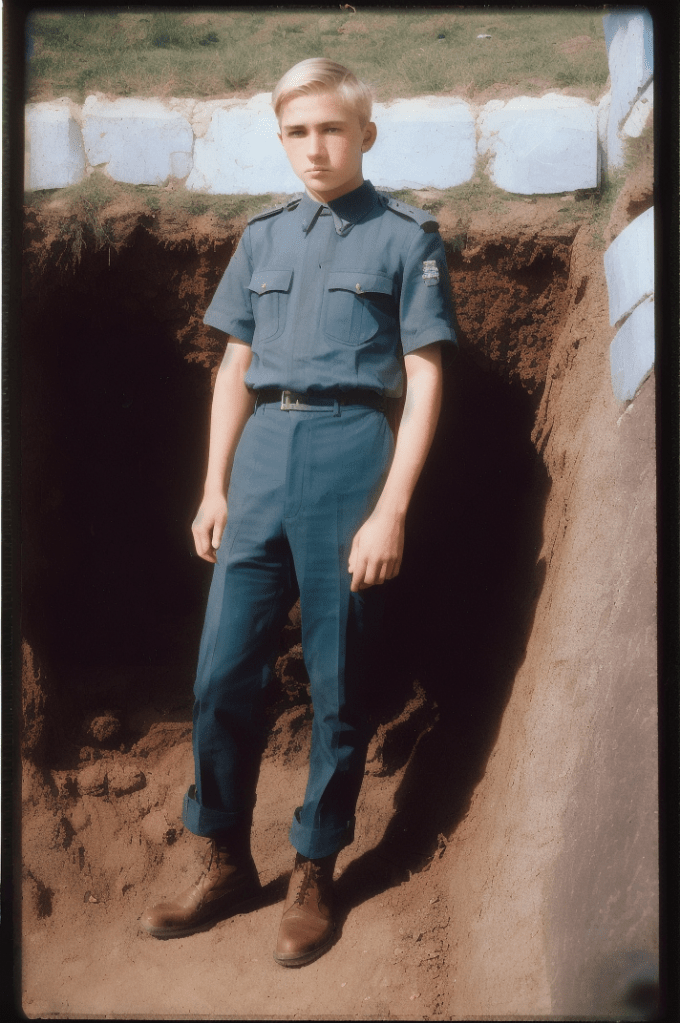
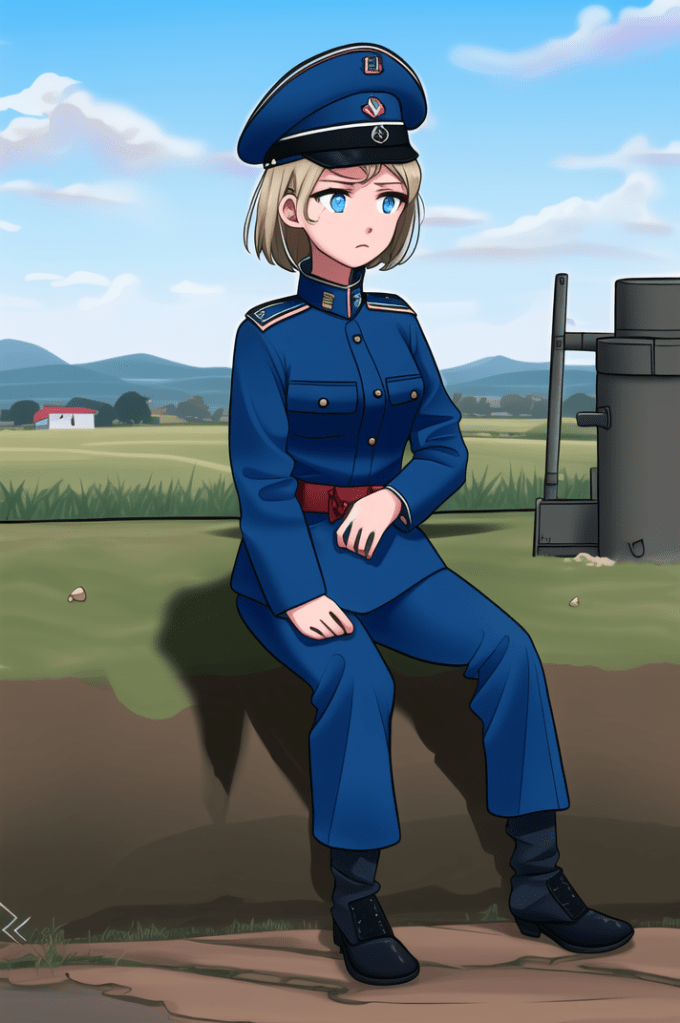
Shown here are several of the Romanian defenders in fortifications prior to the battle. Most of the troops in the fortified positions were mobilized Patriotic Guards , almost all from areas ineligible for the (itself stretched and mobilized) regular army: Women and men both too young and too old for “regular” service.

There was very little standardization for these desperation formations in terms of either equipment or uniforms. The blue uniforms designed for the Patriotic Guards can be seen in these [pseudo] photos and drawings of them in the fortifications prior to the war, but so can plain and camouflage uniforms.

All pictures made in Stable Diffusion.

Note: Stable Diffusion, at least the models I use most, is currently not very good at doing exact military equipment pieces well. Hands are pure genius in comparison. Hence why I don’t have them actually holding weapons. You can justify it by saying that the Securitate was afraid of mutinies or wasting ammo. -C