Delighted to say that I’ve managed to wrangle Stable Diffusion enough to make some AI pseudo-photographs of Cholpon Murad-Kyzy, the heroine of All Union. Though not exactly matching my mind (what can be?) they’re still pretty close.
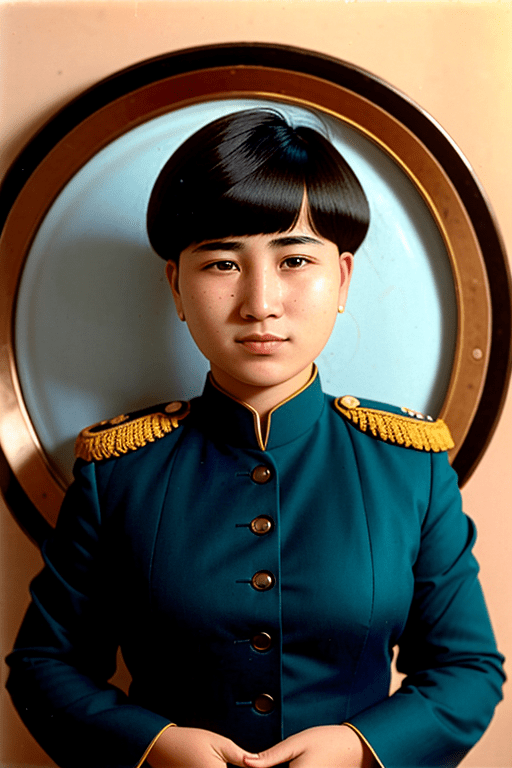
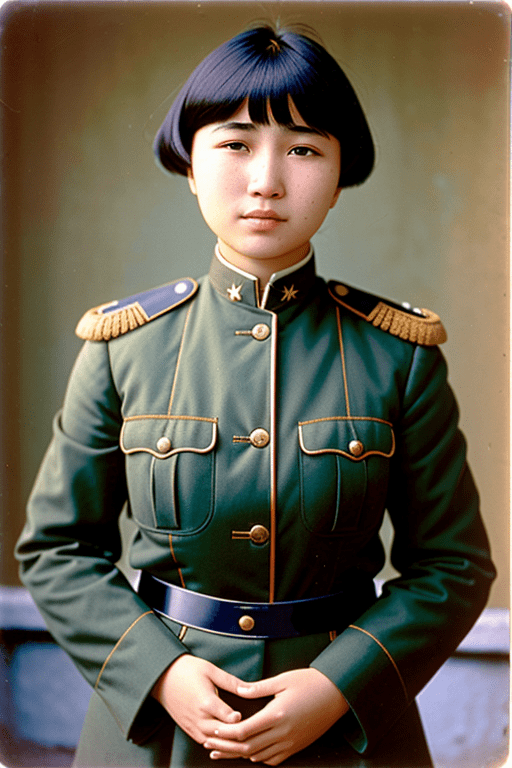

Delighted to say that I’ve managed to wrangle Stable Diffusion enough to make some AI pseudo-photographs of Cholpon Murad-Kyzy, the heroine of All Union. Though not exactly matching my mind (what can be?) they’re still pretty close.
Had too much fun making this “recon aircraft photo” of wrecked armored vehicles in a field in Stable Diffusion. I actually found it was easier to just make the field and then inpaint in the wrecks. And if it’s a high altitude, somewhat blurry photo, that makes the imprecision regarding tanks and the like less important.
A common sight in September 1998 and after. Soviet air supremacy led to fields full of destroyed and abandoned Romanian vehicles throughout the country.

For the Soviet Romanian War in All Union, since World War III 1987 is doing aircraft losses, I figured I might as well too. (Also, enjoy the Sovereign Union’s flag in picture detail!)



After months of work and preparation, I’m delighted to say that All Union is now out in both electronic and paperback versions. It’s an alternate history novel about a world where the Soviet-ahem, Sovereign (totally not Communist or anti-Western, we swear!) Union remains a superpower and the dawn of high-tech war was in Romania and not Kuwait. It’s, as the subtitle says, a novel of love (seriously and unironically), war, and mystery, as everyone from a “Generallismus” to a New Jersey clerk to a Kyrgyz nurse makes their way through this different but similar world.
It and particularly the style in the second half is the kind of book I’ve wanted to write ever since I’ve started Fuldapocalypse. And now I’ve done it. Writing this was incredibly joyful and satisfying, and I hope reading it is as well.
With All Union and my Soviet-Romanian War project, I figured getting a good one-volume history of the Southeast European country would be nice. And Paul Kenyon’s Children of the Night delivers. It starts in 1442 with Vlad “Dracula”, or “The Impaler” Tepes, and more or less concludes with the execution of Nicolae Ceausescu in 1989. The book is a magisterial epic of Romania’s frequently bizarre and violent history.
One consistent theme is Romania being perched on an unsteady point and being tugged on in multiple directions for centuries. Whether it be the Hungarians and Turks, the Russians and Turks, or the east and west in the Cold War, Romania always feels like an odd one out, a Latin enclave in a Slavic realm. The most blatant example of this was Romania spending the first part of World War I figuring out who it should support (it sided with the Entente eventually), but this was shown throughout history. The most ghoulish is Ion Antonescu’s regime conducting some of the worst massacres of the Holocaust, but suddenly changing its mind on the deportation of Jews-conveniently right after the encirclement at Stalingrad.
But it’s its postwar history where the book shines. Ceausescu’s reign of terror is well documented, and the scenes of his fall and execution read like they could have come straight from The Death of Stalin. It also shows that his tendencies towards what can be called “independent totalitarianism” started under his predecessor, Gheorge Gheorghiu-Dej.
If you could only read one book on the history of Romania, this would be a good contender for the choice. It’s definitely worth reading.
All Union, my alternate history novel project, is coming along very, very nicely. The first volume (yes, it’s grown big and ambitious enough to require multiple volumes) should hopefully release sometime in the spring. I’m very excited.
I’ve long since wanted to write a book like the one I’m making now, and I’m finally doing so. And yes, I’m doing things that the snarker me would have slammed several years ago. Oh well.
The GENFORCE-Mobile organizational chart got the then-still-in-development BTR-90‘s stats wrong. It’s both too light (at 17 metric tons compared to the 21 of the real one), and more importantly has too many dismounts (ten as opposed to seven I’ve seen in every real source). The real BTR-90 was cursed by coming right as the USSR fell, but in many ways it was also just a wheeled BMP-2, so its lack of entry into service is understandable.
But I thought (both for the All Union story and for my own fun) “Well, what if you could get a vehicle with ten dismounts?” The squad would grow to USMC size (two or three in the vehicle plus ten dismounts), and it presents a very tricky puzzle: Get a vehicle that is fit for a mobile corps (so it has to be viable in direct combat, both offensively and defensively), can carry ten dismounted troops as standard, and can’t be too big or heavy. If you want heavier weapons, it basically needs a remote uncrewed turret to not tip the scales. It’s not technologically impossible by a long short, but tradeoffs will have to be made.
Finally, the big squad means I can finally introduce my “eastern fireteam” concept I rejected for the next-gen BMP. Which makes more tactical sense, since doctrinally they’ll be fighting away from their vehicle more often, especially in rough terrain or as part of a tactical heliborne operation. So they need to be (theoretically) better in terms of both equipment and skill.
As for how it works, well, I’m writing right now a chapter where such a motorized rifle unit storms a Romanian town…
I’ve decided to kick off the new year on Fuldapocalypse with my current “I justify it by claiming it’s for book research, but really it’s mostly for its own fun sake” obsession. This is the way special forces teams are infiltrated (moved in to their target, almost always with the intention of stealth).
Granted, there are elite teams moving about in All Union (without spoiling any specific element), and the Soviet-Romanian War saw the biggest deployment of special forces in modern history. But it’s still a fascinating topic. So in rough order from least to most complicated…
These are the mundane, usual, “boring” techniques. Now for the “interesting” ones.
It’s important to note that the majority of historical spetsnaz from the 1950s to 1991 were still two-year draftees. The best and most motivated two-year draftees, but still two-year draftees. Infiltrators in the second category in a Soviet-style military would have to be officers or professional volunteers with longer-term contracts to get the time to master such exotic techniques.
A massive number of Soviet, Bulgarian, and Afghan special purpose forces participated in the invasion of Romania. The very first substantial Soviet casualties in the war came when a Romanian MiG-23 shot down a transport carrying SPF for a parachute insertion, killing all eighteen people on board. While those three nations are well known, there have also been rumors of other SPF as well as western mercenaries disguised as employees for humanitarian NGOs.
So my book project now has a name: All Union. To celebrate this milestone and excellent progress on it, I figured I should share the rivet-counting infodump of very little actual relevance to the plot (or is it…) but which is fun to do: An Order of Battle chart of the Mobile Corps (of GENFORCE-Mobile inspiration) of the Union of Soviet Sovereign Republics, most famous for their actions in the invasion of Romania.
The methodology is simple: For the number of corps and locations, I went with this analysis, which predicted eight total by the turn of the millennium and theorized their number by district. In actual history, only one was created, the 5th Guards Army Corps stationed in Belarus. For their numbering, I went with the invaluable ww2.dk and looked for defunct/easily disbandable corps HQs in the general area (HQ cities here NOT always correspond to historical bases). So on with the fun exercise/sneak preview-oops, did I say too much??
Mobile Corps have adopted a degree of heraldry beyond previous divisions. All save one have a geographic semi-nickname, and all have a “mascot” creature displayed prominently on all unit patches and symbols. The “Sovereign Guards” honorific was made to reward units for the Romanian war without worrying about legacy “guards” titles from long ago.
5th Guards Mobile Combined Arms Corps “Neman” (bison): First (and in actual history only) mobile corps created. Peacetime garrison Minsk, Belarusian SSR, served in Romanian invasion under Dniester Front.
7th Sovereign Guards Mobile Combined Arms “Vena” (elk): Peacetime garrison Vitebsk, Belarusian SSR. Served in Romanian invasion under Dniester Front, given sovereign guards status postwar.
28th Mobile Combined Arms Corps “Buh” (medieval lion): Peacetime garrison Lviv, Ukrainian SSR. Served in Romanian invasion under Dniester Front. Considered one of the primary frontline units against independent, hostile Poland.
26th Mobile Combined Arms Corps “Lagoda” (Karelian Bear Dog): Peacetime garrison Petrozavodsk, Russian SSR. Did not participate in Romanian invasion but was on high alert and was earmarked for a proposed second large offensive operation that never had to be conducted.
17th Sovereign Guards Mobile Combined Arms Corps “Fergana” (Huma bird): Peacetime garrison Tashkent, Uzbek SSR. Participated in Romanian invasion under Dniester Front. Given sovereign guards status postwar. Its base in the otherwise remote area makes it the closest thing to a strategic reserve mobile corps, and it is poised to always go either west, east, or south. One of the main characters in All Union, Cholpon Murad-Kyzy, served in the 17th Corps during the war in a forward medical station.
64th Sovereign Guards Mobile Combined Arms Corps “Donets” (nightingale): Peacetime garrison Luhansk, Ukrainian SSR. Participated in Romanian invasion under Dniester Front. Given sovereign guards status postwar. Its base in the birthplace of All-Union president and legendary leader Anton Yatchenko is widely believed to not exactly be the most coincidential, as is it receiving sovereign guards status and massive accolades.
32nd Mobile Combined Arms Corps “Roman-Kosh” (mythical hippocampus mermaid-horse): Peacetime garrison Sevastopol, Russian SSR [not a typo]. Participated in Romanian invasion under Danube Front, the only mobile corps to do so. Is believed to be the mobile corps with the most focus on amphibious invasions and operations in extreme terrain. There are even rumors that detachments from it are earmarked for the seizure of Iceland should it come to that.
57th Mobile Combined Arms Corps “Kisilyakh” (lynx): Peacetime garrison Ulan-Ude, Russian SSR. Did not participate in the Romanian invasion but was earmarked and prepared as part of the ultimately unnecessary second offensive operation.
43rd Mobile Combined Arms Corps “Amur” (mosquito): Peacetime garrison Khabarovsk, Russian SSR. High-priority unit for potential war with China. Because of this and its distance did not participate in the Romanian invasion and was never considered for doing so, even as part of the hypothetical second wave.
“VNG Elite Corps”/”Efir Group Corps”/”Phantom Corps” (ghost): Peacetime garrison Gorky, Russian SSR. Formed after the Romanian invasion, exact strength still unclear. Under the control of KGB successor VNG (based on an acronym that can translate to “All Union Monitoring Group”). Part of the mysterious and nominally private “Efir [Aether] Group, which officially is nothing but a small real estate firm registered in Pune, India. It is said that the corps is haunted and anyone who gazes at its facilities without approval is immediately flung out of a tall window by poltergeists.
I have excellent news regarding my NaNoWriMo project. Writing it has been fun and progress on it has been successful and smooth. I still don’t know if I’ll be able to meet the technical deadline, but I’d rather write at a comfortable pace and miss the arbitrary endpoint than push myself too far.
I feel like I should also (further) reveal what this is: An alternate history pop epic/mystery set in a timeline where the USSR endured in a reformed form (while a lot of stories understandably have the August Coup succeeding, in this it never happened), and the hypothetical Soviet-Romanian War I’ve mused about on this blog plays a huge role in the plot.
Of course, the unfortunate tradeoff is that by writing, I’m admittedly having less energy to read and review on Fuldapocalypse. But rest assured, my creative engine is still running.
 Fuldapocalypse Fiction