The Italian Lesson

What has been said, and said accurately is that drones and tactics surrounding them are advancing and moving extra-fast in Ukraine. Yet counter-intuitively, this is a case for not rushing forward with swarms. Note: It is still important, and rapidly getting C-UAS, especially hard-kill weapons and proper training, is high priority.

Because this isn’t the first time this happened. And the (often unfairly) scorned Italian military of World War II is a stark example why.

So in the 1930s, automotive and aircraft technology was indeed roaring forward at a “Moores Law For Tanks and Propeller Planes” rate. Now I’m oversimplifying, but here’s what happened: Italy didn’t have the economy or resources for multiple huge waves, so they “modernized” too early , and were left with tons of biplanes and tiny tankettes .

I remember seeing a lecture on US interwar armor where even though he didn’t mention Italy or anything similar, he did use that as a reasonable answer for why America was slow in the same period. Now I mentioned the defensive priority being higher. Anti-tank guns and AA guns even if underpowered are still going to be useful in ways strictly worse tanks are not.

Tanks of the Soviet-Romanian War

Main Battle Tanks of All Union’s Soviet-Romanian War, starting with the victors.

Sovereign Union

  • T-94. The star of the tank scenes in All Union, the T-94 was inspired most heavily by the Object 640/Black Eagle prototype with its advanced gas turbine, low turret and crew position, and much more. It also has a heavy remote turret with an aircraft-adapted 23mm autocannon (for improved anti-soft target AND hitting things not worth a main gun shell). This was an actual proposal. Most advanced Sovereign Union tank of the war, used only in some mobile corps.
  • T-84. The T-84 was chosen as the “low” tank in the high-low mix (ie T-64/80 and T-72 in real life). The real reason was as a bribe to the Ukrainian SSR where a potential situation was defused by All-Union President Yatchenko. Ukrainian firms would get preferential choices in procurement while Crimea was handed back over. T-84s were used in mobile corps and some high-category legacy divisions and had the most advanced suites of the “125mm classics.”
  • 125mm Classics: IE the T-64, T-72, and T-80, in various states of upgrade. Even the mobile corps had many of these. The 7th Mobile Corps famously had only T-64s and BMP-2s. Not much else to say except that T-64s were disproportionately used because so many units were drawn from the Ukrainian SSR where they were historically based.
  • T-62/55s: These classics were minimum viable tanks that did minimum viable tank things, seeing service in low-category legacy divisions.

Bulgaria

  • T-72. The most advanced Bulgarian tank, which showed their limitations compared to the Sovereign Union.
  • T-62. Bulgaria was the only NSWP country to use the T-62, and they saw extensive use (and losses). Likewise with the T-55, the most common Bulgarian tank.
  • T-34. The absolute contrast between the electronically linked supertanks and Bulgaria fielding hundreds of T-34/85s in its crazed mobilization was one of the big ironies of the war.
  • LPT-100. A fictional tank based on a real proposal, this like several other semi-improvised vehicles could be built in Bulgaria, so it was used by the Bulgarians. Others included APCs on bus chassis and uparmored jeeps from local factories.

The Amphibious Hook

The Amphibious Hook is a type of theoretical maneuver that allows for a naval support of a land offensive. It is either an operational or tactical offensive, with the Heavy OPFOR Operational noting that such ones would never be done outside of extensive air support. The document also argues that it generally would take the form of an amphibious regiment/brigade in the first wave and then normal mechanized troops unloading on the shore after the beach was cleared to continue the push. But of course, depending on shipping, it could easily be more.

(Brief note: Strategic amphibious operations are D-Day and even Inchon. Tactical ones are things like doing a boat raid. Operational ones are, fitting that level, more vague and mean things like ‘land a big enough force to divert their reserves so that the main land push can run more freely’).

The section on amphibious landings (Heavy OPFOR Operational sec. 2-13 to 2-15) also speaks of naval units being an easy way to reinforce airborne ones, assuming the geography works. There’s also, as happened in the Gulf War, the threat of an amphibious hook.

Ironically, one of the best ways for a defender to counter an amphibious hook is to ignore it. Or if not ignore it, recognize that it’s going to have trouble moving inland and can be contained with second-line forces and not divert too much to stop it, leaving the opponent with a small toehold always at risk of being cut off.

Review: Icebreaker

Icebreaker

Perhaps Viktor Suvorov’s most infamous work is Icebreaker, a revisionist historical book that claims that Stalin was juuuuuust about to invade the rest of Europe from the east when the Germans launched a preemptive attack in 1941. What makes this not just wrong in the sense that his book on the hyper-Spetsnaz was inaccurate but outright disturbing is that someone else publicly stated such a claim repeatedly. Said someone else was famously portrayed in a movie by Bruno Ganz.

Thankfully, the book itself does not make the best case for this incredible claim. It’s not just that with hindsight and primary sources (that Suvorov inaccurately claimed were destroyed to cover them up) the image of the shambling wreck in peacetime formations that was the 1941 Red Army facing off against the bunched-up offensive force of the 1941 Wehrmacht. (Fun fact BTW: The Germans actually had a 3-2 numerical advantage in the early part of Barbarossa, and even more in practice if you account for the terrible logistics of the Soviets then).

The only evidence besides ‘trust me bro’ that Suvorov puts forward is basically “The Soviets had lots of ____ [such as fast tanks and/or paratroopers] that clearly meant they were meant for an offensive into western Europe.” It couldn’t just be that their doctrine was on mobile warfare and that they tried and failed to implement it defensively.

I knew about how bad its premise was, but I wasn’t expecting so weak an argument. Which is probably a good thing. Unlike this book.

Review: Hooves, Tracks, and Sabers

Hooves, Tracks, and Sabers

Raconteur Press’s Hooves, Tracks, and Sabers is an anthology of alternate history cavalry stories. You get helicopters in Southeast Asia (but not the way you might think), airships (of course) in the American Civil War, and plenty of good old horsies. While none of the stories are bad, a lot just feel like historical fiction with different names, which is a problem a lot of alternate history unavoidably has (I think that World War IIIs actually avoid this by being something so completely different from say, the Vietnam War, but that’s another story).

Thankfully, there are ones that go above and beyond that. My favorite is a World War I divergence where the Tsar Tank actually works. How can you not love a giant armored tricycle? Anyway, while the execution may not be the best in every case, the concept is so great that I still recommend this collection (and lament that I couldn’t write a story about armored recon units in the Soviet-Romanian War for it).

Review: Tank Warfare

Jeremy Black’s Tank Warfare is a history of the century-plus history of the metal tracked armored vehicle known as the tank. Published in 2020, it wasn’t able to cover the wars in Ukraine and Nagorno-Karabakh, but that’s not its fault. There are however a significant amount of things that are its fault.

The book is a popular history broad-brush overview. Perhaps its biggest weakness is that it’s too broad for its own good. Tangets towards every tank developed and exported by everyone in the time period happen at the expense of actually exploring the topic. Which would be more tolerable if it hadn’t actually focused on World War I in depth simply because there were few types of tanks to cover. The balanced look at the earliest AFVs there give a picture of what might have been.

This is basically just a generic coffee table tank book, but it had the potential to be more.

Review: Weapons and Tactics of the Soviet Army

Weapons and Tactics of the Soviet Army

David Isby’s 1988 edition of Weapons and Tactics of the Soviet Army is perhaps the missing link in the OPFOR puzzle. I have to give the obligatory “this is a Cold War western source” to get it out of the way. That being said, once basic prudence is applied, this is an amazing compendium.

It covers every single major weapons system in the 198X Soviet army detailing not just the paper specs but also the intended doctrinal use and actual combat experience in Afghanistan or with foreign armies. This comprehensive look at the whole and not just the sum of the parts is sadly too rare and is very welcome here.

This is a rare, expensive, and massive book. But it is well worth it to any scholar of the Fuldapocalypse.

Making vehicles in Stable Diffusion

Simple guide to how I bash together vehicles in Stable Diffusion.
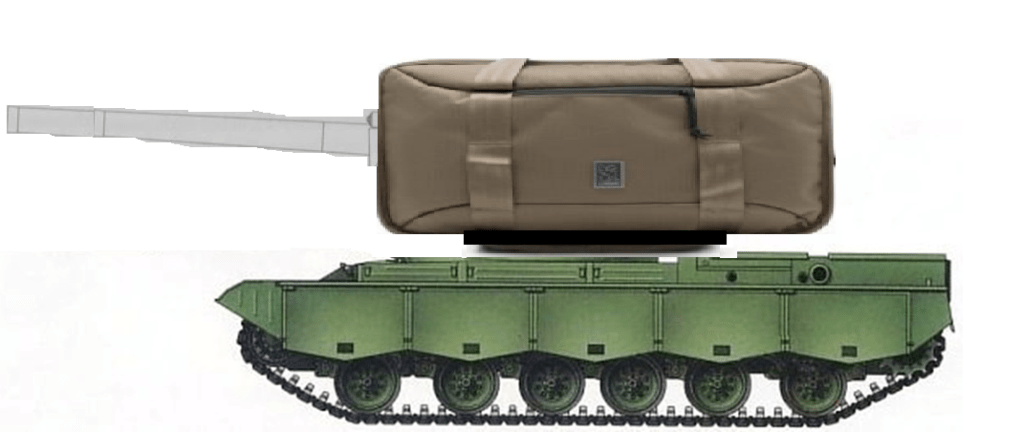
First assemble the shape. In this case it’s the bottom of a tank, a suitcase (!), and a line drawing of a large-caliber field piece.

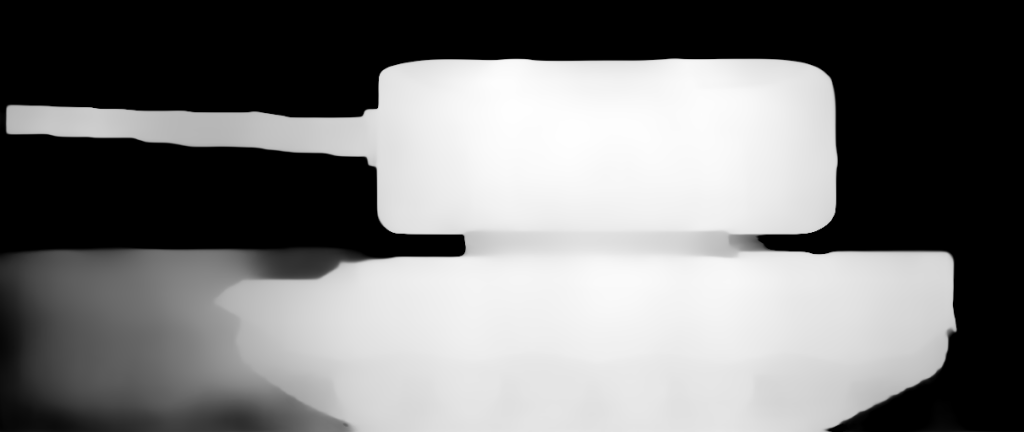
Then load up Stable Diffusion with a controlnet, in this case, depth.

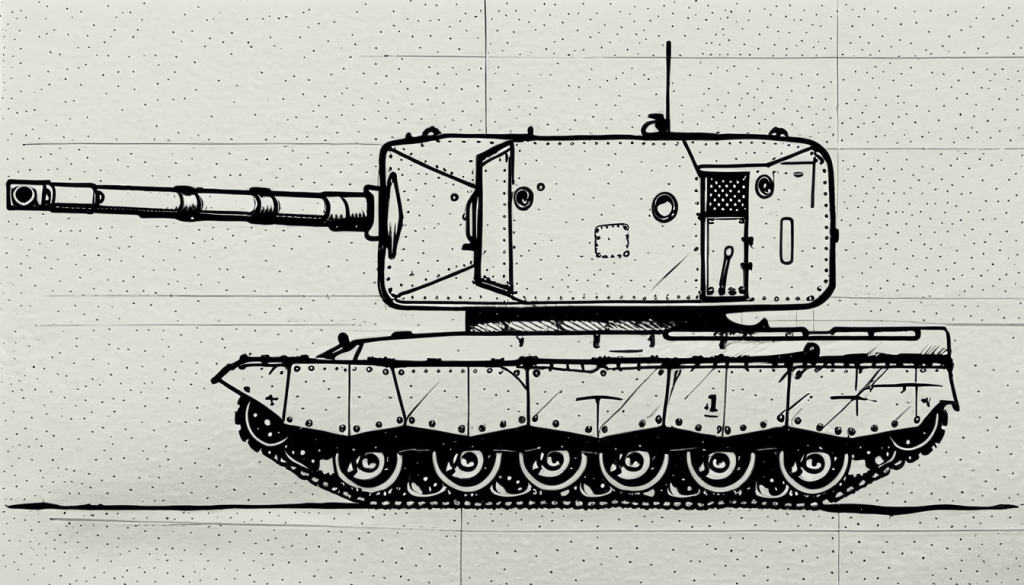
Use the model and prompt (In this case I use Helloworld 6.0), make sure the controlnet is enabled but not too high, and you get…

One self-propelled AH vehicle!

Review: Rust Skies

Rust Skies

TK Blackwood delivers another World War III treat in Rust Skies. I loved the unusual-for-Fuldapocalyptic standards location in Turkey (which was, after all, one of the few direct NATO-USSR borders). I also liked the timely political dilemma about an enhanced American military draft, which is both plausible and interesting. It does stuff a lot of plot and characters into a small package but rarely overwhelms and never feels bad.

The big “problem” is that it ends on a cliffhanger. Oh well! I’ve done it myself, so I guess I can’t complain.